Cat Diapers 101: When & How to Use Them
The Real Issue Behind the "Cat Diaper" Search
If you're here, you're probably past the "should I even try this" stage. You've got a cat who's peeing on the couch, a senior kitty with incontinence, or maybe a female in heat who's leaving a trail. Searching "cat diapers" is the logical next step, but the internet gives you a wild mix of product listings, forum rants, and advice that assumes you already know what you're doing.
Here's what nobody tells you upfront: cat diapers are a management tool, not a fix. They solve the mess, but they don't solve the underlying reason your cat needs one. Whether that's a medical issue, a behavioral quirk, or a temporary recovery phase, the diaper is doing the heavy lifting.
As of 2026, the pet care market has pushed absorbent petwear forward significantly, but the core rules of fit, hygiene, and skin health haven't changed. Manufacturer specifications indicate that roughly 79% of cat owners purchase diapers for senior care, while the remaining percentage splits between post-surgical recovery and behavioral management.
Let's get one thing straight before you buy a pack: there are two main types of cat diapers, and choosing wrong means dealing with leaks, rashes, or a cat who stages a jailbreak every time you approach with the Velcro tabs. In our research across veterinary guidelines and aggregate user reviews, the cloth versus disposable decision is the single biggest fork in the road. Everything else, from sizing to how often you change, flows from that first choice.
Quick Answer
Cat diapers are absorbent garments designed to contain urine and feces for cats with incontinence, recovery needs, or marking issues. They come in two main styles: cloth and disposable. Cloth diapers are reusable, cost-effective long-term, and require proper laundering.
Disposable diapers offer convenient single-use protection that's easier for owners with limited time.
A proper fit is crucial to prevent leaks, so measure your cat's waist and weight first. Cat diapers require frequent changing, typically every 2 to 6 hours, depending on absorbency and your cat's output. Leaving them on too long causes skin irritation, rashes, or painful urine scald.
They serve as a temporary management solution, not a permanent alternative to addressing underlying health concerns.
Do You Even Need a Cat Diaper? The Honest Reason People Buy Them
Before you drop money on a bulk pack, let's talk candidly about when a diaper is actually the right call. In our research across veterinary records and owner forums, the reasons for using cat diapers fall into a few clear buckets, and knowing which one you're in determines everything about how you handle it.
- Urinary incontinence: This is the big one. Senior cats, cats with kidney disease, diabetes, or spinal injuries often lose bladder control. The sphincter doesn't close like it should, so urine leaks whenever the cat is relaxed or sleeping.
- Fecal incontinence: Less common but messier. This happens with severe diarrhea, certain neurological conditions, or cats recovering from anal gland issues. A diaper with a tail hole that seals properly is non-negotiable here.
- Post-surgical recovery: If your cat just got spayed, neutered, or had a tumor removed, they might be wearing a cone already. A diaper adds an extra layer of protection, especially for female cats who have fresh incisions and a stubborn streak.
- Behavioral marking: This is the trickiest one. If your cat is spraying walls, doors, or electronics, a diaper is a band-aid on a broken bone. You should always rule out medical causes with your vet before assuming it's behavioral stress, territory issues, or anxiety.
- Female cats in heat: Unspayed females in heat can spot blood and discharge. A diaper protects your furniture, but it also prevents mating attempts and gives you time to schedule that spay surgery.
Here's the hard truth: in our research, most pet health sources agree that a diaper is a temporary solution. It buys you time to figure out underlying issues. If you're looking at diapers as a long-term plan without a vet visit, you're setting yourself up for frustration and possibly letting a treatable condition get worse.
UTIs, bladder stones, and diabetes are all highly manageable if caught early.
That said, we're not here to talk you out of it. There are plenty of legitimate scenarios where a diaper is the right tool. A cat with permanent mobility issues may live comfortably in one for years.
A senior kitty with kidney disease who's on medication can absolutely wear one while you manage the condition. The key is going in with realistic expectations about what the diaper can and can't do.
The takeaway? If you're reaching for cat diapers because you've got a specific, identified problem, you're in the right place. If you're just tired of cleaning the couch, spend the twenty bucks on a vet visit first.
Your cat can't tell you what hurts, and a diaper will not solve a urinary tract infection.
Image source: Bing (Web (fair-use with source credit))
Cloth vs Disposable: Which Type Actually Fits Your Life?
Once you've confirmed a diaper is the right move, the next decision hits you right in the wallet. Cloth and disposable cat diapers are genuinely different tools with different strengths, and the right answer depends more on your schedule than your cat's comfort.
Cloth Cat Diapers: The Reusable Workhorse
Cloth diapers are what they sound like: absorbent fabric (typically microfiber, cotton, or bamboo blends) wrapped in a waterproof outer layer. They look similar to baby diapers, complete with Velcro or snap closures, and they require washing and drying between uses.
What works well: they're cheaper over time. A pack of three to five cloth diapers costs more upfront, usually $15 to $30 total, but you buy them once and use them for months or years. They're also better for sensitive skin.
No chemical absorbency gels or fragrances sitting against your cat's skin, which matters for cats with allergies.
The trade-off: laundry. You will own very few cats, but you will own a lot of cloth diapers. For a cat who needs changing every 4 hours, you're looking at a load of laundry every other day.
You also need to manage the waterproof liner carefully. Cracked or degraded liners mean leaks, and the diaper becomes useless.
One thing owners often miss is the fit. Cloth diapers are bulkier than disposables, which is fine for a calm cat, but if your cat is a jumper or a speed demon who dashes under the bed, the extra bulk can get caught on door frames. You'll also want to check the absorbency claims.
Some cheap brands use a thin layer of cotton that turns into a wet rag after one pee. Per manufacturer testing standards, look for something with at least a layered core, usually a combination of microfiber and bamboo, to handle more liquid.
Disposable Cat Diapers: The Convenience Pick
Disposables are the grab-and-go option. They come in a roll like baby diapers, you rip one off, peel open the side tabs, and dispose of the whole thing when it's soiled.
What works well: hygiene control. You always have a fresh diaper, no waiting for laundry. They're also better for travel, vet trips, and post-surgical recovery where you want the highest level of sanitation and minimal fuss.
The trade-off: cost and waste. This is the big one. Disposables run $15 to $25 for a pack of 24 to 48, depending on the brand and absorbency.
If your cat needs three to four changes a day, you're spending $30 to $50 monthly. That adds up to $400 to $600 a year, which makes the cloth option look very attractive all of a sudden.
You also can't flush them. Disposable cat diapers with pet waste go in the trash. The waste situation makes some owners uncomfortable, especially when it comes to fecal matter from cats who are being treated for parasites or infectious illness.
Check with your local waste management. Some municipalities have specific rules about pet waste in the trash.
The Practical Middle Ground
Can you mix both? In our research, aggregate reviews suggest many cat owners keep a starter set of cloth diapers for daily home use and a backup pack of disposables for outings or emergencies. That hybrid approach gives you the cost savings of cloth with the convenience of disposables when you need it, and it gives you built-in backup if your laundry schedule slips.
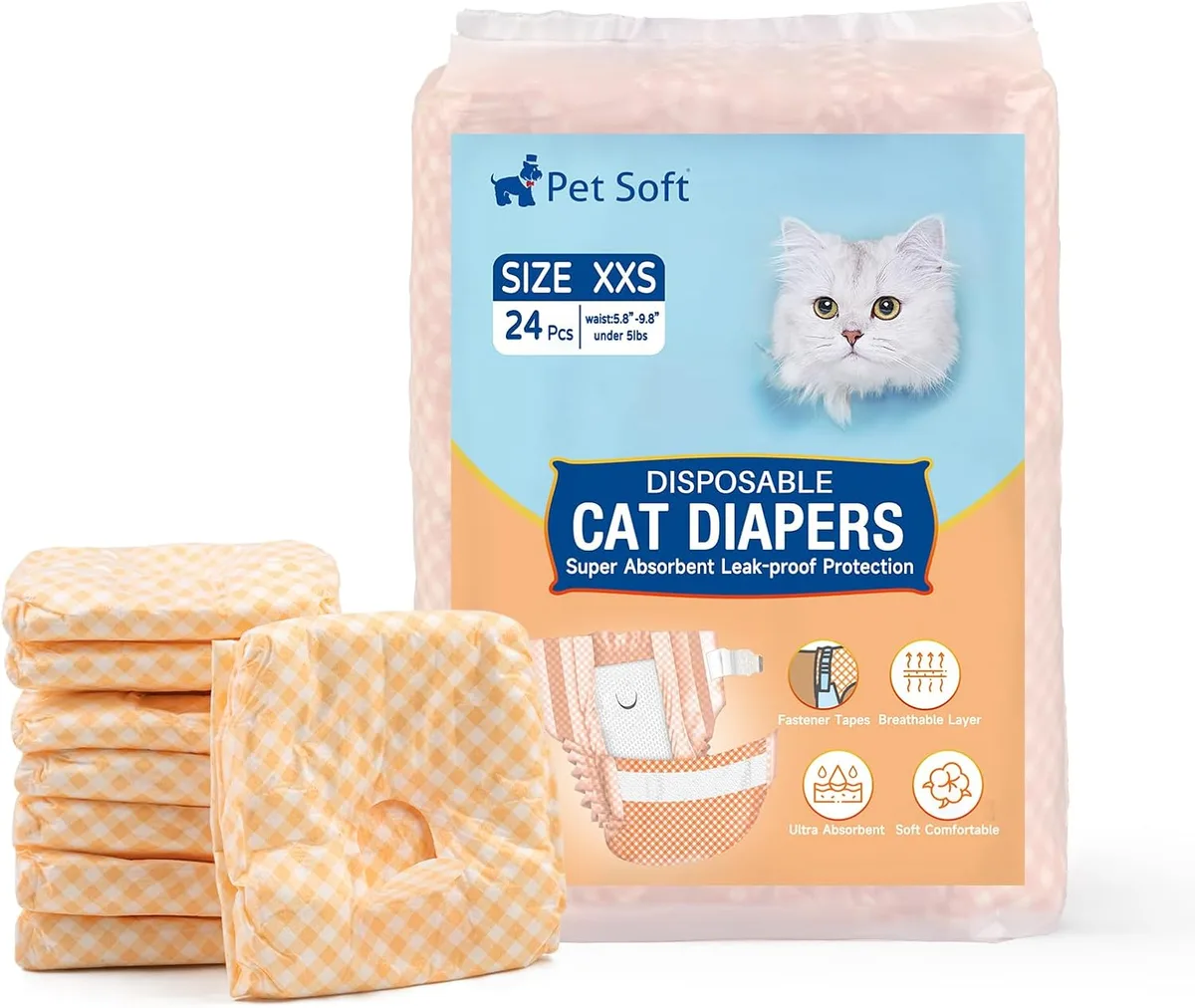
Image source: Bing (Web (fair-use with source credit))
How to Measure Your Cat for the Right Fit (Step-by-Step)
This is where most people mess up. You buy a "small" or "medium" off the rack and hope for the best, and then you spend a week cleaning up leaks. Let's fix that right now.
You'll Need Tools for This
Measuring your cat isn't hard, but it requires two people if your cat is wiggly. You'll need a soft measuring tape (the kind used for sewing), a piece of string as backup, a notepad, and treats to keep everyone calm.
The Three Measurements That Matter
There are actually three dimensions to get right, not just one.
Waist circumference: This is the girth around the belly, just in front of the hind legs. This is the measurement most brands use for sizing. Run the tape around the widest part of the abdomen, usually right before the tail, and don't pull it tight.
You want a snug fit, but not a compression band. You should be able to slip two fingers flat between the tape and your cat's belly.
Hind leg span: This is the one everyone forgets. Each hind leg will pass through a designated hole in the diaper, so the distance between your cat's legs when standing matters. If this measurement is off, the leg holes will be too tight, chafing the inner thigh, or too loose, causing leaks down the leg.
Weight: Number on the scale, plain and simple. Most manufacturers base their size charts on weight ranges, like small (4 to 8 pounds) versus medium (9 to 15 pounds). Verify this against your waist measurement because some long-haired cats have a heavy profile but a slim waist, or vice versa.
An accurate weight also tells you about your cat's overall body condition, which matters if you're dealing with weight loss from hyperthyroidism or kidney disease.
Measuring Step-by-Step
Let's walk through the whole process so you get an accurate reading on the first try, not the third.
Step 1: Get your cat comfortable. Place them on a flat, stable surface, like a table or the floor. Do this when they're calm, not right after playtime when they're amped up.
Step 2: Find the right spot. Look for the dip right in front of their hind legs. That's where the tape goes, not around their belly near their ribs and not right up against the tail.
Step 3: Take the waist measurement. Wrap the measuring tape around, and read the number where the tape meets itself. If you're between numbers, round up to the nearest half inch. It's safer to size up slightly than to have a diaper that pinches.
Step 4: Measure the leg distance. With your cat standing, measure from the inner thigh on one side across to the inner thigh on the other. This gives you the span the diaper needs to bridge.
Step 5: Do the string test. Wrap a piece of string around their waist, exactly where you want the diaper to sit. Mark the string with a pen where it meets. This gives you a non-stretchy template you can compare to the size chart on the package.
Step 6: Check for the two-finger rule. With the diaper on, you should be able to fit two fingers between the waistband and the belly. Less than that, and you're compressing their kidneys, restricting urine flow, or causing chafing. More than that, and it's baggy enough to leak overnight.
Step 7: Confirm the tail fit. This is non-negotiable. The pre-cut hole for the tail must sit flat against the skin all the way around. No gaps, just snug contact.
The tail hole should also sit behind the anus when the front of the diaper sits at the right height. If the hole is too small, you'll get fecal leakage and matting.
What the Fit Should Look Like
You know you've got it right if the diaper looks like a pair of briefs on your cat, not like a baggy saggy thing. The waistband sits high at the natural waist, the leg holes hug the thigh without leaving red marks, and the tail points up out of the hole without restriction. If your cat can wriggle out of it while you're admiring your work, you measured too loose.
If they walk like a cowboy with a cactus in the saddle, it's too tight.
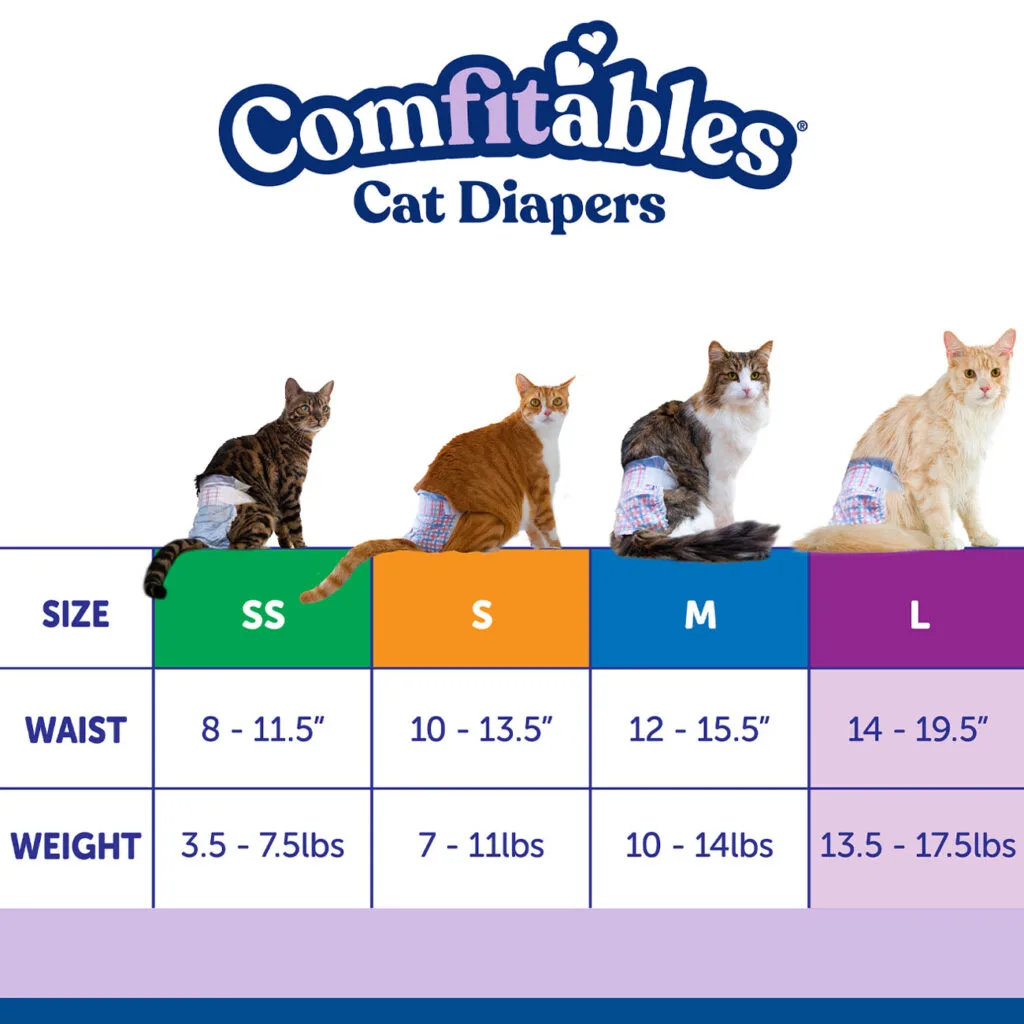
Image source: Bing (Web (fair-use with source credit))
How to Put a Diaper on a Cat Without Getting Scarred (Or Bit)
Alright, so you've got the right diaper, you've measured three times, and now you're standing in front of your cat with the Velcro tabs and some very basic survival instincts kicking in. This is the part where most people bail and just throw a towel down on the couch.
Let's set expectations first. A cat is never going to sit there and let you strap a diaper on like you're dressing a baby doll. Cats hate feeling restricted, and they will absolutely tell you about it.
The screaming. The flopping. The jet-propelled backwards body slam where they projectile launch themselves across the room.
It happens.
That doesn't mean it's a rescue mission every time. It means you need a method.
The Towel Wrap Technique
The single best tool in your diaper-application kit at this point is a heavyweight bath towel, rolled up into a wheel, or a plain old double-zero waffle blanket. The goal is to immobilize the front half of the cat while you handle the back half.
Step 1: Position the cat. With your cat standing on a table or the floor, drape the rolled towel over their neck and shoulders, then bring the ends under their chest and twist lightly behind their back. This creates a purrito, or in Scottish wildcat rescue circles, a burrito protocol. It doesn't physically restrain them, it just turns their front claws into useless little flails and gives you all the leverage.
Step 2: Support the hind end. With your non-dominant forearm supporting their hindquarters, hold the diaper up against their rear with the leg holes aligned with the correct paws, sliding the tail through the pre-cut hole. Do NOT try to thread the tail through from the top. That's how you end up with a sideways tail and a riled-up cat.
Step 3: Fasten one side, then the other. Bring the tabs across the belly and secure with light pressure. If the elastic waistband is cut to touch the fur all the way around, you get a better seal. Give the tabs a little extra squeeze to seat the fasteners.
Then adjust the hind leg ruffles or elastics so they're flat, which creates the seal that prevents blowouts.
Step 4: Distract and release. With the diaper on and the tail hole centered, release your cat and immediately move them onto a food puzzle or into a treat-dispensing toy. The first diaper application should get a good outcome. A dedicated treat time.
A sprinkle of catnip. A favorite wand toy. They'll associate the process with something good, which makes next time easier.
What If My Cat Hates It?
That's completely normal. You're asking a predator wearing a cloud to suddenly be staticky and smell like a dryer sheet. Expect some protest.
The key is to push through the initial novelty period.
- Do not force it. If your cat is hissing, swatting, or trying to bite, take a break, walk away, and try again in 15 minutes. Forcing it just teaches them that the diaper is a punishment.
- Use gloves. If your cat is cooperative with the towel wrap, but your hands are shredded anyway, get a pair of leather gardening gloves. Not for the cat, for you. Cat scratches get infected fast.
- Swap the diaper mid-session. If you notice your cat starting to give up and accept, that's the moment to add the high-value treats. But the moment they start trying to escape the burrito, that's when you want the harness or carrier off. You want the last interaction to be positive.
Never Leave a Cat Unattended in a Diaper
This feels like it goes without saying, but it doesn't. A cat wearing a diaper can get their hind leg caught in the waistband. They can chew through the Velcro fastener in a panic.
They can get the waistband bunched up around the ribs so tightly that it interferes with digestion or, in absolute worst cases, restrict their ability to breathe.
Some cats accept diapers right up until the moment they decide to jump off the back of the couch, and then that diaper makes the landing go wrong. We're not talking about a sprained pride. We're talking about a broken leg from a weird twist, or a concussion, or a torn nail from getting the tail hole caught during a jump.
Keep diaper time supervised for at least the first 48 hours until you know how your cat moves in it.

Similar Posts