Signs of Infection After Neutering Your Cat
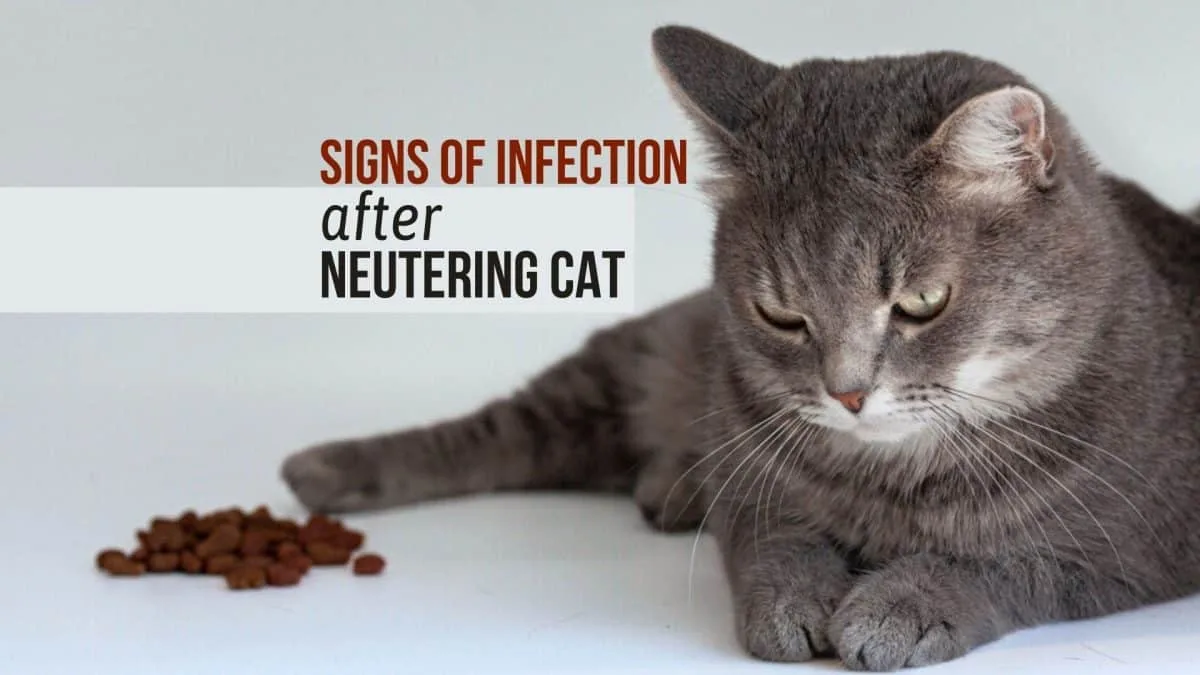
Your cat just got neutered. That's a good thing, both for their health and for population control. But now you're home, and you're staring at that shaved patch on their belly, wondering what's supposed to look like that.
It's completely normal to feel a bit on edge. Seeing a wound on your furry family member is never fun, and knowing what to look for is your best defense against a major problem. We are going to break down the signs of infection after neutering cat surgery, so you know exactly when to relax and when to call the vet, fast.
Here is the deal: surgical site infections are not rare, but they aren't exactly common either. Research and veterinary standards suggest that less than 5% of routine spay and neuter procedures develop a post-operative infection. That number drops even lower when you follow the aftercare rules to the letter.
Your job for the next two weeks is to be observant and to know what "normal" healing looks like compared to "red flag" healing. That's what this guide is for, to give you a clear battle plan so you are never left guessing.
Image source: Bing (Web (fair-use with source credit))
Quick Answer
Signs of infection after neutering cat surgery include redness, swelling, and a foul smell. A small amount of clear or slightly bloody discharge is normal for the first day. Any thick, yellow, or green pus after that is a red flag.
An infected cat might also show signs of lethargy, fever, or a loss of appetite.
These symptoms mean you should call your vet right away. Don't wait to see if it improves.
Understanding Normal Healing vs. Seriously Infected Signs
Let's talk about the canvas you're working with. Neutering is a major abdominal surgery, but it's also a routine one. The vet makes a small incision, usually less than an inch long for a male cat, and a slightly larger one for a female because they are removing internal organs.
What's left behind is a surgically clean wound that needs to heal by "first intention," which is a fancy way of saying the edges are pressed together and need to seal.
For the first 24 to 48 hours, you're likely to see some mild inflammation. This is the body's immune system sending white blood cells to the area to start the repair process. A slight pinkish tint around the incision line, a little warmth, and some swelling that looks like a small grape are all par for the course.
The area might also be bruised, especially in pale-skinned cats. That purple or blue-ish hue is just blood under the skin, and it usually fades within a few days, much like a human bruise.
Here is where you need to look closely. The absence of other symptoms is the biggest sign you're on the right track. Your cat should still be eating, drinking, using the litter box, and, most importantly, acting like a cat.
If you're seeing minor swelling and nothing else, that is usually a normal reaction to the trauma of the surgery and the dissolving sutures underneath, not an infection.
Problems start when your cat's body stops cooperating with the healing process. The "friend" in this scenario is that you have the entire recovery timeline to learn the difference. The "foe" is a surgical site that decides to play host to bacteria.
Let's get into the specifics of what spells trouble.
The 5 Classic Signs of Infection You Absolutely Cannot Ignore
3. Disgusting Discharge (Not The Normal Kind)
This is the big one. You need to get familiar with the texture and color of healthy fluid versus infected fluid. A clear, watery, or light straw-colored ooze is routine.
If there’s a tiny spot of blood on the bandage or the surrounding fur for the first day, that's also normal. As long as wounds drain, the body is trying to wash away the cellular debris from the internal sutures dissolving.
The minute you see pus, you have a problem. We are talking about a thick, pale yellow, green, or even greyish substance. It might look like cottage cheese, or it might be watery and smell like the back of a dumpster in July.
That smell is the dead giveaway. A healthy healing wound has almost no odor. If you lean down to sniff your cat's belly and need to pull back because of the smell, that is the number one sign of a bacterial infection.
Leave it alone and get to the phone, because that isn't waiting for a Monday morning call.
4. The Heat and The Swelling Factor (Feeling the Burn)
In veterinary medicine, we call it a "palpable increase in local temperature." In plain English, the area around the wound starts to feel genuinely hot. Run the back of your hand over your cat's belly. Compare it to the skin on their inner thigh or their ear.
If the shaved skin near the incision feels like it's radiating heat, that's a strong indication of an inflammatory response that's gone septic, not just normal healing.
Swelling also tells a story. Up to 48 hours post-op, a firm swelling on one side is usually a seroma, which is just a pocket of dead space and lymph fluid that happens when your cat is too active too soon. That resolves with rest.
But if the entire incision line starts to look like a stuffed sausage, or if the skin swells to the point where it feels tight and glossy, that's trouble. Press down gently and lift your finger. If it leaves a noticeable dent, that is pitting edema, and it warrants an immediate call to your vet.
You should never try to drain this yourself, you will only push the infection deeper.
5. Cat's Mood and Appetite (The Subtle Shift)
Cats are experts at hiding pain. They evolved this way to survive in the wild, and your pampered house panther still has that instinct. So, when a post-op cat starts hiding under the bed, shunning attention, or refusing to purr, that isn't just them being "grumpy." That's a desperate cry for help that your furry friend expects you to decode.
Watch for changes in appetite. It is completely normal for a cat to eat sparingly for the first 12 hours after anesthesia, nausea is a common side effect. But if it's been two days and they are turning their nose up at a stinky, juicy tuna treat, something is wrong.
Lethargy is also a red flag. A little extra napping is normal. But if your cat is lying on their side, breathing heavier than normal, or refusing to move because their belly hurts, that's a classic sign of sepsis.
This isn't a "wait and see" situation. This requires immediate professional attention, because an infection can turn deadly fast.
Risk Factors and Why Some Cats Get Infected
So, why do some felines sail through recovery without a hitch while others get a terrible skin infection? It's never just one thing. It's usually a perfect storm of pre-existing conditions and what you do during the recovery window.
Knowing these risk factors ahead of time helps you understand exactly what could go wrong and, more importantly, what you can do to prevent it.
First up is pre-operative health. Cats with diabetes, feline leukemia (FeLV), or FIV are automatically at a much higher risk. Their immune systems are already compromised, so they don't have the white blood cell reserves to fight off the surface bacteria that lands on the wound.
Even a fat cat who simply lacks the nutrients for healing can have a rough go of it. Older cats also take longer to heal, so for those felines, the "danger zone" lasts longer than the standard two weeks.
Beyond their internal health, the surgical technique matters. A vet with a heavy hand who leaves too much dead space under the skin creates a pocket where bacteria can grow and grow. This is why you want to see the lot # of the suture material and the exact technique used in the operative report.
In fact, a recent study in the Journal of Feline Medicine and Surgery found that cats who developed post-op infections were three times more likely to have received a specific class of suture that braids bacteria up the strand.
Your aftercare is the biggest variable. Indoor cats have a distinct advantage over outdoor cats, simply because they aren't rolling in dirt and potential waste. If your cat kicks their litter, scratches at the incision, or licks obsessively, the risk of infection skyrockets.
Introducing bacteria into an open wound is methodical work for them.
Common Aftercare Mistakes Cat Parents Make
You might read the risks and think, "I won't do that." But here's the uncomfortable truth: most post-operative infections in cats are iatrogenic, meaning they're caused by the owners themselves, often with good intentions. We're talking about the "helicopter pet parent" who messes with the incision too much to check on it. Resist the urge to poke the wound every five hours.
Each check disrupts the fragile granulation tissue and introduces new, unfriendly bacteria from your fingertips.
Another classic mistake is the litter box boogie. Clumping clay litter is abrasive and, when it kicks up dust, it coats the wound in particles. That contact creates a perfect breeding ground for bacteria.
Your cat also does that digging dance, which stretches the abdominal muscles and puts tension on the sutures. If they pull a stitch, you have a gaping hole and a one-way ticket to emergency surgery.
Let's talk about the surgical onesie or the "cone of shame." Most cats absolutely despise the plastic cone. We know it's uncomfortable. The problem is, a cat that mutilates its surgical site can turn a clean incision into a soggy, open wound within hours.
We aren't trying to be mean here, but a cat's tongue is literally covered in bacteria. If they lick that site, they are injecting that bacteria directly into an open area. The e-collar is your best friend for two weeks, even if it makes you feel guilty.
Finally, the biggest mistake is skipping the recheck appointment. Vets are not doing this to pad their bills. They want to feel the edges under the skin for developing hernias and look at the tissue under a UV light if they used a fluorescent marker.
Skipping that one checkup means you could be missing a pocket of infection that is hiding just under the surface, festering out of sight.

Similar Posts