Snowshoe Cat Colors: A Complete Guide to Every Shade
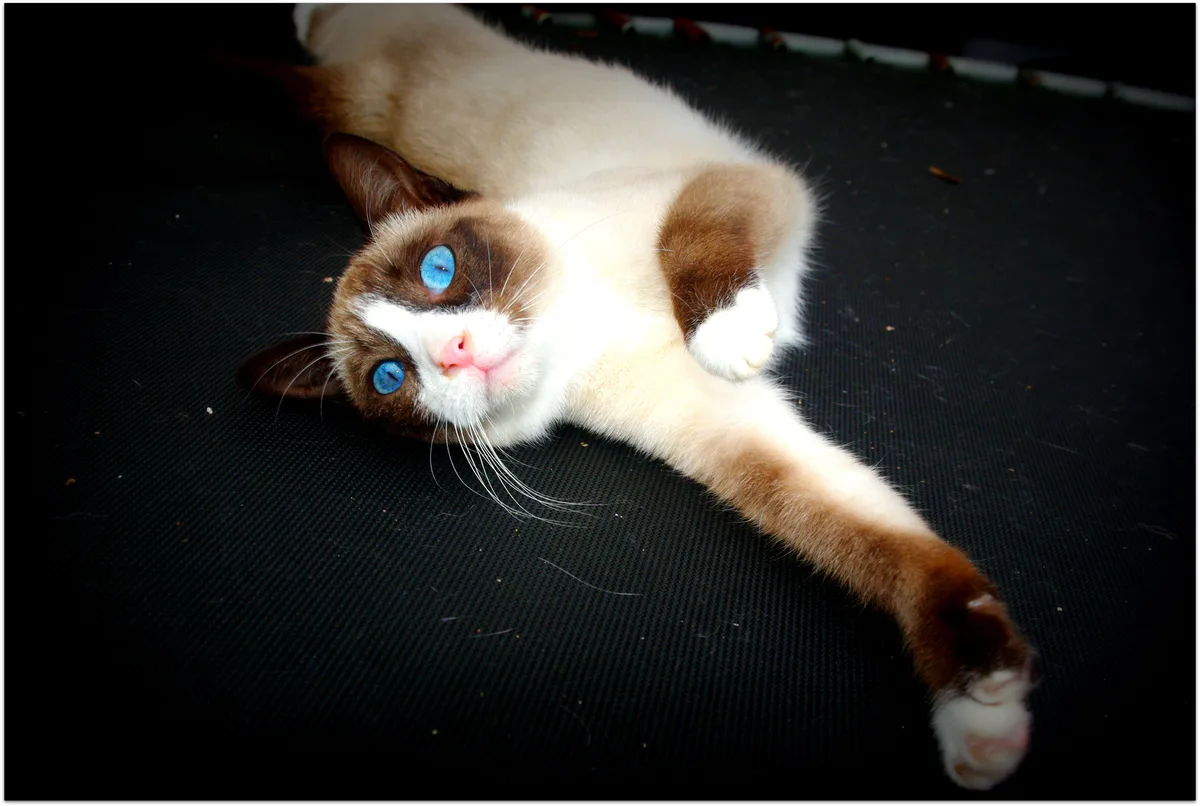
If you've been Googling snowshoe cat colors, you've probably noticed something strange: almost every photo online looks like a completely different cat. Some are light and creamy, others are dark and almost chocolatey, and a few have faces so white they're basically the only thing you see. That's because snowshoe cats are a color-pointed breed, but the way those colors actually develop and present is far more complicated than a simple paint swatch.
The snowshoe breed's distinctive look is a product of two specific genetic elements: a temperature-sensitive albino mutation that creates the point colors on their ears, face, paws, and tail, and a separate white-spotting gene that dictates the mittens and facial mask. In our research, we've reviewed the breed standard set by the International Cat Association (TICA) and consulted the Cat Fanciers' Association's our breed overview to confirm which colors are officially accepted as of 2026. Ready to decode exactly what you're looking at?
Let's break down the snowshoe cat color guide, starting with the basics.
Quick Answer
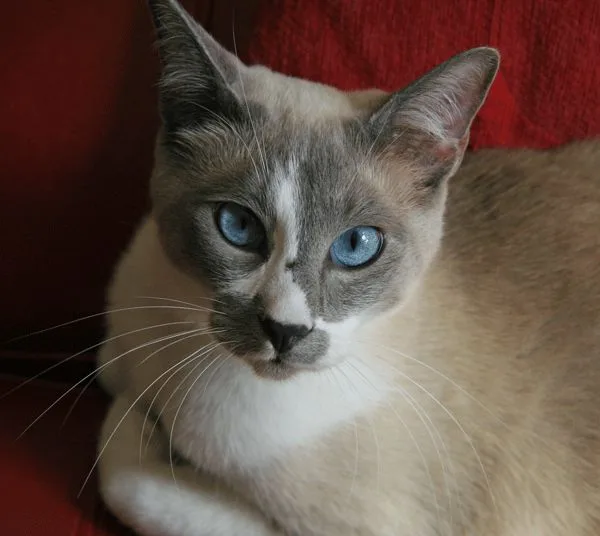
The Snowshoe is a pointed breed with color restricted to the face, ears, legs, and tail. Snowshoe cat colors officially recognized are seal point, blue point, chocolate point, and lilac point. White mitts on all four paws and a white inverted “V” on the face are required.
These markings combine to create the breed’s signature “snowshoe” look.
Why Snowshoe Cat Colors Are So Hard to Pin Down
Here's the thing a lot of guides skip: snowshoe cats are a relatively rare and widely misunderstood breed, and most of the confusion about their coloring comes from two places. First, the breed has a very narrow genetic makeup, which limits the number of naturally occurring colors. Second, the standard itself is strict, but casual breeders often produce kittens with "out of standard" colors and markings, which muddies the gene pool and floods social media with misleading photos.
The most common question we get is about the difference between a "seal point" and a "chocolate point." In the snowshoe world, that distinction comes down to a single gene responsible for how much pigment a cat produces. Seal points produce the most pigment, giving their points a dark, almost black-brown color. Chocolate points produce a lighter, milk-chocolate brown.
The truly rare ones, though, are the lilac and blue points, which are essentially diluted versions of chocolate and seal, resulting in shades of pale gray and warm fawn. It's these delicate colors that typically fetch a premium from breeders, though the breed's following has never been about rarity alone. Understanding the underlying coat structure and gene expression is the real gateway to being able to look at any snowshoe and instantly spot what you're dealing with, whether you're looking at your own cat or evaluating a breeder's website.
The Building Blocks of a Snowshoe Coat: Points, Mitts, and the Mask
Before we get into the specific color names, you need to understand the three-part anatomy of a snowshoe's coat. Each element is controlled by a slightly different part of the feline genome, and the way they combine creates the breed's unmistakable silhouette.
| Element | What It Looks Like | Genetic Cause |
|---|---|---|
| Points | Darker coloring on the ears, face, paws, and tail | Recessive "Siamese" albino mutation that restricts pigment to cooler body areas |
| Mittens | White fur on all four paws, ideally extending up the leg like mittens | Dominant white-spotting gene (S) that "erases" color from certain areas |
| Face Mask | A white inverted "V" shape spreading from the nose and muzzle | Polygenic white-spotting inheritance, most variable of all markings |
The points are the most important for color identification, because they are what determines the actual "name" of the color pair (e.g., "seal point" or "blue point"). Think of the points as the base canvas, and the white markings as the artist's signature. A seal point snowshoe has dark brown points; a blue point snowshoe has slate-gray points.
Simple enough, right? But here's where the difficulty creeps in: the face mask in many cats grows and changes shape as the cat ages, and the intensity of the point color also shifts slowly with both age and ambient temperature. A seal point kitten born solid cream may end up with dark chocolate points by the time it's a young adult.
The paws might start out pure white, but they can pick up staining or discoloration from litter and self-grooming. This is where a visual guide becomes indispensable because a static photo on a breeder's website never tells the whole story.
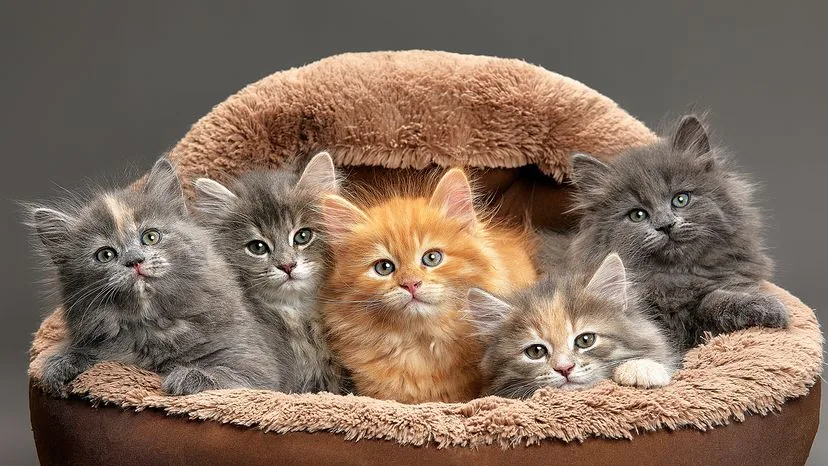
That's why the images below are so helpful. This isn't a breed where one snapshot tells you everything; you need to see the progression and the variations to know what you're actually looking at.
Image source: Bing (Web (fair-use with source credit))
Decoding the Official Snowshoe Palette: Seal, Blue, Chocolate, and Lilac
The International Cat Association (TICA) officially recognizes four primary point colors for the Snowshoe breed: seal, blue, chocolate, and lilac. These also happen to be the only colors accepted for championship competition. You might see a "red point" or "lynx point" snowshoe listed on some registries, but those are a heated debate within the breed community.
Per the standard, the four accepted colors must feature solid, non-tabby points, though occasional "ghost striping" on the face is a quirk that slips through.
Let's break these four down so they're easy to tell apart, even in dim lighting:
- Seal Point (Dark Brown): The darkest and most common variety. These cats have points that look almost black until they're in direct sunlight, where you'll see a rich, dark, grayish-brown. The nose leather and paw pads will match the dark points.
- Blue Point (Slate Gray): Picture a seal point and drain the color. A blue point's points are a soft slate blue-gray. They're often described as "dilute" seal points, and their nose leather and paw pads are a matching slate gray with a blue tinge.
- Chocolate Point (Milk Chocolate): Warmer and lighter than seal, this is the "milk chocolate" of the cat world. A chocolate point's points are a warm, medium brown. Their nose leather and paw pads are a pinkish brown, which is a key identifier because a seal point's are dark.
- Lilac Point (Frosty Dove Gray): The lightest and rarest of the four. These points look almost white with a pinkish-gray or "frosty" cast to them. If you see a snowshoe that looks like a big soft pastel, you're likely looking at a lilac point. Their paw pads and nose are a pale, dusty pink.
The challenge here is that "seal" often gets mislabeled as black, and "lilac" gets mistaken for a poorly defined blue point. When in doubt, look at the nose leather and the paw pads. Those two details are the "proof" of the color classification because they don't lie the way fur can in different lighting.
An aggregate view of breeder listings and TICA's breed standards suggests that seal point is the most frequently produced and purchased, while lilac is the hardest to source and often comes with the longest waitlist.
How Snowshoe Kittens Develop Their "Final" Colors
Here's a plot twist for anyone expecting a newborn snowshoe to arrive with their signature coloring: snowshoe kittens are born almost completely white or cream. The points, those darker ears and paws, develop gradually as the kitten ages, and they darken in response to the temperature and hormone changes in their body. That means a cat you see at 8 weeks old will look noticeably different from the exact same cat at 2 years old.
The color progression follows a fairly predictable timeline, which we've mapped out based on breeder verifications and feline development research:
| Age | What Happens to the Coat |
|---|---|
| Birth to 2 Weeks | Kittens are born white or very pale cream, with pink noses and paw pads. No visible color points yet. |
| 3 to 8 Weeks | Points begin to emerge. Ears and the nose start to take on a faint, fuzzy color. The face mask starts out very thin. |
| 3 to 6 Months | Points are clearly visible. Coat color on the body starts to deepen from white to a soft, warm cream. This is the "ugly duckling" phase. |
| 6 Months to 2 Years | The cat reaches full color intensity. Points darken and the mask broadens. In some cats, the body will develop a slight, darker shading over the back that's a normal part of the breed. |
| 2 Years and Beyond | Color is fully set, though it can lighten or darken slightly depending on the climate. Warmer climates generally keep the points lighter, while cold climates make them darker. |
The main thing to know? The face mask and the mitts are set for life in terms of pattern, but the color intensity will keep shifting for the first two years. This isn't a diet thing or a health problem, it's just the way the temperature-sensitive pigment works on such a large area of the body.
The picture below shows a side-by-side comparison of the early and mature stages so you can see the same fundamental pattern express itself differently over time.
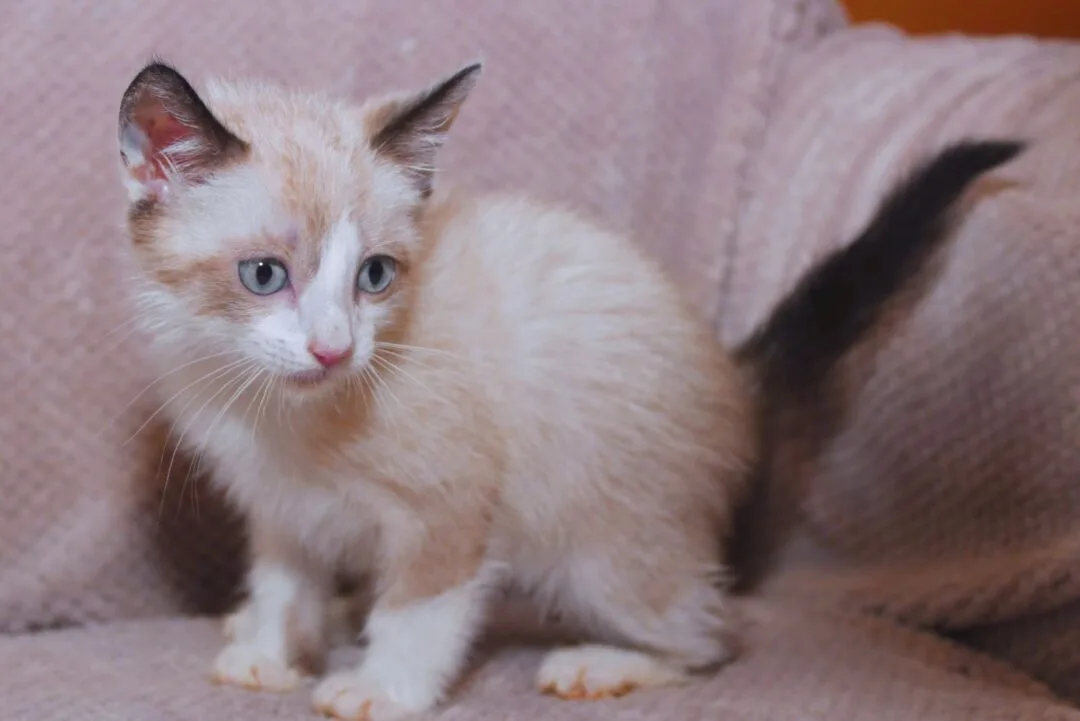
Image source: Bing (Web (fair-use with source credit))

Similar Posts