The Real Reason Your Cat Sleeps Between Your Legs
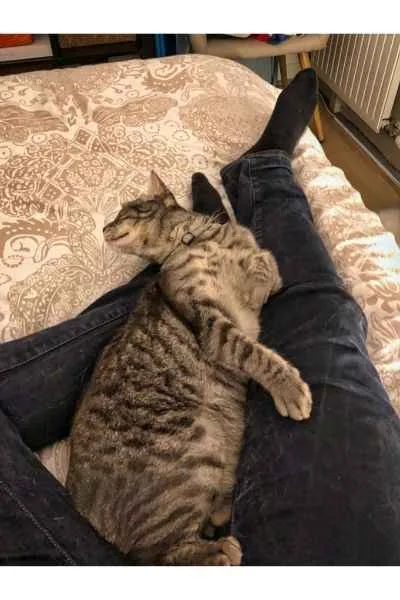
Image source: Web (Bing) / isthatyourcat.com (Web image (fair-use with source credit))
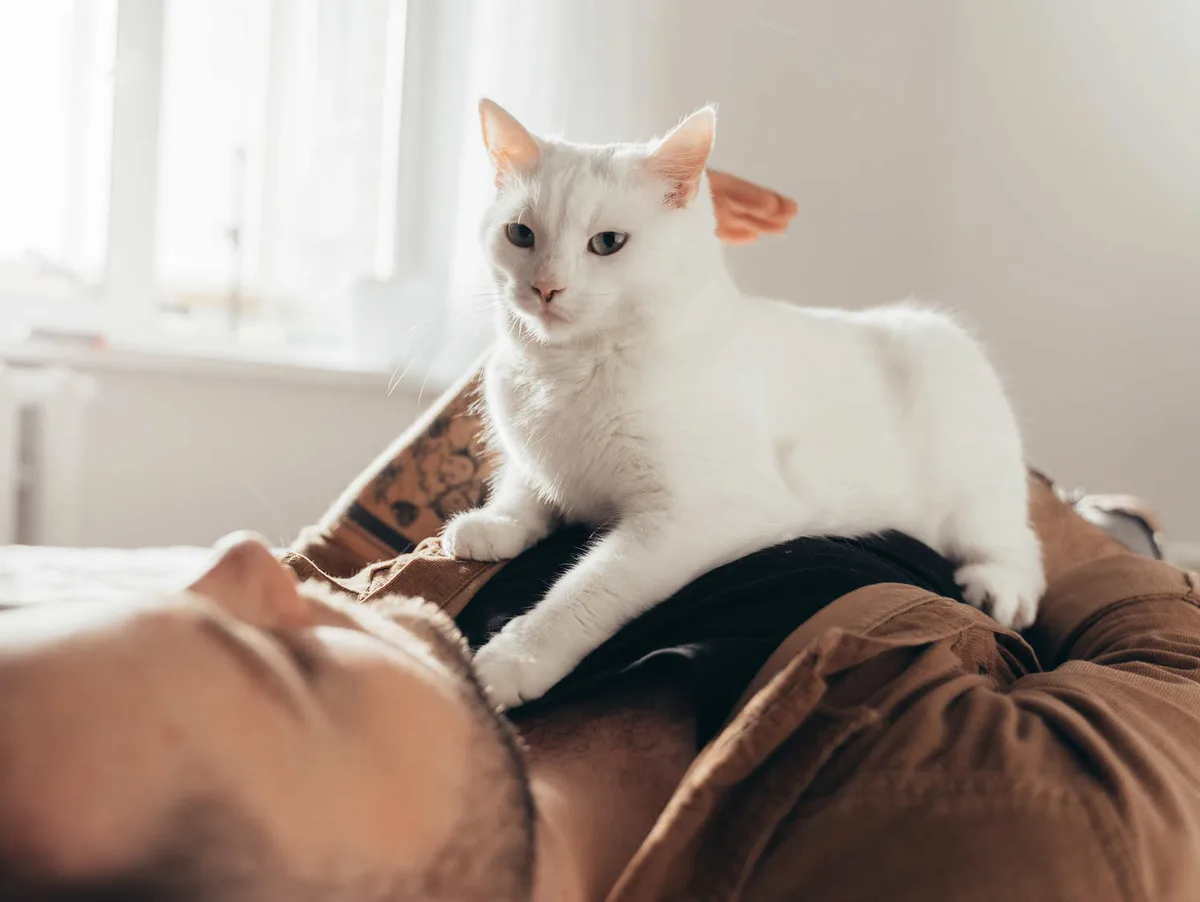
You wake up in the morning, and there they are. Your cat is wedged between your legs like a warm, purring loaf. It's cute, sure.
But you've probably wondered why they pick that exact spot night after night. The short answer is that it's a combination of trust, warmth, and scent marking, and each cat has their own mix of reasons.
As of 2026, over 45% of cat owners report that their pet sleeps on or next to them at night, according to surveys from veterinary behavior researchers. That makes this one of the most common cat sleeping positions. Let's dig into what your cat is really telling you when they curl up right there.
Quick Answer
Your cat sleeps between your legs because it feels safe, warm, and close to your scent. The space between your legs acts like a protective cocoon. Your body heat keeps them comfortable.
Your scent marks them as part of their territory. It's a sign of deep trust and bonding. Most of the time, this is perfectly normal and even healthy for both of you.
The Real Reasons (Security, Warmth, Scent Marking)
Security and trust: why the "cave" between your legs feels safe
Think of the spot between your legs as a natural den. Your legs create walls on either side. Your blanket forms a roof above.
For a cat, this feels like a protected hiding place where nothing can sneak up from behind. In the wild, cats seek out enclosed spaces to sleep safely. Your legs mimic that feeling, especially when you're lying still.
Cats that choose this spot are showing you a high level of trust. They're putting themselves in a position where they can't easily escape if you move. They're betting on you to stay still and keep them safe.
If your cat is relatively new to your home or was previously a stray, this sleeping position can be a powerful sign that they've finally relaxed around you.
Body heat and comfort: the thermoregulation factor
Cats run hot. A healthy adult cat's body temperature ranges from 100.5 to 102.5 degrees Fahrenheit (38 to 39 degrees Celsius), per the American Association of Feline Practitioners. That means they're always looking for warmth, not trying to escape it.
The crook between your legs is one of the warmest spots on your body, especially if you sleep on your back or side. Your legs trap heat from your core and radiate it outward.
This is why you might notice the behavior shifts with the seasons. Your cat is much more likely to sleep between your legs in winter than in summer. In warm months, they might prefer lying on top of the blanket or at your feet instead.
That's normal thermoregulation, not a change in affection.
Scent marking and bonding: claiming you as their territory
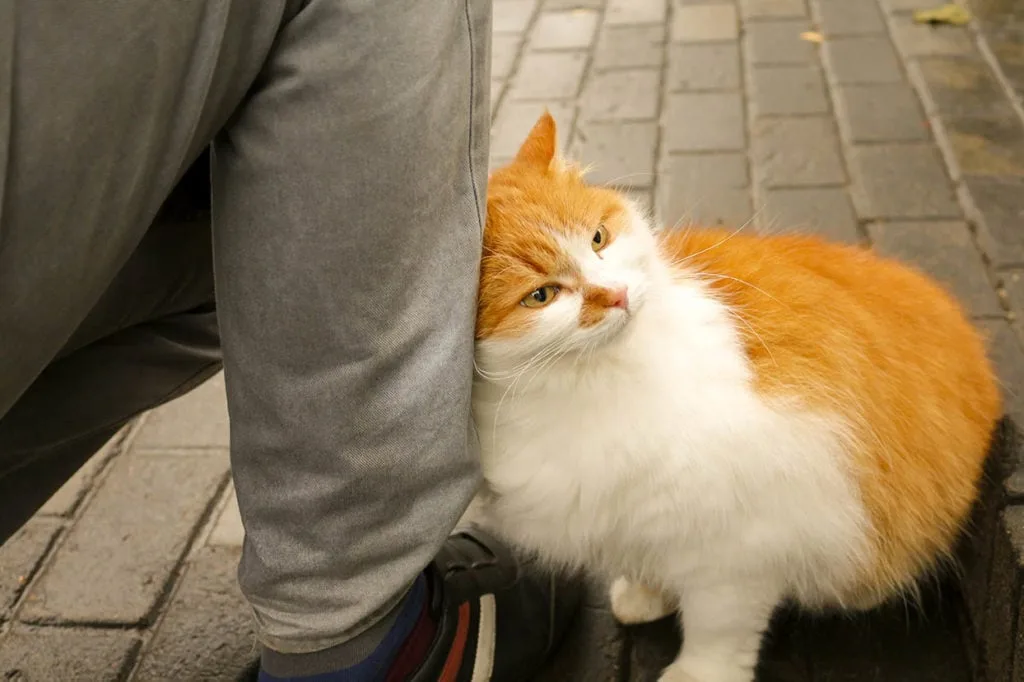
Image source: Web (Bing) / catster.com (Web image (fair-use with source credit))
Cats have scent glands on their paws, cheeks, chin, and the base of their tail. When your cat kneads your legs or presses their body against you, they're depositing their scent. It's a way of saying "this human is mine." Between your legs, they get to rub both sides of their body against you, maximizing the scent transfer.
This behavior is deeply instinctual. Kittens learn to rub against their mother to stimulate milk flow and to mark her as a safe space. Adult cats carry that behavior into their relationships with humans.
When your cat sleeps between your legs, they're recreating that early bonding experience with you.
How age and personality play into each reason
Kittens and young cats often sleep between your legs more frequently. They're still building confidence and need the extra security. Senior cats, especially those with arthritis or vision loss, may also gravitate to this spot.
It's warmer and safer for them, and they know they can feel you breathing and moving.
Personality matters too. A naturally clingy cat will choose this spot for comfort. A more independent cat might only do it when they're extra cold or feeling insecure.
A territorial cat might do it primarily to scent mark you and keep other pets away. Observing when and why your cat chooses this spot gives you clues about their current emotional state.
How to Tell Which Reason Fits Your Cat (Decision Branch Table)

Image source: Web (Bing) / utpaqp.edu.pe (Web image (fair-use with source credit))
Not every cat sleeps between your legs for the same reason. The context tells the story. Use the table below to match your cat's behavior with the most likely explanation.
This is your practical decision tree for decoding their nightly choice.
| If you notice this… | Most likely reason | What it means |
|---|---|---|
| Cat purrs loudly, kneads your leg, falls asleep quickly | Security and bonding | Deep trust, feels completely safe with you |
| Cat only does this in winter or cold nights | Warmth seeking | Thermoregulation, not emotional need |
| Cat sleeps there right after you return from work | Scent marking | Reasserting ownership after your scent changed |
| Cat is new to the home, sleeps there immediately | Security seeking | Positive sign of adjustment, but could also be mild anxiety |
| Cat stiffens or watches the door while between your legs | Hyper-vigilance, possible anxiety | May need extra environmental security |
| Cat leaves as soon as you shift positions | Low commitment to the spot | Comfort-driven, not bonding; no need to worry |
| Cat hisses at other pets that approach while they are in that spot | Territorial scent marking | They're guarding their claimed space |
| Cat has suddenly started sleeping there after years of not doing so | Possible health change or stress | Monitor for other symptoms, consider vet check |
Time of day and season as extra clues
Pay attention to when the behavior happens. If your cat jumps between your legs the moment you lie down at night, warmth and comfort are likely the main drivers. If they come to you in the middle of the night looking for reassurance, it might be anxiety or a response to a sound they heard.
Morning cuddles are often about bonding and greeting you with affection.
Recent changes in the household
Move to a new home? New baby? New pet?
Your cat may start sleeping between your legs as a coping mechanism. The familiar scent and warmth of your body helps them feel grounded during change. This is temporary in most cases and will fade as they adjust.
Multi-cat dynamics
If you have more than one cat, the spot between your legs is prime real estate. Cats may compete for it. The cat that wins that spot is usually the one with the strongest bond or the highest social status.
If a lower-ranking cat starts sleeping there, it might be a sign they're feeling insecure and need your protection.
When You Should Pay Attention (Problems & Signs)
Most of the time, a cat sleeping between your legs is a good thing. But there are moments when it signals something you shouldn't ignore. The key is whether the behavior is new, sudden, or accompanied by other changes.
Sudden change in sleeping behavior
If your cat has never slept between your legs and suddenly starts doing it every night, that's worth noting. A sudden increase in clinginess can indicate pain, illness, or stress. Cats often hide discomfort, so a change in sleeping patterns is one of the few clues they give you.
If this behavior arrives alongside other signs like hiding more, eating less, or vocalizing, a vet visit is a smart move.
Signs your cat may be anxious or unwell
Watch for body language. A cat that sleeps between your legs but also looks alert, flicks their tail, or twitches their ears at every sound is not fully relaxed. They might be using you as a shield because they feel unsafe.
Separation anxiety can also drive this behavior. If your cat panics when you leave the room or follows you everywhere, they may need help building confidence.
Conversely, if your cat stops sleeping between your legs entirely after years of doing so, that's also worth a look. It can mean they're in pain and don't want to be touched, or that they've lost trust due to a negative experience. Check for injuries, arthritis, or changes in your own routine that might have spooked them.
Disrupted sleep for you
Your sleep matters too. If your cat wakes you up multiple times a night by moving, kneading, or meowing, the behavior becomes a problem. A cat that constantly shifts position between your legs can leave you with leg cramps, numbness, or restless sleep.
This is especially common if you have a restless sleeper or a very large cat. An average adult cat weighs 8 to 10 pounds. That's enough weight on your legs to cause discomfort over time.
Overheating and other owner discomforts
Some people sleep hot, and a cat between your legs can make that worse. If you wake up sweaty or overheated, you don't have to suffer in silence. You can redirect your cat to a nearby spot without damaging your bond.
The relationship should work for both of you.
What You Can Do About It (Practical Steps)
Whether you love having your cat between your legs or you'd rather sleep without a furry space heater, there are gentle ways to manage the situation.
How to encourage the behavior if you enjoy it
If you want your cat to keep sleeping there, consistency helps. Go to bed at roughly the same time each night. Keep your legs in a relaxed position that creates that pocket shape.
Don't suddenly shift or kick while they settle. Praise them softly or offer a gentle chin scratch when they curl up. Cats learn quickly that this spot pays off with warmth and affectionate attention.
You can also make the area more inviting. Use a soft, fresh blanket that carries both your scents. A heated pet pad placed between your legs (on a low setting) can encourage a reluctant cat to stay.
Just make sure any heating device is pet-safe and has an auto-shutoff feature.
How to gently redirect without damaging trust
If you need your cat to stop sleeping between your legs, don't push them off or yell. That breaks trust. Instead, create an alternative spot that's almost as good.
Place a cat bed or a folded blanket right next to your hip or at the foot of the bed. Warm it slightly with your hand or a microwavable pet warmer. When your cat approaches, lure them into the new spot with a treat or a gentle stroke.
Be patient. This can take a week or two. Every time your cat chooses the new spot, reward them.
If they insist on returning between your legs, gently lift them and place them in the alternative spot. Repeat the process calmly. They'll eventually learn that the new spot is also warm and safe and that it comes with rewards.
Alternative sleeping spots that still feel safe to your cat
Your cat needs a secure, warm spot that smells like you. Good alternatives include:
- A cat bed on your bedside table or dresser, close to your head
- A small blanket or towel on the pillow next to yours
- A heated cat bed at the foot of your bed
- A cozy cave bed placed on the bed beside you
The closer the alternative spot is to your body, the more likely your cat will accept it. Over time, you can gradually move the bed farther away if you prefer them off the bed entirely.
When a visit to the vet is actually needed
Schedule a vet appointment if you notice any of these signs alongside the sleeping behavior:
- Loss of appetite or weight loss
- Excessive vocalization at night
- Hiding during the day
- Sudden aggression when touched
- Vomiting, diarrhea, or litter box issues
- Limping or reluctance to jump
If your cat is senior (over 10 years old), a sudden change in sleeping habits is more likely to have a medical root. Conditions like hyperthyroidism, chronic kidney disease, and arthritis are all common in older cats and can influence how and where they sleep. A thorough checkup can catch these early.

Similar Posts