Soft Dry Food That’s Easy on Bad Cat Teeth
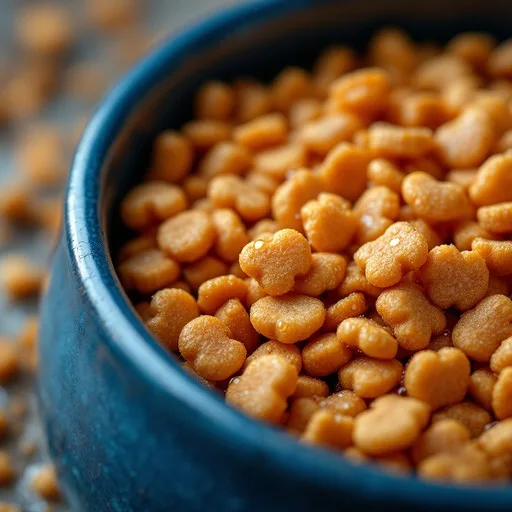
Image source: Bing (Web (fair-use with source credit))
Why Dental Health Matters More Than the Food Itself
If your cat has bad teeth, you're likely noticing it in their bowl. Maybe they're pawing at their mouth, dropping kibble, or leaving a trail of half-chewed crunchies around the floor. The search for "soft dry food for cats with bad teeth" probably started because you saw that and thought, "well, at least I can make eating easier for them."
Let's be crystal clear about something first: if your cat has a painful mouth, the texture of their food is a symptom you're trying to manage, not the disease itself.
Here's the hard truth I need you to swallow: a cat who suddenly prefers mushy food over hard kibble is in pain. This isn't a picky eater holding out for a gravy-topped entrée. This is an animal avoiding chewing because chewing hurts, often significantly, as the nerve endings in exposed tooth roots are agonizingly sensitive.
The catch is that most cats are also masters at hiding their pain. Behavioral changes only show up once the problem is well advanced.
Feline dental disease is surprisingly common, too. Studies published by veterinary schools consistently report that anywhere from 50 to 90 percent of cats over age four have some form of dental issue, with gingivitis and tooth resorption leading the pack.
That means when you switch to a soft diet, you're buying yourself a little time and giving your cat some temporary relief, but you haven't solved the underlying problem. You've just hit pause on a ticking clock. The real goal has to be getting a veterinarian to look inside that mouth.
Here's the silver lining: choosing the right soft food is a genuinely helpful care decision for a cat with a sore mouth, especially if a vet visit isn't immediately possible tonight. The trick is doing it correctly, and knowing exactly when the food stops being a meal and starts being a medical intervention.
Let's break it down.
Quick Answer
The best "soft dry food for cats with bad teeth" is not actually dry at all. It's your cat's regular high-protein kibble, soaked in warm water or broth until it breaks apart under light fork pressure. The alternative is fully canned pâté-style food, which eliminates chewing entirely.
Neither option treats dental disease, and neither replaces a veterinary exam.
One fact per sentence:
Vets recommend soaking kibble for 20 to 30 minutes.
Warm water or low-sodium chicken broth accelerates softening.
Canned pâté is the safest texture for severe pain.
A cat in mouth pain may still refuse food.
Sudden appetite loss in a cat demands urgent vet attention.
Soft Dry Food vs. Canned Food: What's Actually Best for a Cat With Bad Teeth?
Let me clear up a misconception right away: there is no such thing as "soft dry food" that is both a dry kibble and a gentle option for bad teeth. Those "dental diet" kibbles on the market are engineered to be crunchier to scrape plaque off the tooth surface. If your cat's teeth hurt, those are the worst possible choice you could make right now. The crunchy texture is precisely what your cat wants to avoid.
When we're talking about softening food, we're really talking about a short menu of options that fall into two distinct buckets: soaked dry food and canned wet food.
Soaked dry food is the hybrid. You take a good-quality dry kibble that matches your cat's life stage and health needs, then warm liquid breaks it down into a porridge-like consistency. It's a low-friction way to maintain the complete, balanced nutrition of dry food while making it actually palatable for a sore mouth.
Canned food is the heavy-duty choice. Pâté-style (the smooth, meatloaf-like texture) is the standard here. It has nothing to chew, just mush against the roof of the mouth.
Most cats with advanced dental disease will eat this readily.
So which one do you choose? It depends on the severity of the mouth.
| Condition | Recommended Texture | Why It Works |
|---|---|---|
| Mild gingivitis / early plaque | Soaked kibble (mushy but with some structure) | Requires minimal chewing; the softness avoids aggravating inflamed gums |
| Missing teeth / loose teeth | Soaked kibble or pâté | Removes all need for bite force, texture is easy to swallow whole |
| Severe stomatitis / post-extraction | Pâté only | Chewing may be impossible; smooth mush is the only pain-free option |
| Cat still eats crunchy foods | No change needed | If they're eating and not dropping food, don't fix what isn't broken |
In our research, we found that pet owners consistently make one of two mistakes: they either stick with hard kibble out of habit/hope, or they swing to a low-quality grocery store wet food that's loaded with carbs and fillers. Neither helps the cat recover, and both can cause weight gain or malnutrition if fed long-term.
Look for wet food with a named protein source (chicken, turkey, rabbit) as the first ingredient, and avoid anything with "by-products" or "meat meal" higher up the list than the actual protein.
The "Soften It" Method: How to Turn Hard Kibble Into a Safe Meal
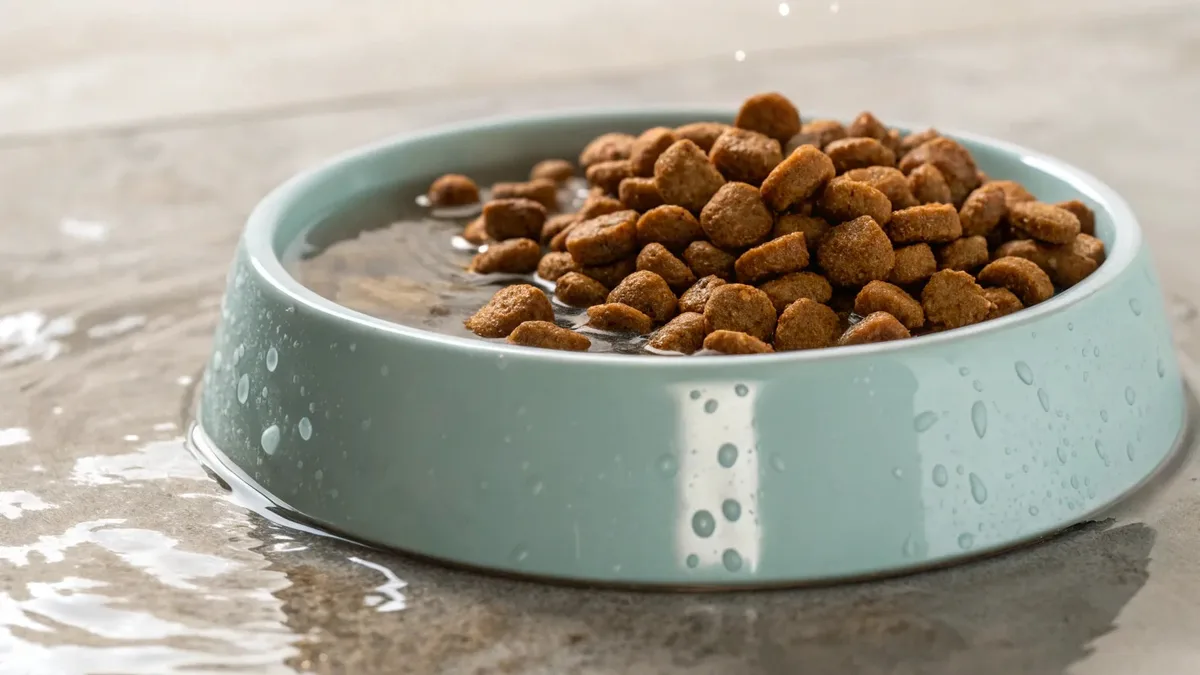
Image source: Bing (Web (fair-use with source credit))
This is the section you came for. Let me walk you through the fastest, safest way to soften your cat's existing dry food.
I'll be honest, the method is so simple it feels like it shouldn't need an entire section, but here's the thing: two details get mixed up constantly, and the results of getting them wrong range from "cat refuses to eat" to "soggy mess that's lost all nutritional value."
Step 1: Measure the food. Start with the amount of dry food your cat normally eats per meal. Follow the portion guide on the bag or, better yet, check with your vet for the right calorie count for your cat's ideal weight. Don't guess this, obesity is already the most common nutritional disease in cats, so don't make it worse.
Step 2: Choose your liquid. Warm water is the baseline. Filtered tap water works fine. Low-sodium chicken or beef broth (check the ingredient list for zero onion and garlic, those are toxic to cats) adds flavor that entices a sensitive feeder.
This is a great place for a quick burst of flavor:
Step 3: Pour and wait. Add enough warm liquid so the kibble is about halfway submerged. Set a timer for 20, 30 minutes. Hot water from the tap will speed this up considerably; boiling water will destroy some vitamins, so stick to warm.
Step 4: Test the texture. You're done when a fork can cut through a piece with minimal resistance. Think oatmeal consistency. If there are still rock-hard pieces inside, your cat isn't going to choose them, and if they're eating around them, the food doesn't help them eat enough.
Step 5: Serve at the right temperature. Cats prefer food around 100, 110°F, just above body temperature. Microwave the soaked mix for 5-10 seconds if it cooled too much. Cold food from the fridge blunts the smell and appetite, which is the last thing you need.
The most common mistake here is under-soaking. I get it, you're in a hurry, and a little crunch in there seems harmless.
But think about it from your cat's perspective: one hidden crunch in a mouth that has exposed nerves is like biting on a grape seed out of nowhere. It's agonizing, and more importantly, it trains your cat to avoid that food.
One rule I hold firm: if you wouldn't eat it with a toothache, don't serve it to a cat with bad teeth.
Beyond the Bowl: Choosing the Right Texture for Different Mouth Conditions
Not all mouth pain is created equal, and equally, not all "bad teeth" mean the same thing. This is where your decision about dry vs. canned food matters most, and where generic advice starts to break down. As a general rule, the more invasive the pain, the smoother you need your food to be.
For early-stage gingivitis, red but intact gums that bleed occasionally, soaked kibble is actually a great choice. The texture, once fully broken down, is soft enough to avoid aggravating the gums while the fibrous nature of the kibble can help massage the gumline and possibly slow down plaque progression. Don't expect a cure, though.
Gingivitis that isn't plaque-related (a common type called lymphocytic plasmacytic stomatitis) is an immune-mediated disease that won't respond to dietary changes at all.
For missing teeth (technically "irregular dentition" after extractions), I'd steer you toward canned food every time. Here's why: cats who have had a full or partial clean and extraction often enter a stage where the mouth feels fine, they're not in pain anymore, but they've lost the habit of crunching for weeks. When inflammation is gone, they may still prefer the soft food.
That's fine, but you need to make sure they're actually eating enough calories.
For post-extraction recovery (the first 1, 2 weeks post-op), pureed food is non-negotiable. The stitches can be caught on kibble, and the surgical sites are tender. I love using a canned pâté and thinning it with warm water to a syrupy consistency, leaning toward a slightly warmer temperature to increase smell.
For the "still crunching" cat, you might be surprised to hear this, but if the vet has looked in your cat's mouth within the past three months, told you the teeth are fine, yet your cat has dropped kibble a few times but is otherwise eating and acting normally, the problem isn't dental. Cats are patient. If they're consistently eating hard food without visible pain, the mouth is likely okay.
Trust the exam results over your worry.
In every one of these cases, the texture choice comes back to the same principle: if eating causes flinching, growling, or dropping food, go one step softer.
A good test: if you can't crush a soaked piece of kibble between your pointer finger and thumb without your nail biting in, it's too hard.
The Veterinary Guide to Reading Labels: What to Look For (and Avoid)
I need to pivot your mindset for a second. Nutrition label reading for a cat with bad teeth is less about the "organic everything" pitch and more about understanding the AAFCO statement. AAFCO (Association of American Feed Control Officials) sets the nutritional standards for pet food in the United States.
Rule #1: Find the AAFCO statement. Every complete and balanced cat food should say one of two things: (A) "This food is formulated to meet the nutritional levels established by the AAFCO Cat Food Nutrient Profiles," or (B) "Animal feeding tests using AAFCO procedures substantiate that this food provides complete and balanced nutrition." You want either, though (B) is the gold standard.
Rule #2: Watch the "dental" marketing. Foods labeled "Dental" or "Tartar Control" are, per FDCA finding, not a medical treatment. They have been shown to reduce plaque by mechanical abrasion, which is the opposite of what we want for a painful mouth. Avoid these lines entirely, they are typically larger, harder kibble that stands up to crunching.
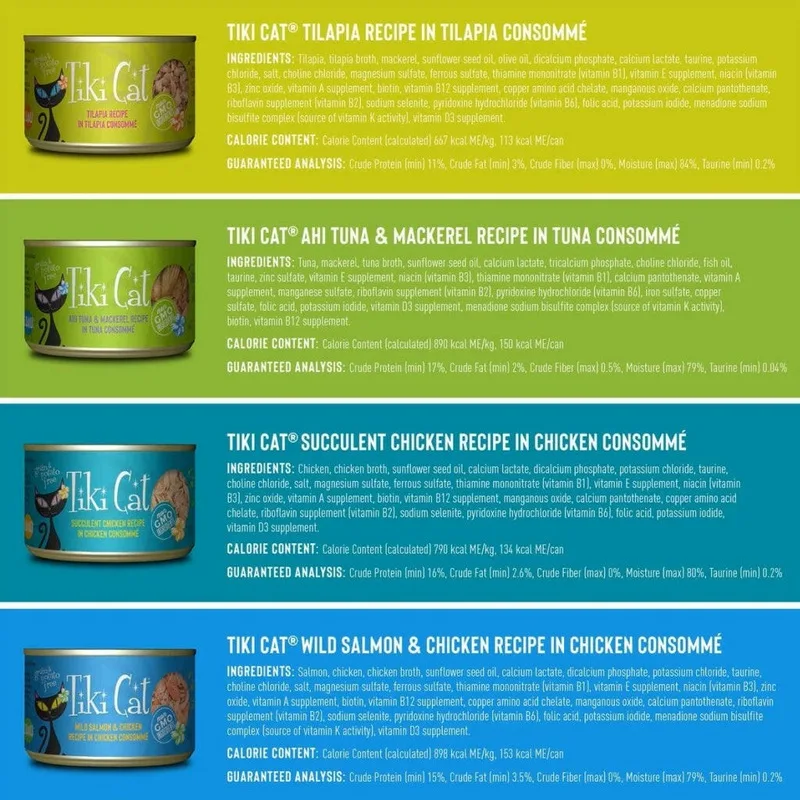
Rule #3: Calorie density matters more than you think. Once you move to wet food or soaked food, the calorie count changes. The same volume of soaked kibble contains more water and therefore fewer calories per cup than dry. Watch your cat's weight closely for six weeks after the switch.
A 10-pound cat needs roughly 200, 250 kcal per day, regardless of which food you choose. Check the calorie content (measured in kcal/kg) on the label and divide by the number of cans or cups you're feeding. If your cat is free-feeding, stop, transition to scheduled meals immediately.
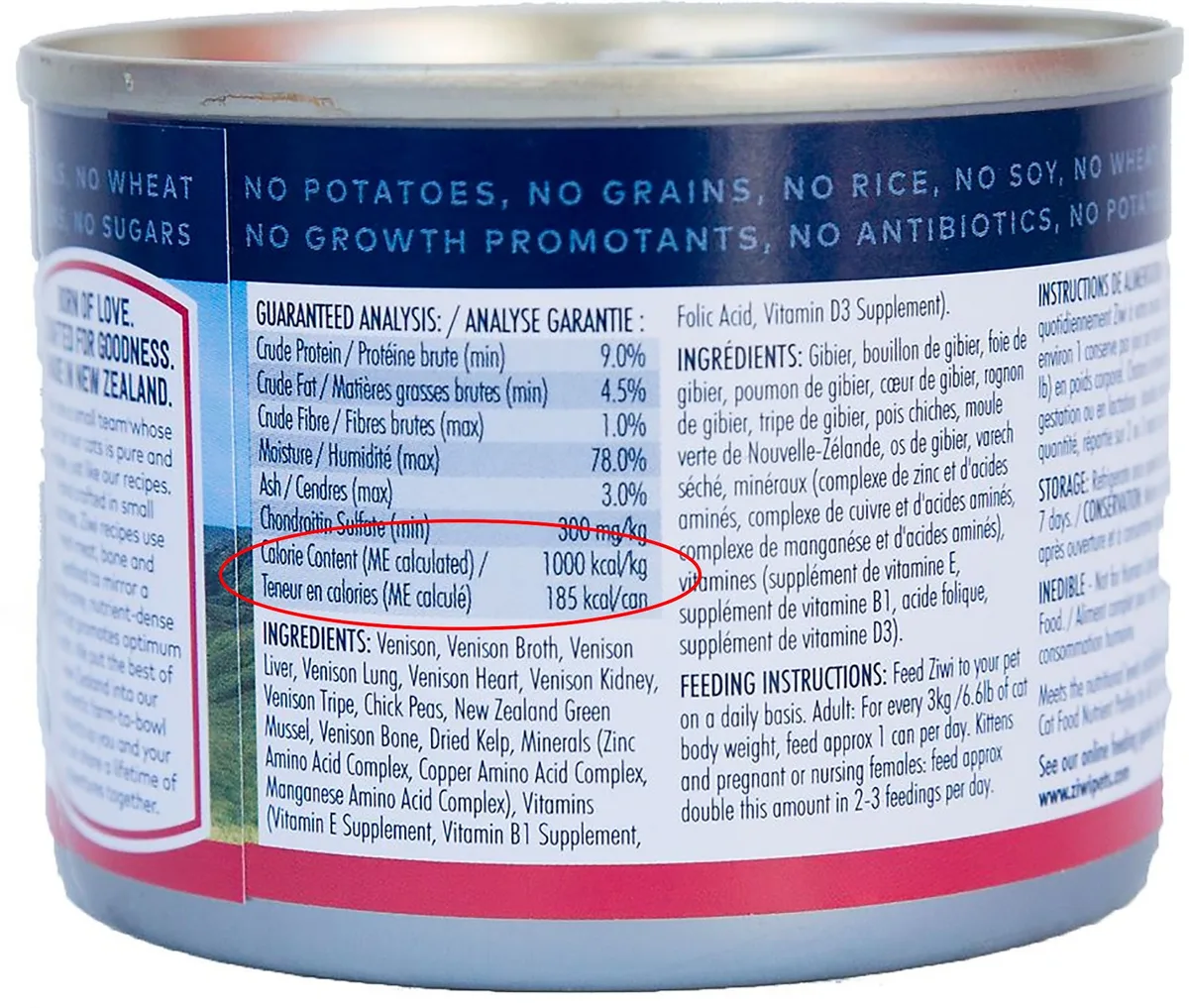
Image source: Bing (Web (fair-use with source credit))
Rule #4, Avoid the fillers. Look for a named meat protein in the top three ingredients. Corn, wheat, and soy are unnecessary carbohydrates that can contribute to weight gain and don't add any dental benefit. "Meat by-products" are perfectly nutritious, but they're lower in protein and higher in connective tissue, so I prefer to avoid them when feeding a cat in pain with a delicate stomach.
Rule #5, Moisture content. Canned food has roughly 75-78% moisture; dry food has about 10%. That's a big difference that affects urine dilution. Cats get most of their water from food in the wild.
If you switch from dry to wet, you're naturally reducing the risk of urinary crystals, which is a nice side benefit.
One last point here, I want to be clear about what you shouldn't do: don't feed anything with a label that mentions "for inflammation" or "pain relief" as if it were a specialized therapeutic food. There is no OTC food that reverses gum disease.
For that, you need a scaler, an ultrasonic, and likely anesthesia. Your cat needs the vet before they need a product. If you see blood on toys, a dark red line near the gumline, or a foul odor coming from the mouth, put the label down and pick up the phone, that's beyond what any diet is able to fix.

Similar Posts