The Surprising Name for a Group of Cats
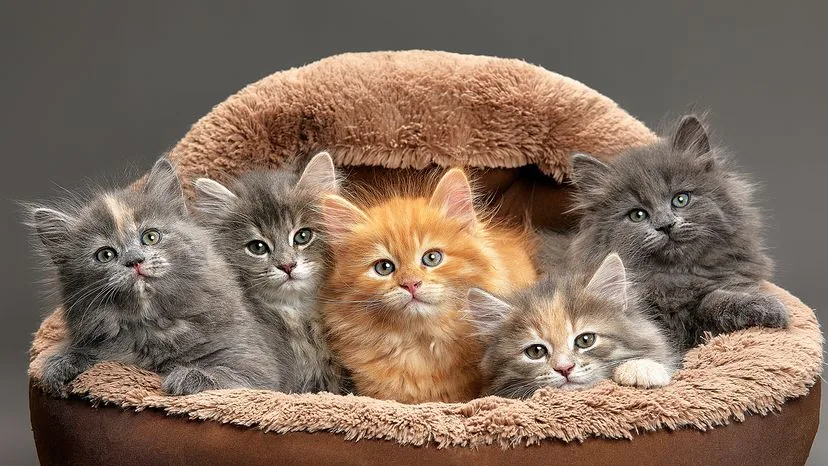
You've probably asked yourself what do you call a group of cats at some point. Maybe it came up during a trivia night. Maybe you spotted a bunch of strays in an alley and wondered if there's a proper word for them.
The short answer is yes. There are several, and picking the right one depends on the situation.
Per Merriam-Webster's lexical data, at least seven distinct collective nouns exist for felines in English. The most common one, clowder, applies to domestic cats. But that's just the starting point.
The term shifts based on whether the cats are wild or tame, young or adult, peaceful or squabbling.
Image source: Bing (Web (fair-use with source credit))
Why "A Group of Cats" Isn't a One Answer Question
English is weird about collective nouns. We have a murder of crows, a gaggle of geese, and a parliament of owls. Cats are no different.
The trouble is that one single phrase doesn't cover every situation.
A litter of kittens is different from a pride of lions. A feral colony living under a porch is different from a clowder of house cats watching a bird through the window. The word changes depending on species, age, social structure, and even mood.
Here is the core logic. Domestic cats are mostly solitary by nature. They don't form tight social groups the way lions do.
So when you see a group of pet cats hanging out together, that's a clowder. When you see a structured group of wild cats hunting together, that's a pride. And when those same wild cats are squabbling over territory, some sources call it a destruction.
The key takeaway? There is no universal answer. You need context.
That is what makes this topic fun and genuinely useful for writers, researchers, and trivia fans alike.
As of 2026, dictionaries recognize about half a dozen active terms for cat groups. But plenty of obscure ones exist in historical texts. Knowing which one fits your situation separates a confident answer from a guess.
The Quick Reference Guide: Clowder, Colony, Pride, Litter, and More
Let us lay out the main terms in a way you can scan fast. This table covers the most common collective nouns for cats, who they apply to, and when to use them.
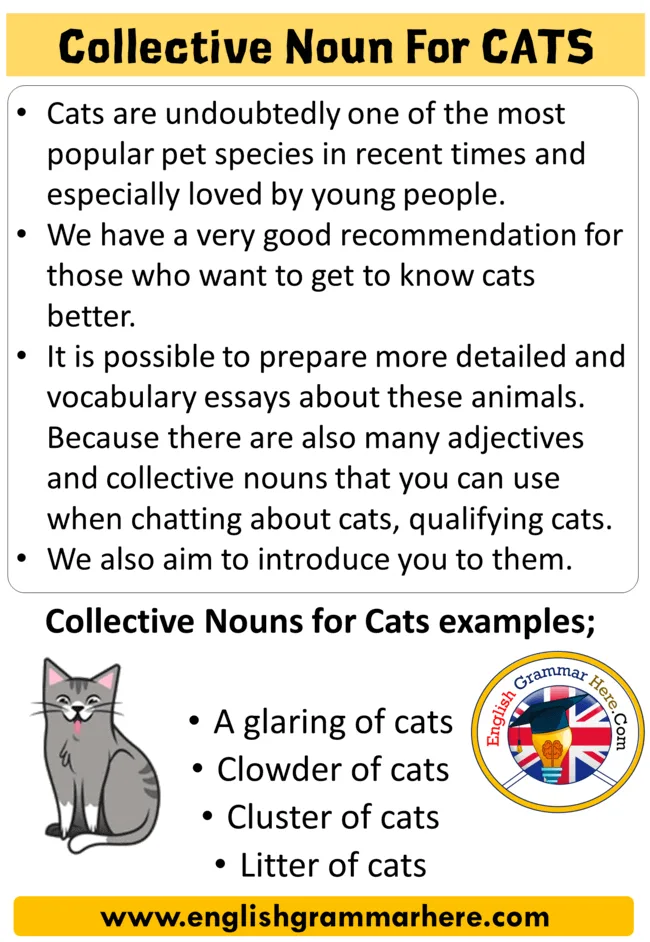
Image source: Bing (Web (fair-use with source credit))
| Term | Applies To | When to Use |
|---|---|---|
| Clowder | Domestic cats | Any group of pet or house cats together |
| Colony | Feral cats | A group of unsocialized cats living outdoors |
| Pride | Lions (and sometimes other big cats) | A family group that hunts and lives together |
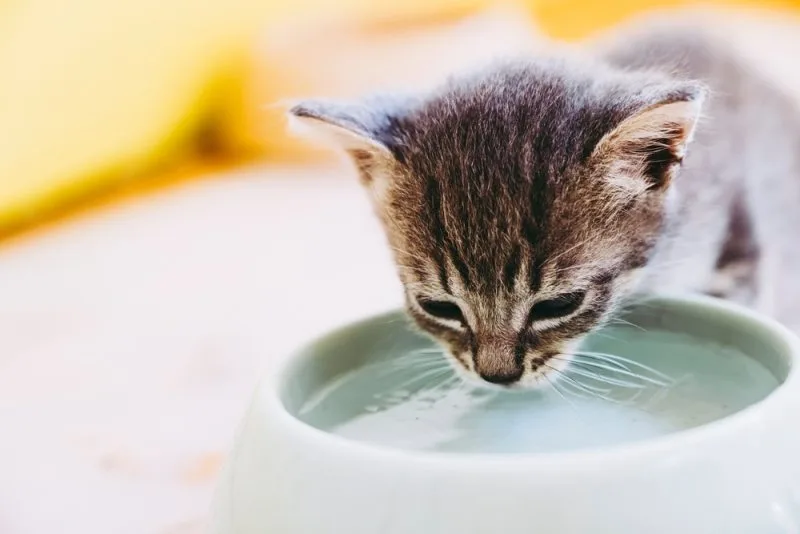
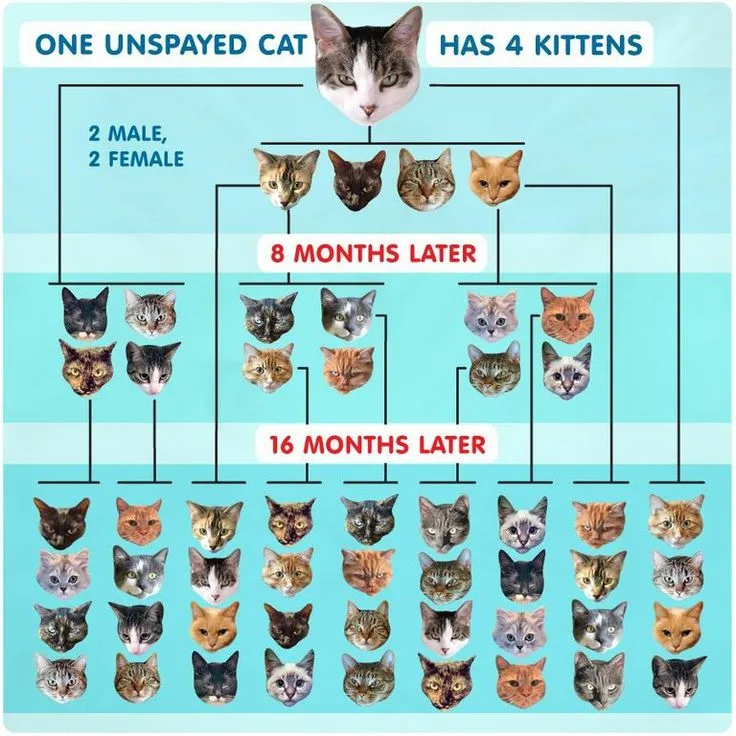
| Litter | Kittens | A group of kittens born to the same mother |
| Kindle | Kittens | Archaic term for a group of kittens |
| Destruction | Wild or feral cats | When cats are fighting or acting aggressively |
| Glaring | Domestic cats | A group of cats that are staring warily at something |
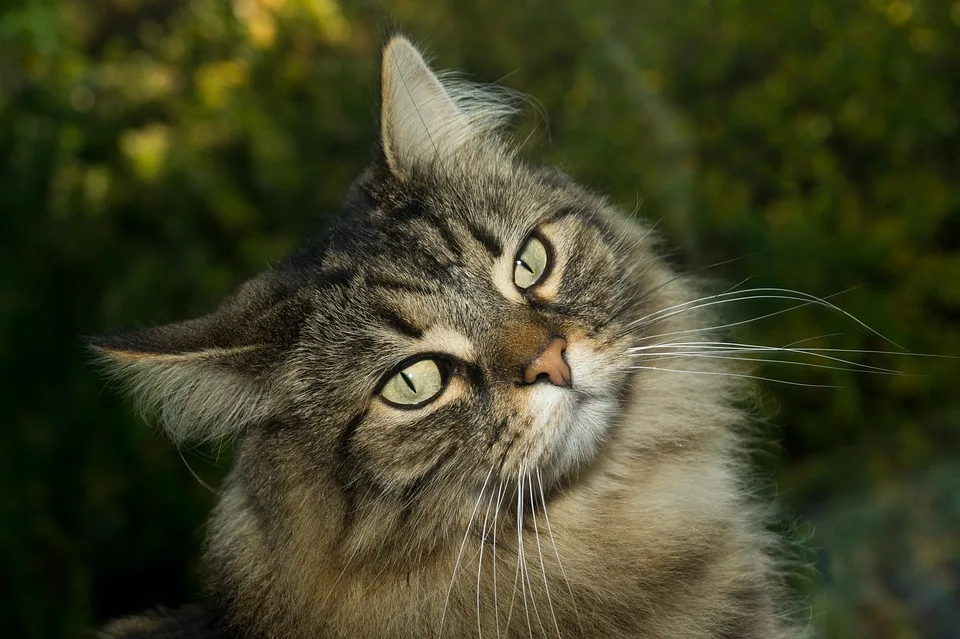
Clowder is the one you will hear most often. It comes from an old English word clodder, meaning a clotted mass. Think of a clowder of cats the way you think of a cluster of grapes.
It just means a loose bunch.
Colony is the term rescue organizations use. If you volunteer with Trap Neuter Return programs, colony is the standard word for a group of feral cats that share a territory. These groups often have a stable social structure even though the cats are not tame.
Pride applies almost exclusively to lions. As of 2026, Panthera confirms that lion prides are the only true social groups among big cats. Tigers and leopards are solitary.
So unless you are writing about African wildlife, skip this one.
Litter is straightforward. A mother cat gives birth to a litter of kittens. Kindle is the older word for the same thing. You will see it in old poetry and historical texts.
Destruction and glaring are less common. Destruction implies chaos or fighting. Glaring refers to cats staring intently, often at prey or a threat.
Use these sparingly and only when the behavior matches.
Your Decision Tree: How to Choose the Right Term Based on Context
Now let us turn this into a simple process. Follow these steps in order. Each question narrows down the options until you land on the correct term.
Image source: Web (Bing) / fity.club (Web image (fair-use with source credit))
Step 1: Identify the species.
Is it a domestic cat or a wild cat? If it is a lion, the answer is pride. If it is a tiger, leopard, cheetah, or jaguar, stop.
These big cats do not form groups in the wild. A group of tigers in a zoo enclosure does not have a specific collective noun. Just say "group."
Step 2: Check the age.
Are these adult cats or kittens? If every cat is a kitten under six months old, the term is litter. If they are adults, move to step three.
Step 3: Assess domestication status.
Are these pet cats or feral cats? Pets that live indoors or visit outdoors but are socialized with humans fit the term clowder. Feral cats that avoid human contact and share a territory fit the term colony.
Step 4: Observe the behavior.
Are the cats calm, fighting, or staring intensely? Calm and relaxed cats in a clowder. Cats hissing, swatting, or wrestling aggressively could be called a destruction.
Cats frozen in place, staring at something with fixed eyes, could be called a glaring.
Step 5: Consider the setting.
Are you writing a formal research paper, a casual blog post, or a trivia answer? For academic or scientific writing, colony and pride are standard terms. For casual conversation or fiction, clowder is fine.
For a quiz, clowder is the safest bet.
Follow this logic every time, and you will rarely pick the wrong word.
The Most Common Mistakes People Make (And How to Avoid Them)
Even experienced writers stumble on cat group terms. Here are the biggest errors and how to fix them.
Mistake 1: Using "pack" for cats.
Dogs form packs. Cats do not. Using "pack" for felines immediately reads as wrong to anyone who knows animals.
Stick to the proper terms above. Your readers will notice the difference.
Mistake 2: Calling every group a "pride."
Pride only applies to lions. A group of tabbies in your living room is not a pride. It is a clowder.
This mistake happens because "pride of lions" is the most famous cat group term in English. Resist the shortcut.
Mistake 3: Assuming all wild cats form groups.
Tigers, leopards, jaguars, and cheetahs are mostly solitary. They do not have widely recognized collective nouns. If you write about a "pride of leopards," wildlife experts will flag it.
Use "leopard" alone or specify "a group of leopards" if you must.
Mistake 4: Using "litter" for adult cats.
Litter refers specifically to newborn or very young kittens. Calling a group of adult cats a litter sounds like you think they are babies. Use clowder or colony instead.
Mistake 5: Misspelling "clowder."
This is remarkably common. People write "cludder," "clowdered," or even "cloud." The correct spelling is C L O W D E R. There is no second D or E at the end.
Practice it once, and it will stick.
Mistake 6: Overusing obscure terms.
Destruction and glaring are real words. But they are rare in everyday speech. If you drop "destruction of cats" into casual conversation, most people will think you made it up.
Use them sparingly and only when the context clearly supports the behavior.
Avoid these six pitfalls, and you will sound like someone who actually knows feline terminology.
When Precision Matters: Practical Use Cases and Real World Scenarios
Knowing the right term is one thing. Knowing when it matters is another. Here are the real situations where getting it right counts.
Writers and editors.
If you are writing fiction, a blog post, or a magazine article, accurate collective nouns add polish. A character who casually mentions a "clowder of cats" sounds observant. An editor who catches "pride of house cats" earns her paycheck.
In published work, precision builds credibility.
Trivia and quiz participants.
Pub quizzes, crossword puzzles, and game shows love collective nouns. "Clowder" appears in crosswords regularly. Memorizing the main terms gives you an edge.
It is the kind of deep trivia that impresses without feeling obscure.
Animal rescue and TNR volunteers.
The term "colony" is operational language in rescue work. Volunteers talk about managing a colony, feeding a colony, and tracking colony health. Using the right word shows you understand the structure of feral cat communities.
It also helps new volunteers learn faster when everyone uses consistent terminology.
Educators and parents.
Teaching kids about collective nouns is a staple of elementary language arts. Cats are a familiar example, so the lesson sticks. Explaining that a group of cats is called a clowder, but a group of lions is a pride, makes the concept concrete.
Kids love the weirdness of it.
Social media content creators.
Cat content dominates the internet. Using correct terminology in captions, video descriptions, and blog posts signals authority. A video titled "Clowder of Cats Reacts to Cucumber" gets more respect than "Group of Cats Reacts." Small details matter for engagement.
Wildlife researchers and zoologists.
In academic writing, precision is nonnegotiable. A researcher studying lion social dynamics uses "pride" with exact definitions. A field report on feral cat populations uses "colony" with specific population counts.
Sloppy terminology undermines the science.
In each of these cases, the right word does more than sound smart. It communicates exact meaning to the right audience.
Frequently Asked Questions
What exactly is a clowder of cats?
A clowder is the standard collective noun for a group of domestic cats. It applies to any two or more pet cats that are together, whether they are sleeping, eating, or simply occupying the same room. The word comes from an old English term meaning a clotted mass.
What is the difference between a clowder and a colony?
A clowder refers to pet cats that are socialized to humans. A colony refers to feral cats living outdoors without human socialization. Rescue workers use "colony" as a technical term for Trap-Neuter-Return programs.
The two words are not interchangeable.
Can a group of big cats ever be called a pride?
Only lions form prides in the wild. Tigers, leopards, jaguars, and cheetahs are solitary by nature. A group of these cats in captivity does not have a specific collective noun.
Just say "group" and you will be accurate.
Is "destruction of cats" a real term?
Yes, but it is rare. It describes a group of cats that are fighting or behaving aggressively. It appears in some historical lists of collective nouns from the 15th century.
Use it sparingly and only when the behavior clearly matches.
What do you call a group of kittens?
A group of kittens from the same mother is called a litter. An older, less common term is a kindle. Both refer specifically to very young cats, not adults.
Once kittens grow up, the group becomes a clowder instead.
Why does English have so many different names for groups of cats?
The English language has a long tradition of creating specific collective nouns, especially for animals. This tradition peaked in the 15th century with books of courtesy that listed proper terms for hunting and social settings. Cats, being independent and varied in behavior, earned multiple terms over time.
Your Final Decision Guide: Which Word to Use and When
Here is your cheat sheet for quick reference. Use this flow whenever you need the right term.
| Situation | Correct Term |
|---|---|
| Pet cats together at home | Clowder |
| Feral cats sharing a territory | Colony |
| Lions in a family group | Pride |
| Kittens from one mother | Litter |
| Cats fighting or acting aggressive | Destruction |
| Cats staring intently at something | Glaring |
| Any other big cat (tiger, leopard, etc.) | Group |
If you remember nothing else, remember this. For everyday conversations about domestic cats, clowder is the word. For feral cats, colony is the word.
For lions, pride is the word. For kittens, litter is the word. Everything else is a bonus.
The beauty of this system is that it rewards observation. Pay attention to the cats you see. Notice whether they are relaxed or tense.
Notice whether they are tame or wild. Notice whether they are adults or babies. The answer reveals itself.
Next time someone asks you what do you call a group of cats, you will have the answer ready. Not just one answer. The right answer for the situation.
That is the difference between knowing a fact and understanding the language behind it.

Similar Posts