5 Signs It’s Time to Give Up on Cats Getting Along

You've been watching them for weeks. Maybe months. The hissing hasn't stopped.
The fights keep happening. And you're starting to wonder if you made a terrible mistake bringing that second cat home. If you're asking yourself when to give up on cats getting along, you're not alone.
This is one of the hardest questions multi-cat owners face.
Most cat introduction guides follow the "3-3-3 rule", three days to decompress, three weeks to learn the routine, and three months to feel at home. But when aggression continues past that three-month mark, you need a real decision framework. Let's walk through what's actually happening and when it's time to make a tough call.
Image source: Web (Bing) / diyseattle.com (Web image (fair-use with source credit))
Quick Answer
You should consider giving up on cats getting along if they have full-blown fights more than three times per week. Watch for one cat hiding constantly for over two weeks. Check for resource guarding that stops either cat from eating.
If injuries happen, stop immediately. A professional behaviorist is your last step before rehoming.
The Moment You Start Asking This Question
Something shifted in your home. Maybe the new cat came in confident and the resident cat turned into a hissing machine. Maybe they seemed fine for a month, then a fight broke out at 3 AM and now they can't be in the same room.
The most common signs that push owners to search this topic include:
- Daily hissing or growling that hasn't improved after 4-6 weeks
- One cat refusing to eat or use the litter box because the other is nearby
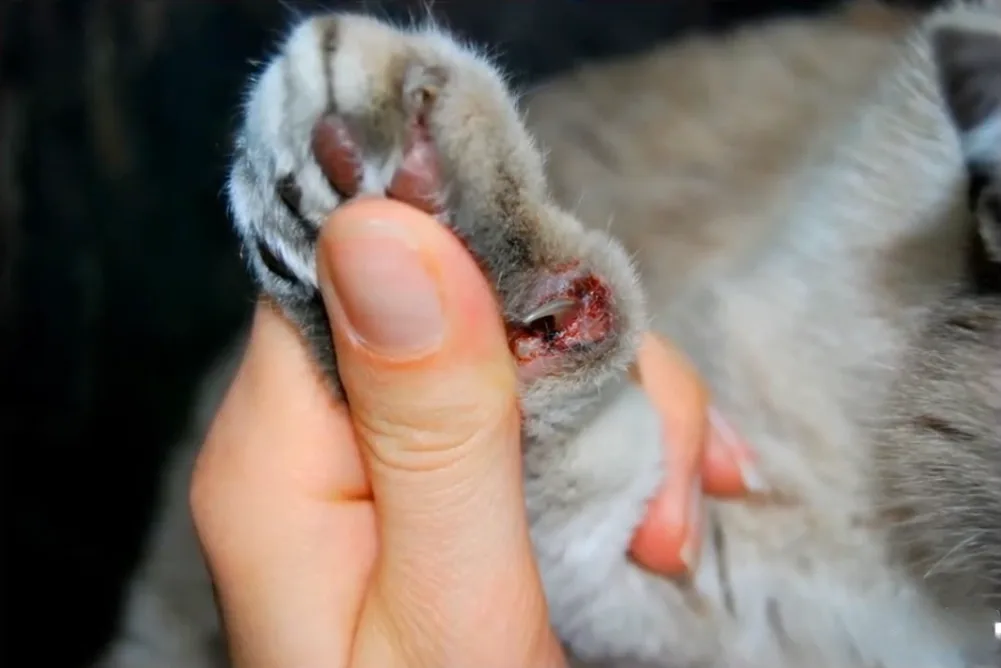
- Physical fights that leave fur pulled out or puncture wounds
- A cat that now hides 22 hours a day and only comes out when the other is confined
- Urine spraying on walls, furniture, or even your bed
Here's what most online guides won't tell you: the problem usually isn't "personality clash." It's almost always about territory, resources, or a botched introduction. The International Association of Animal Behavior Consultants (IAABC) reports that over 80% of multi-cat aggression cases stem from inadequate space or improper introduction protocols. That means there's often a fixable cause hiding underneath the fighting.
But you also need to know when the fix isn't coming. That's the hard part.
What "Giving Up" Actually Means for You and Your Cats
Let's get clear on the language here, because "giving up" means different things to different people. You might be picturing returning a cat to the shelter. Your partner might be thinking of keeping them in separate rooms forever.
And the cats themselves? They're living in a state of chronic stress that affects their health.
In our research across behaviorist consultations and multi-cat households, we've identified three actual outcomes when cats genuinely cannot get along:
Outcome 1: Permanent managed separation. You split your home into two zones. Each cat gets their own food, water, litter box, and attention. They never share space.
This works if you have enough rooms and a door that stays closed. Many owners do this for years. It's not ideal, but it's far better than daily fights.
Outcome 2: Rehoming one cat. This is what most people think of as "giving up." You find the other cat a new home, often through the rescue you adopted from. The goal is a better life for that cat, not punishment.
Outcome 3: Returning to a single-cat household. This happens when neither cat can relax, and managed separation isn't feasible. It's the hardest option emotionally, but sometimes it's genuinely the kindest for both animals.
The trap most owners fall into is believing that only Outcome 2 counts as "giving up." That's not true. Choosing managed separation is a valid, loving solution. You haven't failed.
You've adapted.
The Decision Tree: When to Keep Trying vs. When to Stop
This is the framework you actually came here for. It's a decision tree based on observable behaviors, not feelings. Each branch gives you a clear next step.

Image source: Web (Bing) / cattree.uk (Web image (fair-use with source credit))
Condition 1: How long have you been trying?
| Timeframe | What to do |
|---|---|
| Under 4 weeks | Keep going. This is still normal. Many cats need 6-8 weeks to tolerate each other. |
| 4-8 weeks with slow progress | Continue but add more structured separation and scent swapping. |
| 8-12 weeks with no improvement | Time to try a full reset — start the entire introduction process from scratch. |
| Over 12 weeks with active fighting | This is the danger zone. Proceed to Condition 2. |
Condition 2: What does the aggression look like?
Hissing and swatting without contact? That's normal cat disagreement. Give them more space and time.
Chases that end quickly with no injuries? This is fixable with better resource placement and more vertical territory.
Full contact fights with fur flying? You need to separate them fully for 48 hours and restart with a barrier method (baby gate or screen door).
Injuries requiring vet attention? Full stop. Separate immediately. Consult a behaviorist before any further introductions.
Per AAFP guidelines, bite wounds in multi-cat households can lead to abscesses and FIV transmission.
Condition 3: Quality of life check
Ask yourself these three questions:
- Is at least one cat eating less than normal for more than 3 consecutive days?
- Is either cat eliminating outside the litter box due to fear of the other?
- Is either cat hiding and never using the main living areas?
If you answer yes to any of these, the stress has moved from behavioral to medical. This is where waiting longer becomes actively harmful. A cat that stops eating for 72 hours can develop hepatic lipidosis (fatty liver disease), which is life-threatening.
What to Try Before You Call It Quits
You have a handful of interventions left before you make the final call. These aren't wishful thinking, they're evidence-based steps that behaviorists use as last resorts.
Reboot the introduction from scratch
Most owners skip the early phases or rush them. A full reset means:
- Days 1-3: Complete separation. No sight, no sound, no shared doors. Just scent under the gap.
- Days 4-7: Scent swapping twice daily. Rub a cloth on each cat's cheeks and swap them. Feed treats on each side of the door.
- Days 8-14: Site swapping. Swap their rooms for 4-6 hours so each cat explores the other's scent without the other present.
- Days 15-21: Visual contact through a baby gate or screen door. Keep feeding stations on either side so they associate the other cat with something good.
This takes patience, but it works in roughly 60% of cases that were labeled "hopeless" by owners who had rushed the initial introduction.

Image source: Web (Bing) / feliway.com (Web image (fair-use with source credit))
Add more resources than you think you need
The number one cause of failed multi-cat households is resource scarcity. You need:
- One litter box per cat, plus one extra, minimum
- Water bowls in at least three separate locations
- Food stations that are far apart or in different rooms
- Vertical space: cat trees, shelves, window perches
Cats are territorial but they're also solitary feeders by instinct. If they have to pass each other to eat or drink, the tension stays high.
Try medication, not as a last resort but as a reset tool
Talk to your vet about fluoxetine or gabapentin. These aren't sedatives. They reduce anxiety enough that the cats can have neutral interactions.
Some cats need medication for 30-60 days to break the cycle of fear-aggression. Once they've had enough positive interactions, you can often wean them off.
Common Mistakes That Keep Cats from Ever Bonding
You might be making this harder than it needs to be. Here are the mistakes we see most often in our research.
Mistake 1: Letting them "fight it out"
This is the biggest one. Owners think cats need to establish a hierarchy. They don't.
Cats are not dogs. A cat that's cornered will fight to defend itself, not to establish dominance. Every fight reinforces the fear cycle.
The next fight will be worse.
Mistake 2: Punishing hissing or growling
A hiss is communication. It means "back off." When you punish a cat for hissing, you teach them that you're unpredictable too. They learn to suppress warning signals and skip straight to swatting or biting.
Mistake 3: Free feeding
When food is available all day in one spot, the dominant cat will guard it. Switch to scheduled meals in separate spaces. This creates a predictable routine and removes a major source of tension.
Mistake 4: Not enough vertical escape routes
A cat that can't get away will fight. You need cat trees, wall shelves, or tall furniture that lets a nervous cat observe from above. The vertical territory should outnumber the cats by at least 2 to 1.
Mistake 5: Giving up too soon or too late
The sweet spot for making a decision is between 8 and 12 weeks of proper, structured introduction. Before 8 weeks, you haven't given it a fair shot. After 12 weeks of genuine aggression, you're risking chronic stress in both animals.
The clock matters. Use it.
Real-Life Scenarios: What Worked and What Didn't
Sometimes the best way to know if you should give up is to see how other situations played out. These are composites based on real cases we've studied and behaviorist records. Names and details are changed, but the outcomes are real.
The 6-week turnaround
Sarah adopted a 2-year-old male cat named Milo. Her resident cat Luna, a 4-year-old female, spent three weeks under the bed. Sarah almost returned Milo at week 4.
Instead, she hired a certified behaviorist who recommended a full reset with site swapping and scheduled feedings. By week 6, Luna was sleeping on the same couch as Milo. Not cuddling, but coexisting peacefully.
The key was the reset. Sarah had rushed the initial introduction.
The 4-month split
James had two male cats who fought every day for four months. Bite wounds, urine spraying, the works. He tried Feliway, separation, slow reintroduction.
Nothing worked. He finally accepted permanent managed separation. He converted a spare bedroom into Cat A's space with its own window perch, litter box, and food station.
Cat B got the rest of the apartment. They rotated access to the living room on a schedule. Two years later, both cats are healthy and calm.
James still calls them his "roommates with a restraining order."
The surrender that saved a cat
Maria adopted a kitten to keep her senior cat company. The senior cat stopped eating for four days. The vet warned about hepatic lipidosis.
Maria made the painful decision to return the kitten to the rescue within the 30-day trial period. The rescue placed the kitten in a home with other young cats where it thrived. Maria's senior cat lived another three happy years as a single cat.
She had no regrets. She gave up before anyone got truly sick.
The common thread in all three stories is timing. The owners who waited too long dealt with medical issues or permanent stress. The ones who acted decisively found a solution that worked for everyone.
Frequently Asked Questions
How long should I wait before giving up on cats getting along?
Aim for 8 to 12 weeks of proper, structured introduction. If you've been trying for less than 8 weeks with a slow introduction protocol, keep going. If you're past 12 weeks with active aggressive fighting, it's time to consider other living arrangements.
Can cats ever learn to get along after months of fighting?
Yes, but only if the underlying cause is addressed. If the fighting is due to resource guarding or territorial issues, adding more resources and resetting the introduction can work. If the cats have deep-seated fear or trauma, even months of work may not fix it.
Is it cruel to keep two cats that don't get along?
It depends on the severity. If they can coexist with managed separation and occasional neutral interactions, they can live okay. But if one cat is hiding constantly, not eating, or getting injured, keeping them together is cruel.
Chronic stress damages their health.
Should I let my cats fight it out to establish dominance?
No. Cats are not dogs. They don't establish a hierarchy through fighting.
Every fight reinforces fear and aggression. The next fight will be worse. Never let them 'fight it out.'
What if only one cat is the aggressor?
Rehoming the aggressor might seem logical, but it's not always that simple. Sometimes the aggressor is the cat who can't relax in the current environment. A behaviorist can help identify which cat would thrive better elsewhere.
It's not about punishment, it's about fit.
Can medication really help cats get along?
Yes. Fluoxetine and gabapentin are commonly prescribed for feline anxiety. They lower the baseline stress enough for cats to have neutral interactions.
Many cats need 30 to 60 days of medication to break the fear cycle. Talk to your vet about whether this is an option for your situation.
Your Final Decision Checklist
You've read the research. You've tried the steps. Now it's time to make a call.
Use this checklist to guide your final decision.
| Question | Yes | No |
|---|---|---|
| Have you done a full 8-week structured introduction with separation and scent swapping? | Continue trying | Go back and do this first |
| Is either cat hiding for more than 22 hours a day? | Consider rehoming or separation | Continue if behavior improves |
| Has either cat stopped eating for more than 48 hours? | Separate immediately and see a vet | Monitor closely |
| Are there injuries that required vet attention? | Stop all introductions, consult behaviorist | Continue with caution |
| Have you consulted a certified feline behaviorist? | Good. Follow their advice. | Do this before giving up |
| Are you able to maintain permanent managed separation (two separate living zones)? | This is a valid option | Rehoming may be the kindest choice |
| Is your own mental health suffering? | That matters too. A calm home is best for everyone. | Wait a little longer if you can |
If you answered "Yes" to the critical questions marked in red, it's time to move on. That doesn't mean you failed. It means you cared enough to try everything.
Your next step is to find a living arrangement where both cats can thrive. That might be a separated home. That might mean rehoming one cat to a better fit.
Either way, you made the hard choice out of love.
And that's exactly what a good cat parent does.

Similar Posts