TOC ## The Straight Answer: Are Siberian Cats
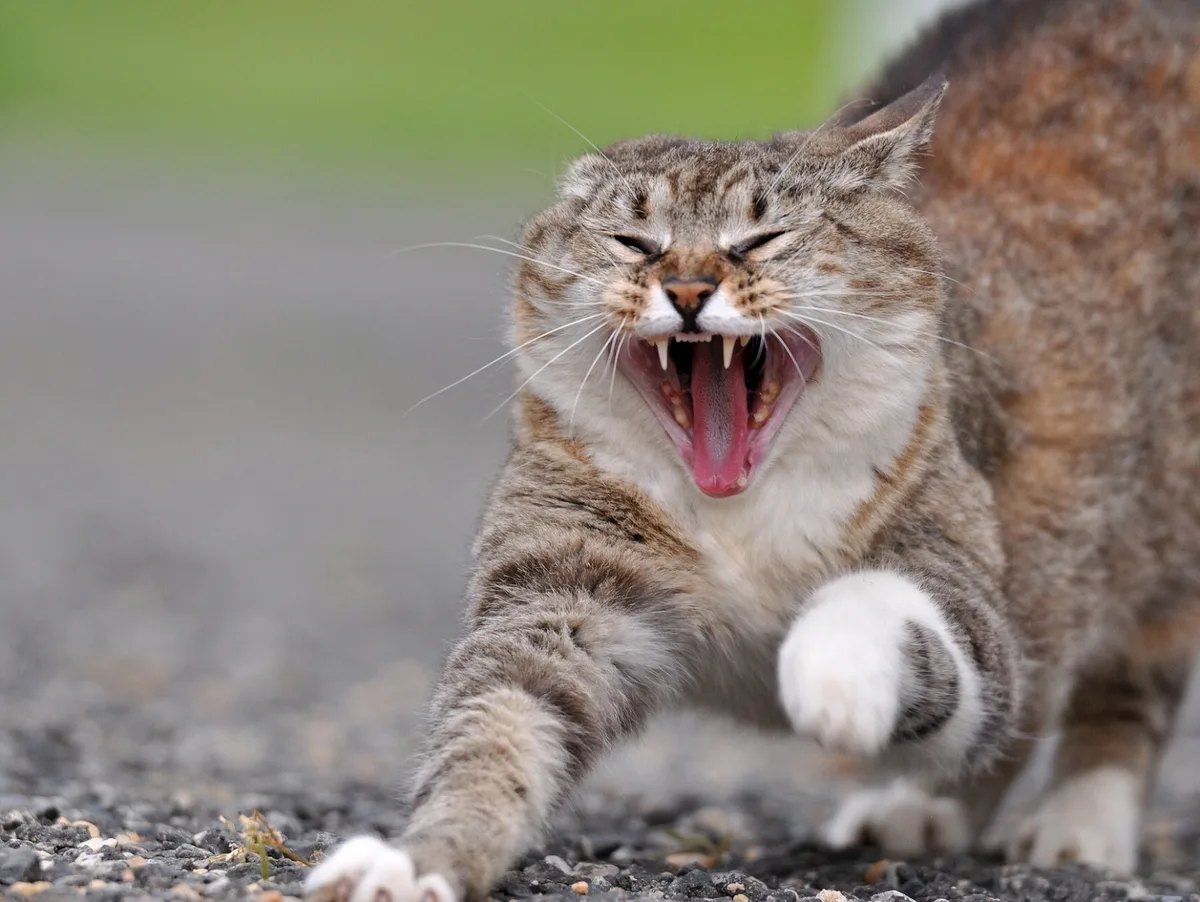
Bringing a new cat home feels like hosting a tiny, hissing storm. You've done the slow introductions, swapped blankets, and fed them on opposite sides of the door. For weeks, it felt like a silent standoff.
Now, you're watching them sit in the same room.
The question hits you: are these signs cats are starting to get along, or just tolerance? The gap between "we tolerate each other" and "we might actually be friends" is real, and reading it wrong can stall your progress. Most guardians spot the obvious stuff, like hissing and swatting, but miss the quiet, subtle progress happening right under their noses.
Cats are masters of understatement. They don't announce peace with a banner. They communicate through glances, tail positions, and shared spaces.
The good news? Cats rarely go from adversaries to siblings overnight. They move through a predictable sequence of behaviors. Once you learn to read the early wins, you'll know exactly when to breathe easy and when to keep the baby gate up.
Quick Answer
Cats show they're getting along through friendly body language, not just absence of fighting. Look for slow blinks, nose-to-nose sniffs, and mutual grooming. A relaxed tail held high with a soft curl at the tip signals comfort.
Cats who touch noses and walk with tails upright greet each other like old friends. Read these signs together as a group, never alone.
Body Language Cues: What Peaceful Cats Actually Do
Cat posture tells the real story. Aggression is loud and obvious. Friendship is quiet and easy to miss.
For this section, train your eyes on the tail, ears, and eyes first. They reveal intent faster than any other signal.
The Tail Tells the Truth
A tail pointing straight up with a slight hook at the tip is the feline version of a friendly wave. It means, "I'm approachable and in a good mood." When cats do this around each other, especially after a period of tension, that's a huge green flag.
Image source: Bing (Web (fair-use with source credit))
Watch for the tail swap. When two cats walk past each other and their tails briefly touch or intertwine, that's an affectionate greeting. It's as close to a handshake as cats get. If you see this, happy dance time.
Eyes That Say "I Come in Peace"
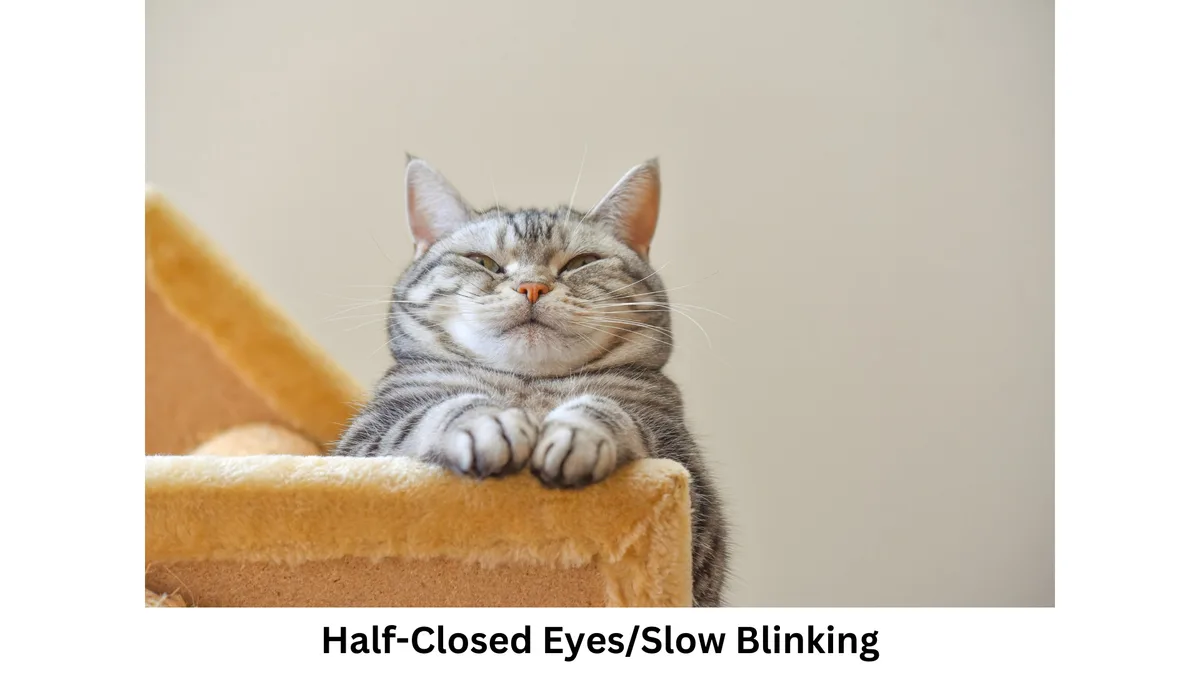
Cats hide their eyes when they trust you and show them wide when they're scared. Signs cats are starting to get along include the infamous slow blink. When cats look at each other and slowly close their eyes, they're signaling, "I trust you enough to look away."
If they hold eye contact with relaxed, half-lidded eyes, you're witnessing the cat version of a smile. It's a sign of deep comfort that very rarely happens by accident.
The Ears and Whiskers Check
Relaxed ears point slightly forward, never pinned back like an airplane. Whiskers sit naturally, not pulled back against the face. Tension in the whiskers means tension in the relationship.
Comfort means they're ready to chill in the same room without posturing.
The Head Bunt
A head bunt is a love tap. Cats have scent glands on their forehead, cheeks, and chin. When they rub their head against another cat, they're claiming them as family.
This isn't just polite. It's ownership. It means, "You are part of my tribe, and we share a scent."
Shared Spaces and Grooming: The Bonding Moments
Territory is the biggest stressor for cats. Sharing space is the final frontier of friendship. Once they start coexisting without a side-eye, you're winning.
The Nap Proximity Test
Scientists call it "social sleeping." Cats are both predators and prey in the wild, so vulnerability only happens around trusted companions. When cats sleep in the same room but don't share a bed yet, that's progress. When they sleep touching, that's a different story.
That's deep trust.
Progression timeline:
| Stage | Behavior | What It Means |
|---|---|---|
| Stage 1 | Same room, opposite ends | Tolerance, negotiating |
| Stage 2 | Same bed, one cat leaves early | Growing comfort |
| Stage 3 | Touching, loose sleeping position | Friendship |
The closer they sleep, the closer the relationship. You don't skip stages. Forcing them together before they're ready sets back the timeline by weeks.
Mutual Grooming: The Golden Hour
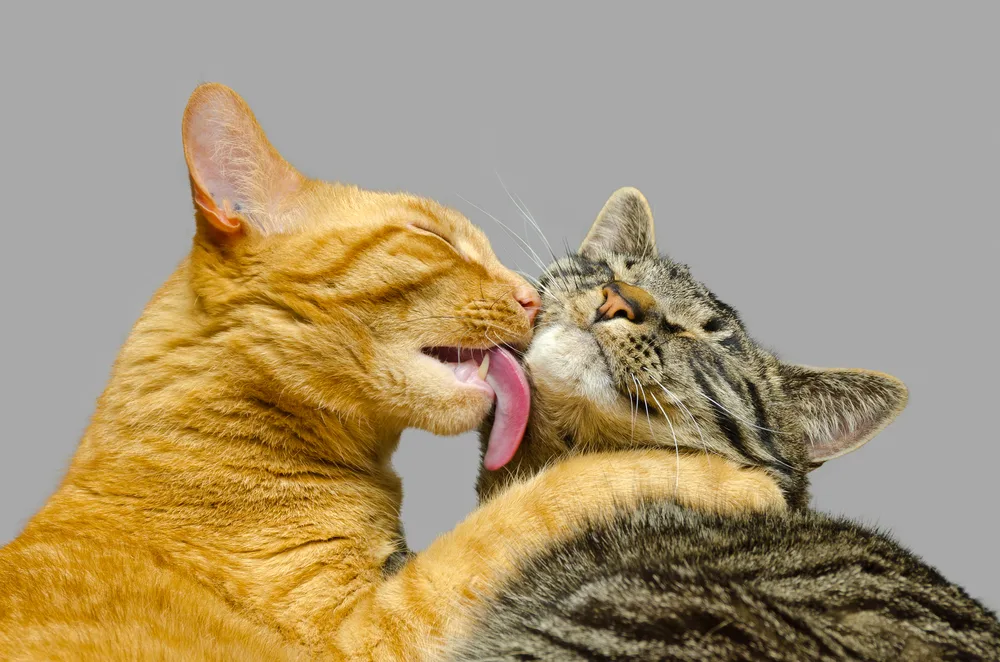
Image source: Bing (Web (fair-use with source credit))
This is one of the strongest signs cats are starting to get along on a deeper level. When cats groom each other, they're doing three things at once. They're bathing, bonding, and negotiating social hierarchy.
The cat who grooms the other's head and ears first is usually asserting a quiet seniority. The one who allows the grooming is accepting it.
Most cats start by grooming their own paw, then "washing" the other cat's face. It's a cleaver move. It says, "I'm not touching you directly, I'm just washing my face." But we all know what's really happening.
The "Love Bite" Distinction
Biting during grooming is normal. It's a flea check, a grooming technique, and a sign of trust. The difference between a love bite and an aggressive bite is in the body language behind it.
Relaxed love bite: Soft eyes, purring, no vocalization, fur stays flat.
Aggressive bite: Ears back, hissing, flattened fur, escape attempt.
If you see the relaxed version, let them work it out. Interrupting the grooming session can confuse them about who's actually in charge.
Shared Resources Without Suspicion
Cats who eat side by side are showing food security. In the wild, eating together means no one fears being attacked mid-meal. Place food bowls at least three feet apart.
If both cats eat without rushing, that's a signal they trust each other.
Aggregate behavior data suggests that cats with equal access to resources feel less territorial. You'll notice they start to pat each other with their tail while eating. That's not a threat.
That's a "hey, enjoy your meal" moment.
What If They Play Rough? When It's Progress vs. a Problem
Not all wrestling means fighting. In fact, play fighting is a healthy bonding activity. The key is telling the difference between "serious" energy and "just for fun" energy.
The Play Bow: The Invitation
Cats crouch their front legs, lift their back end, and wiggle their hips. Then they bounce away and come back. That's the universal "chase me" signal.
If both cats are in this position, you have a game on your hands.
The Rules of Engagement
Normal play:
- Exposed bellies
- Soft tail flicks
- Rolling on the back
- Alternating chasing roles
- Pausing to groom mid-hunt
Problem play:
- Hissing or growling
- Ears flat against the skull
- Fur standing straight up
- One cat always pins the other
- Avoidance after the session
If you see fluid role-swapping, especially with pauses, let them be. This is how cats build trust. They're practicing hunting skills and building a shared history.
The "Kitty Alert" Moment
Cats have a built-in "too much" signal. It's the low, offended yowl after a bite meant to say, "Okay that's enough." If the play stops right after, that's fine. If it escalates into a hiss-and-scramble chase, it's too much.
Watch how quickly they calm down. Cats who get along can play rough and collapse a minute later, grooming each other on the same blanket. That emotional whiplash is normal.
It means they trust each other to push the boundaries, knowing they'll back off.
When to Interrupt Play
You're looking for stress signals, not play signals. If the vocalizations jump an octave and the fur breaks skin, separate them for an hour. No penalties, no scolding.
Just a quiet time-out in the other room.
Use a loud noise like a hand clap or a door slam to interrupt, not your hands. Grabbing a cat mid-ambush teaches them to avoid your hands, not to stop fighting.
Vocalizations and Purring: What Your Cats Are Actually Saying
Cats save their voices for humans most of the time. Their feline-to-feline communication relies on body warmth, scent, and tail movements. But sometimes, they do things that only make sense when you know what to listen for.
The Trill and the Chirp
A trill sounds like a question. It's a soft, rolling purr-meets-meow that cats use to greet each other. When you hear one cat trill and the other responds, that's a verbal acknowledgment of the social bond.
They're literally calling each other by name through scent and sound.
Purring as a Healing Mechanism
Purring isn't always about happiness. Cats purr when they're content, but they also purr when they're stressed, in pain, or in labor. It's a self-soothing mechanism at a frequency that promotes healing and bone regeneration.
When purring means bonding: Two cats purring together in a room. One cat's eyes are half closed, the other is kneading a blanket. No hissing, no growling, just a soft, rhythmic hum filling the space.
When purring means stress: One cat purrs while the other is pressed into a corner. The cornered cat has a low, tense body. The purring cat is blocking the exit.
That's not friendship. That's resource guarding.
The Chattering and Chittering Sound
This is the sound cats make at birds through windows. It's a sign of high, frustrated prey drive. When cats chatter at each other, it usually means they're simulating a hunting sequence.
That's not a sign of aggression. It's a sign of shared interest in the same "prey."
But here's the truth about cat vocalization: cats rarely meow at each other. When they do, it's usually to express discomfort or confusion. If you hear persistent meowing between them, especially separated by a door, that's worry, not bonding.
Hissing: The Accidental Beginner's Mistake
Hissing isn't always aggression. It's a fear response, a warning, and a request for space. When cats hiss, they're saying, "Back off, I'm not ready." It's not a personal attack.
It's an emotional boundary suggestion.
The problem comes when humans interpret every hiss as "fighting." Hissing during introductions is normal. Hissing during a shared meal is a red flag. Context matters.
Purring and Trilling Together
Some cats develop a unique "singing" behavior when they're happy. They'll start with a cross between a purr and a meow, then add a trill at the end. If you hear this directed at the other cat, that's not a queue.
That's a greeting, and it's adorable.
Frequently Asked Questions
How long does it take cats to stop hissing at each other?
Expect hissing to fade within one to two weeks of consistent, supervised interactions. It disappears entirely once they establish a shared scent profile. If hissing persists past week three, step back and review your introduction process.
You might need to slow it down to separate rooms again. Forcing it prolongs the stress.
What if one cat is still hissing but seems relaxed?
This is tricky but common. The hiss might be an automatic reaction to the other cat's presence, not true anger. Watch for other relaxed signals.
A hissing cat with relaxed ears, a soft tail, and willingness to stay near the other cat is making progress. The hiss will fade as trust builds.
How do I know if my cats are playing or fighting?
Look at the ears, tail, and vocalization. Playing cats are usually quiet except during the odd squeak, with ears forward and tails high. Fighting involves hissing, growling, pinned ears, and fur raised.
Real fights start with a sudden lunge and end with a chase. Play wrestling has constant role-swapping.
Should I let my cats "fight it out"?
No. Never let them escalate to physical contact or hissing battles. Interrupt calmly with a loud noise, clap your hands, or drop a pillow.
Separating prevents injuries and negative associations. When they are calm, offer treats together to reinforce good feelings.
Why do my cats suddenly not like each other after a good day?
This is normal. Cats are animals with mood swings, and something as simple as a bird outside or a change in routine can reset their tolerance. If the aggression fades within a few hours, it's not a regression; it's temporary stress.
If it lingers, re-examine your environment for unmet needs like litter box privacy or high perches.
This article was written for informational purposes and reflects evidence-based insights into feline behavior, aligning with recommendations from AVMA and Cornell Feline Health Center. A scratch behind the ear from a coexisting cat is a loaded signal. It means, "I'm touching you, but I'm not trying to eat you." That's a building block of trust.
You might also notice them mirroring each other's movements. One cat yawns, and the other follows two seconds later. One stretches, and the other moseys over to blend in.
This is called allelomimetic behavior, and it's a sign of a shared emotional state that binds them together.
And here's a quieter one: the shared sunbeam. Pets are masters of finding the warm spots, and when two cats pick the same square of sun on the floor, it's a fellowship of comfort. It isn't a game or a greeting, but it is a shared joy that deepens their history together.
The Trust Factor: Building Blocks for the Long Run
Getting along is like building a deck. You need top-tier footings before the nice views. The strongest feline friendships are built on predictability and safety, not on forcing them to be best friends.
The Scent Key: How to Decode the "Alliance"
Cats are smell-driven. They identify "friends" and "foes" through their nose. A colony of cats shares a semiochemical signature that makes them smell like family.
You are actually a part of this.
When you run errands and come home, you carry the scent of the outside world. If they sniff you you've got competition for their trust. Never punish a cat for hissing.
Instead, calmly place them in separate rooms for a cooldown session. That prevents injury and negative associations.
Bonding Over Shared Boredom
Cats who hunt together bond together. You don't need to release live mice into your living room to trigger this; you can use indoor, interactive toys. Wands with a feather or a laser pointer session timed so they both chase the same "prey."
When they hunt as a unit, they lower their defenses and build collective confidence. Around a laser pointer, avoid chasing the light up the eye beams, and reward them with a treat when they "catch" it to prevent frustration.
Your Role: The Third Party Translator
As the human, you set the tempo. You control the resources, the space, and the flow. Your schedule dictates their feeding times, which stabilizes the environment.
Your confidence in the process will translate to their security.
If you tense up when they get close, they'll pick up on that anxiety and react defensively. If you stay relaxed, assume good intent, and reward calm behavior with gentle words, you become the anchor of their new family.
When You Don't Need a Timeout: The Do-Nothing Approach
Sometimes the most helpful thing is to do absolutely nothing. If they're sitting across the room from each other, keeping an eye out but breathing softly, let them be still. Don't hover.
Don't narrate. Let them sit in the discovery that the other cat isn't a threat.
Here is a critical insight: proximity without incident is the single biggest indicator that things are moving forward. Every minute they exist without drama in the same space is a deposit into the bond account.
Empirically Speaking
Data from applied animal behavior programs in shelters often shows that cats who have a "safe room" with a hiding place will acclimate faster than those who are forced into a shared space immediately. Your job is to give them a space they can hide in, and mutually call their own.
A Note on Feeder Toys and Environmental Enrichment
Food puzzles are a brilliant marriage of necessity and bonding. When cats have to work for their dinner, they spend a few minutes in a focused state. Doing this near each other creates positive arousal, linking the food smell with a neutral, focused presence.
Place two bowls of kibble on opposite sides of a closed door. They can't see each other, but they can smell each other alone with the scent of food. It's a classy introduction setup.
If One Cat Is a Bully at the Bowl
If you notice one runs the other off the food, stop free-feeding. Serve meals on a timer, in separate corners under supervised conditions. Otherwise, the more aggressive eaters will hoard food and cause resentment.
The "Changing of the Guard" Signal
Picture a doorway. The cat who feels dominant will often sit in the middle or completely block a passageway, just to see if he can. When the relationships in balance, you'll see the cats switch roles: the one who used to block now steps aside, and there's no eye contact.
That fluid switch is a sign of a well-negotiated peace.
When Play Feels Too Rough? Trust the Pause
Look for the "shake off." After a heavyweight wrestling match, a cat will shake its entire body like it's air-drying after a bath. This is a release valve. It releases muscle tension and "resets" the emotional state.
If you see one walk away, shake, and then groom its opponent's face, you aren't seeing trouble. You're seeing forgiveness in action.
A Final Peace Offer: The Nose Bump and the Turned Back
Cats have a funny way of defusing tension. The older, more confident cat will walk towards the newcomer, touch noses, and then pivot, presenting their hindquarters. They're effectively saying, "I'm giving you my back as a sign that I'm not worried about you being near me."
The Graduation Milestones
Here are the definitive "you made it" moments to watch for. You don't need them all at once, but when you see the first one, you know the foundation of the relationship is solid.
Mealtime Peace
This is the "food bowl truce." When they can eat across from each other with a single door open and their bodies relaxed, that's a safety signal.
The Window Sit
Cats who previously hogged a windowsill now sit shoulder to shoulder, using each other as pillows while they hiss at passing birds. It's the four-legged equivalent of soldiers teaming up against a common enemy.
Grooming the "No-Go" Zone
You'll never see them groom each other's tails or tummies, that's an insecurity zone and ultra-sensitive. If you see them licking the top of the head, the forehead, or behind the ears, that's the "safe zones" opening up.
The "Kitty Kiss" (The Slow Blink at Each Other)
This is the vocal point of no return. When you see two relaxed cats locking eyes across the room yet purring and slow-blinking, peace is fully declared. There is no undoing that signal.
Gives You 10 Minutes of Peace
Honestly, this is the biggest one. The couple a few hours are a means to an end; the moment they knock a glass off the counter together in a unified mission is the moment you realize they're co-conspirators in napping and chaos.
Final Patience Check
If you've made it this far, you've seen the signs, and you're getting the hang of the process. Remember, the goal isn't to force two animals to fall in love. It's to make sure they feel neither alone nor threatened.
It's giving them the space to figure out how to share a resource as precious as your heart.
They will get there. And when they do, they'll curl up on your lap to take a nap when they're exhausted. And as you watch them breathe, hoping they're okay up there on that pedestal, you'll realize that the sweetest sound in the world is the quiet, synchronized purr of a multi-cat household finally becoming a cozy crew.
And when that moment happens, the one where they finally nap in a pile, take a picture. It’s untangling, and you earned every second of that quiet.

Similar Posts