Siamese Cat Growth Chart: Kitten to Adult Stages
If you've ever stared at your Siamese kitten and wondered whether they're growing on track, you're not alone. Most owners hit that moment around month four or five where the kitten looks either gangly and awkward or surprisingly petite, and they start Googling. A siamese cat growth chart isn't a one-size-fits-all document, but it's close enough to a roadmap that every owner should have one in their head.
Here's the short version: a healthy adult Siamese typically weighs between 8 and 15 pounds, with females on the lower end and males on the higher end. The breed standard from the Cat Fanciers' Association describes a cat that's "long, svelte, and tubular," which means they pack more bone density and lean muscle than their delicate appearance suggests. We're going to walk through the entire growth timeline, month by month, so you know exactly what to expect and, more importantly, what to do if your cat isn't following that curve.
Why Growth Charts Matter for Siamese Cats
A Siamese is not a domestic shorthair with a chatty personality. This breed has a distinctly different skeletal structure, and their metabolism runs hot enough that they can look underweight when they're actually perfectly healthy.
What makes the Siamese growth pattern unique is that they grow vertically before they grow horizontally. If you've got a five-month-old Siamese that looks like a teenage stilt-walker, that's a feature, not a bug. The breed standard calls for a cat that's "relatively long" in the body, and that length comes on early.
Muscle mass and weight distribution catch up later, usually somewhere between nine and twelve months.
Another thing worth knowing from the start: Siamese kittens are active, absurdly social, and borderline theatrical in their demand for attention. That's not a phase, that's the breed. What this means for growth is that they burn through calories at a different rate than a more sedentary cat would.
If you're weighing your cat at home and noticing fluctuations, before you panic, ask yourself whether they've just finished a manic zoomie session or spent the last three hours asleep in a sunbeam.
Why Accuracy Matters Here
We're dealing with a living animal, so this isn't a topic where guesswork is acceptable. A growth chart is a monitoring tool, not a report card that fails you. A kitten that's off the curve isn't automatically broken any more than a kitten hitting every average is automatically safe.
Our role here is to give you the numbers, the ranges, and the warning signs so you can have a productive conversation with your vet. We're not diagnosing anything in this article. But we are giving you the data, and we're including the references to back it up, because your cat's health is exactly the kind of topic where vibes are not a substitute for evidence.
Siamese Cat Weight Milestones by Age
Plotting a Siamese kitten's growth is a bit like checking a weather forecast. You're not looking for a single prediction, you're looking for a range and a trend. Different bloodlines grow at different rates, and a kitten from a petite female line might naturally sit at the bottom of the range while a male from a larger line sneaks toward the top without either being wrong.
That said, we can pull some useful benchmarks from aggregate veterinary and breed data. These aren't pulled from thin air, they're based on the growth curves that seasoned breeders and vet clinics see with this specific breed year after year.
Kitten to 6 Months: The Long and Lanky Phase
Birth weight for a Siamese kitten typically lands between 3 and 4 ounces. That's small, but standard. By the time they hit that second week, they usually double it, which is also normal.
At eight weeks, when many kittens are heading to their new homes, you'll typically see them weighing in around 2 to 2.5 pounds. Some lines will be closer to 3, especially if it's a robust male. Don't stress if your kitten is under that, just ask what the breeder has been feeding and whether they've been dewormed, because intestinal parasites can absolutely suppress weight gain in kittens.
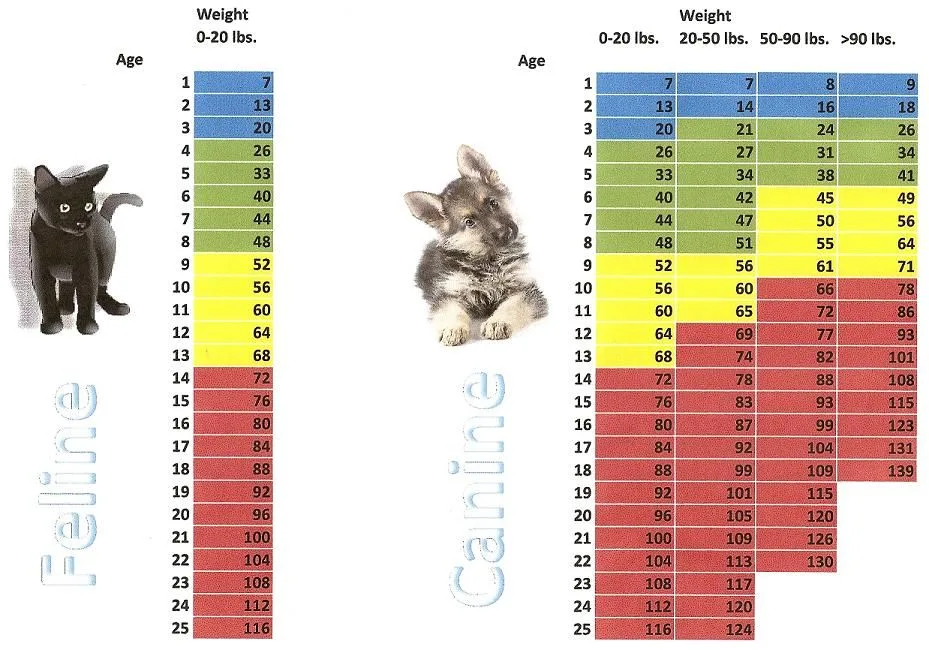
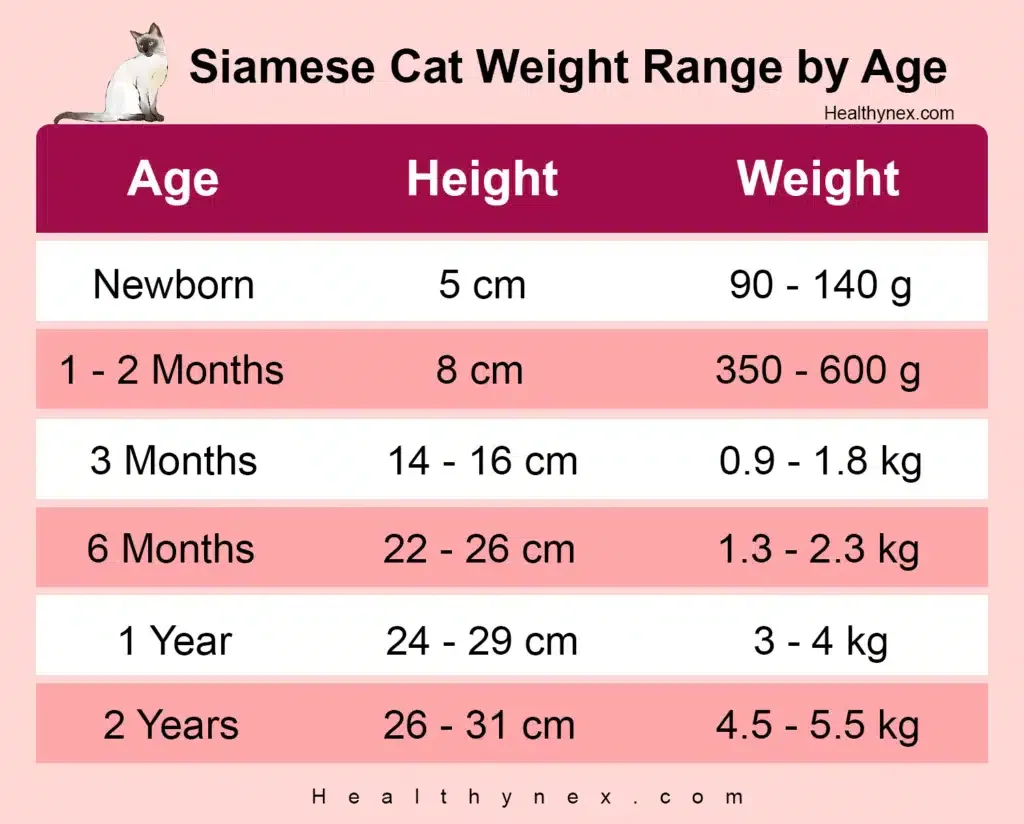
This table shows a practical weekly-to-monthly breakdown, but always remember, these are midpoint values. A healthy kitten can be a little above or below and still be completely fine. What matters more than the number on the scale is the trend line that comes out of tracking it over time, as shown in the weight milestones graphic below.
Image source: Bing (Web (fair-use with source credit))
| Age | Average Weight Range | What You'll Notice |
|---|---|---|
| 0 weeks | 3–4 oz | Newborn, eyes closed, all they do is eat and sleep |
| 8 weeks | 2–2.5 lbs | Ready for adoption, active and curious |
| 12 weeks | 2.5–3.5 lbs | Baby fat starts to burn off, leggy phase begins |
| 6 months | 5–6 lbs | Lanky and uncoordinated, all elbows and tail |
| 9 months | 6–8 lbs | Muscle density starts catching up to bone length |
| 12 months | 7–10 lbs | Near full length, weight still filling out |
| 18 months | 8–12 lbs | Final adult weight typically lands in this range |
Adult at 1 Year? Not Quite
Here's the thing about the one-year mark that catches plenty of owners off guard: a cat isn't fully grown just because they're no longer a kitten. The first year is about skeletal length, and the second year is about muscle and general skeletal mass. A lot of Siamese cats will hit their full adult weight around two years old, not one.
So if your cat turns one and is sitting near the bottom of the range, that's actually usually fine. During the growth process, we also need to be aware of how their body composition changes. Some cats add a significant amount of muscle mass during their second year, especially if they're active, and watching that on the scale can trick you into thinking they're getting fat when they're actually just doing a feline impression of a teenager hitting a growth spurt.
How to Assess Your Siamese Cat's Body Condition Score
Here's a number that matters more than what the scale says: the Body Condition Score, or BCS for short. This is a veterinary assessment tool that scores a cat from 1 to 9, with 1 being emaciated, 5 being ideal, and 9 being severely obese.
The reason this matters for Siamese cats specifically is because they're such a lean, sleek breed that owners often panic thinking they're too thin when the cat is actually at a perfect 4 or 5. Siamese cats simply don't have that soft, round belly that a lot of other breeds carry, it's not their build.
What you want to feel when you run your hands along their sides is a thin layer of fat over muscle. You should be able to feel the ribs easily through that layer, but you shouldn't see the ribs sticking out. The image below shows four different body condition scores side by side so you can visually compare where your cat lands.
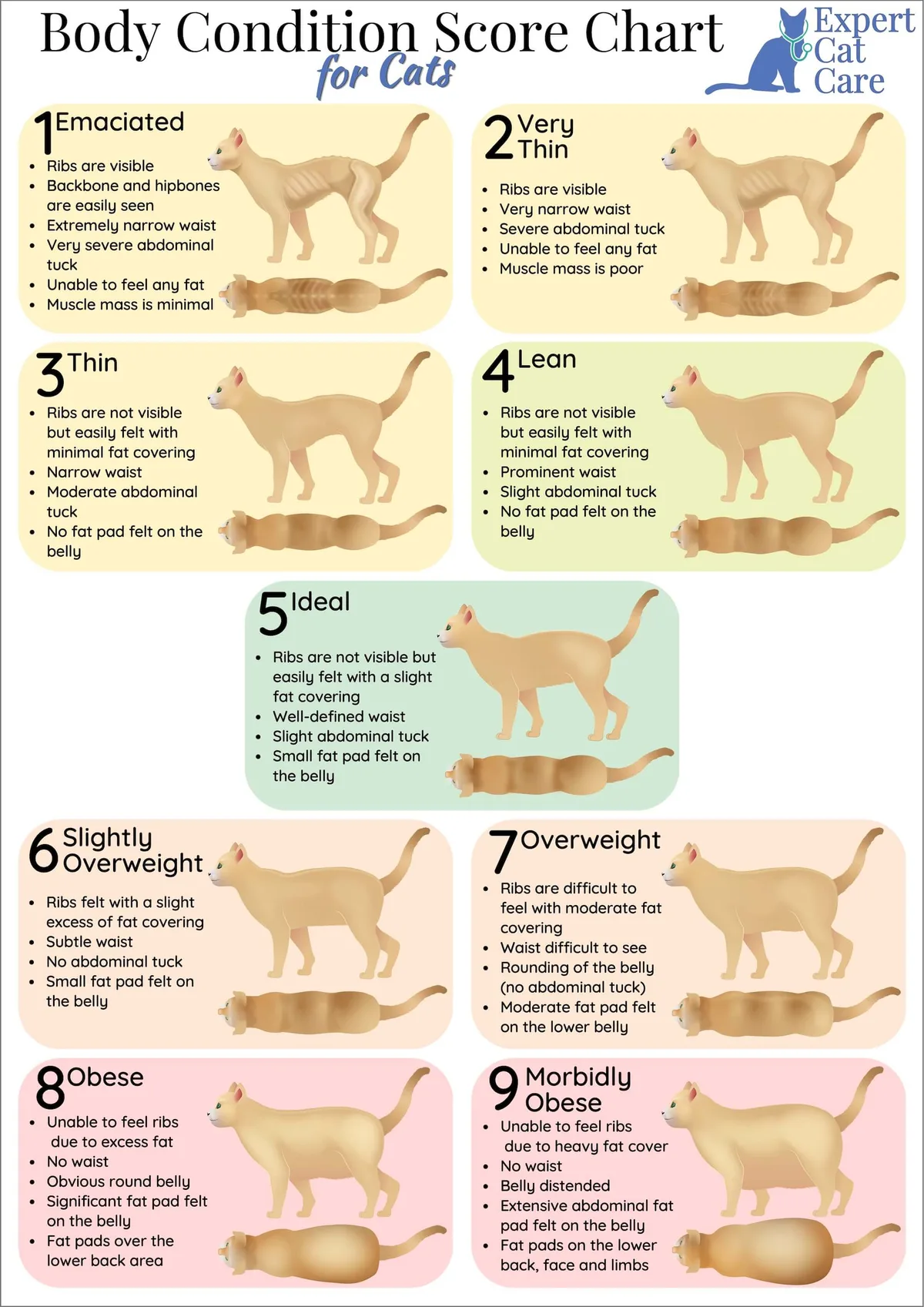
Image source: Bing (Web (fair-use with source credit))
The Touch Test, Step by Step
Let me walk you through how to do this at home without being a vet. You're looking for three specific checkpoints:
- Rib check: Place both palms flat along their ribcage, thumbs on their spine. If you can feel the ribs without pressing hard, that's good. If you press and you can feel each rib individually with no padding, they're too thin. If you can't feel ribs at all, they're carrying extra weight.
- Waist check: Look down at your cat from directly above while they stand. There should be a gentle inward tuck behind the ribs. No tuck at all means they're overweight. An exaggerated pinched waist suggests they're underweight.
- Belly check: Feel the abdomen where it meets the back legs. There should be a tiny fat pad, but it shouldn't hang or swing side to side. That little primordial pouch, the one that flaps when they run, is not fat. It's skin and fur, and it's normal.
As of 2026, a significant portion of the pet cat population in the US is now overweight or obese, so if you're seeing early signs, you can't afford to ignore them.
When the Number on the Scale Lies
Here's where a BCS actually outranks weight as a metric. A lean Siamese at 11 pounds might be perfectly healthy at a BCS of 5, while a plushly coated cat at the same weight might be a 6.5 and trending the wrong way.
Muscle is denser than fat, so two cats can weigh exactly the same and be in completely different health situations. This is why we do both: the scale gives you a trend to track, and the BCS gives you a snapshot of what's actually going on under all that fur. Manufacturer specifications for veterinary wellness protocols generally recommend checking the BCS at every annual exam, and they're right to do so.
Growth Spurts and Plateaus: When Growth Doesn't Happen Linearly
Growth in kittens is not a straight line upward. If you were to map it on a graph, you'd see a series of step-and-platform patterns. The kitten gains weight rapidly, hits a plateau, seems to stay the same for a week or two while they stretch out, then jumps up again.
That's normal.
What you want to see over time is a continuous upward trend. Some weeks the line will be flat, and that's fine. But when you look at the chart from month to month, there should be steady progress.
The graph below that opens this article, a standard siamese cat growth chart, shows the expected comparison curve you'd typically see for the breed, and it's just as important as a broader health baseline.
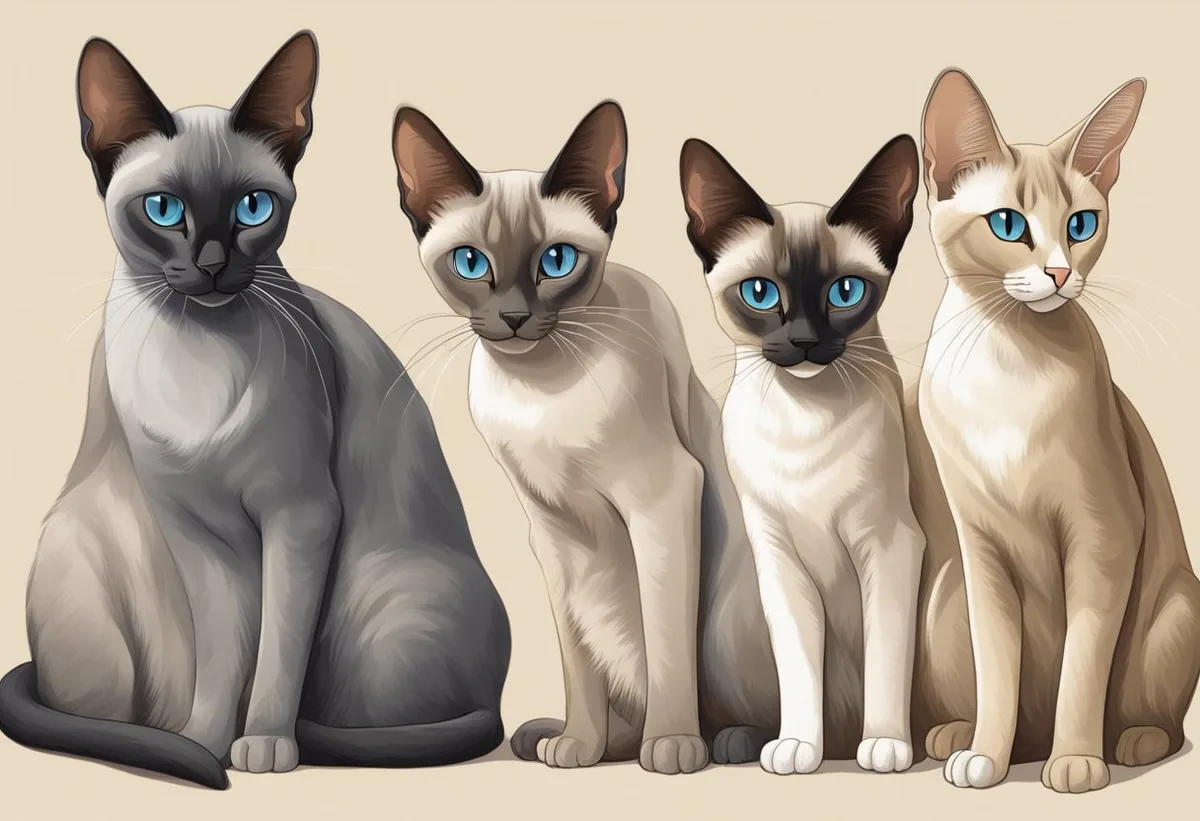
Image source: Bing (Web (fair-use with source credit))
The Teenage Phase: Why Your Siamese Looks Weird Right Now
Around the 4-to-6 month mark, your Siamese kitten will go through a profoundly awkward phase. Their back legs outgrow their front legs, they trip over their own feet, and they seem to have zero awareness of where their body ends and the wall begins.
This is also when teething is in full swing, and you might notice their appetite dip. It's not a linear process where they eat the same amount every single day. Growth spurts demand extra calories, and the plateau weeks see them grazing less.
If your kitten is hitting these phases but still maintaining their weight and energy levels, they're fine. It's when you see a significant drop in activity along with a weight plateau that you start to worry.
When Do Siamese Cats Stop Growing Altogether?
Technically, a Siamese reaches skeletal maturity around month ten to twelve, but they put on final muscle and weight through their second year. A cat is not truly "adult" in developmental terms until somewhere around 18 to 24 months.
This is something aggregate reviews of breed health data confirm: the Siamese is a slower-maturing breed than a random-bred domestic shorthair. So if someone tells you their six-month-old Siamese is "fully grown," they're looking at length, not development. The bones might be done, but the filling out has a while to go.
Feeding for Healthy Growth: What to Feed a Growing Siamese Kitten
You can't talk about growth charts without talking about nutrition, because the chart is only as good as the fuel that powers it. A growing Siamese needs a high-protein, high-fat diet that's specifically formulated for kittens. The Association of American Feed Control Officials sets the nutritional profiles that all commercially complete cat foods follow, so look for the AAFCO statement on the back of the bag.
That label is your guarantee the food contains the minimums your kitten needs. It's a standard, not a suggestion. One important study from the Journal of Nutritional Science confirms that rapid growth in kittens also requires careful calcium-to-phosphorus ratios, so another reason to stick with foods carrying that AAFCO nutritional adequacy statement.
How Much and How Often
Between weaning and about six months, your kitten should eat three to four times a day. Free-feeding dry food can be okay for some kittens, but you risk a kitten that overeats out of boredom. Measured meals, three to four times a day, are the safer play.
| Kitten Age | Meals per Day | Notes |
|---|---|---|
| 8–12 weeks | 4 | Small portions, high energy burn |
| 4–6 months | 3 | Growing phase, keep portions consistent |
| 6–12 months | 2–3 | Activity level dictates actual portions |
| 12+ months | 2 | Transition to adult food gradually |
The exact amount is on the bag, but it's a starting point, not gospel. Muscle activity, metabolism, and whether your cat is an only child or has a sibling to wrestle will all change the math.
Wet Food vs. Dry Food
This is a genuine debate in cat nutrition with solid arguments on both sides. Wet food is higher in moisture, which helps keep the urinary tract healthy and makes it easier to control calorie intake. Dry food is more calorie-dense, which is useful for a growing kitten with a nuclear reactor metabolism.
The pragmatic answer is that a mix of both works well. The most important thing is that you're not overfeeding or free-pouring dry food all day without structure. If you're feeding extra to maintain a growth spurting kitten's weight, that's necessary, in the same way that muscle gain in an active, growing cat is a good thing.
When to Worry: Red Flags and Growth Problems
Not every deviation from the chart is a medical emergency, but there are warning signs you should never brush off. Cats are masters at hiding pain and illness, so if you catch a problem early, you've got a huge advantage.
Emergency Red Flags
If your kitten stops eating for more than 24 hours, that's a veterinary call. If they have diarrhea that lasts more than two days, that's a concern. If you see lethargy alongside a fever or they're not using the litter box, stop reading and call your vet.
Other red flags are more subtle. A kitten that's losing weight while still eating the same amount might be dealing with parasites or an underlying metabolic issue. A cat that's gaining weight without eating more or that's struggling to breathe well might be heading into heart problems, and Siamese cats do have some genetic predispositions in that area that are worth taking seriously.
Per the Cornell Feline Health Center, certain conditions like amyloidosis are more prevalent in this breed, which is a good reminder that routine physicals are about more than just keeping up with vaccinations.

Similar Posts