Is My Cat Pregnant or Just Fat?
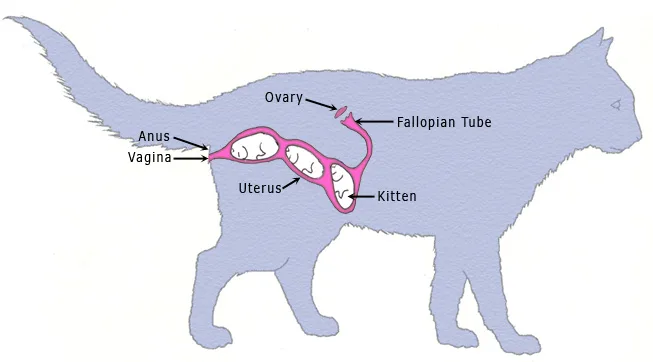
Image source: Bing (Web (fair-use with source credit))
Why It's So Easy to Confuse a Pregnant Cat With a Fat One
Let's be honest. If you're asking "is my cat pregnant or just fat," you're probably staring at a very round, very content-looking feline who has suddenly decided that your lap is the only safe place on earth.
The math checks out too. Female cats reach sexual maturity as early as 4 months old. They're seasonally polyestrous, which means they cycle into heat repeatedly during warmer months until they mate.
Add a gestation period of roughly 63 to 65 days, and you get a perfect storm of confusion: a cat who was never desexed, got outside for exactly one warm week, and now sports a belly that would make a Buddha statue jealous.
Here's what makes it tricky. A pregnant queen starts putting on weight around week 3 or 4, but that's right about when a spayed or indoor-only cat begins her "food bowl is a lifestyle" phase. Both pregnancies and chub periods cause gradual midsection expansion, subtle nipple color changes, increased appetite, and sudden bouts of extreme affection.
The overlap is so broad that even experienced owners can't reliably tell by eye alone until around week 5 or 6.
That's why this article walks you through the actual timeline, physical markers, and behavioral shifts that separate a "waiting mama" from a "well-fed house lion." And at the end, we'll tell you exactly when your vet becomes your best friend instead of your wallet's worst enemy.
Quick Answer: The Fastest Way to Tell the Difference
If you're in a rush, here's the straight answer.
A pregnant cat and a fat cat look nearly identical until about week 5 of gestation. The true differentiators are nipple pigmentation, belly shape, and movement patterns. Pregnancy creates a firm, pear-shaped belly that feels tight.
Fat sits lower and softer, more like a squishy beanbag. A pregnant cat will also start nesting and grooming her belly obsessively around week 6. A fat cat just grooms her regular chub.
But here's the non-negotiable truth. You cannot confirm pregnancy with certainty at home. Not reliably.
By day 20 to 24 post-mating, a vet can palpate the fetuses. By day 25 to 30, an ultrasound can detect heartbeats. And by day 45, x-rays give a clear count of the litter.
If you need to know, book the appointment. Guessing is how kittens end up born inside a closet with nobody prepared.
The Timeline: What Happens at Each Week of Feline Pregnancy
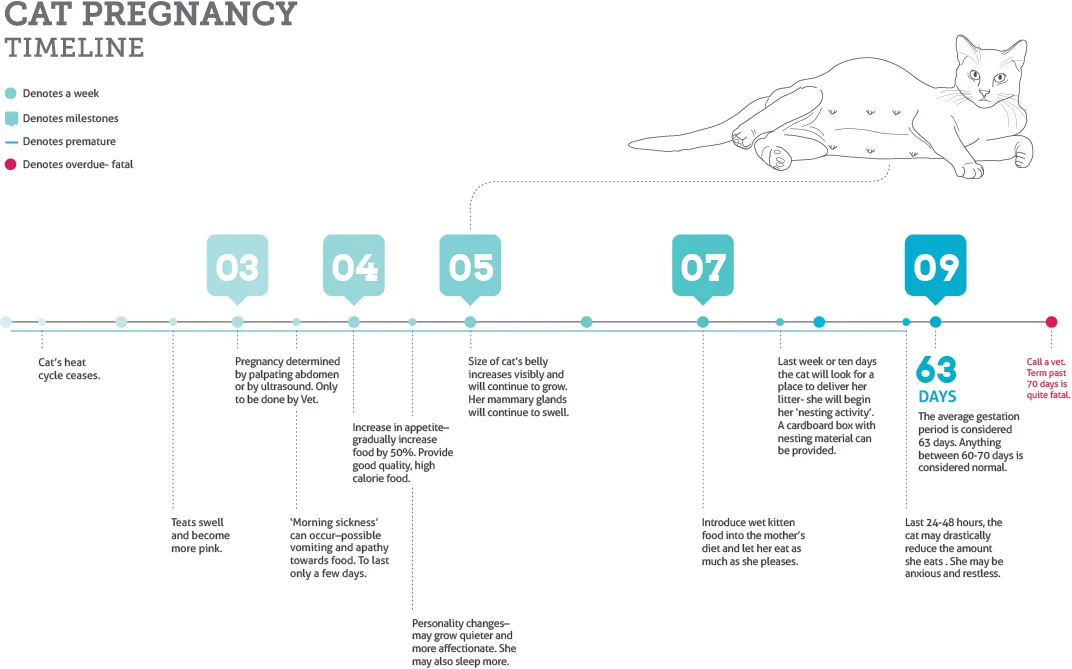
Image source: Bing (Web (fair-use with source credit))
Feline gestation breaks down into nine distinct weeks, and knowing what happens when makes all the difference in spotting the real signs.
Weeks 1-2: The silent phase. There's literally zero visible sign. The eggs are fertilizing and traveling toward the uterine horns, implanting around day 13 or 14. Your cat may act completely normal, or you might catch her sleeping more than usual.
That's it.
Week 3-4: The first real clue. Her nipples start to change color with a pinkish, rosy tint that vets call "pinking up." It's subtle but visible if you look closely. Her appetite might dip ever so slightly. Weight gain is minimal, but the uterus is visibly thickening.
Week 5: The belly appears. This is when most owners start googling. The fetuses are now the size of small grapes, and the abdomen shows a distinct pear shape. This is also the safest time for a vet to palpate and confirm the pregnancy.
Week 6-7: Really obviously pregnant now. Her belly hangs noticeably lower and her mammary glands swell. She might start nesting, dragging blankets into closets or pawing at your laundry. Her appetite increases significantly, often by 50% or more.
Week 8-9: The marathon finish. The belly sits low and heavy. She may lactating in the final days, and the kittens will visibly move inside her. Labor typically arrives between day 63 and day 65.
The key difference from a fat cat? The timeline. Fat accumulates slowly over months of overfeeding.
A pregnant cat's transformation happens on a strict nine-week schedule with distinct markers at each stage.
Key Physical Signs: Nipples, Belly Shape, and Weight Gain Patterns
Let's get into the specifics that separate a pregnant cat from a fat one, because the differences exist but they're subtle.
Nipple changes. In pregnancy, all of her nipples become progressively pinker and more prominent, usually starting around day 16-20. They also appear to "stand out" more, and in later pregnancy they'll swell and lightly crust as the glands prepare to lactate. A fat cat may have slightly darker nipples if she's had a heat cycle, but they won't swell or change texture.
Belly shape. This is the biggest visual clue. A pregnant cat's belly forms a firm, rounded pear shape that widens from the spine downward, looking almost like a lightbulb from the side. When she lies down, the pregnancy bump stays high but full.
A fat cat's belly is softer, sags lower toward the ground, and typically spreads wider when she's lying on her side.
When you gently feel her abdomen (and we'll talk about the risks of this later), a pregnant cat feels firm and taut near the uterus. Fat cats feel squishy, jiggly, and compressible. There's also a difference in movement: a pregnant cat feels small, hard lumps (the developing kittens) moving around.
A fat cat's belly just shifts and jiggles as a uniform mass.
Weight distribution. Pregnant cats gain weight disproportionately in the abdominal region and mammary glands, while fat cats gain weight over their whole spine, ribs, and haunches. If her ribs are hard to feel but her spine feels bony, that's a sign of general weight gain rather than pregnancy.
Appetite patterns. A pregnant cat's appetite stays stable for the first month, then climbs steadily week by week. She'll likely eat 1.5 to 2 times her normal amount in the final two weeks. A fat cat just eats the same amount but gains weight over time.
A sudden dramatic appetite spike paired with constant hunger usually signals pregnancy, not gluttony.
Behavioral Changes That Point Toward Pregnancy (or Away From It)
I've seen plenty of cats whose owners were convinced were pregnant just because they acted extra sweet. Pregnancy sparks a distinct behavioral pattern, but it's not identical to depression or food-seeking behavior.
Affection shifts. A pregnant cat becomes intensely clingy toward her person, often circling your legs or demanding lap time far more than usual. This usually starts in week 2-3 and intensifies. A fat cat, on the other hand, maintains her usual love language but simply never stops eating.
Nesting instinct. Starting around week 6, a pregnant cat will begin carrying soft items to isolated spots. You'll find her dragging hair ties, socks, or crumpled paper into closets or under furniture. This is one of the strongest pregnancy indicators, and a fat cat won't do this.
Vocalization changes. Pregnant queens often become more vocal, particularly in the last week before labor. You'll hear low-pitched, drawn-out meows that sound almost like a complaint. It's very different from the attention-meowing of a food-driven cat.
She's saying, "I need privacy and preparation," not "more kibble."
Litter box habits. Some pregnant cats become more cautious about using the litter box, digging more frequently and rearranging the space before going. They also tend to be more possessive of their resources, hissing at other pets who approach the box.
Energy levels drop. A pregnant cat sleeps more often throughout the day, particularly in the final weeks. Fat cats will still chase a laser pointer until they're panting. If her play drive plummets and she's constantly dozing, that's worth noting.
Grooming obsessions. Around week 6, a pregnant cat will begin obsessively grooming her belly and perineal area. Her hormones are readying the nipples for nursing, so she'll spend significant time licking down there. A fat cat grooms her stomach too, but not with that dedicated, focused intensity.
Warning sign to watch out for: If her belly grows rapidly, she shows signs of distress (panting, crying), or she loses her appetite suddenly, that's not normal pregnancy progression. That could signal uterine infection, a urinary blockage, or an emergency fetal complication. Pregnant cats don't "crash" without a reason.
All this behavioral tracking gives you a solid educated guess, but nothing beats a professional exam.
How a Vet Confirms Pregnancy (and Why You Should Book That Visit)
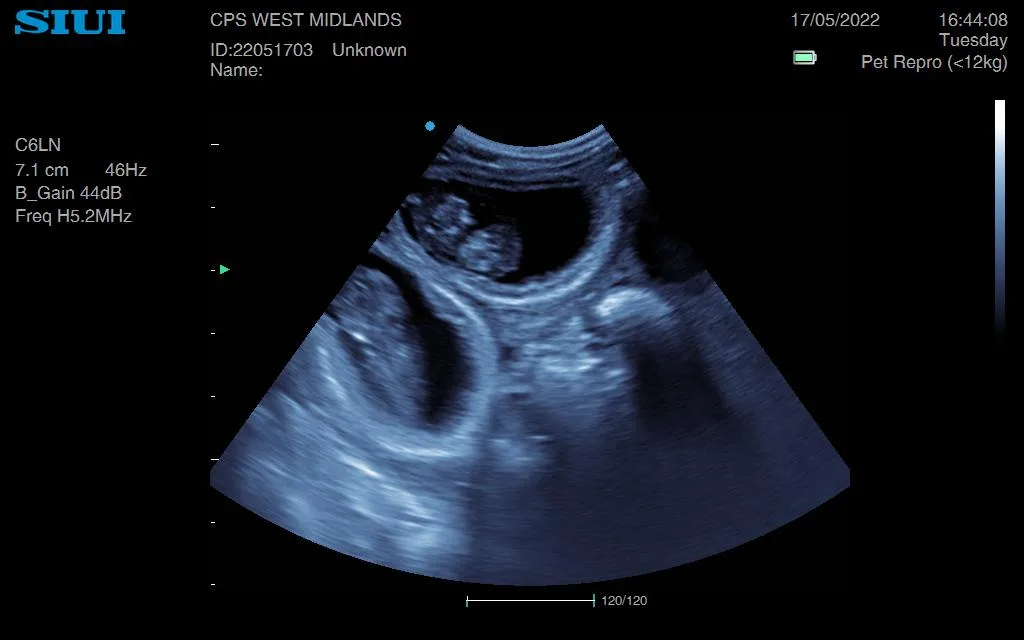
Image source: Bing (Web (fair-use with source credit))
Here's the pragmatic part. Even experienced breeders schedule vet visits to confirm pregnancies. There are three standard diagnostic methods, each with pros and cons.
Abdominal palpation (Week 3-4): The vet gently presses on the abdomen to feel the uterine swellings. It's the oldest method and it's non-invasive, but it takes a skilled hand and becomes less reliable after week 5 when the fetuses become larger and less distinctly palpable. It also won't help you gauge the exact number of kittens.
Ultrasound (Week 4-5 and beyond): This is the gold standard for early confirmation. An ultrasound uses sound waves to detect the fetal heartbeats and confirm a viable pregnancy. It can also spot an ectopic pregnancy or signs of molar issues, though it won't give you a reliable count of how many kittens to expect.
X-rays (Week 6+): By day 45-55, the kittens' skeletons are calcified and visible on x-ray. This provides an exact count of the litter, which is invaluable when the due date approaches. The catch?
Kittens bones only show up this late, so x-rays can't confirm pregnancy until after week 6.
So when should you book? Ideally, take your cat in for palpation and a possible ultrasound around 3-4 weeks after she started showing signs. If you want the x-ray count for birth planning, schedule that around day 50-55.
During the exam, the vet will also check her overall health, screen for signs of infection, and give you advice on premium kitten food, which a nursing queen needs (high-protein, high-calorie, extra DHA for kitten brain development).
And if the verdict is "she's just fat"? The vet will give you a proper weight loss plan. You'll switch to measured portions of a high-fiber, low-calorie food and start a gentle play routine.
It's a slower process than pregnancy, but safe and gradual.
That's the professional path. No guesswork, no ambition, no squinting at belly shapes. Just certainty, plus a plan either way.

Similar Posts