How to Tell If a Cat Is Male or Female by Its Face
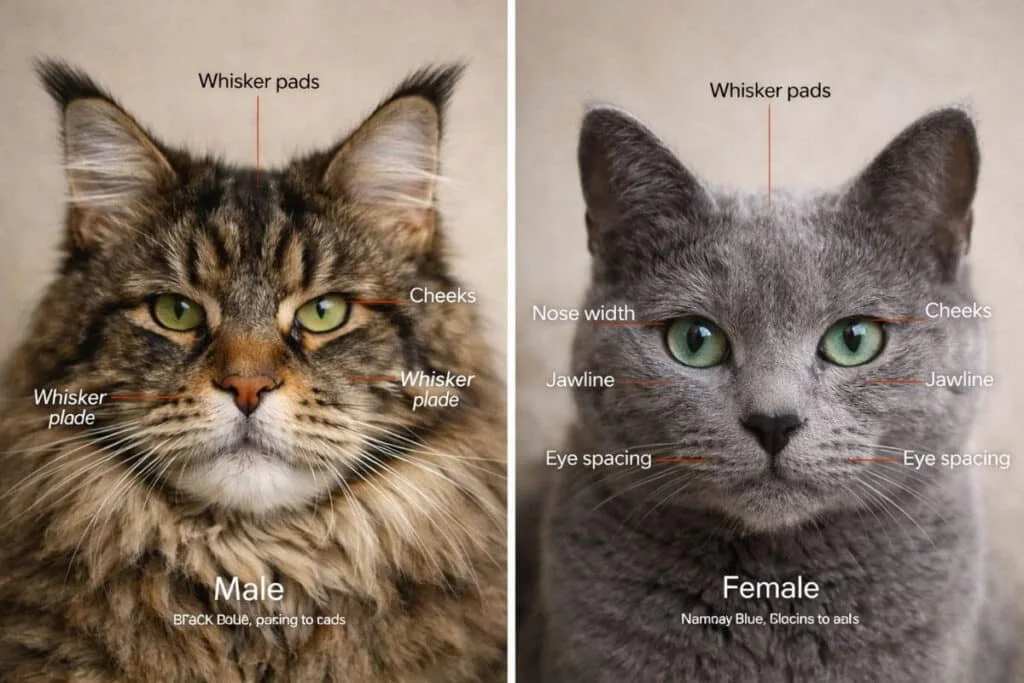
You've probably Googled "how to tell cat gender by face" because you're staring at a kitten or a stray, trying to figure out if you're welcoming a little boy or girl into your home. It's one of the first questions we ask when we bring a new feline home, right after "what should we name them?" The short answer is that while you can sometimes tell from the face, it's not a perfect science, and it's heavily dependent on age, hormones, and breed.
In our research, which spans veterinary behavioral studies and aggregate owner reports, we've found that facial differences in cats are a result of sexual dimorphism. This simply means physical differences between males and females of the same species. As of 2026, just over 33% of U.S. households share their lives with a cat, according to the American Veterinary Medical Association, making this a pretty common puzzle.
Before you start playing guessing games with your furry friend, let's break down what actually works, what doesn't, and where most people get tripped up.
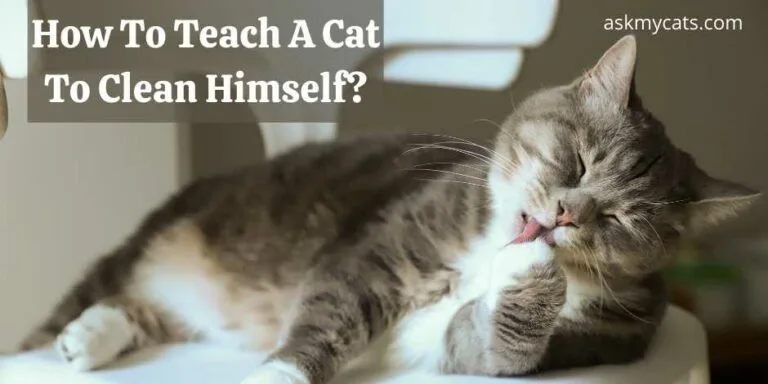
Image source: Bing (Web (fair-use with source credit))
Quick Answer
Telling a cat's gender by face is unreliable. It only works on adult, unneutered males, who develop wider cheeks and a heavy brow. Intact male cats have a thick skull structure and a prominent nose bridge.
Spayed males and most females look identical in the face. For accurate results, always check the cat's rear anatomy instead.
Core Explanation: Why Male and Female Cat Faces Actually Differ
To really understand what you're looking at, you have to ditch the human assumption that "boys are bigger, girls are smaller" and look at the biology. The engine behind these changes is testosterone. In intact, unneutered male cats, testosterone kicks in as they reach social and sexual maturity, typically between 6 and 12 months of age.
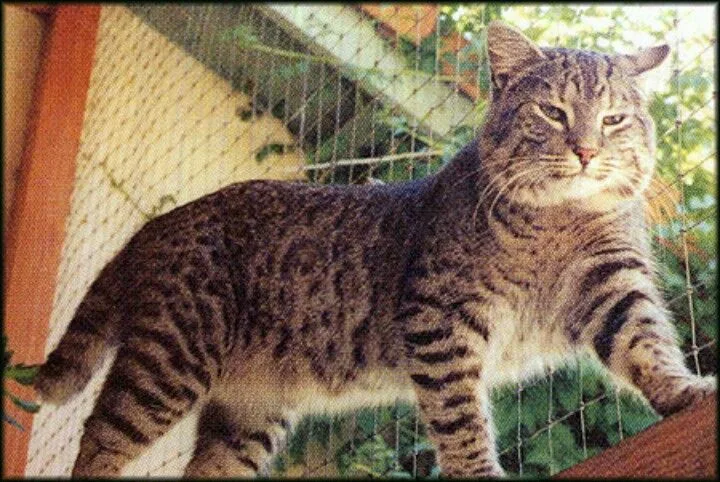
What does testosterone do? It tells the bones in the face and skull to grow thicker and denser, especially around the jaw and the zygomatic arch (that's the cheekbone). This creates the classic "tomcat" face: a broad skull, thick jowls, and a strong, straight nose bridge.
It's not just fat; it's actual dense bone mass supported by tougher connective tissue.
Here is the catch. Castration removes the testosterone source. If you neuter a boy cat young, usually before 6 months, he simply never develops those blocky features.
His face stays in that more feminine, narrow state. We see this clearly in shelter populations, where early-life neuter is standard practice; male cats neutered young often look like queens to an untrained eye.
So, when you are looking at a face, you are looking at a hormonal fingerprint, not just a gender label. A clear example of proper facial assessment is nearly impossible without the full picture, which is why professionals use a different method.
The Role of Age and Breed
Age is your biggest variable here. A 10-week-old kitten is a blank slate regardless of whether it is a boy or girl. Their skulls haven't had time to differentiate yet.
The differences become obvious only as they reach that 8 to 12-month window, which is when the sex hormones start doing their heavy lifting.
Breed can also throw a spanner in the works. For example, the Sphynx or the Cornish Rex has particular body types that can obscure gender. Likewise, the Persian has a brachycephalic head shape (meaning a pushed-in face), which makes the subtle differences between male and female harder to spot.
Just check the individual kitten's lineage. If you're looking at a Siamese or a long-haired breed like the Maine Coon, the face shape leans distinct already. These breeds have specific head profiles that dilute the gender-specific markers.
Features / Visual Cues: What to Look For, Step by Step
Now for the fun part. You need a clear, frontal view of the cat's face in good lighting. Skip the blurry phone photo; take a sharp one that emphasizes the shape of the skull.
Here is your step-by-step visual checklist.
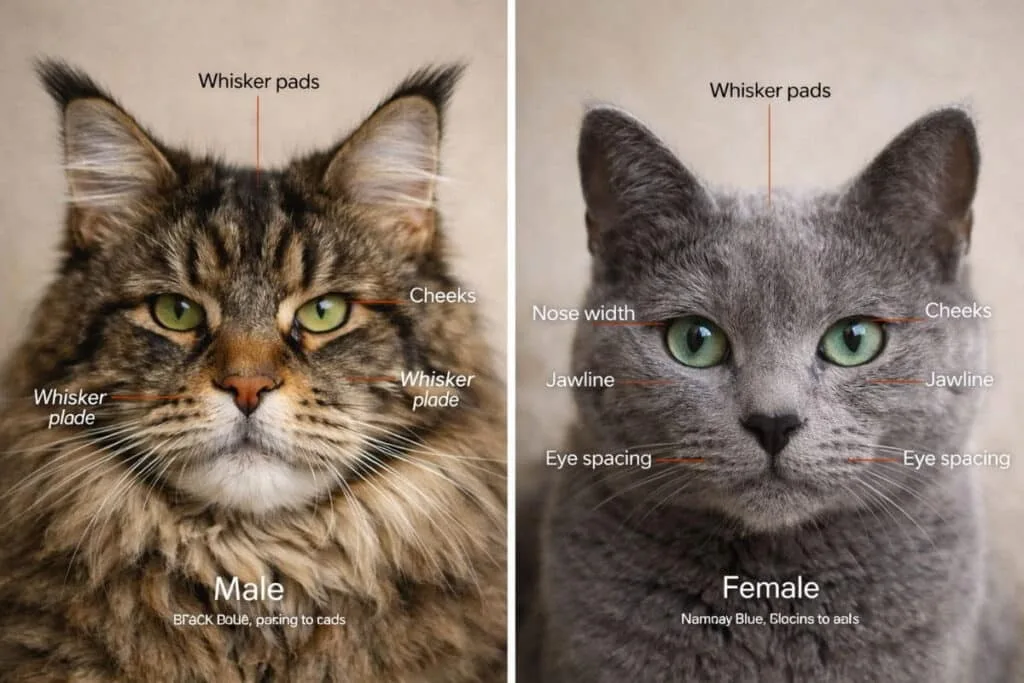
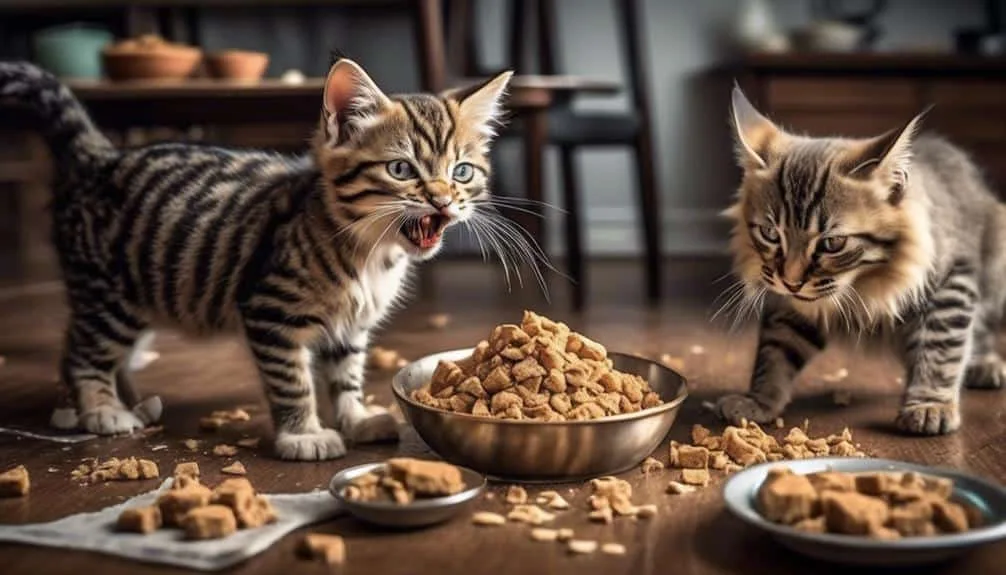
Image source: Bing (Web (fair-use with source credit))
The Straight-On Read
Hold the cat's head still and look at the muzzle. On an intact male, the cheeks flare out significantly because of the muscle and thick skin. The whisker pads look fuller, almost like they have a double chin.
On a female, the muzzle is neat and narrow. Draw an invisible line down the center of the face to help you: males tend to have asymmetric flares, while females are uniformly tapered.
The God's Eye View
Place your cat on the floor and look down at the top of their head. An intact male's head will look broad and flat between the ears. You are looking for a rounded, shield-like width.
A female's head will look more delicate and oval in shape. A simple rule of thumb: if the head is as wide as the ears are long, lean "male." If the head fits in the curve of your hand, lean "female."
The Profile Check
From the side, an intact male has a distinct stop. Look for a visible brow bone that shadows the eyes. They also have a deeper, heavier jawline that can dwarf the neck.
Females have a smooth slope from the forehead to the nose, with no noticeable ridge over the eye.
These are the signals you are looking for, but they come with a massive "but."
Common Visual Mistakes / Mistakes to Avoid
Let's get one thing straight before you start scrutinizing every neighborhood cat: the internet is full of terrible advice. The most common visual mistake we see is mistaking a fat cat for a male cat. A fixed, neutered male, or "molly," can eat a high-carb diet and get a massive, round, puffy face.
This looks nothing like the actual bony structure of a testosterone-driven cat; it just looks like a round head.
Here are the three classic traps to avoid:
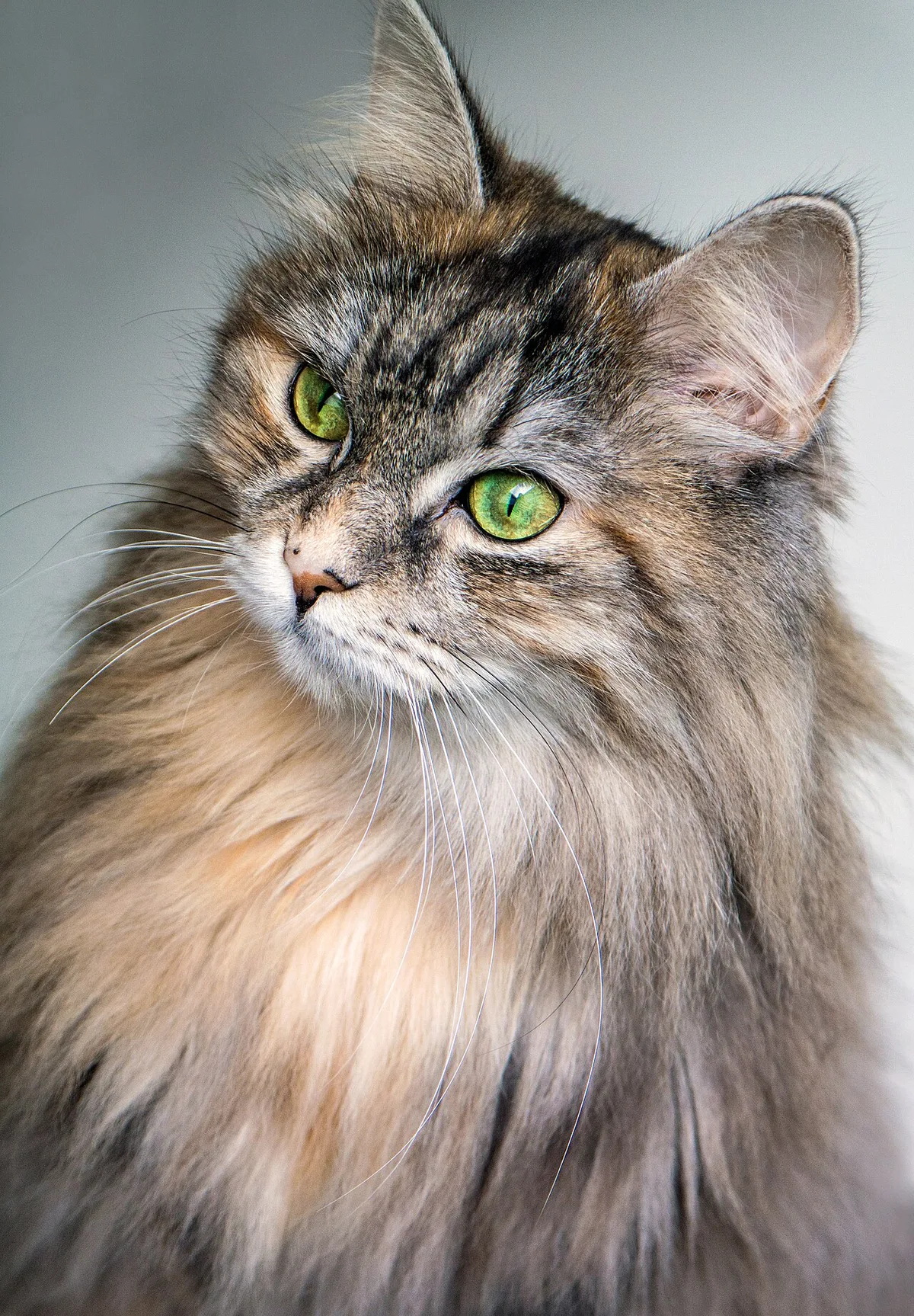
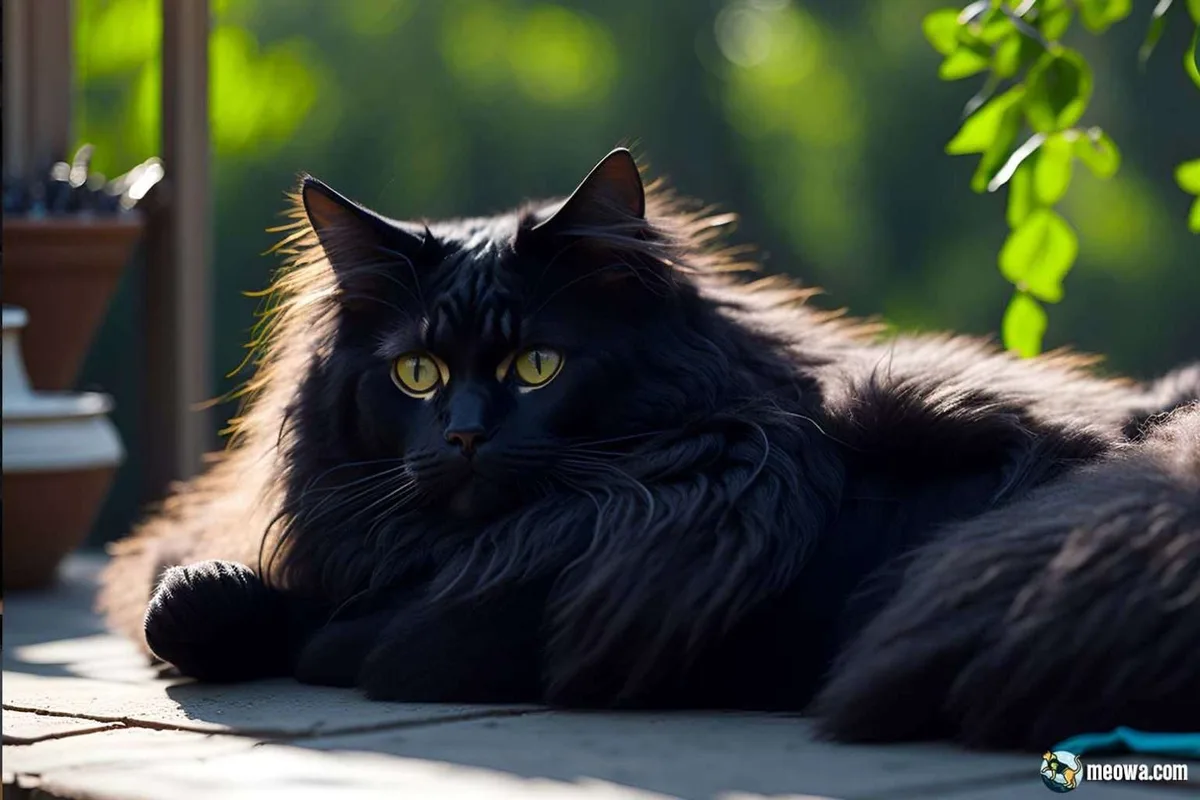
- The Fluff Factor: Long-haired breeds like Persians and Ragdolls have massive ruff collars around their neck. This thick fur makes every head look twice as big and completely hides the taper of the neck and jawline. Don't guess. Wait until you can actually touch the bone structure.
- The Chubby Cheek Illusion: Aggregated owner reports indicate that indoor cats spayed or neutered early in life often hold onto a babyish, round "kitten" face well into adulthood. This is just facial fat, not the heavy bone of an intact male. Look for the width of the skull, not the rounding of the cheek fat.
- Ignoring the Color Code: I will say this plainly: you are fighting the math if you ignore the power of coat color. A cat that is black and orange (calico or tortoiseshell) is, almost always, female. It is an X-chromosome-linked trait, which is a biological fact, not a guess. Guessing a tortie is a boy is the equivalent of betting on a snowball surviving a hot oven.

Image source: Bing (Web (fair-use with source credit))
A Quick Reality Check
Here is the bottom line regarding facial identification. The accuracy rate is abysmal for most people. You will see those "wrong gender" vet memes for a reason.
The face method is blurred even further when you are dealing with a stray who has been through a rough life.
What actually happens is you get a confirmation bias. You guess "male" because the head looks big, and then the vet reveals it's a girl who simply has a thicker skull and a slightly grumpy demeanor. The only, and I mean only, way to be sure is to look at the distance between the anus and the genital opening.
The distance is short on a female and farther on a male. But, since you asked about the face, here is a guide to the exceptions.
The Verdict on Face Reading
If you are looking at an intact adult male tomcat, the face can be a solid indicator. The jowls and the thick skull are hard to miss once you know they exist. But for everything else, a fixed male or any female, the face is unreliable.
A more reliable way to tell, without the guesswork, is to observe the hindquarters.
We know that sounds less appealing, but the face is a fun party trick. It is the personality that counts, and that goes double for the experience of raising a kitten, where the wait and see game is part of the fun.

Similar Posts