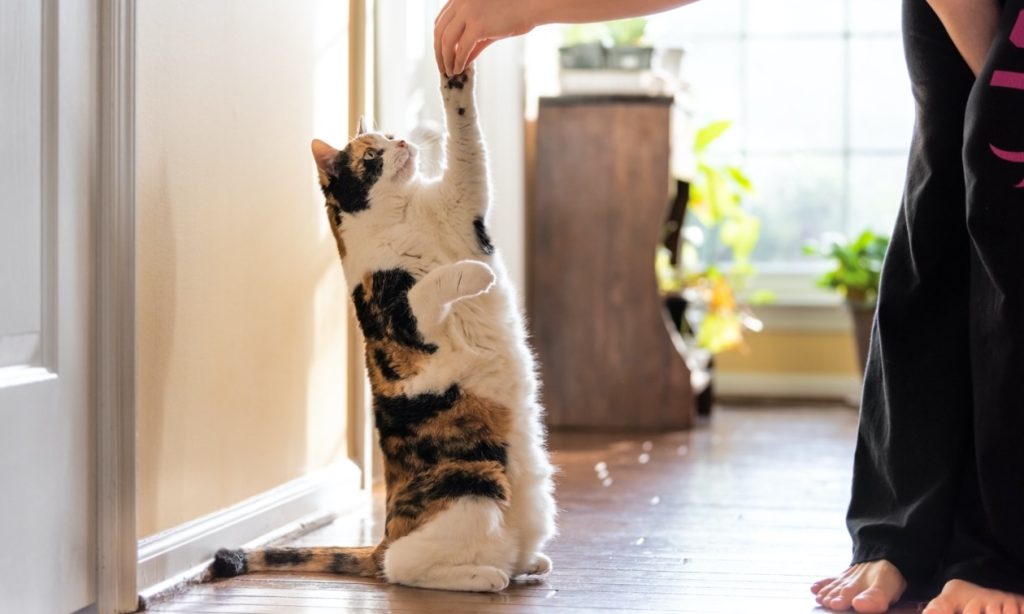
Are you a cat owner who has ever wondered if your feline friend can be trained? Perhaps you’ve seen dogs performing tricks and following commands and thought, “Why can’t my cat do that?”
You’re not alone. Many believe that cats are too independent or stubborn to be trained, but that’s simply not true. Cats can indeed be trained, and the results can be both surprising and rewarding. Imagine a world where your cat comes when called, uses the litter box like a pro, and maybe even performs a few tricks to entertain your guests.
This isn’t just a dream—it’s entirely possible with the right approach. Intrigued? Read on to discover the secrets of unlocking your cat’s potential and transforming your daily interactions into a more harmonious and exciting experience.

Credit: www.littergenie.com
Cat Training Myths
Many believe that cats are untrainable. This myth persists among pet owners. People often compare them to dogs. Dogs are seen as more obedient. Cats, on the other hand, have a reputation for independence. These beliefs create confusion. Let’s explore some common myths about cat training.
Myth 1: Cats Cannot Learn Tricks
It’s often said cats can’t learn tricks. This is not true. Cats can learn simple commands. Sit, stay, and high-five are possible. It takes patience and practice. Positive reinforcement is key. Treats and praise work wonders.
Myth 2: Cats Ignore Commands
Many think cats ignore commands. In reality, they respond differently. Cats need motivation to listen. A tasty treat or playtime helps. They might not obey immediately. But they do understand commands. Repetition builds familiarity.
Myth 3: Cats Lack Intelligence
Some believe cats aren’t smart. This is misleading. Cats show problem-solving skills. They learn from experiences. They can navigate complex environments. Intelligence varies among individual cats. Training enhances their mental abilities.
Myth 4: Cats Don’t Like Training
It’s said cats dislike training. They actually enjoy it. Training strengthens their bond with you. It provides mental stimulation. Cats love learning new things. Training sessions should be fun. Keep them short and engaging.
Understanding Feline Psychology
Cats are mysterious creatures. Their behavior often puzzles their owners. Understanding feline psychology can help in training them. Cats have unique instincts and social behaviors. These factors influence their reactions and actions.
Natural Instincts
Every cat has strong natural instincts. Hunting drives their actions. They love to chase and pounce. These instincts make them playful. Cats are also territorial. They need their own space. Understanding these instincts can aid in training. Use toys that mimic prey for effective engagement.
Social Behaviors
Cats have distinct social behaviors. They are not pack animals like dogs. Their independence often confuses people. Yet, they form bonds with humans. Cats communicate through body language. They use purring, meowing, and tail movements. Recognizing these signals is key. It helps in building trust and cooperation.
Patience is vital when training cats. Respect their instincts and social cues. This approach makes training more successful.
Effective Training Techniques
Training cats might sound like a daunting task, but with the right techniques, it can be both fun and rewarding. Cats, unlike dogs, have a reputation for being independent creatures. But that doesn’t mean they can’t learn new behaviors or tricks. Effective training techniques can help you communicate better with your feline friend and strengthen your bond. Let’s dive into some proven methods that can help you achieve success.
Positive Reinforcement
Positive reinforcement is a powerful tool in cat training. It’s all about rewarding your cat for good behavior. When your cat performs a desired action, offer a treat or affection immediately. This encourages them to repeat the behavior. The key is consistency; reward the behavior every time it happens.
A friend of mine trained her cat to sit by using small pieces of tuna as a reward. The cat quickly associated sitting with getting a tasty treat. What reward will motivate your cat? Experiment with different treats to find out.
Clicker Training
Clicker training is another effective method. This technique involves using a small device that makes a clicking sound. You click it when your cat performs the desired action, followed by a reward. This helps your cat understand what action caused the reward.
Start by clicking and rewarding for simple actions. My own cat learned to come when called using a clicker and her favorite snack. The clicker sound became a signal for her to pay attention. Are you ready to see how your cat responds to the clicker?
Training your cat requires patience and creativity. Not every technique works for every cat. What unique method have you tried with your pet? Share your experiences and learn from others. With practice and persistence, you’ll find what works best for your furry friend.

Credit: yourpetandyou.elanco.com
Common Challenges
Training cats can be rewarding yet challenging. Understanding their unique behaviors is crucial. Many cat owners face common challenges during training sessions. These challenges often require patience and consistency. Addressing these issues can lead to a happier, well-adjusted cat.
Aggression And Anxiety
Cats may display aggression or anxiety during training. This behavior can stem from fear or overstimulation. Some cats get scared by sudden movements or loud noises. Others might be anxious in new environments or around strangers. It’s important to create a calm training space. Gradually introducing new stimuli helps reduce stress. Using positive reinforcement encourages gentle behavior.
Litter Box Issues
Litter box problems are common in cats. They might refuse to use the box due to its location or cleanliness. Cats are sensitive to smells and textures. Keeping the box clean and accessible is essential. Experimenting with different types of litter can also help. Sometimes, health issues cause litter box avoidance. Consulting a vet ensures no underlying medical conditions exist.
Tools For Training
Training cats might sound like a daunting task, but with the right tools, you can make it a rewarding experience for both you and your feline friend. Cats, much like humans, respond well to incentives and interactive environments. By using specific tools tailored for training, you can harness their natural curiosity and intelligence.
Interactive Toys
Have you ever watched your cat chase a laser pointer? Their eyes light up, and their hunting instincts kick in. Interactive toys can be your best ally in training your cat. These toys stimulate their mind and keep them engaged, making learning easier. Try using wand toys with feathers or bells. They’re not just fun; they can also help teach your cat commands like “come” or “stay”.
Think about your cat’s favorite playtime activity. Is it chasing a ball or batting at a moving toy? Incorporate these into training sessions. The goal is to associate play with learning. As your cat plays, introduce simple commands. You’ll be amazed at how quickly they catch on.
Treats And Rewards
Treats are a powerful motivator for cats. Imagine the joy on their face when you offer them a tasty morsel. Use this to your advantage in training. Each time your cat successfully follows a command, reward them with a treat. This creates a positive association and encourages them to repeat the behavior.
Experiment with different types of treats to see which ones your cat prefers. Some cats love crunchy snacks, while others might favor soft, meaty bites. Keep sessions short and fun. This way, your cat remains interested and eager to learn. Have you ever noticed how a simple treat can make your cat purr with delight? Use this natural reaction to reinforce good behavior.
What tools have you found effective in training your cat? Share your experiences and insights. Training is not just about teaching commands; it’s about building a bond. By using interactive toys and treats, you can transform training into a playful adventure.
Real-life Success Stories
Many people have successfully trained their cats using patience and consistency. Cats can learn tricks like sitting and fetching. These stories prove that with the right approach, feline training is possible.
Real-life success stories prove that cats can indeed be trained. While cats are often seen as independent creatures, many cat owners have successfully taught their feline friends a variety of tricks and behaviors. These stories not only inspire but also provide practical insights you can apply to your own training efforts.Meet Whiskers, The Fetching Cat
Whiskers, a two-year-old tabby, amazed her owner by learning to fetch. Fetching is a skill many associate with dogs, but Whiskers loves it. Her owner, Sarah, began by tossing her favorite toy a few feet away. Each time Whiskers brought it back, she was rewarded with a treat. After a few days of practice, Whiskers was eagerly fetching her toy across the room. This success shows that with patience and positive reinforcement, even cats can enjoy interactive play.Simba’s Journey To Leash Walking
Simba, a curious Bengal, became a local sensation when he learned to walk on a leash. His owner, Tom, was determined to let Simba explore the outdoors safely. Starting with a comfortable harness, Tom let Simba wear it around the house to get used to it. Once Simba was comfortable, Tom attached the leash and let Simba lead the way in the backyard. Simba now enjoys regular walks, proving that with persistence and gradual exposure, leash training is achievable.Luna, The High-fiving Cat
Luna, a playful Siamese, delights everyone with her high-five trick. Her owner, Emily, taught Luna this trick using her favorite treats. Holding a treat just above Luna’s head, Emily waited for Luna to reach up with her paw. Each successful high-five earned Luna a treat and lots of praise. Within weeks, Luna was high-fiving on command. This story highlights how simple tricks can be an engaging way to bond with your cat.Oliver’s Impressive Bell-ringing
Oliver, a clever Scottish Fold, mastered ringing a bell for treats. His owner, Mike, used a small bell placed on the floor. Initially, Mike would ring the bell and immediately offer Oliver a treat. Oliver quickly learned to associate the bell with rewards. It wasn’t long before Oliver was pressing the bell with his paw to signal snack time. This success illustrates how using clear signals can help your cat communicate in fun ways.These stories show that with creativity and patience, you can teach your cat new tricks. What will you and your feline friend achieve together?
Building A Strong Bond
Building a strong bond with your cat is crucial for successful training. Cats are unique creatures with distinct personalities. Understanding and respecting their nature builds trust. This trust forms the foundation for effective training sessions.
Communication With Your Cat
Effective communication is key to training cats. Observe their body language. Cats communicate through subtle signals. A flick of the tail or a soft purr speaks volumes. Responding to these cues shows that you understand them.
Use a calm voice when speaking to your cat. Cats respond well to gentle tones. Repeating simple commands helps them recognize words. Consistency in your communication encourages positive responses from your feline friend.
Consistency In Training
Consistency is essential in cat training. Set a regular training schedule. Short, daily sessions work best. Cats have short attention spans. Repeating exercises daily helps reinforce learning.
Stick to the same commands and rewards. Cats learn through repetition. Consistent rewards encourage desired behavior. Patience is vital. Training takes time, but consistency makes a difference.
Benefits Of Training
Training your cat might seem like a challenging task, but the rewards can be incredible. Not only can it enhance the way your cat interacts with you and its surroundings, but it can also significantly improve your relationship with your furry friend. Training opens up a world of possibilities for a more harmonious living environment. Let’s delve into some of the tangible benefits of training your cat.
Improved Behavior
Training can help curb undesirable behaviors such as scratching furniture, biting, or excessive meowing. By teaching your cat commands like “sit” or “stay,” you can redirect its attention to more positive activities. Imagine the relief of coming home to a house without shredded curtains or chewed-up shoes. It’s not just about discipline; it’s about creating a peaceful coexistence.
Consider a simple training technique: reward your cat with a treat when it uses a scratching post instead of your couch. This encourages the behavior you want to see more often. With patience and consistency, your cat can learn to behave in ways that make living together more enjoyable.
Enhanced Human-cat Relationship
Training creates a stronger bond between you and your cat. When you engage in training sessions, you’re spending quality time together, which fosters trust and understanding. Your cat learns to look to you for guidance, and you become more attuned to its needs and signals.
Reflect on moments when your cat responded positively to a command or cue. The mutual satisfaction you both feel is a testament to your growing connection. Training is more than teaching tricks; it’s about building a partnership where you both thrive.
Think about how training can make daily interactions smoother. When your cat knows how to respond to simple commands, it can lead to less frustration and more enjoyable companionship. Wouldn’t you love a relationship with your cat that’s based on mutual respect and communication?
Training your cat is not just an option; it’s a path to a happier, more fulfilling life together. Whether you’re curbing bad habits or strengthening your bond, the benefits are undeniable and worth the effort. Ready to start training your cat today?

Credit: www.youtube.com
Frequently Asked Questions
Is It Possible To Train A Cat To Behave?
Yes, cats can be trained to behave with patience, consistency, and positive reinforcement. Use treats and praise to encourage desired actions. Focus on simple commands like “sit” or “stay. ” Keep sessions short and fun to maintain their interest. Adjust methods based on your cat’s personality for best results.
Can Cats Be Trained To Stay Off Furniture?
Yes, cats can be trained to stay off furniture. Use positive reinforcement and provide alternative spaces. Consistent training helps them understand boundaries. Offer scratching posts and cozy beds as substitutes. Patience and persistence are key to success.
How Do You Teach A Cat No?
Use a firm voice and say “no” when your cat misbehaves. Redirect its attention to a toy or treat. Consistency is key; repeat this process regularly. Reward good behavior with praise or treats to reinforce positive actions. Avoid punishment, as cats respond better to positive reinforcement.
Can I Train My Cat Like A Dog?
Yes, you can train your cat like a dog. Use positive reinforcement techniques. Focus on rewarding desired behaviors. Cats respond well to treats, praise, and toys. Patience and consistency are key. Start with simple commands and gradually increase complexity. Training enhances your bond with your cat.
Conclusion
Training cats is possible with patience and consistency. Cats respond well to positive reinforcement. Treats and praise work wonders. Start with simple commands. Keep sessions short to maintain interest. Remember, each cat learns at its own pace. Celebrate small successes along the way.
Building trust is key to progress. Not all cats will learn the same tricks. Respect their unique personalities. Enjoy the bonding experience training brings. With time and effort, your cat can learn new skills. Happy training!