Is Feline Fiv Contagious to Other Cats? Uncover Truths
Is your beloved cat at risk of catching Feline Immunodeficiency Virus (FIV) from other cats? If you’re a cat owner, this question might have crossed your mind more than once.
Understanding FIV and how it spreads is crucial in ensuring the health and happiness of your furry friend. You want to make sure your cat is safe and sound, and that’s exactly what this article will help you achieve. We’ll unravel the mysteries of FIV transmission, so you can protect your cat and prevent unnecessary worry.
Stay with us to discover the essential information every cat owner needs to know.
Credit: www.adamscountyhumanesociety.org
Feline Fiv Overview
Feline Immunodeficiency Virus, or FIV, affects cats worldwide. It’s similar to HIV in humans. Many cat owners worry about its spread. Understanding FIV helps in managing its risks. The virus weakens a cat’s immune system. This makes them vulnerable to infections and diseases. FIV-positive cats can live long, healthy lives with care.
What Is Feline Fiv?
Feline FIV is a retrovirus. It spreads slowly in the body. The virus attacks the immune system. This makes cats prone to illnesses. It’s not the same as feline leukemia. Both are different viruses.
How Feline Fiv Spreads
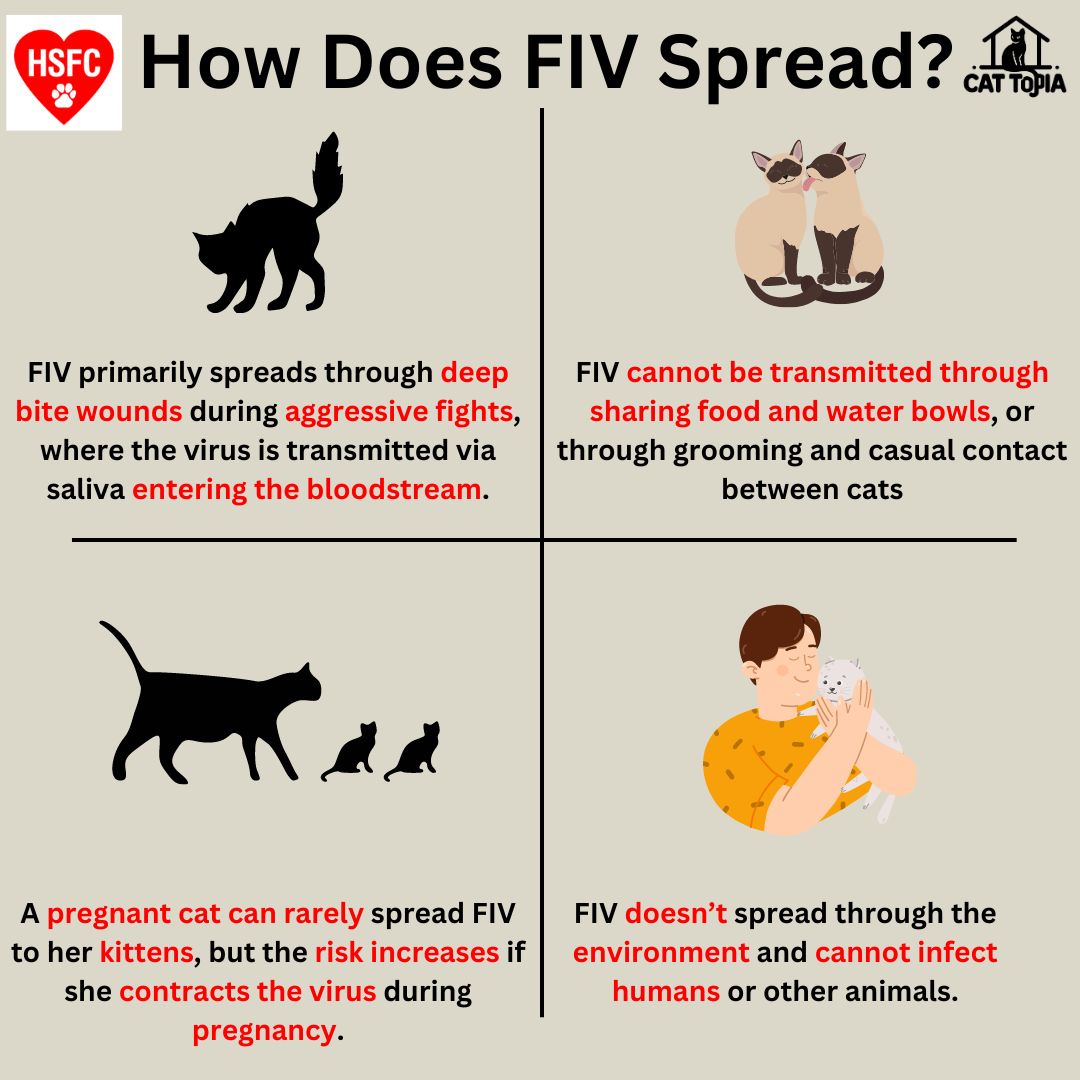
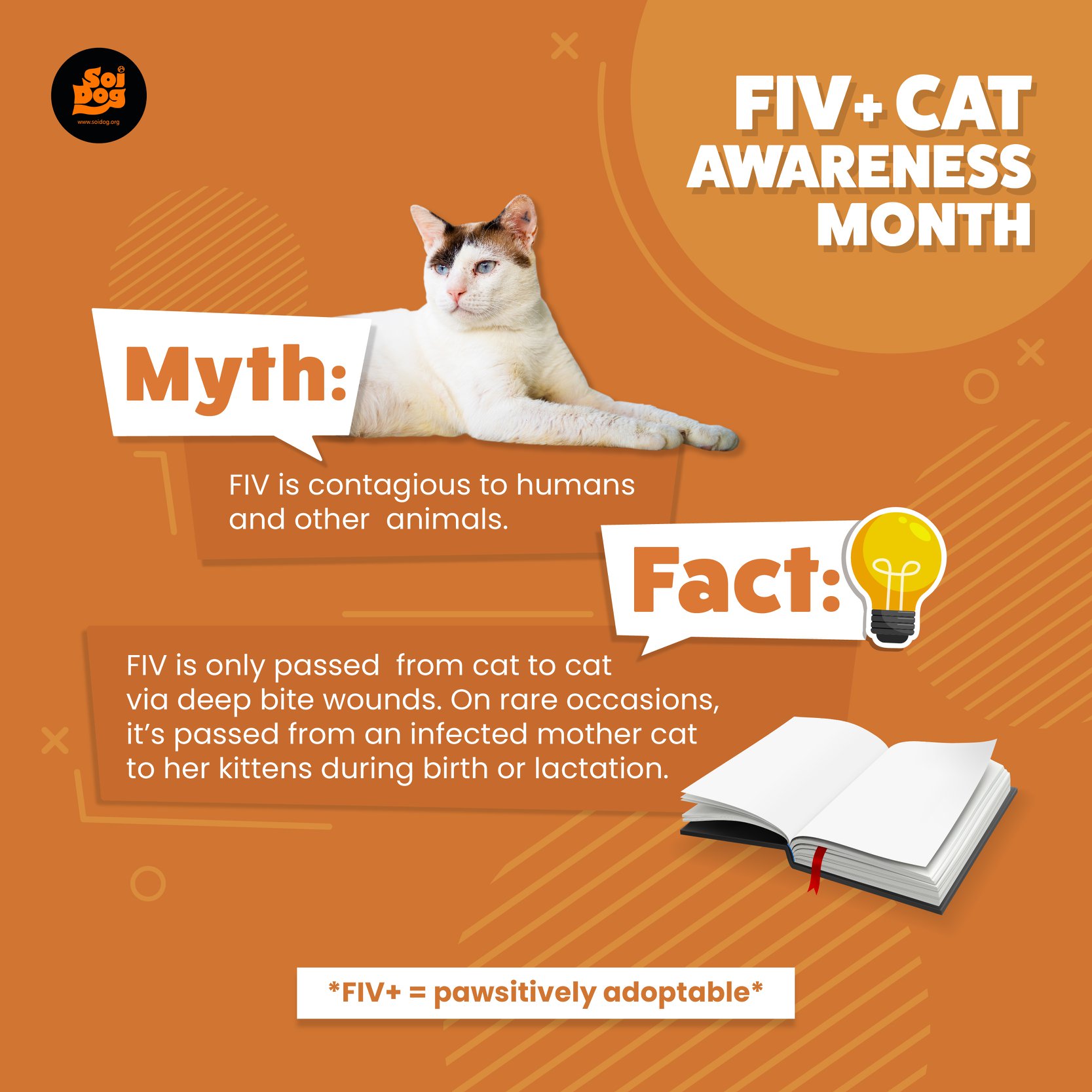
FIV mainly spreads through deep bite wounds. These occur during fights with infected cats. Mother cats can pass it to kittens. This happens rarely. Casual contact, like grooming or sharing bowls, doesn’t spread FIV.
Symptoms Of Feline Fiv
FIV symptoms may take years to show. Common signs include fever and weight loss. Cats might also develop swollen lymph nodes. They could have gum infections and poor coat condition. Not all infected cats show symptoms immediately.
Diagnosis And Testing
Vets use blood tests to diagnose FIV. Early testing helps in managing the condition. It’s important to test new cats before introducing them to others. Regular vet check-ups ensure early detection.
Management And Care
FIV-positive cats need a healthy diet. Regular vet visits are crucial. Keeping them indoors protects them from infections. Good dental care is also important. Vaccinations should be up to date.
FIV-positive cats can coexist with others. Ensure they don’t fight. Monitor their health closely. Provide a stress-free environment. With love and care, FIV cats live fulfilling lives.

Credit: www.forsythpets.org
Transmission Methods
Feline FIV spreads mainly through deep bite wounds from infected cats. Casual contact like grooming or sharing bowls is less risky. Keeping infected cats indoors reduces transmission chances significantly.
Feline Immunodeficiency Virus (FIV) is a concern for many cat owners, especially when considering the risks of transmission among their furry companions. Understanding how this virus spreads is crucial for keeping your cats safe. By knowing the transmission methods, you can take proactive steps to prevent the spread of FIV within your household or neighborhood. Let’s dive into the primary ways FIV can be transmitted among cats.Bite Wounds
Bite wounds are the most common method of FIV transmission. When an infected cat bites another, the virus can transfer through saliva and into the bloodstream. This is particularly prevalent in outdoor cats, where territorial disputes often lead to aggressive encounters. If you have an outdoor cat, you might consider monitoring their interactions or even transitioning them indoors to reduce risk. I once had a neighbor whose cat frequently roamed the neighborhood. Unfortunately, after a scuffle with a stray, the cat tested positive for FIV. This experience highlighted the importance of keeping a watchful eye on your cat’s outdoor activities.Mother To Kitten
Transmission from mother to kitten is another route FIV can take. While less common than bite wounds, it can occur during birth or through nursing. Pregnant FIV-positive cats can pass the virus to their offspring, so it’s vital to have your cat tested if she’s expecting. Knowing her status can help you make informed decisions about caring for her and her kittens. If you’re adopting kittens, ask about their mother’s health history. This step can provide peace of mind and ensure you’re adopting a healthy, thriving pet. Understanding these transmission methods can empower you to make informed choices. How will you protect your cats from FIV? It’s a question worth considering for the sake of their health and happiness.Symptoms In Infected Cats
Feline Immunodeficiency Virus (FIV) affects a cat’s immune system. Symptoms can vary widely among infected cats. Recognizing these symptoms early can help manage the condition better. This section explores the signs of FIV infection in cats. Understanding these symptoms ensures timely care and attention.
Early Signs
Infected cats often show subtle changes first. They may seem tired more often. Appetite might decrease noticeably. You might spot swollen lymph nodes. These are early indicators of FIV. Cats might catch colds or infections easily. Early signs can be mild, but they should not be ignored.
Advanced Symptoms
As FIV progresses, symptoms become more severe. Weight loss is common. Cats may suffer from dental issues. Chronic diarrhea can occur frequently. Persistent fever might be evident. Skin infections may become frequent. Respiratory problems are also possible in advanced stages. Advanced symptoms require immediate veterinary care.
Credit: www.facebook.com
Diagnosing Fiv
Feline Immunodeficiency Virus (FIV) spreads from cat to cat through bites. Diagnosing FIV involves blood tests to detect antibodies. Early detection can help manage the disease and prevent transmission.
Diagnosing Feline Immunodeficiency Virus (FIV) is crucial for the health and well-being of your cat and the entire feline community. Understanding how to accurately diagnose FIV can alleviate many worries you may have about the spread of this virus. Taking the right steps ensures you know how to manage the health of your beloved pet and protect others.Testing Procedures
Testing for FIV involves a simple blood test that can be done at your veterinarian’s office. The test checks for antibodies that indicate the presence of the virus. It’s a straightforward procedure but timing matters—testing too soon after exposure may not yield accurate results. You might wonder if your cat should be tested. If your cat frequently interacts with other cats, especially in outdoor environments, it’s wise to consider it. Early testing can lead to early management of the condition, keeping your cat healthier for longer.Interpreting Results
Once you have the test results, understanding what they mean is the next step. A positive result indicates that your cat has been exposed to FIV and has developed antibodies. However, a positive test doesn’t necessarily mean your cat will get sick. If your cat tests positive, consult your veterinarian about what to do next. They can guide you on managing your cat’s health and maintaining a good quality of life. On the flip side, a negative result might bring relief but remember that regular testing is important, especially if circumstances change. Are you concerned about the validity of these tests? It’s a valid thought, as no test is 100% accurate. Discuss any concerns with your vet to ensure you have the most reliable information and plan for your cat’s health.Preventing Fiv Spread
Feline FIV, or feline immunodeficiency virus, spreads mainly through bite wounds from infected cats. Keeping cats indoors reduces the risk of such encounters. Regular vet check-ups also help monitor and control the spread.
Preventing the spread of Feline Immunodeficiency Virus (FIV) is crucial for cat owners. FIV affects the immune system, making cats vulnerable to infections. Understanding how to protect other cats is key. Effective strategies can limit transmission and keep your feline friends safe.Vaccination Options
Vaccination can be a preventive measure for FIV. It helps reduce the risk of infection in cats. Consult a veterinarian for the best vaccination plan. They can provide guidance tailored to your cat’s needs. Not every cat may need vaccination, so expert advice is important.Managing Infected Cats
Managing cats with FIV is essential to stop the virus spread. Infected cats should be kept indoors to prevent contact with other cats. Regular vet check-ups are vital for monitoring their health. Balanced nutrition boosts their immune system. Keep infected cats stress-free for optimal health.Impact On Feline Communities
Feline FIV spreads through bites, impacting cat communities. Infected cats may face weakened immune systems. Careful management can reduce transmission.
Feline Immunodeficiency Virus (FIV) affects many cat communities. This virus weakens a cat’s immune system. Communities with FIV-positive cats face unique challenges. Understanding these challenges helps protect healthy cats. It also supports FIV-positive cats.Shelter Protocols
Animal shelters play a crucial role. They often house many cats together. FIV spreads through deep bite wounds. Shelters must have specific protocols. These protocols minimize the risk of transmission. Separate housing for FIV-positive cats is essential. It reduces the chance of biting and infection. Regular health checks are vital. Early detection helps manage FIV effectively. Staff must stay informed about FIV. Training programs increase awareness and preparedness.Fiv In Multi-cat Households
Living with multiple cats presents challenges. FIV-positive cats need special care. Owners must monitor interactions closely. Prevent fights to avoid bite wounds. These wounds can spread FIV. Feeding cats separately reduces stress. It prevents competition for food. Regular vet visits help manage health. Early signs of illness can be treated promptly. Owners should educate themselves about FIV. Knowledge empowers them to care for their cats better. `Myths And Misconceptions
Many misunderstandings exist about Feline Immunodeficiency Virus (FIV). These myths often confuse cat owners. Knowing the truth helps in caring for infected cats. Let’s debunk some common misconceptions.
Fiv Vs. Felv
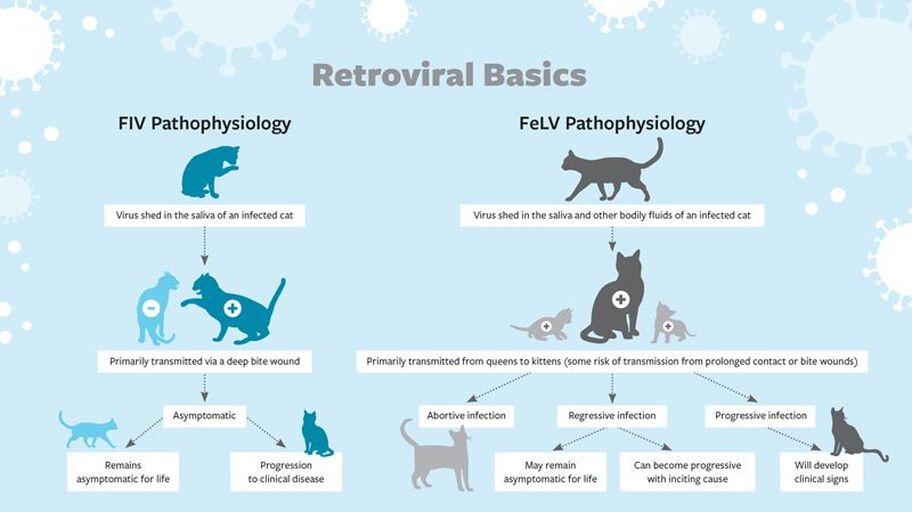
FIV and FeLV are different viruses. FIV is the feline version of HIV. It weakens the immune system. FeLV stands for Feline Leukemia Virus. It causes cancer in cats. Both viruses spread differently. FIV spreads through bites. FeLV spreads through saliva and close contact. People often mix them up. This leads to wrong beliefs.
Fiv Contagion Myths
Many think FIV spreads easily. This is false. FIV mainly spreads through deep bite wounds. Casual contact doesn’t usually spread FIV. Sharing food bowls or grooming doesn’t pose a risk. FIV-positive cats can live with non-infected cats. Supervised introductions are key. Keep the peace to prevent fights. Misunderstandings about FIV can lead to unnecessary fear.
Living With Fiv-positive Cats
FIV spreads among cats through deep bite wounds. Sharing food or grooming doesn’t usually transmit the virus. Keeping FIV-positive cats indoors reduces the risk of spreading it to others.
Living with an FIV-positive cat can be a deeply rewarding experience, but it does come with its own set of challenges. These furry companions deserve a loving home just like any other cat. As you embark on this journey, you may wonder how to best care for them and ensure they live a happy, healthy life. Let’s dive into some practical strategies and tips that can make living with an FIV-positive cat a fulfilling experience for both of you.Care Strategies
Caring for an FIV-positive cat involves some special attention. Regular vet check-ups are crucial to monitor their health. Keep their vaccinations up to date and discuss specific needs with your vet. Focus on a nutritious diet. High-quality cat food can boost their immune system. Consider adding supplements if recommended by your vet. Maintain a stress-free environment. Cats with FIV might be more sensitive to changes. A calm, consistent routine can be reassuring for them.Socialization Tips
Socializing with an FIV-positive cat doesn’t mean isolation. You can safely integrate them with other cats if everyone is spayed or neutered and gets along well. Observe their interactions closely. Look for signs of aggression or discomfort. If any arise, separate them and consult a vet for advice on safe socialization. Encourage play and bonding activities. Use toys and games to strengthen your connection. This enriches their life and helps them feel loved. Living with an FIV-positive cat requires dedication, but the rewards are immeasurable. How can you adjust your lifestyle to ensure their comfort and happiness? By embracing these care strategies and socialization tips, you can create a nurturing environment that allows your feline friend to thrive.Frequently Asked Questions
Can Cats With Fiv Be Around Other Cats?
Cats with FIV can live with other cats. Transmission requires deep bites, so peaceful cohabitation is safe. Regular vet check-ups are essential. Ensure all cats are vaccinated and monitored. Providing a stress-free environment helps prevent aggression. Always consult a vet for personalized advice on managing FIV in multi-cat households.
Can I Kiss A Cat With Fiv?
Yes, you can kiss a cat with FIV. FIV is not transmitted to humans. Always wash your hands after contact to ensure hygiene. Regular vet check-ups help maintain a healthy environment for FIV-positive cats.
Can Fiv Be Transmitted To Other Cats By Saliva?
FIV can be transmitted to other cats through bite wounds. Casual contact, like grooming, usually doesn’t spread it. It’s essential to monitor interactions between cats, especially if one is infected. Always consult a veterinarian for guidance on managing FIV in a multi-cat household.
Can Cats With Fiv Share Water With Other Cats?
Cats with FIV can share water with other cats. FIV spreads primarily through deep bite wounds. Sharing water poses minimal risk for transmission. Always monitor interactions and consult your vet for guidance.
Conclusion
Understanding Feline FIV is crucial for cat owners. It’s a virus affecting the immune system. Cats with FIV can live normal lives. Yet, FIV can spread between cats through bites. Regular vet visits help monitor health. Proper care reduces risks and keeps your cat healthy.
Always introduce new cats cautiously. Ensure your cats are free from FIV. Protecting all pets is a priority. Awareness and prevention are key. Keep learning about feline health. Stay informed to ensure happy, healthy cats. Your efforts make a difference in their lives.