Why Your Cat Headbutts Then Bites You
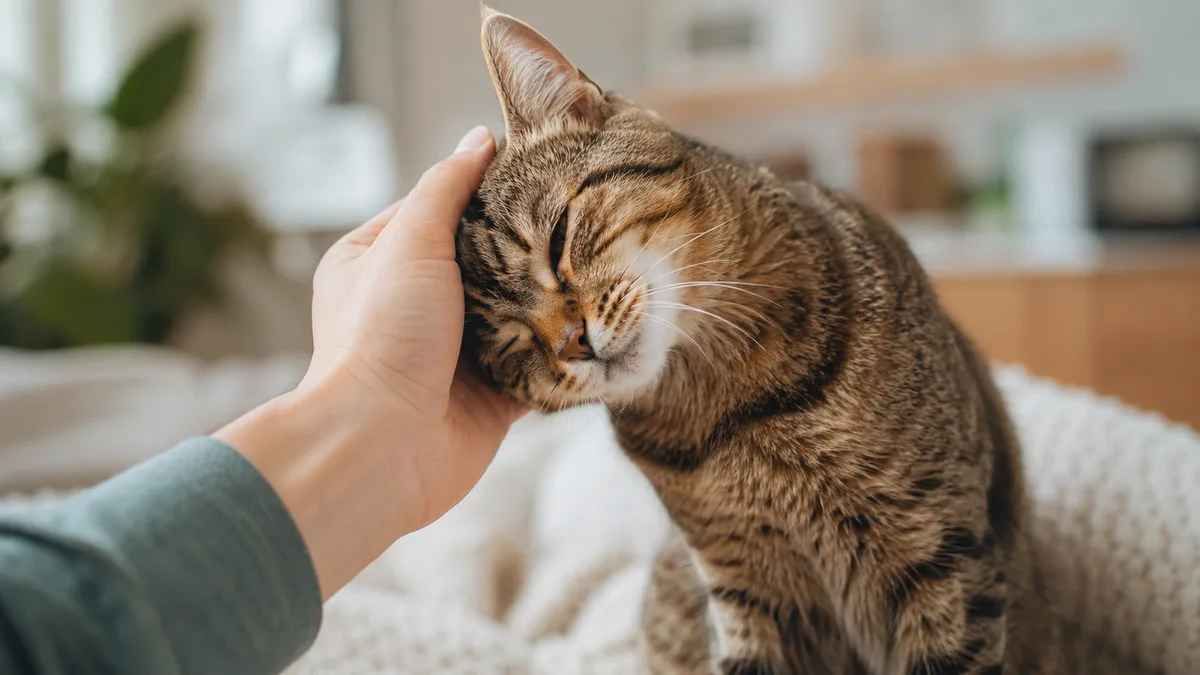
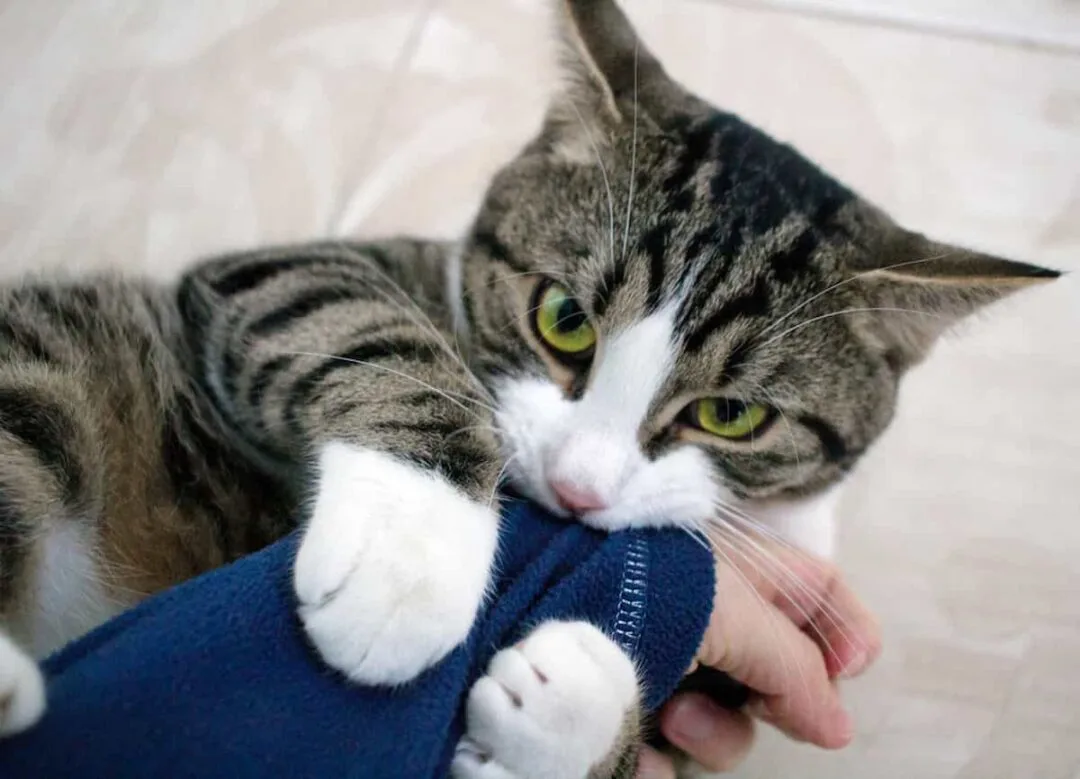
You're petting your cat, she's purring and rubbing her face against your hand. Then, out of nowhere, she bites you. If you've ever asked "why does my cat headbutt then bite me," you're not alone.
It's one of the most confusing mixed signals cats give us.
Research from the Cornell Feline Health Center confirms that headbutting, or bunting, is a scent-marking behavior tied to affection. The bite that follows is rarely random. Understanding which of three likely causes is happening in the moment is the key to keeping your skin intact.
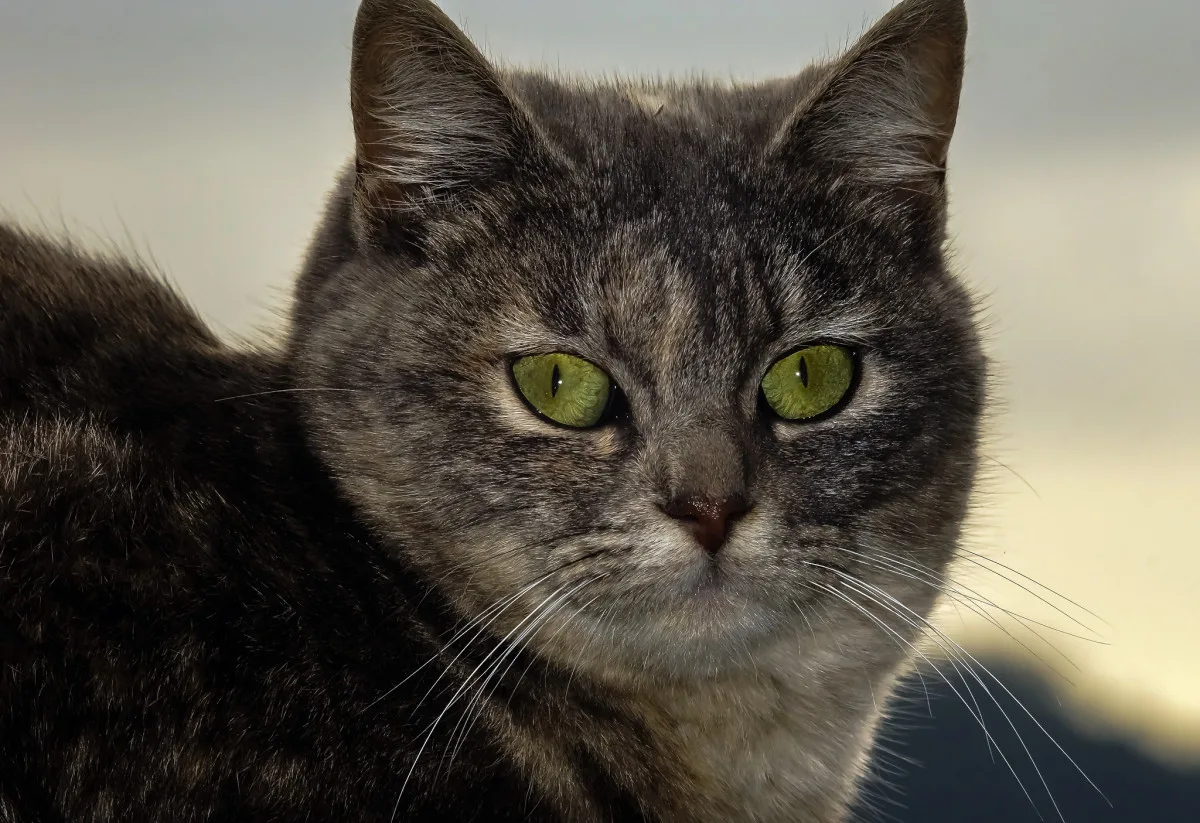
Image source: Bing (Web (fair-use with source credit))
Quick Answer
Your cat headbutts to mark you with friendly scents from her cheek glands. The bite that follows signals overstimulation, play, or redirected energy. Watch the tail, ears, and body tension.
A twitching tail means stop. A soft nibble with relaxed ears means affection. A hard bite with pinned ears means back off now.
Why Your Cat's Mixed Signals Make Perfect Sense (to Them)
Cats communicate in a language that makes perfect sense to other cats. To us humans, it looks like chaos. The headbutt-then-bite sequence is actually two separate messages delivered in quick succession.
The headbutt says "I trust you and I want to share my scent with you." It's a bonding ritual. The bite says "I've gone from comfortable to overwhelmed in the time it took you to give me three more strokes." Or it says "You look like something I want to hunt right now."
The reason this feels confusing is timing. Cats don't have a slow fade from happy to annoyed. They go from zero to sixty in a heartbeat.
One second your cat is bumping her forehead against your chin. The next second she has her teeth on your arm.
The good news? She's not being mean. She's being a cat.
And once you understand the split-second cues that separate the headbutt from the bite, you can see it coming every time.
As of 2026, veterinary behaviorists have a solid consensus on this pattern. The sequence is predictable, even though it feels sudden to us. The trick is learning to read the micro-signals that happen between the rub and the chomp.
The Secret Language of Bunting: More Than Just "I Love You"
Let's talk about the headbutt itself first. It's called "bunting" in feline behavior circles, and it's one of the highest compliments your cat can give you.
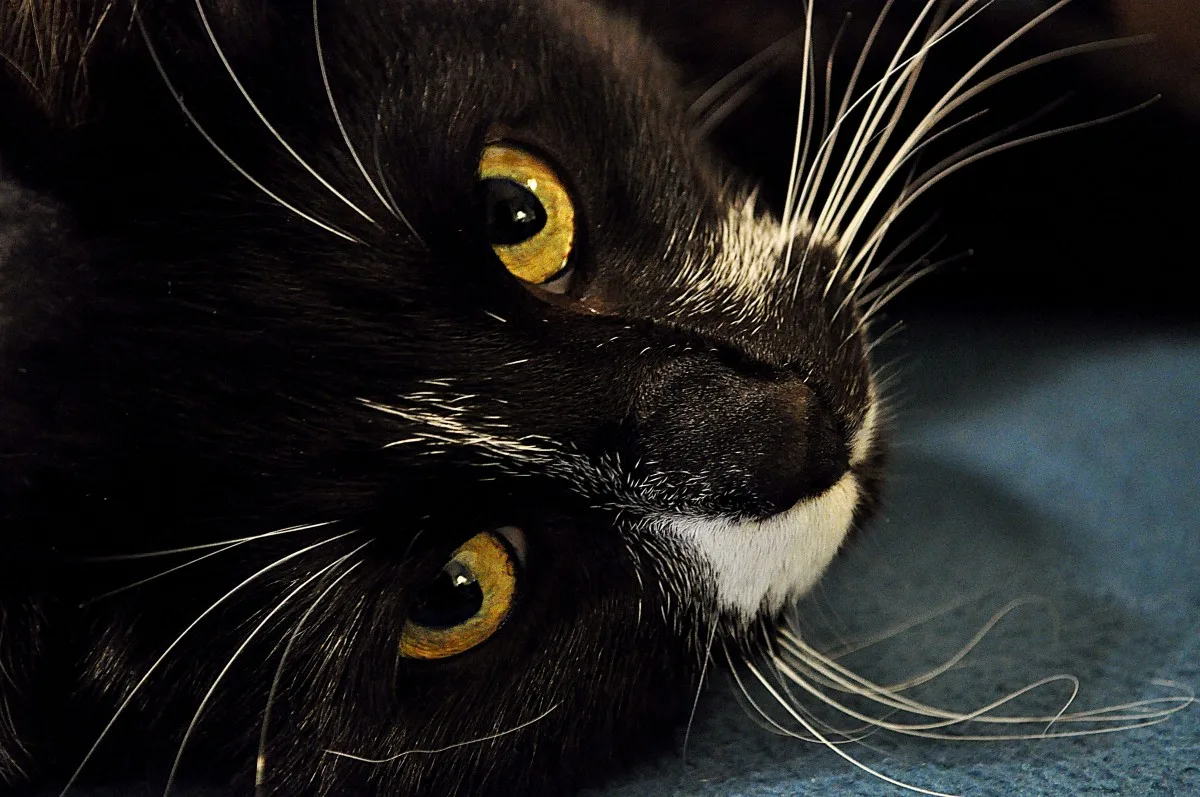
Cats have scent glands on their cheeks, chin, forehead, and the base of their tail. When your cat presses her forehead against your hand or face, she's depositing her unique scent onto you. This does three things.
First, it marks you as familiar and safe. Second, it picks up your scent in return, so she can check where you've been. Third, it triggers a feel-good response in her brain.
Bunting releases endorphins. It genuinely makes her happy.
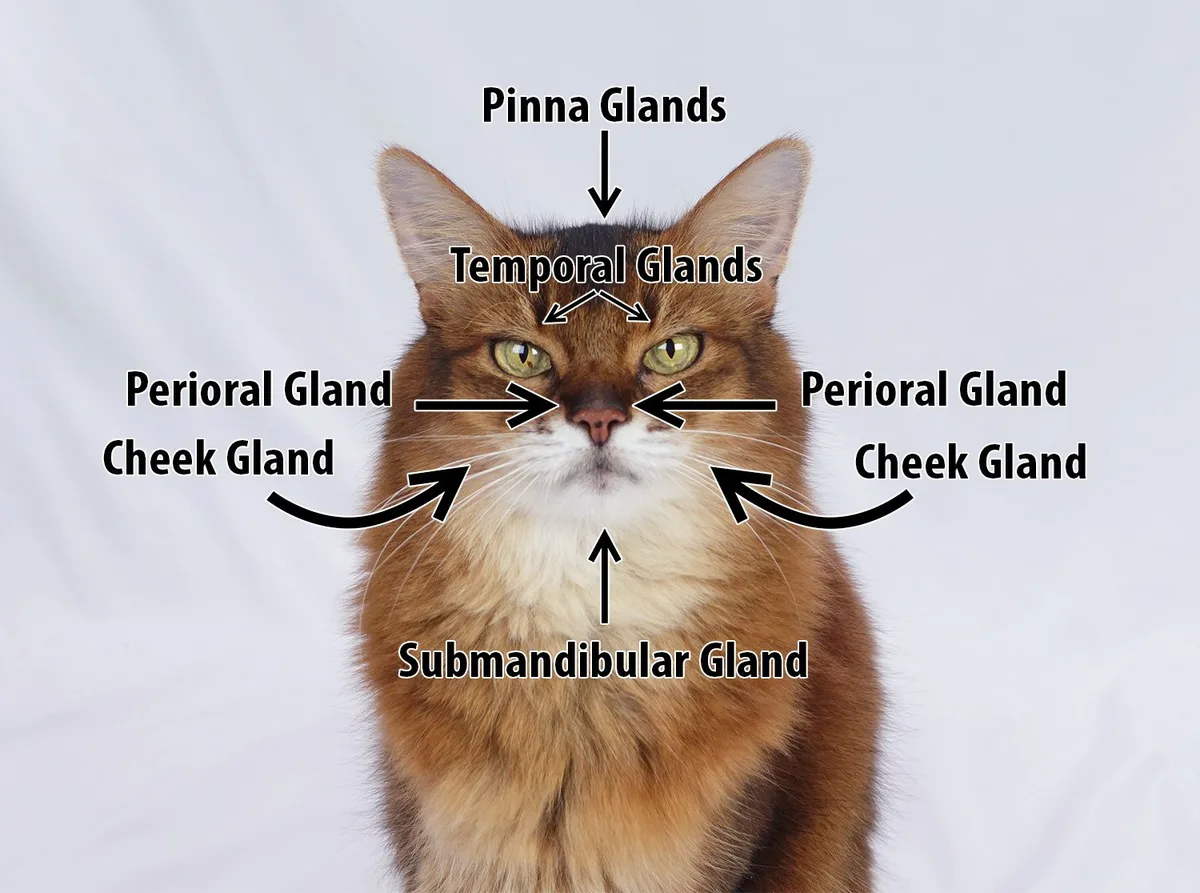
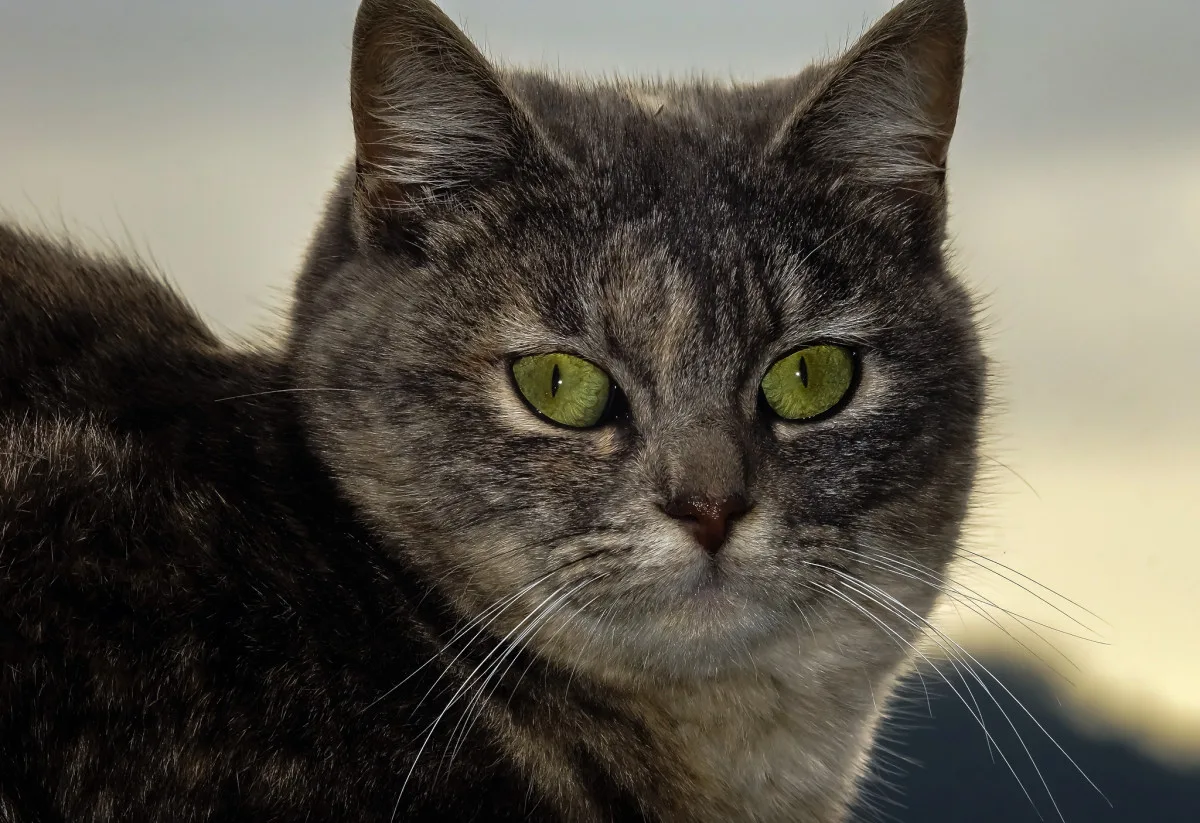
Image source: Bing (Web (fair-use with source credit))
So when your cat headbutts you, she's not just being cute. She's performing a social bonding ritual that cats have used for thousands of years. It's the feline equivalent of a hug and a handshake rolled into one.
But here's where the confusion starts. Bunting is often the opening move in a longer interaction. Your cat has just declared that she wants contact.
The question is what kind of contact she wants next.
If she wants continued gentle petting, you'll see her lean into your hand, purr, and keep her tail relaxed. If she wants to play, you might see her pupils dilate and her hind end wiggle. If she's already past her threshold for touch, you'll get the bite.
Understanding which branch of the decision tree you're on comes next.
Three Reasons That Headbutt Becomes a Bite
There are three main paths that lead from a friendly headbutt to a bite. Each one looks different, and each one needs a different response from you.
Reason 1: Overstimulation aggression. This is the most common cause. Your cat enjoys being petted, but only for a specific number of strokes. Once she's had enough, the sensory input becomes uncomfortable.
The bite is her way of saying "stop now." The warning signs include skin twitching on her back, a stiffening body, and a low tail flick. You might only get two or three strokes before she reaches her limit.
Reason 2: Play aggression. Your cat headbutts you, then suddenly sees your moving hand as prey. This is more common in kittens and young cats under two years old. The bite is harder, often accompanied by bunny kicks with the back feet.
Your cat's pupils will be dilated, and her ears will be forward. She's not being aggressive. She's being a predator who forgot you're not a toy.
Reason 3: Affectionate biting. Some cats give gentle nibbles as part of their love language. These are soft pinches, not puncturing bites. Your cat might hold your hand in her mouth without pressure.
Her body will be relaxed, eyes half-closed, purring the whole time. This is not a problem to fix. It's just how she shows love.
The decision tree helps you tell these three apart in real time.
The Decision Tree: Figure Out What Your Cat Is Saying
Here is the framework that behaviorists use. Run through these questions in order the next time your cat bites after a headbutt.
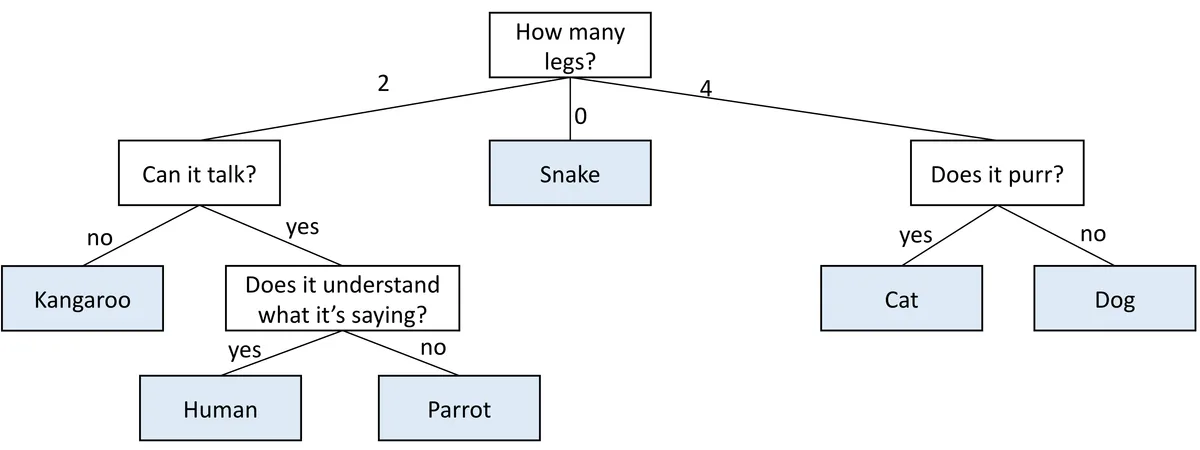
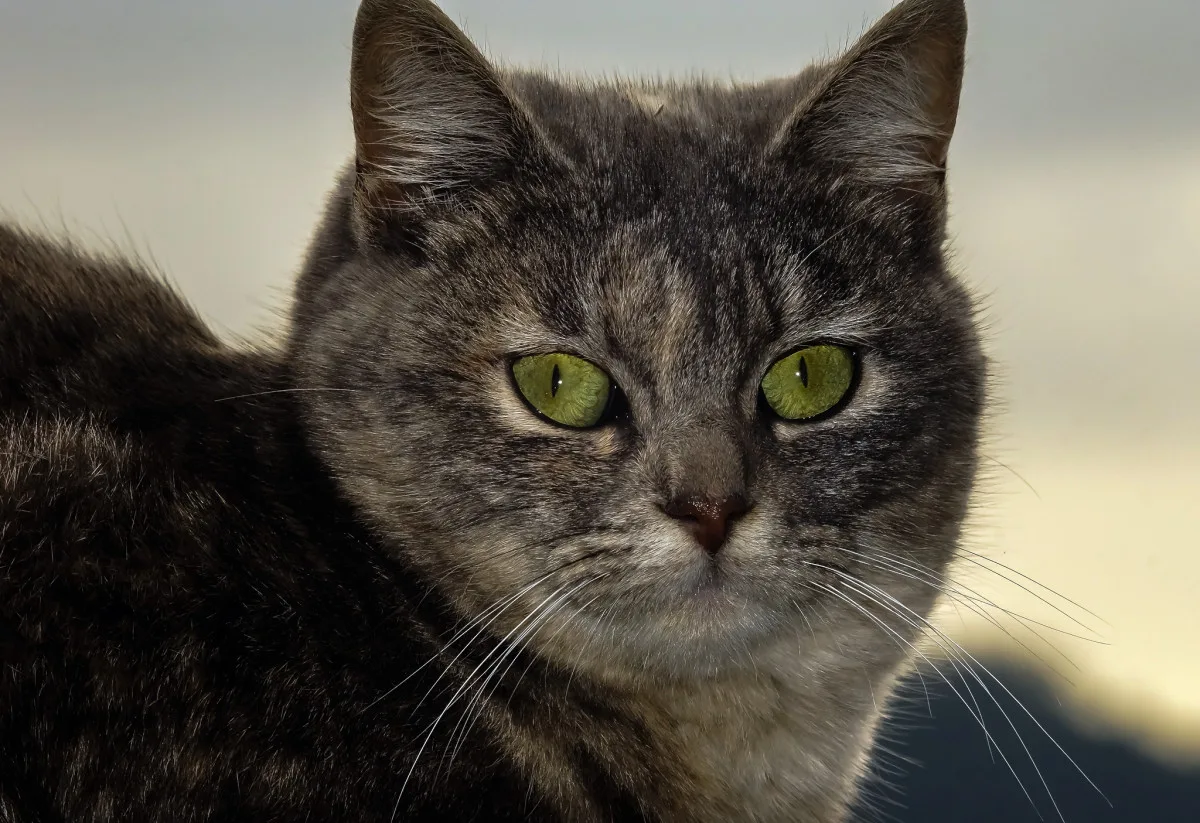
Image source: Bing (Web (fair-use with source credit))
| What You Observe | Most Likely Cause | What to Do |
|---|---|---|
| Tail twitching, skin rippling on back, ears flattening | Overstimulation aggression (petting-induced) | Stop petting immediately. Do not pull away. Freeze your hand. |
| Dilated pupils, crouched stance, hind-end wiggling | Play aggression | Redirect to a wand toy or crinkle ball. Never use your hand as the toy. |
| Soft nibble, purring, relaxed ears, slow blinking | Affectionate biting (love bite) | Accept it or gently withdraw. This is normal cat behavior. |
| Ears pinned back, growling, hissing before or during the bite | Fear or pain-based aggression | Consult your veterinarian. This requires medical investigation. |
The first branch of the decision tree is always about the tail. A relaxed, upright tail with a slight curve at the tip means you are still in the safe zone. A flicking tail, especially at the tip alone, is your cat's version of a flashing red light.
Stop petting immediately.
If you stop petting and the cat relaxes, you have your answer. She was overstimulated. If you stop petting and she attacks your hand again, you are looking at play aggression that needs a toy outlet.
If she never stops purring and the bite is soft, she's just nibbling you with love. No action needed.
The Mistakes That Train Your Cat to Bite (And What to Do Instead)
The biggest mistake cat owners make is reacting. When the bite happens, pulling your hand away sharply is the most natural response in the world. It's also the worst one.
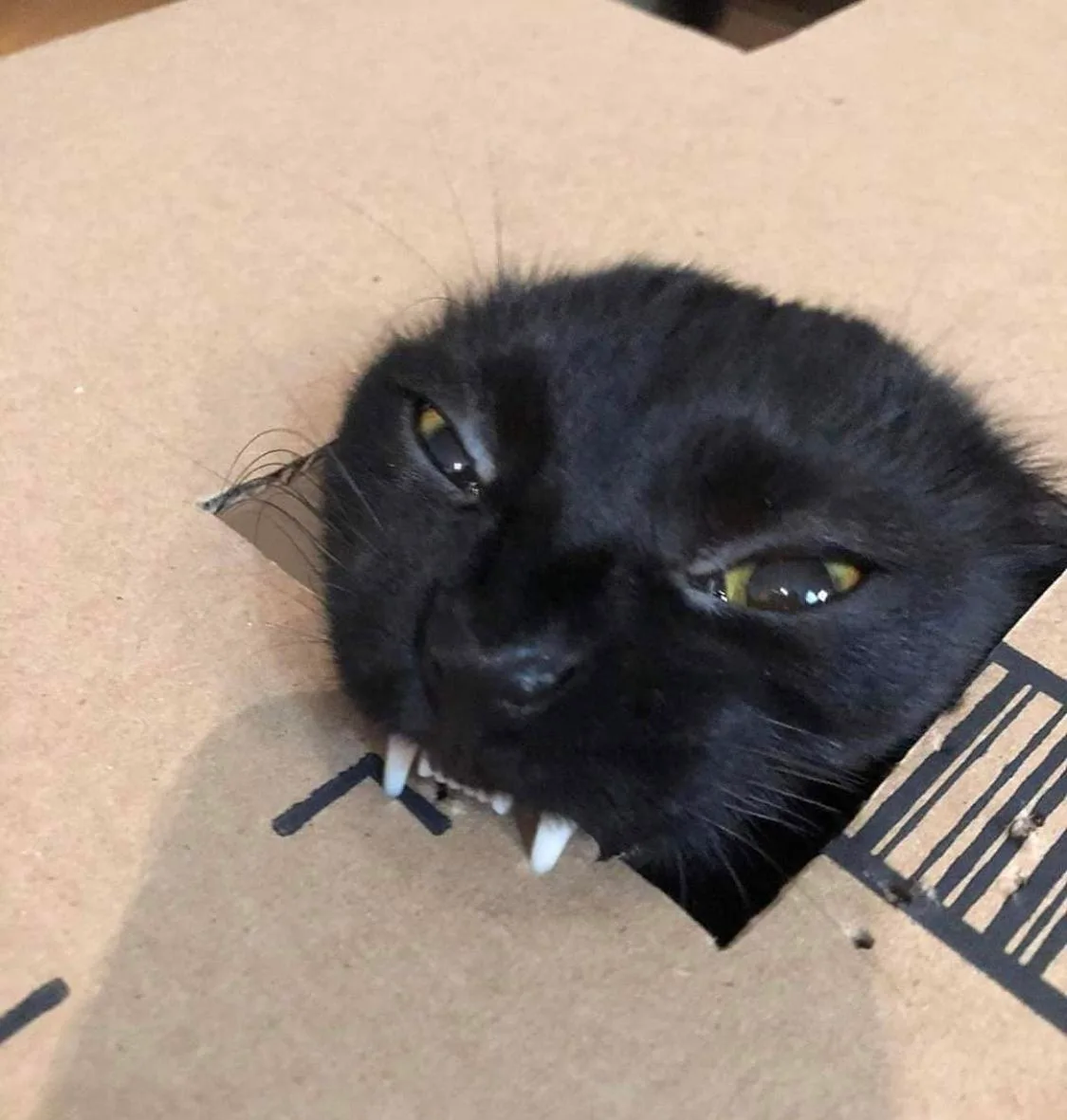
Pulling away triggers your cat's prey drive. Her brain sees a fast-moving object and wants to grab it. She will bite harder and hold on longer.
You've just taught her that biting makes the hand do something fun and chaseable.
Here are the other common mistakes and what to do instead.
Mistake 1: Yelling or punishing your cat. Cats do not connect punishment with their own behavior. They connect it with you being scary. Aggressive punishment makes them anxious and more likely to bite defensively in the future.
Instead, say nothing. Freeze your hand. Wait for her to release.
Then calmly leave the room for 30 seconds.
Mistake 2: Reaching for the same spot every time. Many cats are sensitive on their lower back and belly. If your cat only bites after you touch these areas, the solution is simple. Pet the head, cheeks, and chin.
Avoid the back, sides, and tail base. Watch her reaction and adjust.
Mistake 3: Forcing petting when she walks away. A cat who walks away from you is signaling that she needs space. If you follow her and continue petting, you are overriding her consent. She will bite to enforce the boundary she already tried to set.
Let her come to you for affection. Let her leave when she's done.
Mistake 4: Using your hands as play toys. This is the big one. If you wiggle your fingers at a kitten or let her attack your hands during play, you are training her that human skin is a valid target. Always use a wand toy, a stuffie, or a laser pointer.
Keep your hands out of the game entirely.
Real-Life Scenarios That Help You Spot the Difference
Here's how the decision tree plays out in actual interactions. See if any of these sound familiar.
Scenario A: The five-stroke limit. Your cat jumps onto your lap, headbutts your hand, and purrs. You stroke her back. On stroke three, her tail tip twitches.
On stroke four, her skin ripples. On stroke five, she grabs your arm and bites. This is classic overstimulation aggression.
The solution is to count strokes. Stop at two strokes next time. See if she stays calm.
If she does, you have found her limit.
Scenario B: The ambush from behind. Your cat rubs against your leg while you stand at the kitchen counter. You reach down to pet her. She grabs your hand, kicks with back feet, and bites hard.
Her ears are forward and her pupils are huge. This is play aggression. She saw your hand as a moving toy.
Redirect her to a wand toy kept nearby. Never let her practice this on your skin.
Scenario C: The gentle holder. Your cat headbutts your chin, then takes your finger in her mouth. She holds it there with no pressure. She purrs and slow blinks.
This is an affection bite. She is not hurting you. You can gently remove your finger or let her sit there.
No behavior modification needed.
Scenario D: The sudden stranger. Your cat rubs on your hand, then freezes. Her ears pin flat. She growls.
Then she bites hard and runs away. Something hurt or scared her. This could be pain from a dental issue, arthritis, or a hidden injury.
Schedule a veterinary exam. Pain-based aggression is different from overstimulation or play.
Frequently Asked Questions
How can I tell if my cat's bite is playful or aggressive?
Playful bites come with relaxed ears, purring, and no hissing. Aggressive bites include pinned ears, growling, and a stiff body. Play bites often involve bunny kicks.
Aggressive bites are quick, hard, and followed by fleeing.
Why does my cat headbutt me then bite my face?
Face bites often happen during close bonding moments. Your cat may be overstimulated by the proximity. She may also be trying to groom you.
Waking up to a face bite can mean she wants breakfast and is using a strong signal.
Should I punish my cat for biting after headbutting?
Never punish your cat for biting. Punishment increases fear and anxiety. It damages trust.
Instead, learn her triggers. Stop petting before the bite happens. Redirect play energy to toys.
Positive reinforcement builds better behavior.
How many strokes does it take before a cat bites?
Every cat is different. Research from the Journal of Feline Medicine and Surgery confirms that some cats tolerate only two to three strokes on the lower back. Others allow ten.
Watch the tail for the first sign of twitching. Stop there.
Can kittens grow out of headbutting then biting?
Kittens often grow out of play aggression by age two. But the headbutt-then-bite pattern can persist into adulthood if it becomes a learned behavior. Consistent redirection to toys and respecting the cat's limits will reduce the bites over time.
When should I see a vet about my cat's biting behavior?
See a vet if the biting is new, sudden, or accompanied by hiding, yowling, or litter box problems. Pain from dental disease or arthritis can cause a normally friendly cat to bite. A veterinary behaviorist can help if the pattern is severe.

Similar Posts