Why Do Male Cats Have Nipples? The Surprising Truth
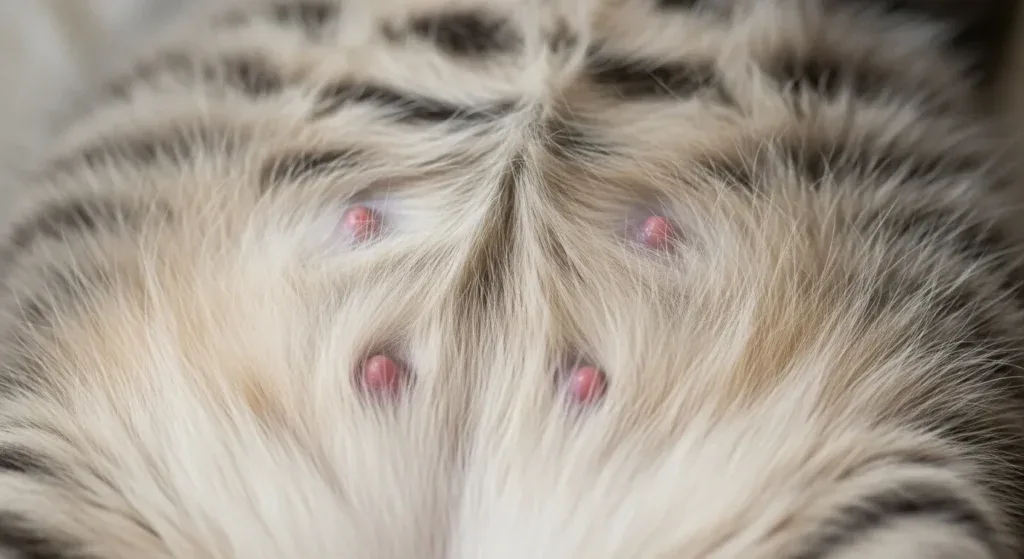
If you've ever noticed tiny bumps on your male cat's belly and wondered "why do male cats have nipples," you're not alone. It's one of those questions that pops up the first time you give your cat a good belly rub and spot something unexpected. The short answer is straightforward: they have them because all mammals start out on the same developmental path, regardless of sex.
Here's the key biological detail: nipples form in cat embryos around day 14 to 21 of gestation, before the kitten's sex is determined. That's about one-third of the way through a typical 63 to 65 day pregnancy. The testosterone surge that directs development toward a male kitten happens after nipples have already appeared.
As of 2026, this remains one of the clearest examples of shared mammalian biology that veterinarians point to when cat owners ask. Let's walk through exactly how this works and what it means for your tomcat.
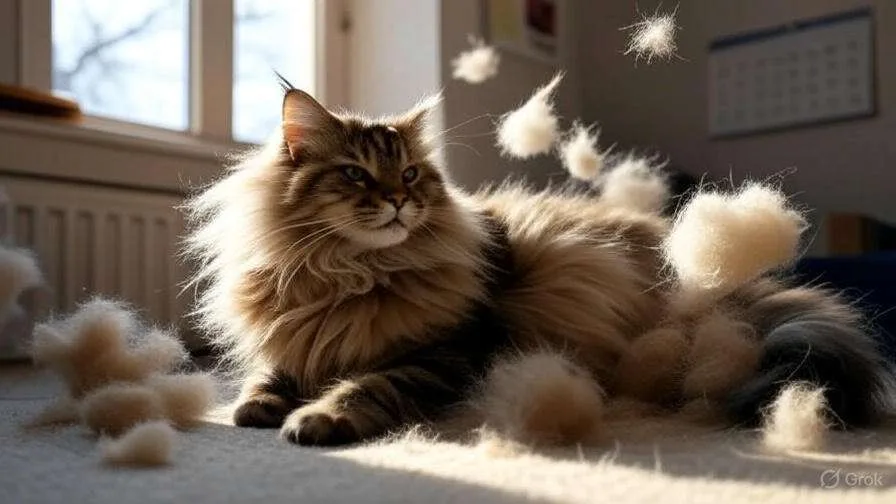
Image source: Web (Bing) / petfel.com (Web image (fair-use with source credit))
Why Do Male Cats Have Nipples? The 30-Second Answer
Male cats have nipples because all mammalian embryos form them before sex is determined. Nipples develop in the first few weeks of gestation. The testosterone surge that makes a kitten male happens later.
So the nipples stay, even though they never serve a function.
It's that simple. Every cat, male or female, starts with the same basic body plan. Nipples are part of that initial blueprint.
Your male cat's nipples aren't a mistake, a leftover, or a sign of anything unusual. They're just a normal part of being a mammal.
The Basic Biology: How and When Nipples Form
Let's get into the developmental timeline. In our research, this is where most cat owners find the "ah-ha" moment that makes everything click.
Around day 14 of gestation, the cat embryo develops two raised ridges of tissue along its belly. These are called mammary ridges or milk lines. They run from the area near the front legs down toward the groin.
Nipples form along these ridges over the next week or so.
At this point, the kitten's sex hasn't been determined yet. The embryo has what biologists call a bipotential gonad, it can develop into either ovaries or testes. The SRY gene on the Y chromosome triggers testes development, but that process starts after the nipples have already formed.
Per the National Institutes of Health's overview of mammalian development, this sequence is nearly identical across all mammals. The nipples form first, then sex differentiation follows. By the time testosterone begins shaping male anatomy, the nipple blueprint is already locked in.
The practical takeaway? Your cat didn't "grow" nipples as a male. He had them before he was a male.
They're part of the default mammalian body plan that every kitten inherits.
What about function?
Female cats have functional mammary glands that produce milk for kittens. Male cats have the same glandular tissue, but it remains underdeveloped. The tissue doesn't respond to the hormonal signals that trigger milk production in females.
So it stays small, non-functional, and entirely harmless.
Biologists call this a vestigial feature, a structure that served an evolutionary purpose in ancestors but no longer has a function in modern males. It's the same reason male dogs, male humans, and male mice all have nipples. Evolution doesn't waste energy removing non-harmful features.
What Male Cat Nipples Actually Look Like (Visual Guide)
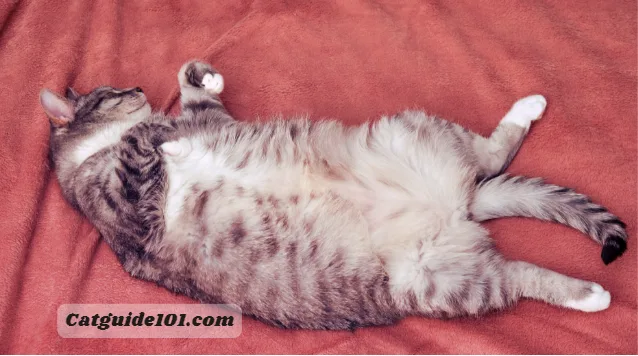
This section is where a picture is worth a thousand words. Your male cat's nipples are small, symmetrical, and arranged in two parallel rows along his belly.
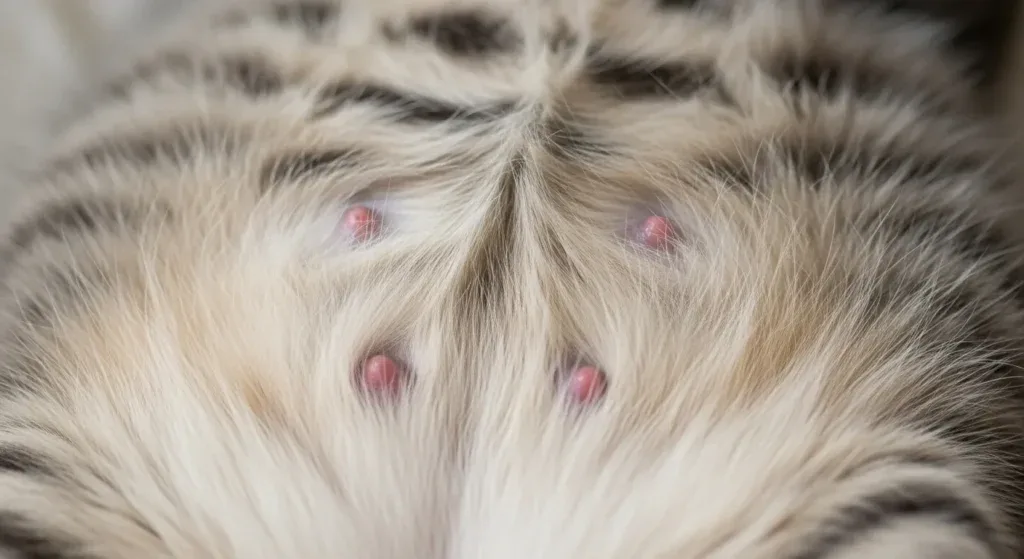
Here's what to expect when you look:
| Feature | What's Normal |
|---|---|
| Count | 6 to 8 nipples (3 or 4 pairs) |
| Location | Two rows from chest to groin, evenly spaced |
| Size | 2 to 4 mm in adult males; slightly smaller than female nipples |
| Color | Pink, light pink, or dark brown depending on coat color |
| Texture | Small, flat, or slightly raised bumps |
| Symmetry | Left and right sides should match |
In kittens, nipples are tiny and can be hard to spot, especially in fluffy breeds. As your cat grows, they become more visible but still stay relatively small compared to a female cat's nipples. An intact female's nipples will enlarge noticeably if she becomes pregnant or goes through a false pregnancy.
Breed differences
Short-haired cats make nipple identification easier since there's less fur to part. Long-haired breeds like Persians or Maine Coons often conceal nipples well. Hairless breeds like the Sphynx make nipples extremely obvious, owners sometimes mistake them for skin tags because they're so visible against bare skin.
Seasonal or age-related changes
Your male cat's nipples will look roughly the same year-round and throughout his life. They don't change with seasons, mating cycles, or neutering. Neutered males keep the same nipple appearance as intact males.
The only time you might see a change is if there's a health issue, which we'll cover in a moment.
Common Visual Confusions: Lumps, Ticks, and Spay Scars
This is the part that sends cat owners to the internet in a panic. You find a bump on your cat's belly, and your brain immediately thinks the worst. Most of the time, you're just looking at a normal nipple.
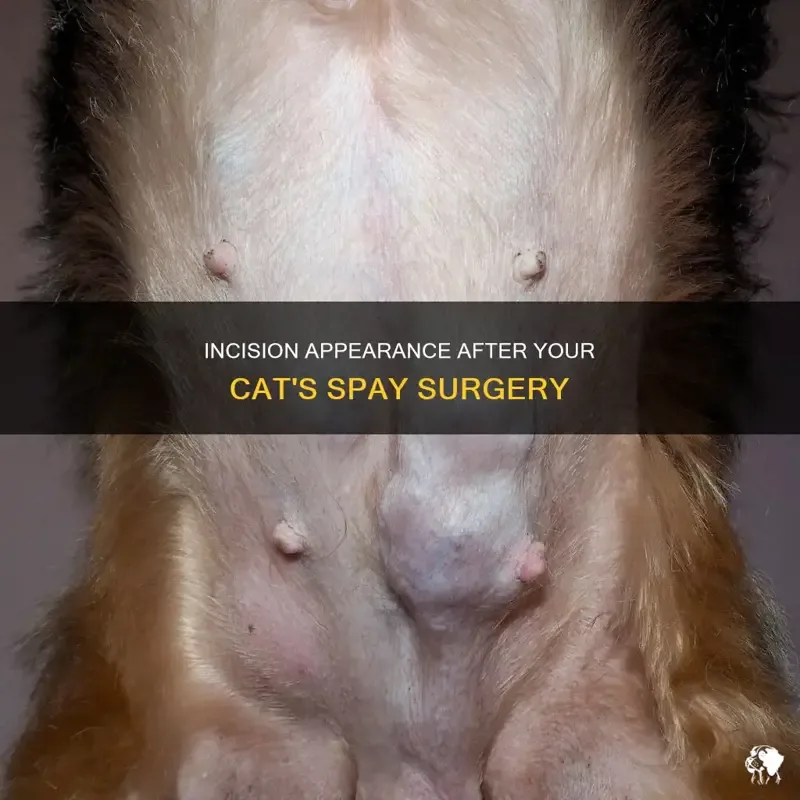
Here are the three most common mix-ups:
Nipples vs ticks
Ticks attach to the skin and have a visible head and legs. Nipples are smooth, symmetrical, and attached at the base with no separate head. If you're unsure, try a gentle comb-through.
A tick will stay attached; a nipple won't budge. Ticks also tend to be on the neck, head, or armpits, not in the symmetrical rows nipples follow.
Nipples vs skin tumors
This is the scary one. Skin tumors in cats can look like raised bumps, but there are key differences. Tumors often grow over time, change shape, or have irregular borders.
Nipples stay the same size and shape for your cat's entire life. Mammary tumors in male cats are extremely rare, less than 1 percent of all feline mammary tumors occur in males, per veterinary oncology data. But if you feel any new lump that wasn't there before, get it checked.
Nipples vs spay scars
Spay scars are usually a single thin line on the belly midline, often with a small knot of scar tissue underneath. They're located between the belly button and the groin, not along the nipple rows. If your cat was spayed (impossible for a male, but some adopted cats have ambiguous history), the scar would run vertically down the center.
Nipples are paired on each side.
The table below summarizes the quick visual check:
| What You Found | Key Identifier |
|---|---|
| Normal nipple | Symmetrical, paired, same size as others, hasn't changed |
| Tick | Attached, has visible legs/body, not symmetrical |
| Skin lump | Irregular shape, growing, not in a row with others |
| Spay scar | Single midline line or small knot, not paired |
How to Check Your Cat's Belly Safely
You don't need to be a vet to know what's normal for your cat. A quick belly check once a month can help you spot changes early. Here's a simple process.
Step 1: Pick the right moment
Choose a time when your cat is relaxed. After a meal, during a lap session, or right before sleep works best. Never force a belly exam on a stressed or agitated cat.
That's a quick way to get scratched.
Step 2: Get a visual
Part the fur along the belly with your fingers. Look for symmetry. The nipples should be evenly spaced and look similar from left to right.
Count them. Most cats have 6 to 8, but 4 to 10 is still within normal range. Know your cat's baseline number.
Step 3: Gentle touch
Use the flat of your finger, not the tip. Lightly feel each nipple. It should feel like a small smooth bump.
There should be no hardness, heat, discharge, or tenderness. Your cat should not flinch or pull away when you touch them. If they do, that's a red flag.
Step 4: Compare to last time
Mental note or a photo on your phone, either works. What matters is knowing what "normal" looks like for your specific cat. If nothing has changed, you're good.
If you notice anything different, flag it and monitor.
When to call the vet
You don't need to rush to the vet for every tiny bump. But schedule an appointment if you see any of these signs:
- A nipple that has grown noticeably larger
- Redness or swelling around a nipple
- Discharge (fluid, blood, or pus)
- A lump that feels hard or irregular
- Your cat is licking or chewing at the area
- Any new bump that doesn't look like the other nipples
Mammary issues in male cats are uncommon, but they do happen. Catching them early makes treatment far more effective. A quick belly check costs nothing and takes 30 seconds.
It's one of the easiest ways to stay ahead of potential health problems.
When a Male Cat's Nipples Could Mean a Health Problem
Here's the honest truth: serious nipple problems in male cats are rare. But they're not impossible. Knowing what to watch for could save you an unnecessary vet bill or catch something early.
The most common issue is trauma. Male cats, especially outdoor ones, can get into fights or scrape their belly on rough surfaces. A scratched nipple might look red, scabbed, or swollen.
It usually heals on its own within a few days. Clean it gently with warm water. If it doesn't improve in 48 hours, call your vet.
Mammary tumors in male cats
This is the one that worries owners most. Mammary tumors in male cats do happen, but they're extremely uncommon. Veterinary oncology data puts the rate at less than 1 percent of all feline mammary tumors.
When they do occur, they tend to be aggressive. That's why early detection matters.
The red flag is a firm, irregular lump near a nipple that wasn't there before. It might feel like a pea or a small marble under the skin. It won't be symmetrical with the opposite side.
If you feel something like that, schedule a vet visit within a week.
Mastitis in male cats
Mastitis is inflammation of the mammary tissue. It's mostly associated with nursing females, but it can happen in males too. It's usually caused by a blocked gland or infection.
Symptoms include a warm, swollen, red nipple area. Your cat might lick at it constantly. He might act lethargic or lose his appetite.
If you see any of these signs, don't wait. Mastitis can progress quickly and requires antibiotics or sometimes surgical drainage.
Nipple discharge
A small amount of clear fluid can sometimes happen with hormonal imbalances. It's not common in neutered males at all. Bloody or pus-like discharge is always abnormal.
That warrants a same-day vet visit.
When to stop watching and start acting
Use this simple decision guide:
| Situation | What to Do |
|---|---|
| Normal-looking nipples, no change | Nothing. That's your cat. |
| One nipple looks different but no other symptoms | Monitor for 2-3 days. Take a photo for comparison. |
| Redness or swelling | Check for injury first. If no injury found, call vet. |
| Hard lump under or near a nipple | Schedule vet visit within a week. |
| Discharge (blood, pus) or open sore | Same-day vet visit. |
| Cat seems sick, lethargic, or isn't eating | Emergency vet. |
Your monthly belly check is your best tool. Most male cats go their whole lives with zero nipple issues. But if something changes, you'll catch it before it becomes a bigger problem.
Frequently Asked Questions
Can male cats produce milk?
No. Male cats have the same mammary tissue as females, but it doesn't have the right hormone receptors to produce milk. Their glands stay underdeveloped throughout life.
There are extremely rare cases of hormonal tumors causing milk production, but you would notice other signs first.
Do male cat nipples get bigger after neutering?
No. Neutering removes the testicles and reduces testosterone, but it doesn't change nipple size. Your cat's nipples will look the same after surgery as they did before.
If they seem larger after neutering, have your vet take a look.
How many nipples do most male cats have?
Most male cats have six to eight nipples arranged in two symmetrical rows. That's three or four pairs. Some cats have fewer or more.
The range is typically four to ten. The number doesn't matter as long as they are evenly spaced and paired.
Why does my male cat have a lump near his nipple?
It could be a normal nipple, a tick, a skin tag, or a fatty tumor. Start by checking if it's symmetrical with the other side. If it's a single lump that the other side doesn't match, monitor it.
If it grows or changes, see your vet. Most lumps in male cats are harmless.
Should I be worried if my male cat's nipples are red?
Not automatically. Redness can mean your cat scratched himself on something. Check for a scab or small wound.
If the area is warm, swollen, or your cat is licking it, that's a stronger sign of infection. A little redness without other symptoms usually clears up in a day or two.
Do all mammals have the same number of nipples?
No. Nipple count varies widely by species. Cats have six to eight.
Dogs have eight to ten. Humans usually have two. Pigs can have over a dozen.
The number depends on the species' average litter size and body structure. But the developmental reason is the same across all mammals.

Similar Posts