Calico Cat Types: Patterns, Colors & Genetics
If you've ever tried to explain to someone what a calico cat is, you already know it gets confusing fast. Is it a breed or a pattern? And why do some calicos look pale and creamy while others are bold and bright?
The truth is, there are several distinct types of calico cats, and telling them apart comes down to genetics, color depth, and coat marking structure rather than the category on a vet form.
As of 2026, feline genetics research classifies all calico patterns under the umbrella of tricolor or tortoiseshell-and-white expressions, affecting roughly 1 in 3,000 calico births. Understanding these variations isn't just party trivia though, it helps you identify what's typical, what's rare, and what a good breeder (or a thorough adopting resource) is actually talking about.
Quick Answer
There are four main types of calico cats. The classic or traditional calico has white, black, and orange patches. Dilute calicos show gray, cream, and soft white.
Calico tabbies mix striped patches with spotted white. The rare patched or tortie-and-white calico blends brindled sections throughout.
Males with this coloring are overwhelmingly sterile. Most calicos are women because coat color links to the X chromosome. Standard feline health resources, including university veterinary extensions, confirm short-haired and long-haired versions of every variant exist.
Color proportions, not breed, determine the category.
Why Coat Patterns Matter More Than Most Owners Realize
Here's something people often miss: a calico is not a breed. It never has been. A calico is purely a color pattern that can pop up across dozens of breeds, from the American Shorthair all the way to the Persian.
When we talk about the types of calico cats, we're really talking about how the genetics of coat color sort themselves out.
Think of it this way. The pattern is the blueprint, not the building material. You can have a fluffy, long-haired calico and a sleek, short-haired calico sitting side by side, and they share zero breed lineage.
What they share is the tricolor expression: patches of white, plus a warm pigment, plus a dark pigment.
Why does this matter? Because if you're looking to adopt, knowing the pattern type helps you predict grooming needs, potential health quirks, and even temperament in certain breeds. It also protects you from overpaying for a "rare designer cat" that is just a standard calico with a fancy name.
The pattern doesn't drive behavior, but it does shape the entire ownership experience from shedding expectations to brushing sessions.
Image source: Bing (Web (fair-use with source credit))
The Classic Calico: White, Black, and Orange Patches
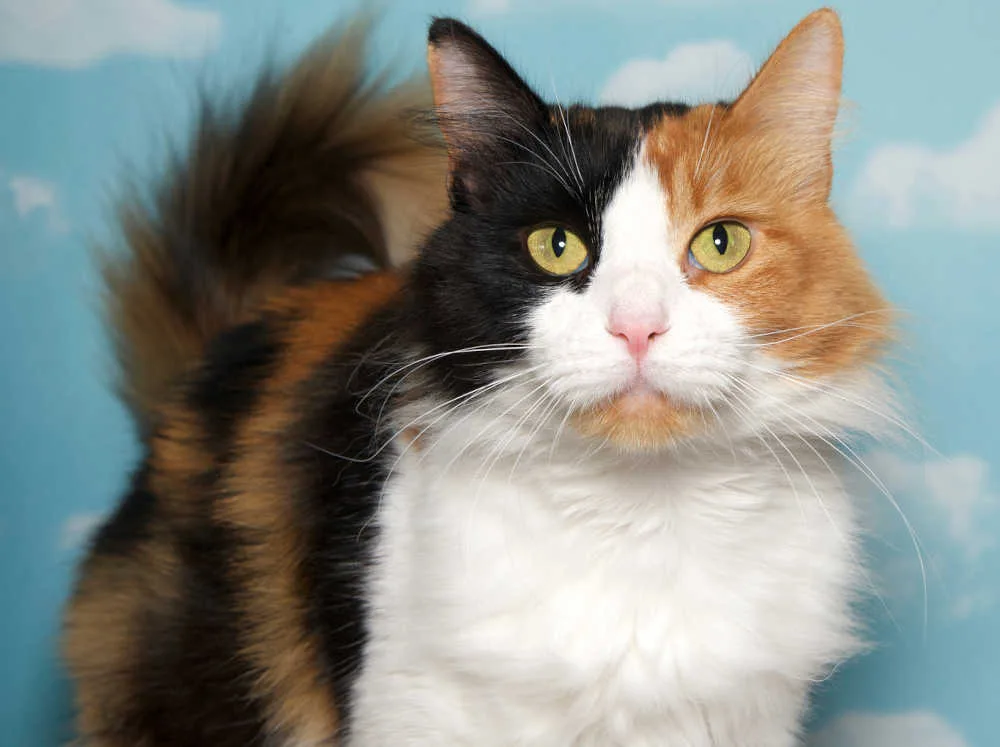
When most people picture a calico, this is the one they're seeing. The classic calico, sometimes called a standard or traditional calico, rocks a predominantly white coat with clearly defined patches of black and orange. The colors don't blend into each other like a tie-dye experiment.
They sit in distinct blocks, which is exactly what gives this pattern its signature patchwork look.
The white typically covers the chest, belly, and paws, while the colored patches land on the back, head, and tail. It's rare to find a classic calico where the white is only a tiny accent. Most have at least 50 to 75 percent white coverage, which is a big part of what separates them from tortoiseshell cats, where the orange and black mingle without much white at all.
Now, a quick note on the orange itself. In a classic calico, that warm color is usually a rich ginger or red. Sometimes it leans deeper and more coppery.
What matters is that the black is a true, solid black, not brown or gray. If you see charcoal, slate, or dilute shades, you're actually looking at the next type on our list.
Dilute Calico: The Soft, Pastel Alternative
If the classic calico is like a bold watercolor painting, the dilute calico is the same scene rendered in pastels. These gorgeous cats swap out true black for soft grays and blue-tinged shades, and the bright orange softens into a buttery cream or muted peach. It's the same genetic family, just with the melanin dialed down.
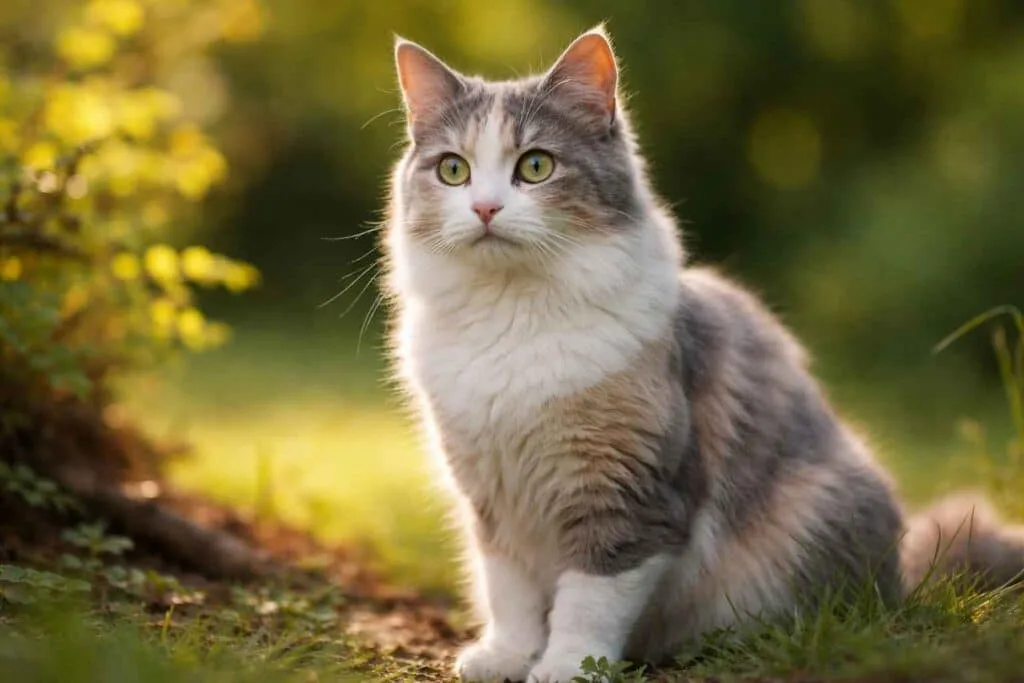
Image source: Bing (Web (fair-use with source credit))
This happens because of a specific genetic modifier that affects how pigment granules sit inside the hair shaft. The color isn't a different color at all, it's the same pigment spread more sparsely. So you get that signature smoky blue or lavender gray alongside a whisper of apricot.
It's honestly one of the most elegant color combinations in the entire cat world.
Here's a common mix-up though: dilute calicos are not the same as a "blue" or "gray" cat with a few orange spots. A true dilute calico still follows that solid-patch rule. The patches are just softer in tone.
When you're at a shelter, ask to see the cat in bright, natural light. Trust me, indoor lighting hides the difference between a dilute calico and a very pale tortoiseshell, and those two cats are very different to live with.
Beyond the Basics: Patched, Mosaic, and Calico Tabby
Now we're getting into the fun stuff. You've got your classics, and you've got your pastels, but the feline world doesn't stop there. Breeders and vet professionals also recognize a few rarer (or at least fancier-sounding) versions that shake up the traditional formula.
Calico Tabby (also called a "calibby"): This one is part tabby, part calico. The cat has the trademark white base, but the darker patches aren't solid. They're striped or swirled.
If you look closely, you'll see the black patches actually carry mackerel or classic tabby markings, and sometimes the orange patches do too.
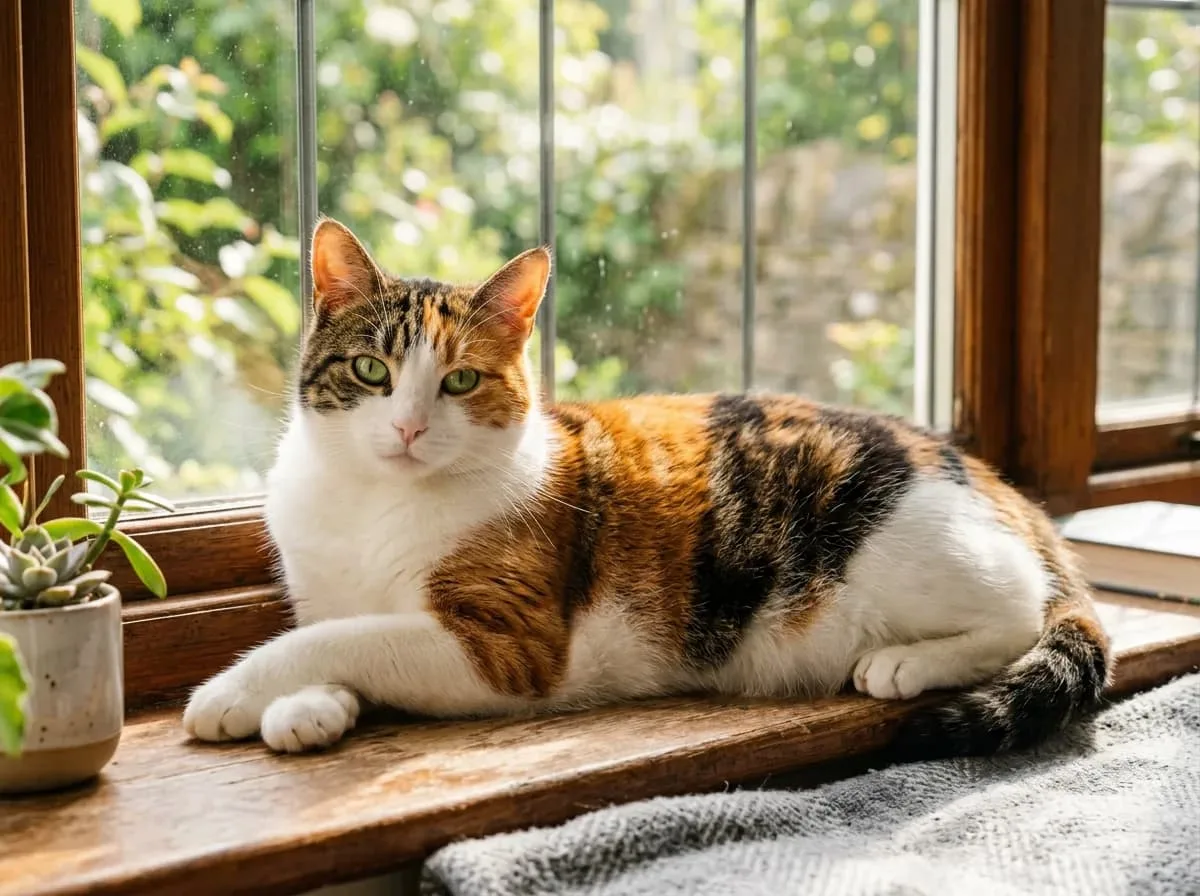
Image source: Bing (Web (fair-use with source credit))
Patched Calico: This term often gets used interchangeably with tortoiseshell-and-white, but purists make a distinction. A patched calico has larger, more defined patches that almost look stamped onto the white. There's very little mixing where the colors meet.
Mosaic Calico: Now, this is where genetics get wild. A mosaic calico happens when the orange and black patches blend together in tiny, almost speckled sections along the edge of each patch. Up close, it looks like someone took a fine brush and stippled the boundary line.
It's not a breed thing, just a genetic coin toss, but it creates a stunning, painted-on effect.
The easiest way to tell these apart from a standard calico is to look right where the white meets the colored patches. If the line is crisp, that's classic or patched. If it's softly blended or speckled, you're looking at mosaic.
And if you see stripes inside the patches, that's your calibby.
An Important Distinction: Calico vs. Tortoiseshell
This might be the most confusing part of the whole calico conversation, so let's settle it for good. A calico and a tortoiseshell are not the same thing, even though they're close cousins. The difference comes down to one simple factor: white.
A tortoiseshell, often just called a "tortie," has almost no white fur at all. Their orange, black, and sometimes cream patches are woven together in a brindle or mottled pattern. You'll see this in everything from the way their patches swirl across their back to the way they might split color right down the middle of their face.
Torties are highly distinctive, but white is not part of their palette.
A calico, on the other hand, carries that white base underneath essentially everything else. The white coat acts like a blank canvas, and the colors sit on top of it in distinct patches. You'll rarely, if ever, mistake a proper calico for a tortie because the white is just too dominant.
Here's a quick comparison table to make it crystal clear:
| Trait | Calico | Tortoiseshell |
|---|---|---|
| Base coat | Predominantly white (50-75%) | Almost no white |
| Color blending | Distinct patches, clearly defined | Mottled, brindled, often blended |
| Patch size | Large, blocky, separate | Small, intertwined, chaotic |
| Most common type | Cream, orange, black | Deep orange, black, dark cream |
If you're speaking with a veterinarian or a shelter worker, this one distinction will clear up more confusion than almost anything else you learn. It's also the first thing that a breeder's reference will list when they're trying to categorize a litter.

Similar Posts