Discover 15 Types of Bengal Cats: Patterns & Colors
If you're looking into Bengal cats, you've probably noticed there's more to the breed than just a pretty spotted coat. The phrase "types of Bengal cats" doesn't just mean coat colors. It means generations that range from first-generation hybrids to fully domestic linebred cats.
As of 2026, TICA registration data shows that over 70% of registered Bengals in the US are SBT (Stud Book Tradition) cats. Those are the generation most households bring home. But the market still has early-generation hybrids.
The differences in temperament, legal status, and care requirements are huge. Let's break down what each type actually means for you.
Image source: Bing (Web (fair-use with source credit))
Quick Answer
Bengal cat types are defined by generation and coat. Generation ranges from F1 to SBT. Coat colors include brown, snow, silver, and charcoal.
Patterns are spotted, marble, and rosetted. Your experience level should guide your choice.
Why "Types" Means More Than You Think (and Why It Matters for Your Decision)
When most people start researching Bengal cats, they think "type" refers to coat color alone. That's part of the picture. But the bigger factor is generation.
A Bengal's generation tells you exactly how much wild Asian Leopard Cat (ALC) ancestry it carries.
That matters because the wild percentage drives behavior. An F1 Bengal is roughly 50% wild cat. An SBT Bengal, by contrast, is five or more generations removed from the ALC.
These are very different animals.
Think about it this way: if you buy a Bengal typed only by its coat color, you might end up with a cat that requires an enclosure, a raw diet, and experienced handling. If you buy based on generation first, you match the cat's needs to your lifestyle.
The TICA breed standard officially recognizes the Bengal as a championship breed. But that applies to SBT cats. Early-generation Bengals (F1 through F3) often fall under hybrid regulations in many US states and countries.
We will cover those regulations in a later section.
Here is the core rule: generation determines temperament, legal status, and price. Coat pattern and color determine how the cat looks. Smart buyers prioritize generation over appearance.
The Generation Spectrum: F1, F2, F3, and SBT (The Real Difference Between a Wild Look and a Wild Cat)
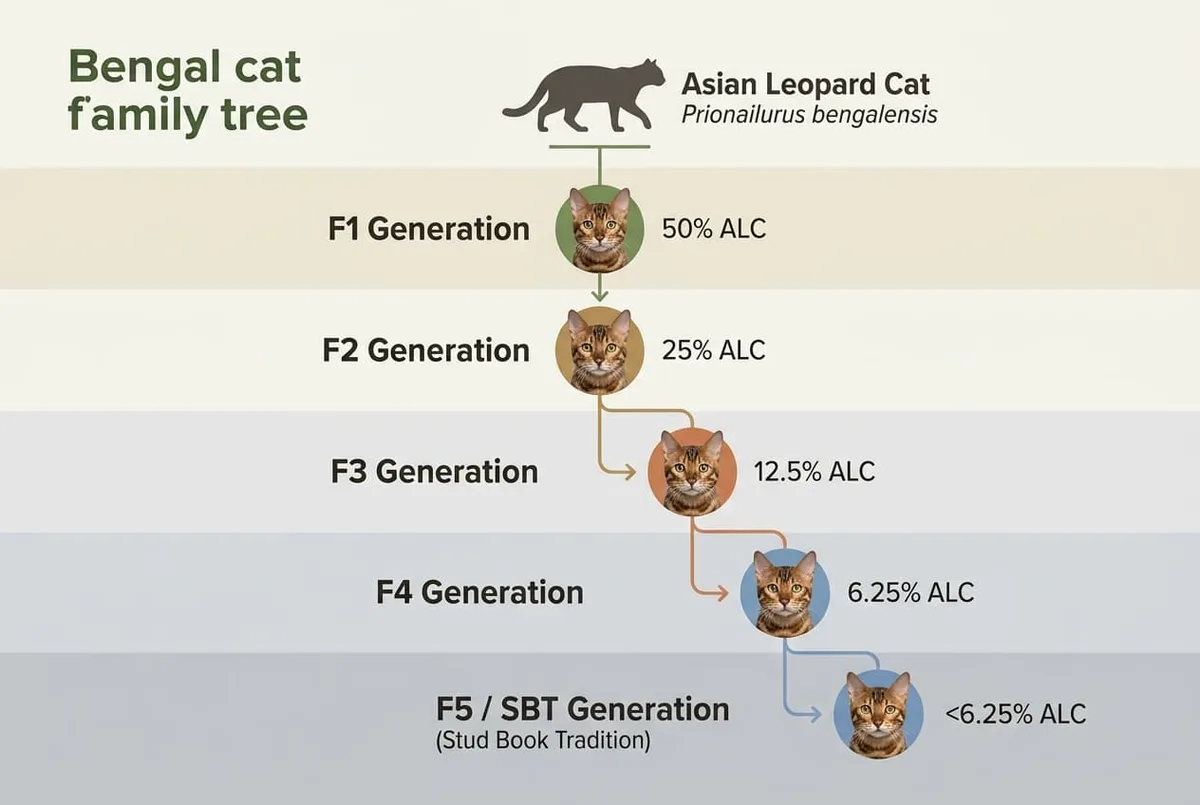
Image source: Bing (Web (fair-use with source credit))
The generation label tells you how many generations removed a Bengal is from its wild ALC ancestor. Here is how they stack up.
F1 Bengals are first-generation hybrids. One parent is a wild ALC. The other is a domestic cat.
F1s are roughly 50% wild. They require specialized housing, often a large outdoor enclosure. They need a raw meat diet.
They are not legal to own in many regions without permits. F1s rarely make good house pets for inexperienced owners.
F2 Bengals are the second generation. The wild ALC percentage drops to roughly 25%. F2s still show strong wild traits: high prey drive, strong territorial instincts, and a need for constant mental stimulation.
Some F2s adjust to indoor life with experienced owners. Most breeders recommend F2s only for homes with prior hybrid cat experience.
F3 Bengals have roughly 12% wild ancestry. At this generation, many cats start showing more domestic behavior. They still need plenty of play and enrichment.
But they bond more readily with humans. F3s can work in homes with other pets if socialized early.
SBT Bengals are the standard for most pet owners. SBT means "Stud Book Tradition," which requires four or more generations of Bengal-to-Bengal breeding. These cats have no recent wild ALC parent in their lineage.
They behave like active, intelligent domestic cats. SBTs are the generation recognized by TICA for show competition.
The price difference is steep. F1 Bengals can cost 5,000 to 10,000 dollars or more. SBT Bengals from reputable breeders typically range from 1,500 to 4,000 dollars depending on coat quality and bloodline.
Coat Colors and Patterns That Define Each Type (Brown, Snow, Silver, Marble, Charcoal, and Rosette)
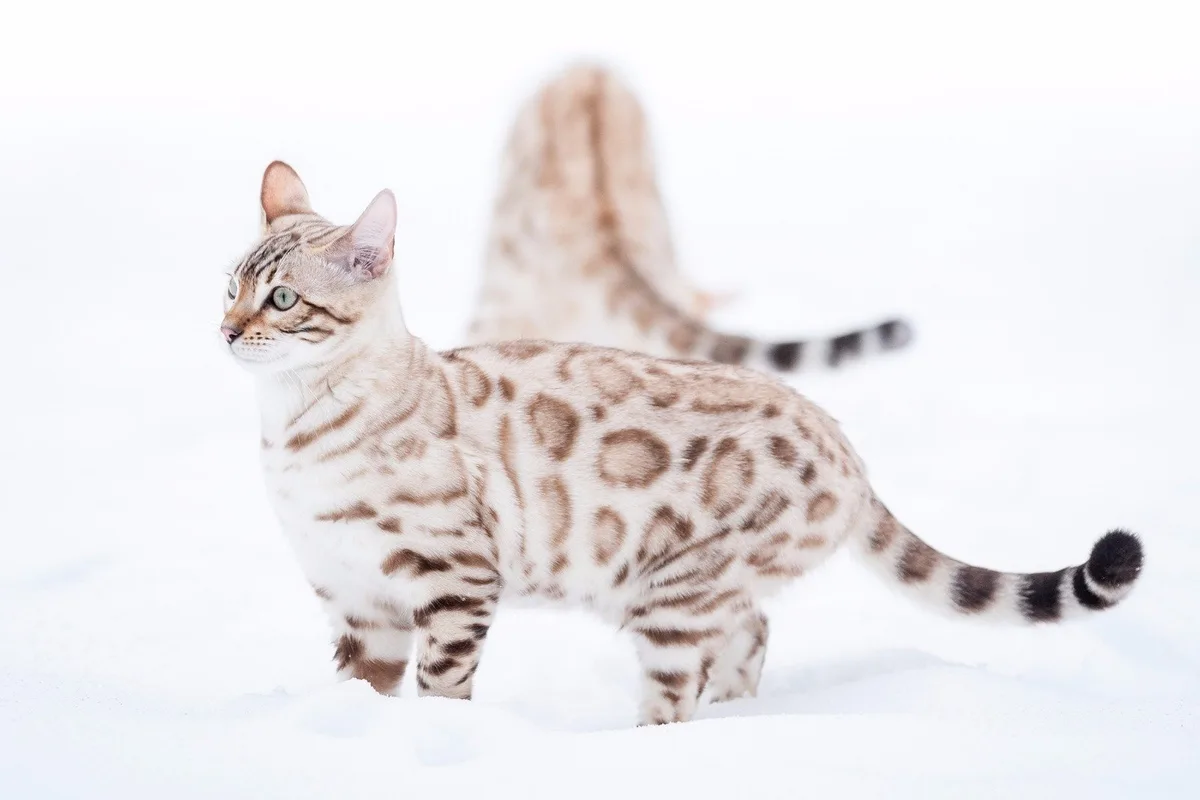
Image source: Bing (Web (fair-use with source credit))
Once you settle on a generation, the fun part is choosing the coat. Bengals come in several recognized colors and two main pattern types.
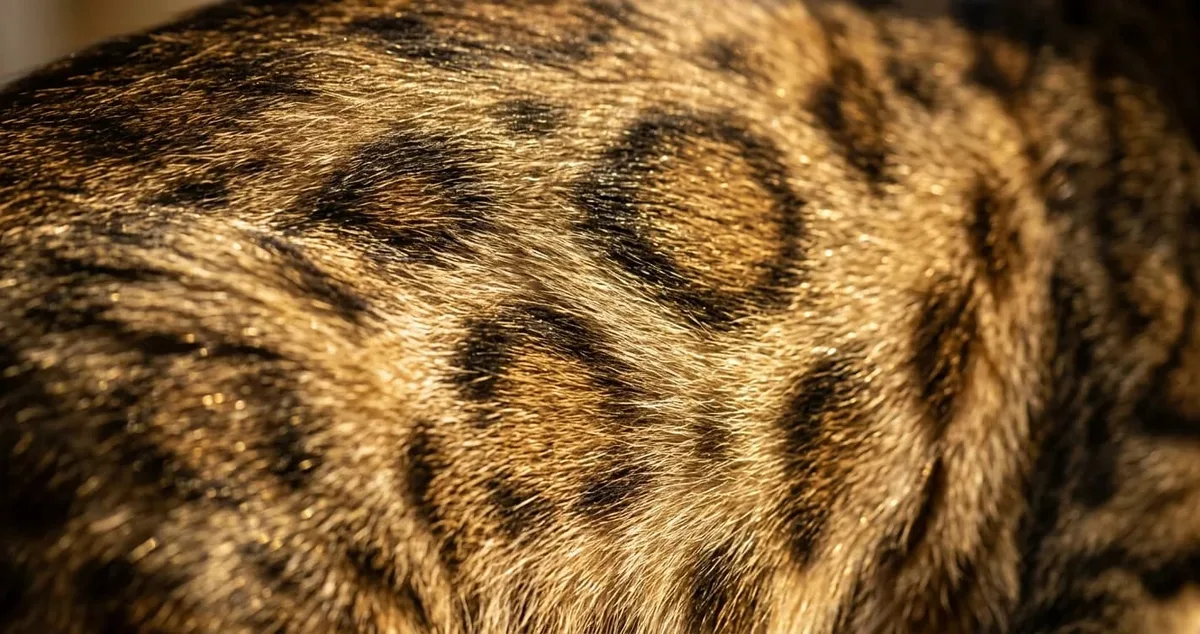
Brown Spotted Tabby is the classic look. It is the color most people picture: a warm golden or buff ground with dark brown to black spots. The California registration rules set the standard for this color.
It is still the most common type because it matches the wild leopard aesthetic.
Snow Bengals come in three variants: seal sepia, seal mink, and seal lynx (also called snow lynx). Snow Bengals have a pale, cream-to-white base coat with darker points on the face, ears, and tail. They look like a miniature snow leopard.
Snow Bengals are popular among owners who want a lighter coat that still screams "wild."
Silver Bengals have a white or pale silver base coat with charcoal or black markings. The silver gene gives them a cool, metallic sheen. Silver Bengals tend to have very high contrast.
They stand out in photos. They are rarer than brown but more common than snow or charcoal.
Charcoal Bengals carry a specific gene that creates a dark mask across the face and a dark stripe down the back. The overall coat is darker and more muted than a brown. Charcoal Bengals are rare and often command a premium price.
Marble is a pattern, not a color. Marble Bengals have swirling, chaotic patterns instead of clear spots. The color can be any recognized base.
Marble patterns often look like a watercolor painting. They are less wild-looking than rosettes but still beautiful.
Rosette is the other main pattern. Rosettes are spots with a lighter center, like a paw print. Two-banded rosettes (a spot within a spot) are the most desirable for show cats.
Single-banded rosettes are more common and still striking.
The glitter gene is a bonus. Some Bengals have a shimmering, metallic coat caused by hollow hair shafts that reflect light. Glitter is more common in certain bloodlines.
It is not tied to a specific color or pattern.
Side-by-Side Comparison Table: Generation, Temperament, Cost, and Ownership Commitment
This table gives you a quick visual reference for the major differences between the generations.
| Generation | Wild ALC Percentage | Typical Temperament | Price Range | Best For |
|---|---|---|---|---|
| F1 | ~50% | High prey drive, needs enclosure, very active | $5,000–$10,000+ | Experienced hybrid owners only |
| F2 | ~25% | Strong wild instincts, can bond with owner | $3,000–$7,000 | Prior hybrid experience needed |
| F3 | ~12% | More domestic behavior, needs play | $2,000–$5,000 | Experienced cat owners |
| SBT | 0–5% | Active but domestic, good with routine | $1,500–$4,000 | First-time Bengal owners, families |
A few notes on the table. Wild ALC percentage is approximate. Individual cats within the same litter can vary.
The price ranges assume a reputable breeder who provides health testing and registration papers. Cats from less scrupulous breeders may cost less but also lack health guarantees.
Here is another critical point: temperament is not guaranteed by generation alone. Socialization, handling during the first few weeks of life, and the individual cat's personality all play a role. But the generation gives you a strong starting point.
Which Bengal Type Is Right for You? (Match Your Lifestyle, Experience Level, and Living Space)
This is where the decision tree comes in. Start by asking yourself three questions.
How much experience do you have with cats? If you have owned cats before and know how to manage high-energy cats, you can handle an SBT. If you are a first-time cat owner, stick with an SBT. Do not buy an F1 or F2.
They are not beginner cats.
How much time do you have each day? Bengals, especially earlier generations, need at least one to two hours of active play per day. That means interactive play, not just leaving a toy out. If you work long hours and cannot provide that, an SBT from a lower-energy bloodline may work.
But expect to cat-proof your space and invest in puzzle feeders and climbing structures.
Do you have other pets or children? SBT Bengals can coexist with other cats and cat-friendly dogs if introduced properly. F1 and F2 cats are harder to integrate. They often view smaller pets as prey.
Children under six may not understand a Bengal's boundaries. SBTs are generally better for families with older kids.
Here is a quick breakdown by user type.
- First-time cat owner. Choose an SBT brown or snow spotted. Avoid early generations. Stick with a reputable breeder who temperament tests kittens.
- Experienced cat owner with high energy. An F3 or SBT from an active bloodline works. Look for a cat that is confident but not aggressive. You can manage the needs.
- Hybrid enthusiast. If you have owned Savannahs or other wild hybrids, an F2 may fit. But be ready for the enclosure, diet, and licensing requirements.
- Apartment dweller. An SBT can work if you provide vertical climbing space. High perches, cat trees, and window shelves are essential. Early generations are too confined for apartments.
- Multi-pet household. SBTs are safer. Early generations may not accept other animals. Ask the breeder for a cat that has lived with other pets before.
The best type for you is the one that matches your actual routine. Not the one that looks the wildest. A healthy, well-socialized SBT Bengal offers the same striking appearance as an F1.
It just comes without the wild unpredictability.

Similar Posts