Tabby Cat Growth Chart: Month-by-Month Guide
Here’s the thing about googling “tabby cat growth chart” and landing on one of those cute little graphs that promise to tell you exactly how big your kitten will get. They’re wildly misleading. You probably searched that exact term because you’re worried your kitten is too small, or maybe you’re just curious if that tiny orange fluffball is on track.
The truth is, those generic charts often do more harm than good because they ignore the single most important factor about your cat.
A tabby isn't a breed. It’s a coat pattern, and that distinction changes everything. As of 2026, veterinary nutritionists still point out that a tabby-striped Maine Coon will weigh four times more than a tabby-striped Singapura at the same age.
So, before you panic about a slow growth curve, you need to understand what your specific cat is, not just what their fur looks like. Let’s cut through the noise and figure out what real growth looks like without the fluff.
Image source: Bing (Web (fair-use with source credit))
Why "Tabby Cat Growth Chart" Is Trickier Than It Sounds
If you’ve ever tried to pin down a solid answer on kitten growth, you know the frustration of finding a million different charts that all disagree. That’s because most of them are built around a generic "mixed breed" standard that doesn’t apply to the cat sitting in your lap right now. The term "tabby" describes a striped, spotted, or swirled coat pattern that crosses nearly every breed and breed mix on the planet.
Your job isn't to fit your cat to a chart; it's to map the chart against your cat's specific genetic blueprint.
Here is the real problem: many popular resources blur the line between "kitten" and "cat" without accounting for structural maturity. A kitten might weigh the same as an adult in a different breed, yet still be growing. Conversely, some kittens hit their growth spurt early and then plateau, which makes a linear chart look like a failure when it's perfectly natural.
The most common issue I see is a desperate cat owner weighing their pet weekly and panicking over a 50-gram difference when the bigger picture shows a steady, healthy upward trend.
The key is to stop looking for a single "number" and start looking at velocity (how fast they gain) and body composition (what that weight is made of). A chart is a reference point, not a verdict. To get an accurate baseline, you have to know what breed groups or body types your cat aligns with, because a lean, athletic build will always weigh less than a large-boned, heavy-set frame at the same height.
This distinction protects you from overfeeding a naturally slim cat or undereating a massive one.
What Normal Kitten Growth Actually Looks Like (Real Numbers)
Let’s get into the muscle of this: actual data. To start, a healthy kitten typically weighs anywhere from 85 to 115 grams at birth (about 3.5 to 4.5 ounces). Within the first week, they should double their birth weight, or at least come very close.
That's the first red flag indicator. From week 2 to week 8, a good rule of thumb is an average daily gain of about 10 to 30 grams, depending on the individual's eventual adult size. If you're seeing less than that over several days, it's time to talk to your vet.
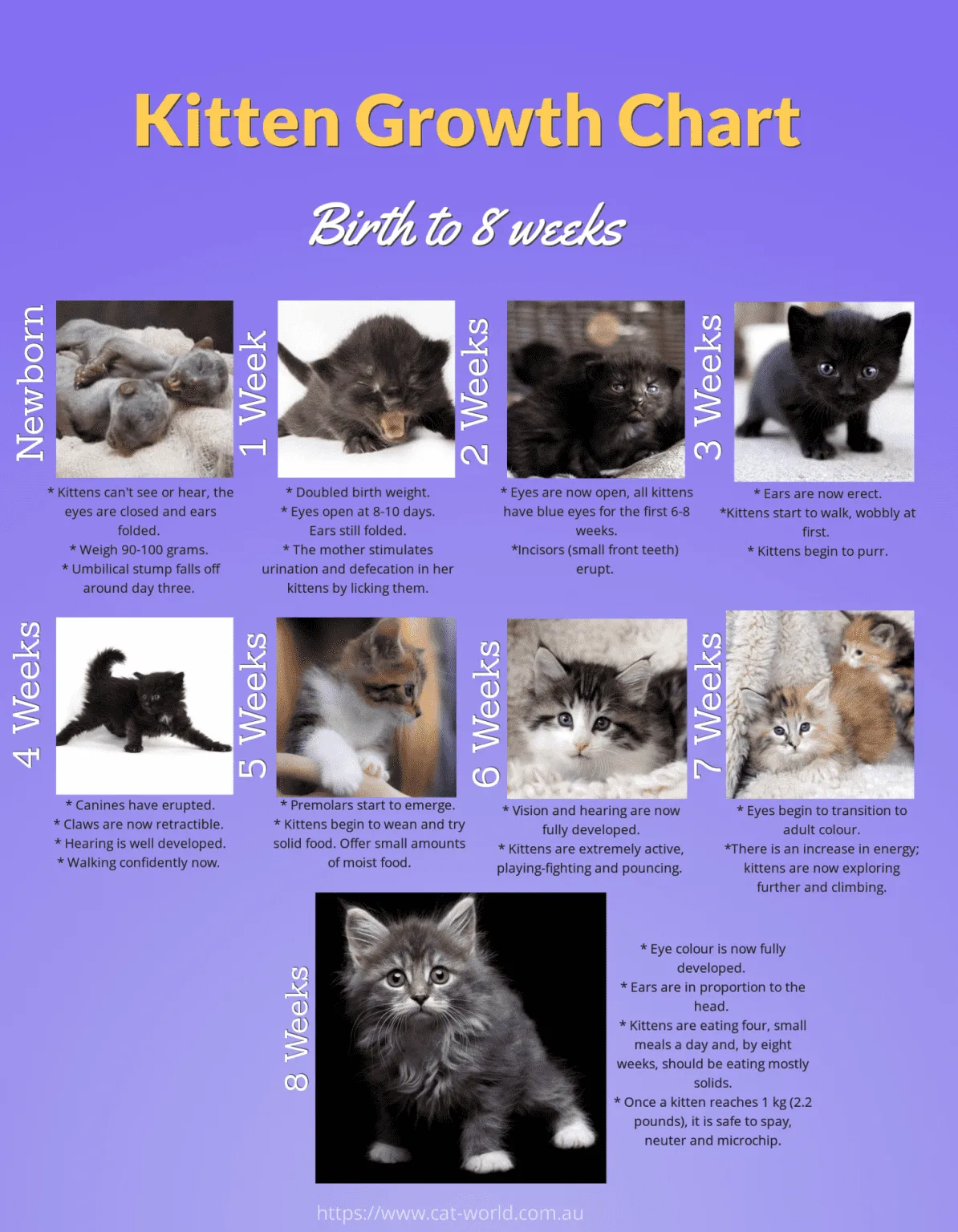
Image source: Bing (Web (fair-use with source credit))
Here is a rough guideline, but keep in mind, these numbers represent average weight for Domestic Shorthair type tabbies:
- 8 weeks old: 700 to 900 grams (roughly 1.5 to 2 pounds). This is a critical window. They should feel solid, with a slight waistline visible from above.
- 12 weeks old: 1 to 1.5 kg (2.5 to 3 pounds). They're gaining about a pound a month at this point, and this is where the real growth spurt kicks in.
- 6 months old: 2.5 to 3.5 kg (5.5 to 7.5 pounds). This is the lanky teenage phase. You'll notice they get tall and clumsy, but the weight gain often slows down or pauses.
- 1 year old: 3.5 to 4.5 kg (8 to 10 pounds) for a healthy adult weight in most mixed breeds. Large breeds like Maine Coons or Ragdolls can easily be 6 to 9 kg by now.
Just remember, purebred status changes these numbers drastically. A Maine Coon tabby will hit 4.5 kg (10 lbs) by the time they are 5 months old, while a dainty female Singapura tabby might only ever reach that as an adult. The takeaway here is to look at the trend over the first few months, not the absolute number.
If you're seeing a smooth, steady upward curve on your log, your kitten is likely thriving. The panic sets in when the curve flattens or drops, that's when you need professional eyes.
How to Track Your Tabby's Growth the Right Way
So, how do you gather that useful data without getting obsessive? Consistency is your absolute best friend here. You want to weigh your cat at the exact same time every day, usually in the morning before breakfast, because a full stomach can add 50 to 100 grams of temporary weight.
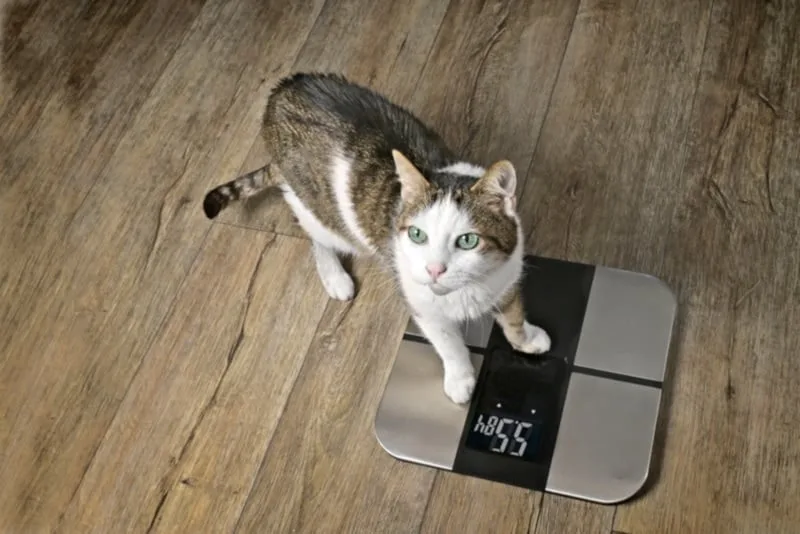
Use a digital kitchen scale that measures in grams, because those smaller increments will show you subtle changes that an adult scale completely misses.
The process is simple. Place the scale on a hard, flat surface, set the kitten on it, and wait for the reading to settle. Write down the number in a notebook or a notes app on your phone.
That data helps you spot a potential problem days before a physical symptom appears. But don't rely only on the scale; you need to pair that weight with a Body Condition Score (BCS) to understand if you're dealing with fat or muscle.
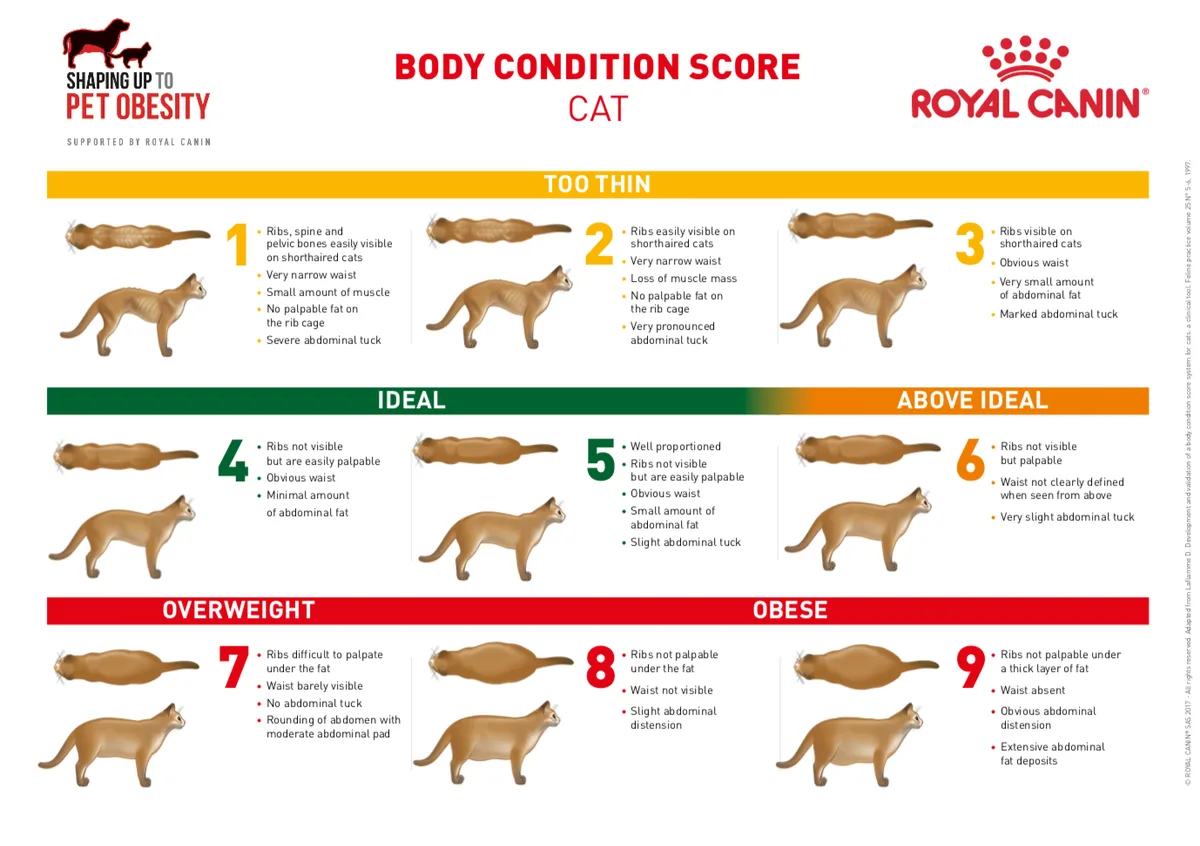
Image source: Bing (Web (fair-use with source credit))
The BCS is a 9-point scale that veterinarians use to grade body fat on a spectrum from 1 (emaciated) to 9 (severely obese). A score of 4 to 5 is your ideal target. You can check this at home in a few seconds.
You should be able to feel your cat's ribs with a light touch of fur, but not see them jutting out. If you can't feel the ribs easily because of a fat pad, your cat edges closer to obese territory. If you can see the ribs sharply through the fur with no fat covering, they're underweight.
Here's the practical routine: weigh every day, but check the BCS weekly. As long as the weight trends upward and the BCS stays stable at a 4-5 range, you're golden. This prevents that classic mistake of thinking a growing kitten needs more food because they act hungry all the time.
A growing tabby needs roughly twice the calories per pound of an adult, but that need is steady, not exponential. Overfeeding at this stage creates obesity that shortens their lifespan later.
The Growth Chart Mistake Most Owners Make
The absolute biggest trap I see people fall into is trying to compare their cat's growth to a specific "perfect" chart they found online, particularly one of those eye-catching tables from a forum or a random pet blog. I get it; you want a benchmark. But here's the ugly truth: most of those charts display averages crafted for intact male breeding adults in a specific breed line.
If you have a spayed female Domestic Shorthair, you're not looking at a precious snowflake that's behind schedule; you're looking at a cat that's perfectly on her own curve, just not the manufacturer's spec.
The second massive mistake? Thinking that excessive weight during kittenhood means "bigger and healthier." There's a pervasive myth that if a kitten is chubby, they'll grow into it, or that fat kittens are just "well-cared-for." That's dangerous. Extra body fat during the growth phase forces the skeleton and heart to work overtime.
Those fat cells form in the first year, and they stay there. So, regardless of whether their chart says "50th percentile," a chunky kitten is statistically more likely to become a diabetic, arthritic adult.
The third issue is just as sneaky: misunderstanding the impact of spaying and neutering. After the surgery, many owners see a sudden dramatic weight gain and assume the cat is growing perfectly. The reality is that the hormone changes alter their metabolism.
They need fewer calories to maintain body condition. If you keep feeding the same amount you used to, your cat will pack on weight, leading you to believe their "growth chart" is working when you're actually just watching them get fat. Always stick to portion-controlled food, not free-feeding, after a spay/neuter procedure.
When a Number on the Scale Is a Red Flag
So, when do you actually worry? Here's the bottom line: numbers go up and down daily, so don't hyperventilate over a single reading. But there are changes that trigger a genuine red flag.
Weight loss in a growing kitten is the biggest one. If your kitten isn't gaining weight over a 3 to 4 day period, or if they lose weight, that's a medical emergency, not a waiting game. It can indicate parasites like roundworms (which steal nutrients), or something more serious like Feline Infectious Peritonitis (FIP) or a GI obstruction.
Don't try to feed them more to fix it; see a vet.
Sudden, rapid weight gain is equally concerning, but in a different way. If your kitten's belly is swelling up like a watermelon, but their legs and spine feel boney, that's not fat, that's fluid accumulation in the abdomen. This is a classic symptom of a congenital heart condition or a severe internal infection.
On the other hand, if they're just eating and gaining weight steadily with a solid waist, you're fine. The difference is in the body shape: fat feels soft and moves when you touch it; fluid feels taut and tight.
When you see a flat portion on the growth curve (where the weight stays exactly the same for a week or more), that's your cue to take action. Always pair this with the BCS. A kitten that's gaining height but the weight stays put is often just hitting a growth spurt; their bones are lengthening while fat is redistributing.
You know it's a problem if the spine and ribs become easily palpable despite a steady weight. When in doubt, pull out your phone and check a standardized BCS chart or ask your vet for a visual to help you gauge if your cat is truly off-track.

Similar Posts