Ragdoll Feeding Chart: Portions by Age & Weight
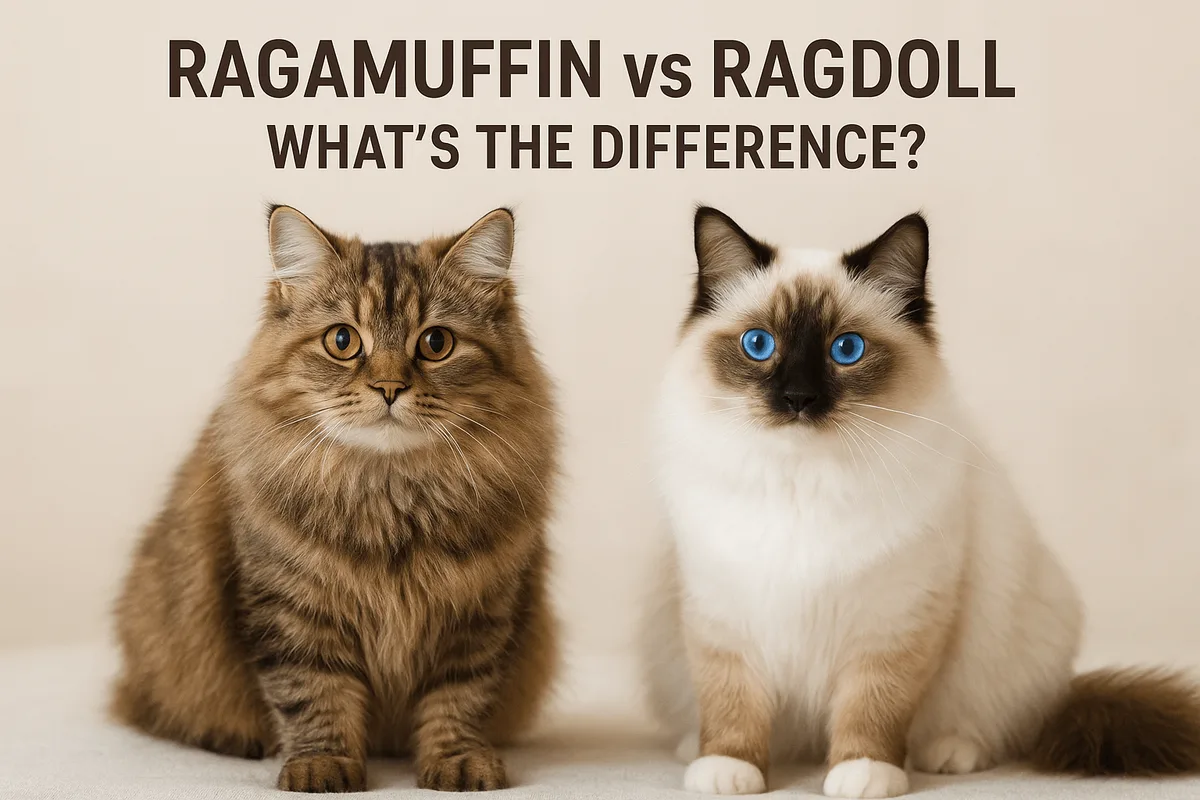
Ragamuffin vs Ragdoll: Which Cat Breed Suits You?
You've narrowed your search for a new fluffy companion down to two breeds that look almost identical at first glance. But while a ragdoll and a ragamuffin share that plush, blue-eyed look, they differ in some meaningful ways that could affect your daily routine, from grooming frequency to how often they'll demand your lap.
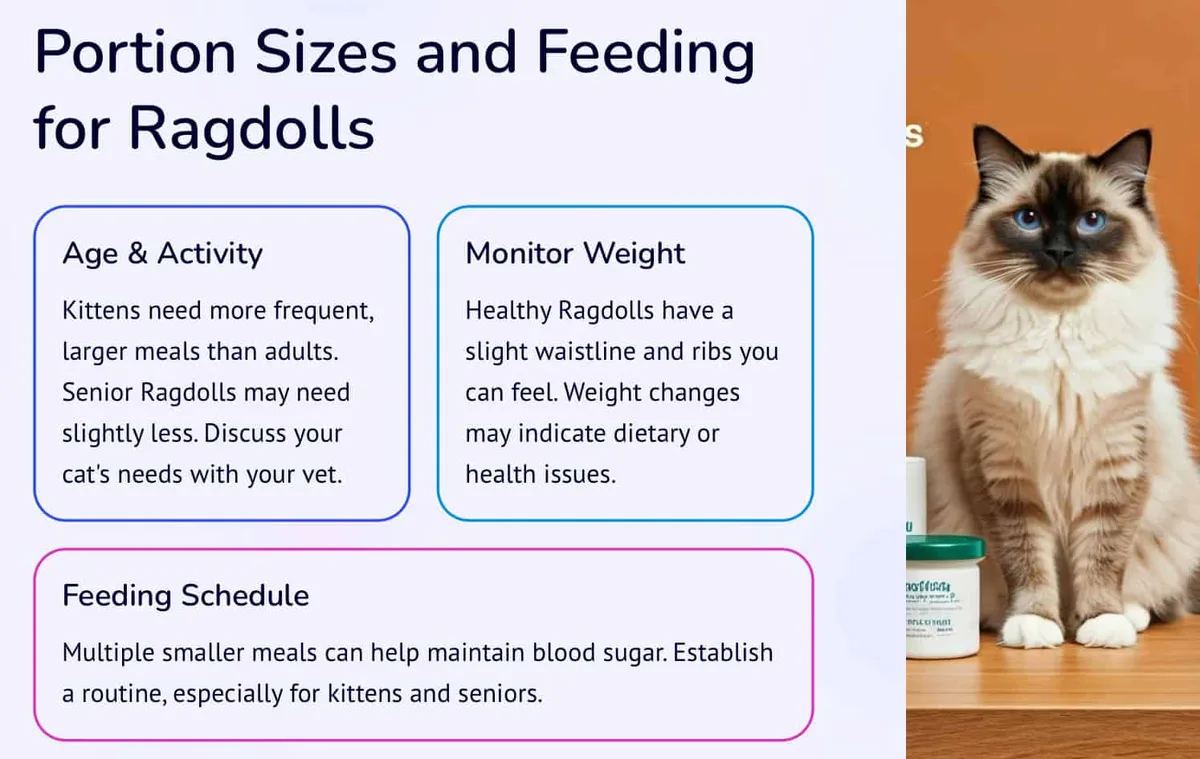
Before deciding, though, you should also understand what goes into feeding either one. That's why we've included a practical ragdoll feeding chart further down, which gives you portion sizes by age and weight. That chart applies broadly to both breeds, since their nutritional needs are very similar.
With that sorted, let's break down the real differences so you can pick the cat that genuinely fits your lifestyle.
Image source: Bing (Web (fair-use with source credit))
Quick Answer
The ragdoll is a pointed, blue-eyed, semi-longhaired breed known for going limp when held. The ragamuffin is a larger, heavier, rounder cat that descended from ragdoll breeding lines but accepts all coat colors. Ragdolls are typically more dog-like and vocal.
Ragamuffins are generally calmer, more laid-back, and even more people-oriented. Both need daily grooming, but the ragamuffin's denser coat may require more brushing. Your choice comes down to energy level and how much clingy affection you want.
Ragdoll vs Ragamuffin: The Short Answer
If someone held a gun to your head and forced you to choose between the two based solely on temperament, you'd likely be happy either way. Both breeds are famously sweet-natured, social, and attached to their humans. The differences are subtle, but they exist.
Ragdolls were developed in the 1960s by Ann Baker, a breeder in California. They're known for their striking blue eyes, colorpoint coats (think Siamese coloring but fluffier), and that distinctive "go limp" reflex when you pick them up. They're moderately active, love interactive play, and tend to follow you from room to room like a shadow.
Ragamuffins, on the other hand, came from some of Ann Baker's breeding lines but were developed separately to be even more robust. They're bigger, with a broader chest and a rounder face. Their coats come in every color and pattern imaginable, not just pointed ones.
In our research, breed associations confirm the ragamuffin standard explicitly calls for a "sweet expression" and a plush, rabbit-like coat.
The most reliable way to tell them apart as adults? Check the eyes. Ragdolls are required to have vivid blue eyes.
Ragamuffins can have any eye color, including green, gold, or heterochromia (two different-colored eyes).
Temperament and Personality: What to Expect Daily
Here's where the two breeds start to separate. Ragdolls are often described as "puppy-cats." They greet you at the door, fetch toys, and bond deeply with one or two primary humans. They're also notorious for flopping over in your arms the moment you pick them up, which is where the "limp ragdoll" name comes from.
That trait is genuine, not a myth.
Ragamuffins are even more laid-back. Aggregate reviews from long-term owners consistently describe them as "floppy," "relaxed," and "indifferent to being handled." They're less likely to perform tricks or chase balls, but they're more adaptable to new environments and strangers. If you throw a dinner party, the ragamuffin will likely park itself in the middle of the living room.
The ragdoll might hide under the bed until everyone leaves.
Both breeds are terrible mousers, by the way. They'd rather befriend the mouse than hunt it. So if you need a working cat, look elsewhere.
Best for families: Both. But ragdolls often pick a favorite person, while ragamuffins tend to adore everyone equally. If you have kids and want a cat that won't play favorites, lean ragamuffin.
Best for singles: Either works. Just know that both breeds are needy. They don't do well if you're gone 10 hours a day.
A bored ragdoll will meow loudly; a bored ragamuffin will shred your curtains out of pure feline spite.
Grooming and Shedding: The Fur Factor
Here's a hard truth: both of these cats shed. A lot. They're not hypoallergenic, and they both require regular brushing to prevent mats.
The ragdoll has a silky, single-layer coat (no undercoat) that resists tangling. It's easier to maintain, but it will still leave fur on your black pants. A quick daily brush is usually enough.
Monthly baths keep the coat glossy.
Ragamuffins have a denser, plush double coat that feels like rabbit fur. That undercoat means more shedding and a higher risk of matting, especially around the armpits and belly. Plan on brushing every other day, maybe daily during spring and fall shedding season.
If you skip it, you'll be battling hairballs. Manufacturer grooming guides from CFA and TICA both recommend a stainless steel comb for both breeds, not just a slicker brush.
Visual reference point: the photo above shows a classic ragdoll's pointed pattern and bright blue eyes, which is what most people picture when they hear the breed name. A ragamuffin next to him would look noticeably chunkier, with a rounder head and a coat that stands out more.
Shedding-wise, the ragdoll wins. If you want less fur on your sofa, pick the ragdoll.
Health, Lifespan, and Common Issues
Both breeds are generally healthy, but they carry distinct genetic predispositions. Know what you're signing up for.
Ragdolls are prone to hypertrophic cardiomyopathy (HCM), a heart condition that affects the left ventricle. Reputable breeders screen for it via echocardiograms. They also have a higher risk of bladder stones and urinary tract issues, so clean water and a moisture-rich diet matter.
Lifespan is typically 12 to 15 years.
Ragamuffins share that HCM risk, but the incidence appears slightly lower in current lines as of 2026 data. They're also prone to polycystic kidney disease (PKD), so ask any breeder for DNA test results for the PKD1 gene. They have a similar lifespan of 12 to 16 years.
Both breeds are slow to mature. Ragdolls aren't fully grown until age four. Ragamuffins can take up to five years to reach full size.
That means a ragdoll kitten isn't just fluff; he's genuinely still got filling out to do.
The vet bill factor: HCM screening isn't cheap. DNA tests for PKD run around $100 to $200 per cat if paid out of pocket. Factor that into your budget.
Healthy habits that help: feed a high-protein, low-carb diet with real meat listed first. Avoid fillers like corn and wheat. For a ragdoll feeding chart by weight and age, start with the portion guide on any premium cat food bag, then adjust by a quarter-cup increment every two weeks until your cat maintains a sleek, trim body condition.
Which One Should You Choose? A Decision Tree
If you want a practical way to decide, work through these questions.
Do you want a cat that plays fetch?
Yes → Ragdoll. They're more trainable and enjoy interactive games.
No / don't care → Ragamuffin.
How much grooming can you handle?
I have 10 minutes a day → Ragdoll.
I can do 20 minutes plus occasional deep brushing → Ragamuffin.
Do you have loud kids or a chaotic household?
Yes → Ragamuffin. They're more unflappable.
No, it's just me and my partner → Ragdoll.
Do you want a cat that will sit on your lap for hours?
Yes, without moving → Ragamuffin is your soulmate.
I want a cat that comes and goes but checks in regularly → Ragdoll.
Do you prefer a quiet, mellow cat or one that "talks" to you?
Quiet → Ragamuffin. They're less vocal.
Chatty → Ragdoll. They chirp and meow to express opinions.
If most of your answers lean toward "ragdoll," you'll get a social, elegant cat with high grooming needs and a puppy's heart. If they lean toward "ragamuffin," you'll get a giant cuddly teddy bear who might just take over your entire house without trying.
Frequently Asked Questions
Are ragdolls or ragamuffins better with dogs?
Both breeds were developed alongside humans and typically get along well with dogs. Ragdolls are more likely to hiss at an overly excited dog and retreat. Ragamuffins usually take it in stride and may even initiate play with the family dog.
Introduce them slowly with cordoned-off spaces.
Do ragdolls or ragamuffins need a special diet?
No prescription food is required for either breed. However, due to their slow growth, kitten food should be fed until 12 months for ragdolls and 18 months for ragamuffins to support proper bone development. Adult cats of both breeds do well on a high-protein, grain-free diet.
Which breed is more expensive to keep?
The ragdoll typically has lower grooming costs since its single coat needs less brushing. Both need routine dental care and annual vet visits. Ragamuffins eat slightly more due to their larger size, but the difference is negligible, maybe an extra pound of food per month.
How do I prevent hairballs in these longhaired breeds?
Regular brushing is the first line of defense. A weekly dose of a hairball control gel supports passage through the digestive tract. Feeding a small amount of canned pumpkin (not pie filling) can also help move hair through naturally.
Is a ragdoll or ragamuffin safer for someone with allergies?
Neither is truly hypoallergenic. Ragdolls produce slightly less Fel d 1 protein, the main allergen, but individual cats vary widely. If you have mild allergies, spend an hour with the specific kitten first.
Wash your hands after handling and consider air purifiers with HEPA filters.

Similar Posts