Why Does My Cat Poop So Much? Causes Explained
Your cat’s litter box habits can tell you a lot about their health. If you’ve caught yourself staring into the litter box wondering why does my cat poop so much, you’re not alone. It’s one of the most common concerns cat owners bring up.
As of 2026, the vast majority of cases turn out to be diet-related or perfectly normal for the cat’s life stage. But ruling out the serious stuff takes a little detective work. Let’s walk through the possible reasons together.
Image source: Bing (Web (fair-use with source credit))
Quick Answer
Most often, a cat poops a lot because of what they eat. Kibble-based diets produce more stool volume than wet or raw food. Kittens naturally go more often.
If your adult cat suddenly starts pooping more, parasites or hyperthyroidism could be the cause. Track your cat for a few days before heading to the vet.
When Your Cat’s Poop Volume Is Actually Normal
First, let’s talk about what “normal” really means. A healthy adult cat on a typical commercial diet usually poops once or twice a day. That’s it.
If your cat is going three or four times daily, something is different.
Age plays a big role here. Kittens have fast metabolisms and smaller digestive tracts. They can poop up to four times a day and still be perfectly healthy.
Their bodies process food quickly and they eat more frequently relative to their size.
Diet changes stool volume more than most owners realize. A cat eating dry kibble will produce noticeably more poop than a cat eating canned wet food. That’s because kibble contains more indigestible fiber and carbohydrates.
Your cat gets less usable nutrition per gram, so more comes out the other end.
Senior cats are a different story. If your older cat starts pooping more than usual, pay attention. Gradual increases over weeks or months can point to underlying issues.
But a single large stool after a big meal? That’s usually nothing to worry about.
The key distinction is between frequency and volume. A cat that poops twice a day with large, firm stools is different from a cat that poops four times with small, urgent ones. Track both numbers before jumping to conclusions.
So before you panic, ask yourself two questions. Has your cat’s diet changed recently? And are you comparing them to another cat?
Context is everything here.
The Diet Variable: Wet vs. Kibble vs. Raw
Let’s get straight to the biggest factor. What goes in determines what comes out. The type of food your cat eats directly controls how much they poop.
Kibble is the biggest culprit for excess stool volume. Most dry cat foods are 30 to 50 percent carbohydrates. Cats are obligate carnivores.
Their bodies didn’t evolve to digest that many carbs. The undigested material passes through and becomes bulk in the litter box. Per the American Veterinary Medical Association, a high-quality diet with named animal protein sources is better for digestive health.
Wet food changes the equation. Canned food has about 75 to 85 percent moisture. There is less fill and more usable protein.
Your cat absorbs more of the nutrients. The result is smaller, firmer stools. Many owners report a 40 to 50 percent reduction in poop volume after switching from kibble to wet food.
Raw diets take this even further. A biologically appropriate raw diet is mostly meat, organs, and bone. There is almost no carbohydrate content.
The digestive system processes nearly everything. Stool volume on raw can be a fraction of what it is on kibble. That said, raw feeding comes with its own risks and requires careful handling.

Image source: Bing (Web (fair-use with source credit))
The table below summarizes typical differences.
| Diet Type | Stool Volume | Typical Frequency | Notes |
|---|---|---|---|
| Dry Kibble | Higher | 1–2 times daily | More filler and carbs |
| Wet/Canned | Lower | 1–2 times daily | Higher moisture, less waste |
| Raw | Lowest | 1 time daily or every other day | Almost fully digestible |
If you recently switched foods, give your cat two weeks to adjust. During the transition, it is normal for stool volume to change. Mix the old and new food gradually over 7 to 10 days.
A sudden switch can cause loose stools or extra poop.
One more thing: treats count too. If you are giving high-carb treats or table scraps, they add to the total. Treats should be no more than 10 percent of your cat’s daily calories.
Health Issues That Cause Excessive Pooping
Diet explains most cases. But sometimes there is a medical reason behind the extra poop. These are the conditions you need to know about.
Intestinal parasites are the most common culprit, especially in kittens and outdoor cats. Roundworms, giardia, and coccidia are frequent troublemakers. They irritate the gut lining and interfere with nutrient absorption.
Your cat eats but doesn’t fully digest. The result is more frequent and sometimes looser stools.
Hyperthyroidism is the one to watch for in older cats. The thyroid gland produces too much hormone. This speeds up the entire metabolism including digestion.
A senior cat that eats ravenously but poops excessively and still loses weight is a classic presentation. A simple blood test called a T4 level confirms it.
Inflammatory bowel disease is common but harder to diagnose. The cat’s immune system overreacts to something in the food or environment. The gut wall becomes inflamed.
This can cause chronic diarrhea, increased stool frequency, and mucus in the poop.
Exocrine pancreatic insufficiency is less common but worth knowing about. The pancreas stops producing enough digestive enzymes. The cat cannot break down food properly.
Undigested fat and protein pass through. Stools become large, greasy, and foul smelling. A fecal elastase test diagnoses it.
Malabsorption syndromes happen when the intestinal lining is damaged. The cat absorbs fewer nutrients from their food. More material passes through.
Weight loss is a red flag here.
For any of these conditions, the treatment is straightforward once you have a diagnosis. Dewormers for parasites. Medication for hyperthyroidism.
Diet changes for IBD. Enzyme supplements for EPI.
Kittens vs. Seniors: Age-Specific Poop Patterns
Age changes everything about a cat’s digestive system. What is normal for a kitten is not normal for a senior. And vice versa.
Kittens under six months have small stomachs and fast metabolisms. They eat several small meals a day. Their digestive systems are still developing.
Pooping three to four times daily is completely normal. The stools should be formed and consistent. Mushy or watery poop in a kitten is an emergency.
Kittens dehydrate fast.
Adult cats between one and seven years settle into a routine. Most poop once or twice daily. The stools are firm, dark, and shaped like logs.
Changes in frequency or consistency over a few days are often diet or stress related. The Cornell University College of Veterinary Medicine recommends tracking any change that lasts longer than 48 hours.
Senior cats over ten years are a different story. Their digestive systems slow down. Chronic conditions become more common.
A healthy senior cat still poops once or twice daily. If that number increases, especially alongside weight loss or increased appetite, hyperthyroidism is the most likely suspect.
Some senior cats develop constipation or megacolon. They strain in the litter box but produce very little. That is the opposite problem.
If your senior cat is pooping more than usual, do not assume it is age related. It is a symptom worth investigating.
Here is the simple rule. Kittens can poop a lot and be fine. Adults should be consistent.
Seniors need attention when things change.
What to Do Next: A Simple 5-Day Observation Plan
Before you call the vet, gather some data. A few days of observation can save you time and money. Here is a simple plan.
Day one. Count every stool. Note the time. Scoop it and look at the consistency.
Is it firm? Soft? Liquid?
Use a scale of 1 to 5. One is watery. Five is hard pellets.
Three is ideal: firm, log-shaped, easy to scoop.
Day two. Keep counting. Also note your cat’s appetite. Are they eating more or less than usual?
Are they begging for food? Any changes in drinking? A cat that drinks and pees more may have hyperthyroidism or diabetes.
Day three. Look at the color. Normal cat poop is brown. Black or tarry stool suggests upper GI bleeding.
Red streaks mean lower GI bleeding. Yellow or grey stool can mean a liver or pancreas issue. White specks might be tapeworm segments.
Day four. Check for mucus or undigested food. A small amount of mucus is normal. Large amounts signal inflammation.
Whole pieces of kibble in the stool mean poor digestion.
Day five. Summarize your findings. Average the number of poops per day. Rate the consistency.
Note any color or odor changes. Collect a fresh sample in a clean container. Refrigerate it and bring it to your vet within 24 hours.
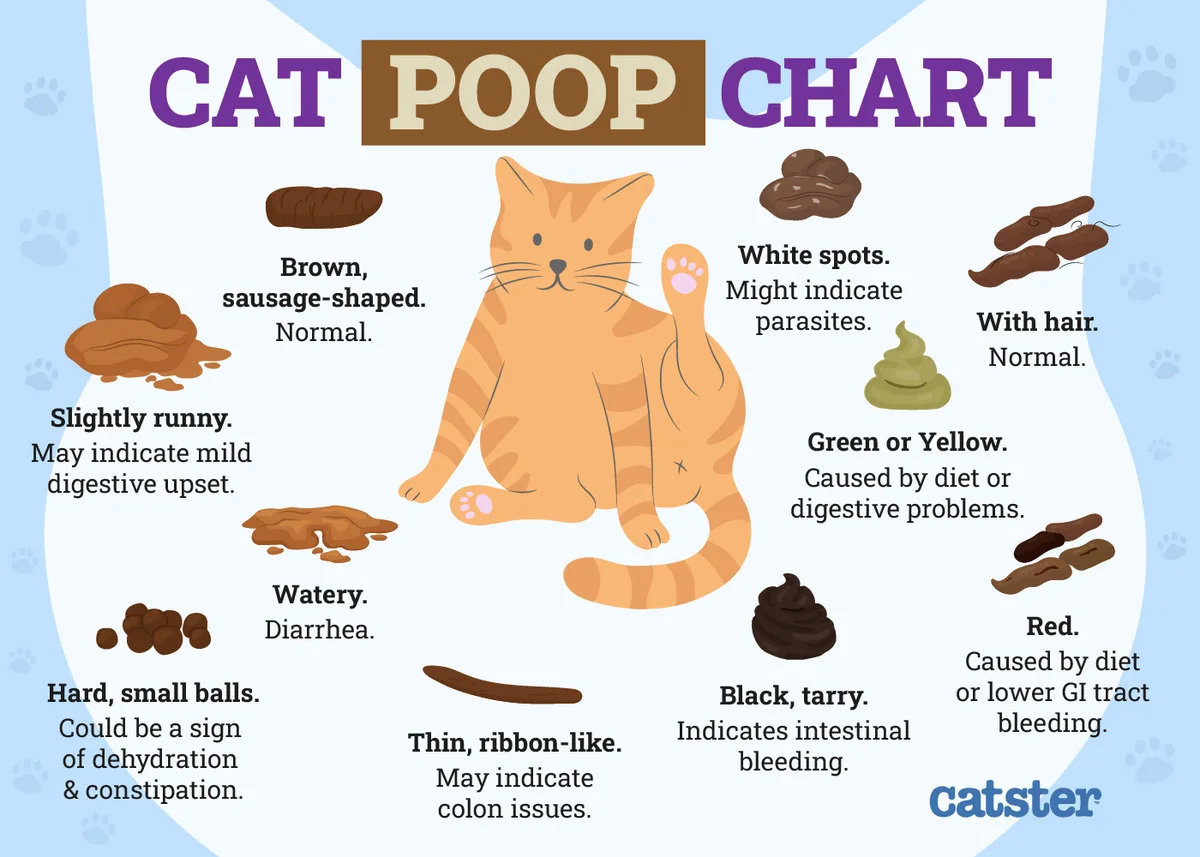
Image source: Bing (Web (fair-use with source credit))
Your vet will most likely run a fecal float test for parasites. They may also check the T4 level for hyperthyroidism and a blood chemistry panel for organ function. Bring your five-day notes.
It makes the vet’s job easier and your cat’s visit shorter.
A quick reminder. If your cat vomits multiple times, has bloody diarrhea, or seems lethargic and dehydrated, skip the observation plan. Go to the vet immediately.
Kittens with diarrhea need emergency care within hours. Adult cats can wait a day, but not longer.
Tracking poop is not glamorous work. But it is the single best way to catch problems early. A few minutes a day can save your cat from unnecessary discomfort and save you from an expensive ER visit.
Mistakes Well-Meaning Cat Owners Make
Here is where good intentions backfire. Owners who notice extra poop often try to fix it themselves. Some of those DIY fixes do more harm than good.
Pumpkin overload is the biggest one. You have probably seen the advice to add pumpkin to your cat’s diet. It works for some digestive issues. But more is not better.
Too much fiber can actually increase stool volume and cause gas or loose stools. A teaspoon per meal is plenty for an average cat.
Switching foods too fast is another common error. Your cat needs 7 to 10 days to transition between foods. A sudden swap causes digestive upset. The result is often more poop, not less.
Patience pays off here.
Jumping to expensive boutique diets without a diagnosis wastes money and time. Prescription GI diets are powerful tools. But they treat specific conditions.
Using them without a vet workup can mask symptoms. Stick with a balanced commercial diet from a reputable brand while you investigate.
Ignoring gradual changes is the costliest mistake. A slow increase in poop volume over weeks or months is easy to miss. Your cat looks fine. They act normal.
But that slow creep can be hyperthyroidism or early IBD. Track changes regularly, not just when you worry.
Mistaking stress for a medical issue works the other way too. A new pet, a move, or construction noise can cause temporary changes. The stool might be softer or more frequent.
If it resolves within a few days once the stressor passes, you are likely fine.
Overusing probiotics is surprisingly common. Probiotics help some cats. But they are not a universal fix.
Giving them when there is no imbalance can change the gut flora unnecessarily. Use them only when your vet recommends a specific strain.
The rule of thumb is simple. Address the root cause, not the symptom. Throwing supplements or food changes at excessive pooping without understanding why is a guessing game.
And your cat pays the price.
Your Quick Decision Guide: When to Watch, When to Test, When to Go In
You have done the observation. You understand the diet differences. Here is the bottom line decision framework.
Watch and wait if your cat is healthy, active, and eating normally. Stools are firm and brown. The increase is less than a week old.
There is no blood, mucus, or straining. A dietary change or mild stress is the likely cause. Monitor for five days.
If things settle, you are done.
Call your vet for a fecal test if the increased volume has lasted more than a week. Your cat is eating well but pooping more. Stools are still formed.
There is no vomiting or weight loss. The vet will check for parasites and possibly run a blood panel. This is the most common scenario that needs intervention.
Request a full workup if your cat is pooping more AND losing weight. Increased appetite alongside increased poop is a hyperthyroidism red flag. Greasy, foul-smelling stools suggest EPI.
Vomiting or soft stool for weeks points to IBD. Bloodwork, a T4 test, and a fecal elastase test are the usual next steps.
Go to the emergency vet if you see blood, black tarry stool, or your cat is vomiting repeatedly. Lethargy and dehydration demand immediate care. Kittens with diarrhea for more than 12 hours need emergency attention.
Do not wait for an appointment.
Here is a quick reference.
| Situation | Action |
|---|---|
| Healthy cat, more stool for 1-3 days | Monitor at home |
| Increased stool for 7+ days, no other symptoms | Schedule a fecal test |
| Increased stool + weight loss or increased appetite | Full vet workup |
| Blood, vomiting, lethargy, or dehydrated | Emergency vet |
| Kitten with loose stool for 12+ hours | Emergency vet |
Trust your gut as an owner. You know your cat better than anyone. If something feels off, even if the criteria say watch, call your vet.
A quick phone call costs nothing. Missing a serious condition costs everything.

Similar Posts