Why Cats Love Rubber Bands and Hair Ties
If you've ever wondered why do cats like rubber bands hair ties so much, you're not alone. It's one of those quirky cat behaviors that can seem harmless until it's not. Many cat owners have watched their feline bat a hair tie across the floor or chew on a rubber band with intense focus, only to realize later just how dangerous those tiny objects can be.
Veterinary sources confirm that linear foreign bodies like rubber bands and hair ties are among the most common ingested objects in cats, with emergency surgeries often costing between $2,000 and $5,000. Understanding the why behind the behavior is the first step to keeping your cat safe. Let's look at what drives this fascination and what you can do about it.
Quick Answer
Cats like rubber bands and hair ties because they mimic prey. The texture, smell, and bounce trigger a cat's hunting instinct. Hair ties also carry your scent, which adds comfort and curiosity.
But the real draw is the movement. A flicked rubber band looks and acts like a fleeing insect or small animal to a cat's brain.
Image source: Bing (Web (fair-use with source credit))
Why Cats Obsess Over Rubber Bands and Hair Ties
The attraction comes down to three main factors: texture, movement, and scent. Let's break each one down.
Texture matters. A rubber band has a distinct springy feel when a cat bites down. It's not like the soft fabric of a toy mouse or the hard plastic of a treat ball. That unique resistance satisfies an oral fixation some cats develop.
Hair ties are softer but still offer a satisfying chew. In our research, veterinary behaviorists note that cats with a history of pica (the compulsive eating of non-food items) show a preference for elastic materials.
Movement triggers the chase sequence. A hair tie that's flicked across a floor skitters in unpredictable ways. A rubber band bounces and rolls. This mimics the erratic escape path of prey like crickets or small lizards.
A cat's brain is hardwired to chase, pounce, and bite anything that moves like that. The problem is, the bite and swallow sequence can happen in seconds.
Your scent makes it personal. Hair ties absorb the oils and smell of your hair and scalp. For many cats, that familiar scent is comforting. They might pick up a hair tie and carry it around like a trophy or a comfort object.
Rubber bands can pick up scents from your hands or from packaging, adding another layer of appeal.
There's also a less talked about reason: stress. Cats who are bored, anxious, or understimulated are more likely to fixate on small objects. Chewing releases endorphins for a cat just like it does for a dog.
So a rubber band or hair tie becomes a source of oral comfort.
The Hidden Danger: Linear Foreign Body Syndrome
This is the part you really need to pay attention to. A rubber band or hair tie might look like a fun toy, but in veterinary medicine it's called a linear foreign body, and it can be life-threatening.
What happens when a cat swallows one. A rubber band or hair tie doesn't digest. It sits in the stomach or starts moving through the intestines. If one end gets caught while the rest keeps trying to pass, the intestine can bunch up like a curtain on a curtain rod.
That's linear foreign body syndrome.
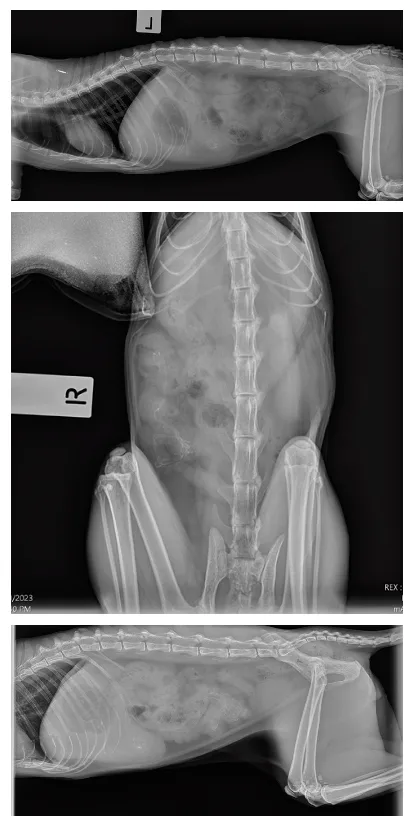
Image source: Web (Bing) / ar.inspiredpencil.com (Web image (fair-use with source credit))
The risks are not minor. They include:
- Choking if the object gets lodged in the throat
- Intestinal blockage, which stops food and water from passing
- Perforation of the intestinal wall, which can cause fatal infections
- Strangulation of a section of intestine, requiring surgical removal
Symptoms to watch for. If your cat has swallowed a rubber band or hair tie, you might see:
- Vomiting (often repeated, may look like foam)
- Loss of appetite
- Lethargy
- Straining to poop or no stool at all
- Abdominal pain (tucked belly, vocalizing when touched)
The timeline is short. Symptoms can appear within hours. A complete blockage can become an emergency within 24 to 48 hours. Veterinary sources confirm that surgery within the first 12 to 24 hours gives the best outcomes.
Waiting even a day can mean losing part of the intestine.
Is Your Cat at Higher Risk? Pica and Habitual Chewing
Not every cat who plays with a rubber band will eat one. But some cats are far more likely to swallow them. Understanding your cat's risk profile is a key part of prevention.
What is pica exactly? In cats, pica is the persistent chewing and eating of non-food materials. Common targets include plastic, fabric, cardboard, and yes, elastic items like rubber bands and hair ties. It's not just a bad habit.
It's a behavioral condition that often has an underlying cause.
Breeds that tend to chew more. While any cat can develop pica, some breeds are overrepresented in veterinary literature. Siamese, Burmese, and other Oriental breeds seem to have a genetic predisposition. Bengal cats with their high prey drive also show higher rates of object chewing.
But mixed breeds catch up fast if stress or boredom is a factor.
Age matters. Kittens and young adults (under 3 years) are more likely to explore the world with their mouths. They haven't learned what's food and what's not. This is the peak period for pica development and also the highest risk window for foreign body ingestion.
Stress and environment play a big role. Cats who live in multi-cat households, experience changes in routine, or have limited environmental enrichment are more prone to pica. Separation anxiety is another trigger. If your cat suddenly starts chewing hair ties after a move, a new pet, or a change in your schedule, that's a red flag.
How to assess your own cat's risk. Ask yourself these questions:
- Does my cat already chew on fabric, plastic, or cardboard?
- Does my cat eat non-food items, even occasionally?
- Has my cat had a foreign body or obstruction before?
- Is my cat under 3 years old or a high-risk breed?
- Has there been a recent change in the household?
If you answered yes to two or more, your cat is in a higher risk category. That doesn't mean panic. It means you need to be extra careful with storage and supervision.
How to Keep Your Cat Safe (Without Taking All the Fun)
You don't have to stop your cat from playing with small toys altogether. But you do need to change how you manage rubber bands and hair ties. The goal is to eliminate access while still giving your cat something satisfying to chase and chew.
The storage rule of thumb. Anything small enough to fit in your cat's mouth should not be left on counters, nightstands, bathroom sinks, or floors. Hair ties belong in a closed drawer or a covered container. Rubber bands should go in a desk drawer or a jar with a lid.
Be especially careful after opening mail packages. Those little bands fall on the floor and disappear under furniture where cats love to hunt them.
Supervised play only. If you want to use a hair tie or rubber band as part of play, fine. But use it as a wand toy attachment. Dangle it for your cat to chase and pounce on.
Never leave it on the floor for self-play. And when the play session ends, put it away in the sealed container immediately. Do not toss it on the counter "for later." That's how accidents happen.
| Object | Safe storage | Supervised play option |
|---|---|---|
| Hair ties | Closed drawer or covered jar | Dangle on a wand toy, put away after |
| Rubber bands | Sealed container in a drawer | Flick as a chase toy once, then discard or seal |
| Elastic hair scrunchies | Lidded basket or cabinet | Let cat bat with your hand holding it, then store |
Redirect the behavior. If you catch your cat chewing on a rubber band or hair tie, don't yell. That can make the behavior more exciting. Instead, calmly take it away and offer a safe alternative.
A crinkle ball, a silvervine stick, or a treat puzzle works well. The key is making the safe option more interesting than the dangerous one.
Training the drop it cue. Teach your cat to drop things on command. This takes time but can save a life. Every time your cat picks up a forbidden object, offer a high-value treat in exchange for letting it go.
After a few weeks, your cat will start spitting things out when you say "drop it." This isn't foolproof, but it adds a layer of safety.
Keep your bathroom door closed. Hair ties often end up on bathroom counters and floors after brushing or styling hair. Make it a habit to close the door when you're not in the room. If that's not possible, do a quick sweep of the floor before leaving.
A minute of prevention beats an emergency vet visit.
Check under furniture regularly. Rubber bands and hair ties have a way of migrating. The space under a couch, behind a dresser, or under the fridge is a prime hunting ground for your cat. Every few days, move the large furniture and sweep up anything small and chewy.
You'll be surprised what you find.
Safe Alternatives That Still Satisfy the Hunting Drive
The safest approach isn't just about hiding rubber bands. It's about giving your cat something better. The goal is to match the sensory experience that makes those objects so appealing, without the risk of surgery.
Crinkle balls are the closest match. They make a satisfying sound when bitten, they bounce unpredictably, and they're lightweight enough to bat across the floor. Most cats will chase them exactly like a hair tie. The difference is they're too big to swallow and made of non-toxic material.
You can find them at any pet supply store for a few dollars.
Silvervine sticks for chewing. If your cat is drawn to the oral fixation aspect, silvervine is a safer alternative. It's a natural plant that many cats find more appealing than catnip. The texture gives them something to gnaw on.
When they chew it, it splinters into soft fibers rather than staying intact like a rubber band. That means no linear foreign body risk.
Spring toys that bounce. There are commercial cat springs made of hard plastic. They bounce and skitter like a rubber band but they don't compress in a cat's mouth. A cat can bat them, chase them, and carry them around without being able to bite through and swallow pieces.
They're one of the most recommended alternatives by veterinary behaviorists.
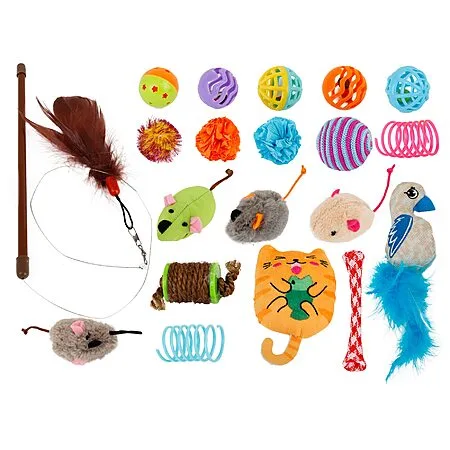
Image source: Web (Bing) / slickdeals.net (Web image (fair-use with source credit))
Treat puzzles for mental stimulation. Some cats chew out of boredom. A treat puzzle forces them to work for food, which uses the same mental energy as hunting. Once they solve it, they get a reward.
This can reduce the urge to seek out random objects for entertainment.
Interactive wand toys with elastic attachments. If you want to keep using that hair tie impulse, attach a safe one to a wand toy where you control it. The cat chases and pounces, but the object never goes into their mouth unsupervised. You get playtime without the risk.
Just inspect the wand regularly for wear and replace the attachment before it breaks off.
What about catnip toys? They work for many cats but not all. Catnip doesn't trigger the same chase response as a bouncing object. Use catnip toys for calming and comfort, not as a replacement for prey simulation.
For the hunt drive, you need movement.
When to Call the Vet: Warning Signs You Shouldn't Ignore
You can't watch your cat 24 hours a day. Sometimes they swallow something despite your best efforts. Knowing when to act can mean the difference between a simple procedure and a surgical emergency.
Call your vet immediately if you see any of these signs:
- Repeated vomiting within a few hours
- Complete loss of appetite for more than one meal
- Lethargy that seems out of character
- Straining to defecate with no result
- A swollen or tender belly
- Drooling or excessive swallowing
- Hiding or unusual aggression when touched
What if you saw them swallow it but there are no symptoms yet? Call your vet anyway. Describe what was swallowed and how long ago it happened. Some foreign bodies pass on their own within 24 to 48 hours.
But rubber bands and hair ties are high risk because of their elasticity. Your vet may recommend bringing the cat in for an X-ray or ultrasound to confirm location and shape of the object.
The cost of waiting is high. Emergency foreign body surgery for cats typically ranges from $2,000 to $5,000. That's not counting follow-up care. And the longer you wait after symptoms start, the more damage the object can do.
Intestinal perforation leads to peritonitis, which is often fatal if not caught early.
Don't try home remedies. Never induce vomiting in a cat without a vet's instruction. Never give oil or laxatives to try to move a foreign body along. These can cause more harm.
A rubber band that's stuck in the stomach can cause more damage if forced into the intestines where it can bunch up. Leave the treatment to professionals.
Frequently Asked Questions About Cats and Elastic Items
Why does my cat carry hair ties around and meow?
This is common with cats who find the object comforting. The hair tie carries your scent, and the cat treats it like a prized kill or a comfort object. Carrying it and meowing is a display of achievement.
It's not harmful in itself, but it means your cat has access to the object, so secure your storage.
Can a cat pass a hair tie naturally?
Sometimes yes, if it's small and moves through the intestines without snagging. But it's a gamble you don't want to take. The elastic material can catch on the intestinal wall and cause bunching.
If you suspect your cat ate a hair tie, call your vet for guidance. Do not wait to see if it passes.
My cat has never swallowed one. Should I still worry?
Yes. Cats can eat foreign objects at any time, even if they've never done it before. The first time is often the time that causes a blockage.
Prevention is much easier than treatment. Keep hair ties and rubber bands in sealed containers as a permanent habit, not just because of past behavior.
Are there any safe elastic toys for cats?
Some commercial cat toys use elastic cords inside a fabric sleeve. These are safer because the cat doesn't have direct access to the elastic. But inspect them regularly for wear.
Once the fabric breaks, the elastic inside becomes the same hazard as a rubber band. Replace any damaged toy immediately.
Does pica in cats ever go away on its own?
It can decrease with age, but it rarely disappears without intervention. Cats with pica need ongoing management. Addressing the underlying cause, whether it's stress, boredom, or a medical issue, is the only way to reduce the behavior.
Consult your veterinarian for a tailored plan if your cat has a pica diagnosis.
What's the best way to train a cat not to chew elastic items?
You can't fully train out a natural instinct, but you can redirect it. Use positive reinforcement when your cat chooses a safe toy over a hair tie. Never punish, as that increases stress which makes pica worse.
Keep dangerous items inaccessible and offer safe alternatives consistently. Over time, the habit shifts.
What About Other Elastic Household Items?
Rubber bands and hair ties aren't the only elastic dangers. Hair scrunchies, elastic bracelets, ponytail holders, and even the elastic bands on face masks pose the same risk. Office supplies like binder bands and rubber loom bands are popular targets too.
Treat all elastic items the same way. If it stretches and fits in your cat's mouth, it goes in a sealed container. Don't assume a larger item is safe.
Cats can bite through fabric and access the elastic core inside.
Creating a Cat Safe Home Long Term
The most effective prevention is habit. Make it routine to scan every room for small objects before you leave. Encourage everyone in your household to follow the same storage rules.
A guest who drops a hair tie on the nightstand can undo weeks of careful management.
In our research, the most successful cat owners pair prevention with enrichment. A cat with plenty of safe toys, puzzle feeders, and playtime is far less likely to hunt for forbidden objects. Address boredom and stress as the root causes.
Your cat will thank you, and so will your wallet.

Similar Posts