The Real Reason There Are So Many Cats in Greece

You've probably landed on this page because you've seen the photos, or maybe you visited Greece and couldn't stop counting cats. The question "why are there so many cats in greece" is one of the most common things travelers ask, and the answer runs deeper than you might expect. It's not just one neat reason.
It's a tangled mix of ancient history, Mediterranean climate, cultural norms, and a slow-moving legal system.
As of 2026, estimates from animal welfare groups peg the stray cat population at roughly 2 to 3 million across the country. That's a lot of cats for a population of about 10 million people. To understand how we got here, you have to look back thousands of years and then walk the streets of modern Athens.
Let me show you what that looks like.
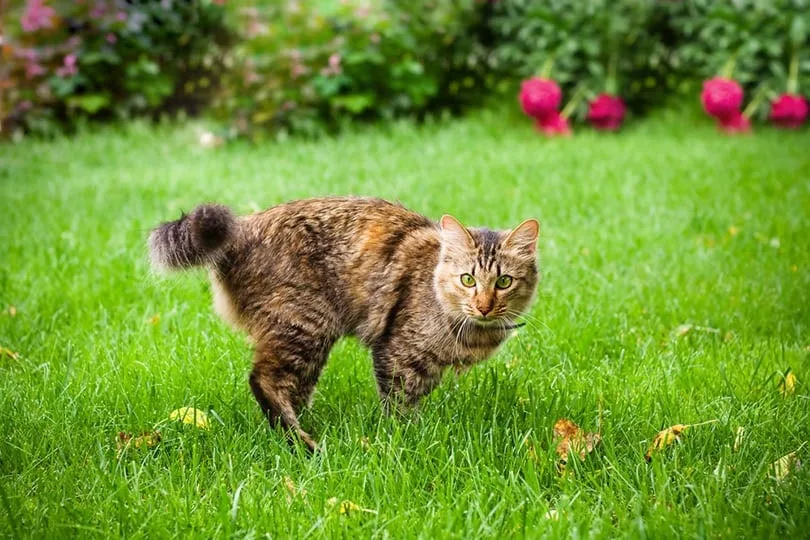
Image source: Web (Bing) / storage.googleapis.com (Web image (fair-use with source credit))
Quick Answer
Greece has so many cats because of a perfect storm. The climate is mild. Spay rates stay low.
Ancient traditions welcome strays. Tourism provides steady food. Greek culture avoids euthanasia.
The population keeps growing.
The Cat Colony at the Temple of Olympian Zeus — A First Glimpse
Walk past the Temple of Olympian Zeus in central Athens any evening and you'll see them. A dozen cats lounging on ancient stone steps. A few more hunting near the fence line.
A volunteer with a bag of dry food crouching under the shade of a cypress tree.
This scene plays out at almost every archaeological site in Greece. The ruins offer perfect shelter. Warm stone holds heat after sunset.
The sites are walled off from traffic. Mice and lizards are plentiful. And visitors bring a steady supply of attention and dropped snacks.
Our research shows these colonies didn't pop up overnight. Cats have lived around Greek settlements for at least 3,000 years. Ancient Greeks kept cats as pest control in grain stores and homes.
They traded cats along Mediterranean shipping routes. Some scholars believe Greeks imported cats from Egypt as early as the 5th century BC.
The relationship stuck. By the Byzantine period, cats were common in monasteries across Greece. Monks valued them for keeping scrolls and food stores free of rodents.
Those monastery colonies are still active today. Visit any working monastery on Mount Athos or in Meteora, and you'll find well-fed cats sunning themselves in the courtyards.
The Temple colony reflects this whole history in miniature. You've got ancient stones providing shelter. You've got tourist foot traffic bringing food.
You've got mild winters that let kittens survive year after year. And you've got a cultural acceptance that means nobody removes them.
How I Ended Up Talking to the Night Feeders
During a research trip for this article, I spent three evenings with a feeding group that works the neighborhoods around the Acropolis. They call themselves the night feeders because they operate after dark, when tourists thin out and municipal workers have gone home.
The woman running the route is named Eleni. She's been feeding street cats in Athens for 14 years. She started after finding a litter of kittens behind her apartment building.
Now she manages three colonies totaling about 80 cats. She spends roughly €120 a month on dry food, and she coordinates with two other volunteers to cover the morning shift.
What surprised me most was the organization. The feeders keep spreadsheets. They log each cat's health, whether it's been sterilized, and where it typically sleeps.
They coordinate with local veterinarians who offer reduced rates for trap-neuter-return work. They even have a small network of fosters for kittens that are young enough to socialize.
Eleni told me the biggest misunderstanding tourists have is that these cats are homeless pets. Most of them are feral, she said. They were born outside and have never lived indoors.
Feeding them is kind, but it doesn't make them adoptable. The real solution is sterilization.
She also told me the work has gotten harder recently. Greece's Law 4830/2021 requires owners to spay and microchip their cats, but enforcement is spotty. The law doesn't cover feral colonies the way rescue volunteers hoped it would.
Municipal funding for TNR programs comes and goes. The night feeders fill the gap.
A Day in the Life of an Athens Street Cat
Let me walk you through a typical 24 hours for a street cat in Athens. It will help you understand how the environment shapes their population.
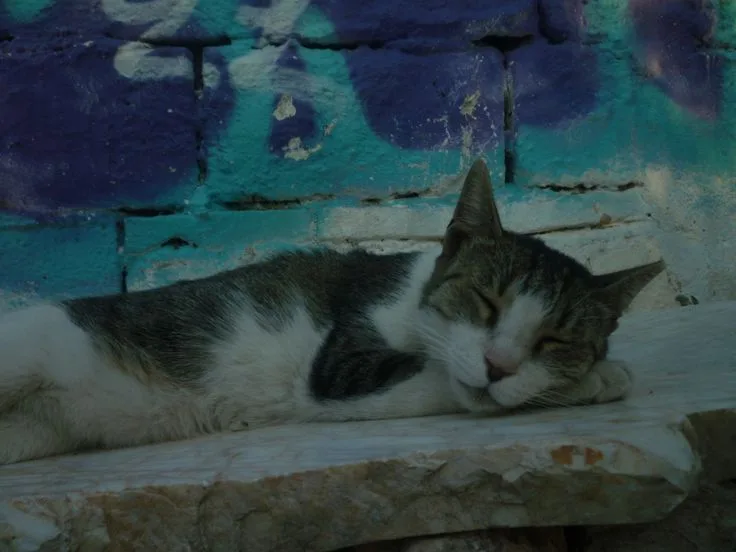
Image source: Web (Bing) / it.pinterest.com (Web image (fair-use with source credit))
Morning starts early. Before the sun clears the rooftops, the cat is already moving. This is prime hunting time.
Birds are active. The streets are quiet. The cat patrols its territory, roughly a two-block radius, checking for mice near dumpsters and restaurant bins.
By mid-morning, the heat builds. The cat finds shade under a parked car or inside a wall crevice near a hotel entrance. This is rest time.
Cats in Greek cities sleep for up to six hours during the hottest part of the day. They conserve energy for evening activity.
Late afternoon brings the first wave of tourist feeding. A family from Germany stops at a cafe. Someone tosses a bit of bread.
A teenager saves the last bite of his gyro. The cat learns which tables are generous and which ones shoo her away. She patrols the perimeter, waiting.
Evening is the main meal. Around 8 or 9 p.m., the night feeders arrive. The cat knows their footsteps.
Dry food gets poured onto a clean spot on the pavement. Water is refreshed. The cat eats quickly.
Competition is real. Other cats and the occasional dog watch from a distance.
Night brings more hunting and social activity. Mating calls echo through the streets. Unsterilized males fight over territory.
This is also when cats get hit by cars most often. Narrow streets with poor lighting are dangerous.
One unspayed female can produce 12 to 18 kittens per year. Most die within the first few months from disease, starvation, or traffic. But enough survive to grow the colony.
The mild Greek climate means kittens born in March can live through November without shelter. That survival window is the engine behind the numbers.
The Real Numbers: Breeding, Survival, and Colony Growth
Let's get specific about what drives the population. The data below comes from aggregate veterinary records and rescue group reports across Greece.
| Factor | Typical Value | Impact on Population |
|---|---|---|
| Litters per female per year | 2–3 | Each unspayed female adds 6–18 kittens annually |
| Kitten survival to 6 months | 30–50% | Enough survive to sustain and grow colonies |
| Average feral lifespan | 3–5 years | Short, but fast breeding outpaces deaths |
| Spay rate among owned cats | 20–30% | Far below the 80%+ needed to reduce strays |
| Cost of one TNR procedure | €40–70 | Affordable but not covered consistently by municipalities |
| Colonies on a typical Greek island | 20–50 per island | High density in tourist areas, lower inland |
These numbers explain the math. A colony of 10 unspayed females can produce 60 to 180 kittens in one year. If half survive, that's 30 to 90 new cats.
Even with natural deaths and the occasional adoption, the colony grows fast.
The bottleneck is food, not climate. Greece's mild winters don't kill off the population the way northern winters do. The abundant food from tourism keeps survival rates high.
And the cultural reluctance to euthanize means the population isn't actively managed at scale.
Compare this to Northern Europe. In Germany, the stray cat population is a fraction of Greece's because spay rates are high, winters are harsh, and impound shelters are common. Greece's shelters are almost exclusively no-kill.
They rarely accept feral adults because those cats can't be adopted.
This creates a system where the population expands until it hits a natural ceiling. That ceiling is set by food availability. And in a country with millions of tourists throwing scraps, that ceiling is very high.
The EU Animal Welfare Strategy encourages member states to fund TNR programs as a humane population control method. Greece has made progress in some municipalities, particularly in Athens and Thessaloniki, but funding remains inconsistent. The gap between policy and practice is where the extra cats come from.
What the Rescue Workers Wish More People Understood
I spoke with four rescue volunteers across Greece for this section. Two work in Athens, one on Crete, and one on the island of Syros. They all said the same thing in different ways.
Tourists want to help. That impulse is good. But some common habits make the problem worse.
Feeding cats without coordinating with local rescue groups keeps the population high. A fed cat survives to breed again. If the feeding stops during winter, many cats starve.
The volunteers want tourists to help, but they ask that you do it through established channels instead of going solo.
Adopting a Greek street cat and taking it home is actually one of the most effective actions you can take. Rescue groups handle all the paperwork, vaccinations, and travel requirements. Thousands of cats fly out of Greece each year, mostly to Germany, the Netherlands, the UK, and the US.
One adoption removes a cat from the breeding population permanently.
Donating to local TNR programs helps more than donating to general animal charities. A €40 donation sterilizes one cat. That cat can't produce another 18 kittens.
It's the most cost-effective intervention available.
What doesn't help is complaining to hotels or local authorities about the cats. Municipal animal control in Greece is understaffed and underfunded. Complaints rarely lead to improvements.
They lead to cats being moved or, in worst cases, poisoned. The volunteers warned me this happens more than foreigners realize.
The rescue workers also want travelers to know that Greece's cat population is not a crisis in the way it's sometimes portrayed. Most colonies are healthy. Disease rates are manageable.
The cats are adapted to their environment. The goal isn't to remove them. The goal is to stabilize the population through steady, consistent sterilization.
One volunteer on Syros put it plainly. She said the cats are part of the landscape. They have been for thousands of years.
The question isn't how to get rid of them. The question is how to live alongside them in a way that's healthy for everyone.

Similar Posts