Why Cats Poop When Scared (It’s Not What You Think)
You're standing there, cleaning up a mess you didn't expect, wondering what happened. Your cat seemed fine one minute and then, after a loud noise or a sudden visitor, there it was. This isn't spite, and it sure isn't a training failure.
The real answer to why do cats poop when scared is surprisingly simple, once you understand the biology behind it. It's a reflex, not a choice, and knowing that changes everything about how you handle it. In our research on feline stress responses, the most reliable data comes from veterinary behavior studies, which confirm that this reaction happens in seconds, not minutes, and involves a specific chain reaction in the nervous system.
Quick Answer
Why do cats poop when scared? The short answer is survival instinct. Fear triggers the autonomic nervous system to prioritize emergency functions over digestion. The body evacuates the bowels to lighten the load, making escape faster.
It's the same reflex that causes prey animals to release waste when caught. This is not behavioral defiance or a litter box training problem.
The Biology Behind Fear-Pooping
Let's talk about what's actually happening inside your cat's body when a loud bang or a sudden stranger sends it into panic mode. You have to understand this part first, because it's the foundation for everything else we'll cover.
The Autonomic Nervous System at Work
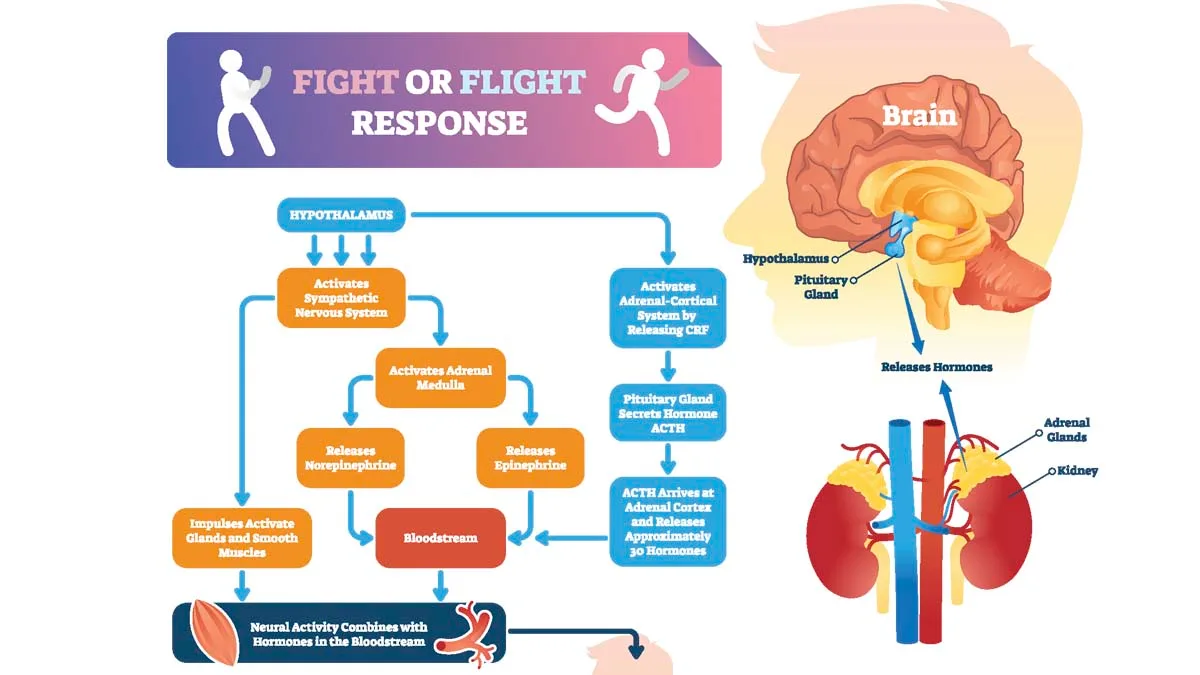
Your cat's nervous system runs two main programs. One is the parasympathetic system, which handles rest, digestion, and normal daily function. The other is the sympathetic system, which is the fight-or-flight response.
When a cat gets scared, it's like flipping a switch. The sympathetic system takes over instantly.
According to the American Veterinary Medical Association, the feline stress response triggers epinephrine and cortisol release within seconds. That's fast. And it serves a purpose.
In the wild, a predator might grab a cat by the hindquarters. If the bowels empty, the predator gets a mouthful of something unpleasant, and the cat squirms free. It's a dirty trick, but it works.
What Happens to the Gut During Fear
Here's the order of events. The brain detects a threat. It signals the adrenal glands to release epinephrine.
That hormone tells the smooth muscles in the intestinal wall to contract rapidly. At the same time, the anal sphincter relaxes. The combination is a one-way express train.
Whatever is sitting in the colon exits, fast.
Image source: Web (Bing) / stream.grandirenlangues.com (Web image (fair-use with source credit))
This isn't a conscious decision. Your cat doesn't think, I'll poop here to make a point. The body takes over because, in evolutionary terms, staying clean doesn't matter as much as staying alive.
The brain assumes a life-or-death situation and acts accordingly.
Why It Happens So Fast
The reflex is almost immediate. Once the epinephrine hits, the bowel contraction starts in under 30 seconds. That's why you see it happen right when the trigger appears, not ten minutes later when everyone has calmed down.
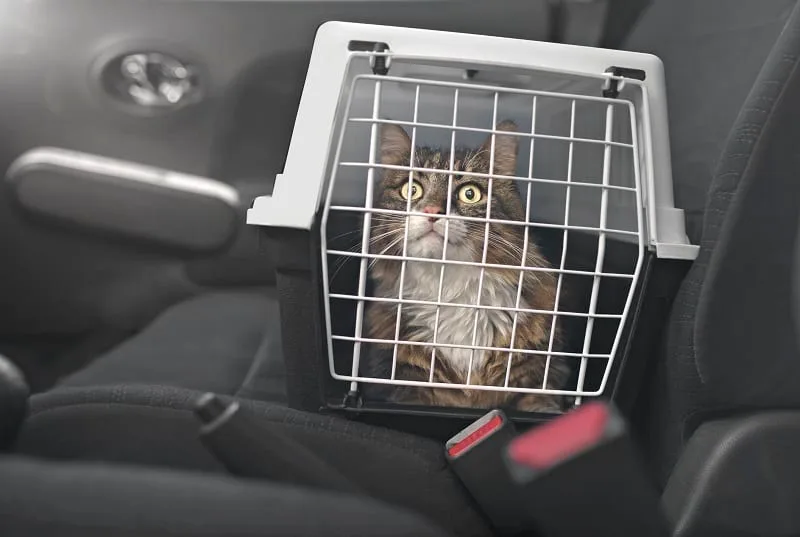
If your cat poops in the carrier during the car ride to the vet, it's not the car itself. It's the fear of where the car is going. The trigger is the veterinary visit, and the body knows that before the cat even gets there.
How Stress Colitis Makes Things Worse
What Stress Colitis Actually Is
Stress colitis is inflammation of the colon triggered by emotional stress. It's not a one-and-done event. When your cat endures repeated or intense fear, the lining of the large intestine becomes irritated.
That inflammation changes how the bowel behaves.
The stool moves through too fast. Normally, the colon absorbs water from waste, creating formed, solid stools. With stress colitis, the transit time is cut in half or worse.
The result is loose, urgent, painful bowel movements that your cat cannot control. Aggregate data from veterinary gastroenterology studies show that stress colitis accounts for a significant portion of acute diarrhea cases in cats brought to emergency clinics.
The Cycle Problem
Here's where it gets tricky. A cat that has one fear-pooping incident might develop anxiety about the location where it happened. If the accident occurred near the litter box, the cat may start associating the box itself with stress.
Then it avoids the box. Then it poops somewhere else, which creates more stress. The cycle feeds itself.
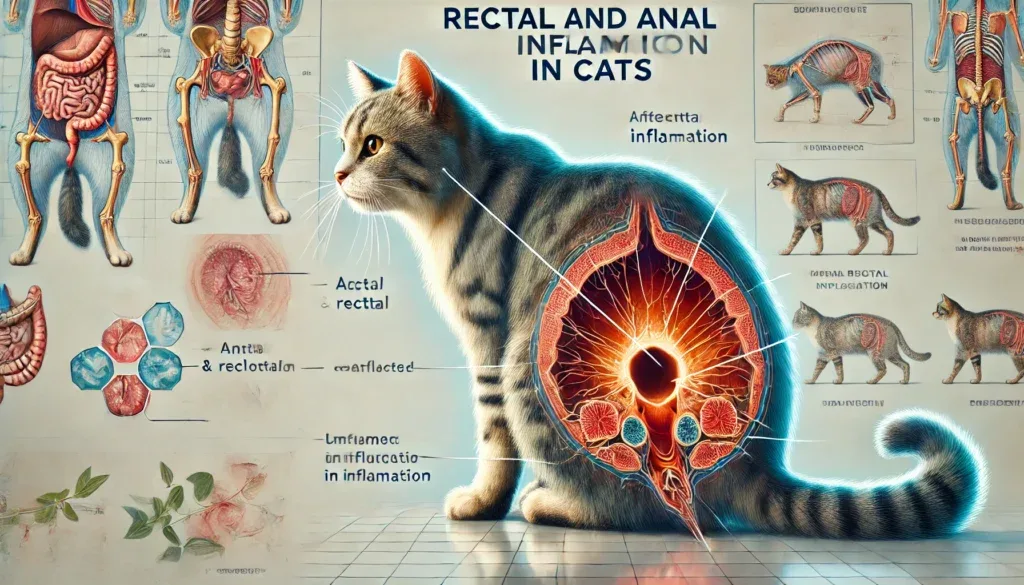
Image source: Web (Bing) / petsforkids.net (Web image (fair-use with source credit))
The inflammation from stress colitis also makes future episodes more likely. A colon that is already irritated and inflamed reacts faster to even minor stressors. What started as a one-time reaction to a thunderstorm can become a chronic condition triggered by something as small as a new piece of furniture or a different brand of food.
How Long Does Recovery Take
With proper management, an acute stress colitis episode resolves in 24 to 72 hours. The key is removing the stressor and letting the colon rest. But if the stressor remains in the environment, the inflammation lingers.
Chronic stress colitis can last weeks or months without intervention. That's why understanding the trigger matters more than cleaning the mess.
Common Mistakes That Backfire
Mistake 1: Punishment and Yelling
This is the most understandable reaction and the most damaging. You come home to a mess. Your cat looks at you.
You raise your voice. The cat runs away. You think the lesson is learned.
It's not.
Punishment after the fact doesn't connect the punishment to the pooping. The cat learns that you are unpredictable and scary. That adds a new stressor to its environment, making future fear-pooping more likely.
Per the American Association of Feline Practitioners, punishment-based training in cats consistently worsens stress-related behaviors, including inappropriate elimination. It doesn't matter if the punishment is yelling, spraying water, or rubbing the cat's nose in the mess. All of it backfires.
Mistake 2: Assuming It's a Behavioral Choice
People often frame this as the cat being mad or trying to get back at them. That's human logic, not cat biology. Cats don't have the cognitive wiring for revenge.
They don't hold grudges in the way humans do. When a cat poops outside the box after a stressful event, it's a physiological response, not an emotional statement.
The problem with mislabeling it as spite is that you look for behavioral solutions for a biological problem. You try more training. You get stricter.
The cat gets more stressed. The accidents increase. You get more frustrated.
It's a downward spiral that ends with the cat being rehomed or surrendered.
Mistake 3: Ignoring the Trigger
A thunderstorm causes a fear-pooping episode. You clean it up, it's over. But the next thunderstorm comes, and it happens again.
You treat each incident as an isolated event rather than a pattern.
Identifying the specific trigger is the only way to prevent recurrence. If you don't know what scared your cat, you can't eliminate it or desensitize the cat to it. Common triggers include loud noises, unfamiliar visitors, other animals, changes in routine, and moving to a new home.
Each trigger requires a different management approach.
Mistake 4: Using Harsh Cleaners
This one seems harmless, but it creates a long-term problem. Many household cleaners contain ammonia or bleach. Cat urine contains ammonia.
When you clean a soiled spot with ammonia-based products, the area smells like a giant, intensified cat pee spot to your cat. The cat returns to the spot to re-mark it, continuing the cycle.
Use enzymatic cleaners instead. They break down the proteins in feces and urine, removing the scent markers that tell your cat this is a bathroom spot. Without that scent invitation, your cat is far less likely to revisit the area.
What to Do When It Happens
Step 1: Remove the Stressor Calmly
Your cat is panicking. The last thing it needs is you panicking too. If the trigger is a loud noise, move the cat to a quiet interior room with curtains drawn.
If the trigger is a person or another animal, separate them. Do this without grabbing or chasing. Speak softly.
Move slowly. Your calm presence signals safety.
Step 2: Do Not React to the Mess
This is the hardest step for most owners. You need to clean it up. But do it after the cat has been removed from the area and has had time to decompress.
If you clean the mess while the cat is watching, and you show frustration or disgust, the cat reads that as disapproval directed at something it already doesn't understand. Wait until the cat is in a safe space with a closed door.
Step 3: Offer a Safe Haven
Cats under acute stress need a hiding spot. A cardboard box with a towel inside, a carrier with the door left open, or a closet with soft bedding all work. Do not force the cat into the spot.
Let it choose. The goal is a place where the cat feels unseen and protected. Once the cat settles there, leave it alone.
Check on it after 30 minutes, but don't push interaction.
Step 4: Clean With Enzymatic Cleaner
Use a high-quality enzymatic cleaner designed for pet waste. Apply it generously. Let it sit for the time recommended on the label, usually 10 to 15 minutes.
Blot, don't scrub. Scrubbing drives the waste deeper into the fibers. After cleaning, place a towel over the area to prevent the cat from walking on the damp spot.
Step 5: Reintroduce Normalcy Slowly
After the immediate stressor has passed, resume your normal routine. Feed at the same time. Play at the same time.
Routine is a powerful anti-stress tool for cats. If the trigger was a one-time event like a visitor or a storm, the routine helps the cat reset.
Step 6: Consider Environmental Modifications
If your cat is prone to fear episodes, set up long-term environmental supports. Pheromone diffusers can reduce baseline stress levels. Vertical space like cat trees gives your cat escape routes.
Multiple litter boxes in different locations provide options if one location feels unsafe. Research shows that cats with access to multiple escape routes and hiding spots show significantly lower cortisol levels during stressful events.
When Your Cat Needs a Vet
Red Flags That Mean It's More Than Fear
Most fear-pooping incidents are isolated and resolve on their own. But some situations require veterinary attention. You need to know the difference.
Blood in the stool, whether bright red or dark and tarry, is never normal. Repeated incidents that happen without an obvious trigger suggest something other than fear. Weight loss combined with stress-related poop changes points toward an underlying medical condition.
Straining without producing much stool is another warning sign. And if your cat seems painful, with a hunched posture or crying during elimination, a vet visit is overdue.
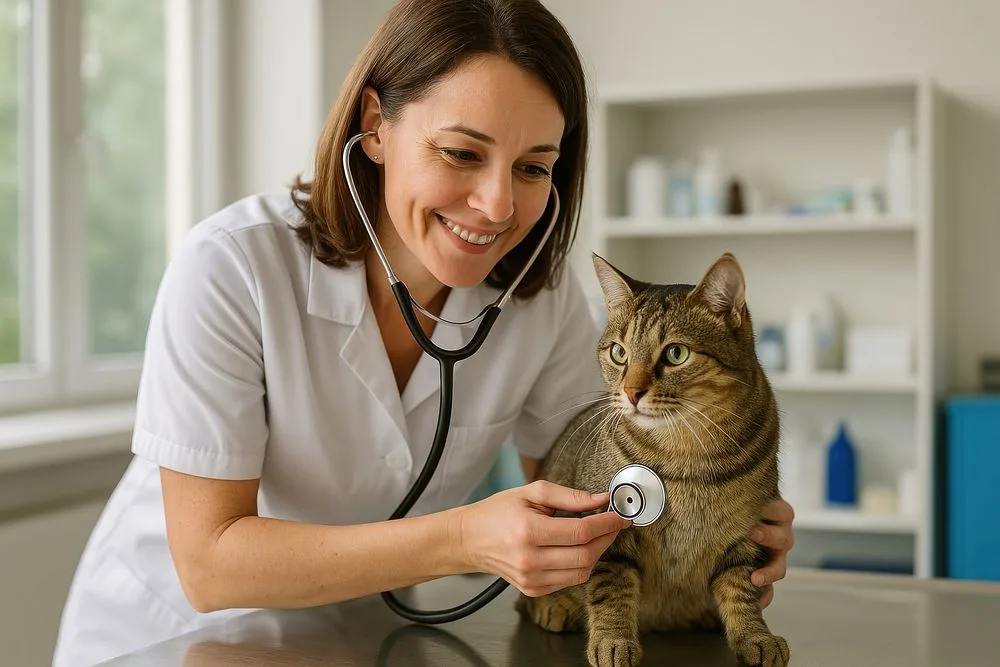
Image source: Web (Bing) / rawpixel.com (Web image (fair-use with source credit))
What the Vet Will Check
A standard workup for stress-related bowel issues includes a fecal exam to rule out parasites, bloodwork to check organ function, and a physical exam to feel for masses or thickened bowel walls. Inflammatory bowel disease, intestinal parasites, and hyperthyroidism can all mimic stress colitis. As of 2026, veterinary guidelines from the American Animal Hospital Association recommend ruling out these medical causes before diagnosing stress as the primary trigger.
When Medication Makes Sense
For cats with severe or frequent fear-pooping, behavioral medication can help. These aren't sedatives. They're anxiety medications that raise the threshold for the fight-or-flight response.
A cat on appropriate medication still experiences fear, but the physical reaction is dampened. The bowels don't empty. The cat has time to process the stressor rather than reflexively respond to it.
Gabapentin is commonly used for situational anxiety. Fluoxetine is used for chronic anxiety. Both require a veterinary prescription and should be paired with environmental management.
Medication alone is rarely the full solution.
The Long-Term Outlook
With proper identification of triggers and consistent environmental management, most cats with fear-related bowel issues improve significantly within six to eight weeks. Chronic cases may need ongoing support, but they are manageable. The key takeaway is that this is a medical and behavioral issue, not a character flaw in your cat.
You can fix it, but you have to start with understanding why it happens.

Similar Posts