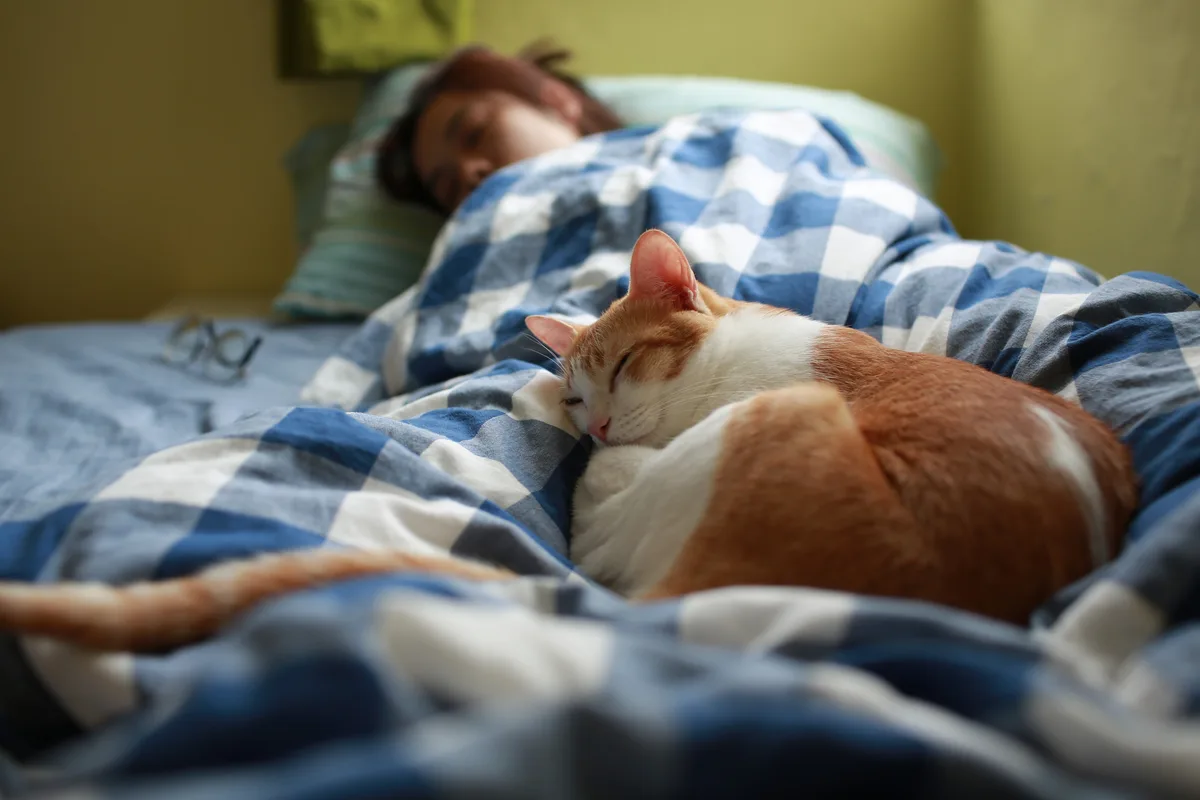
Why does my cat sleep with me instead of my husband?
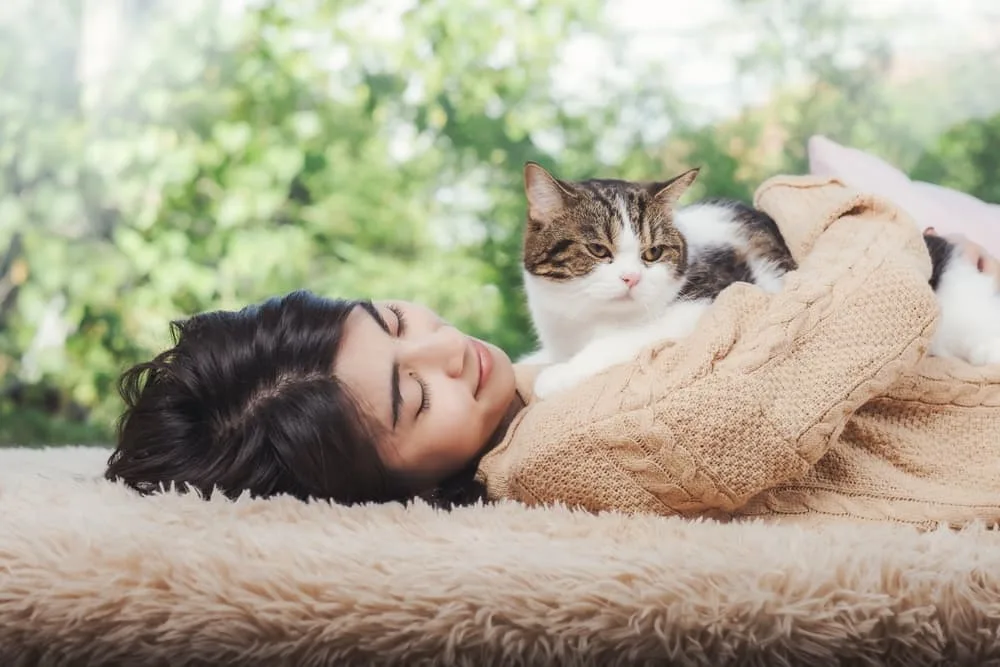
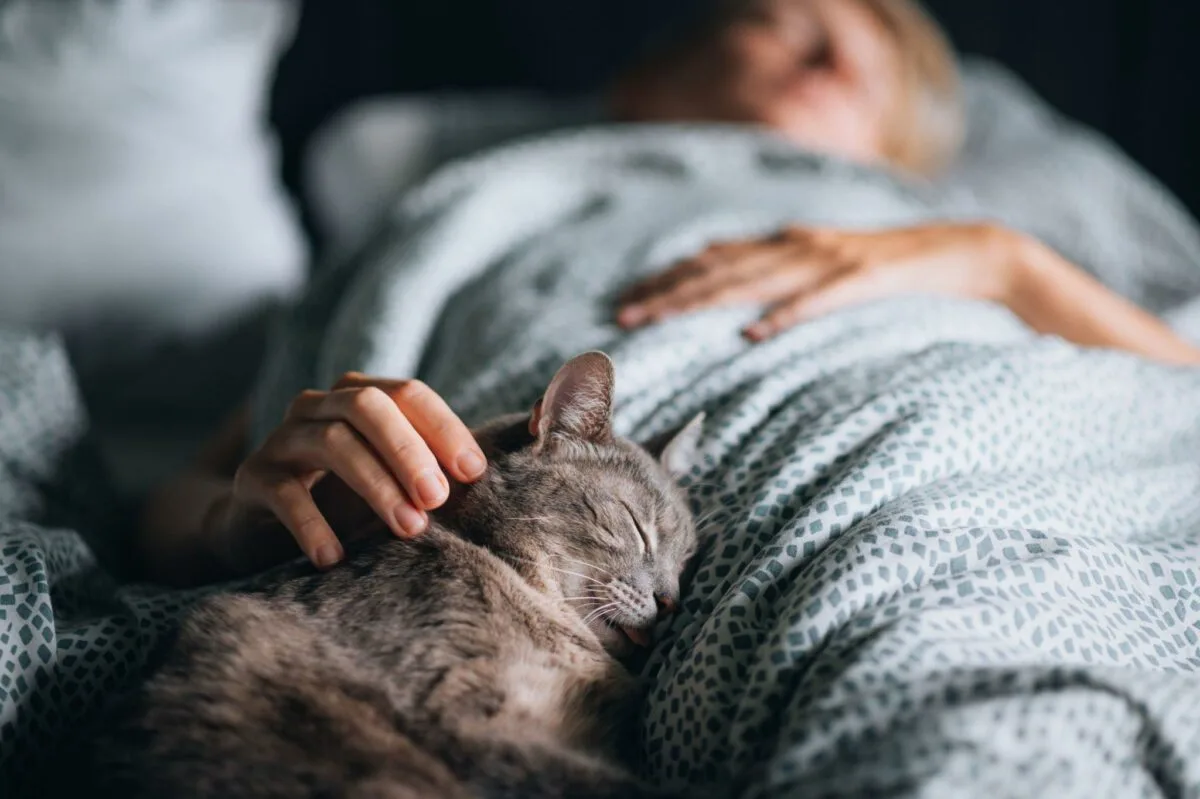
Your cat curls up with you every night. Warm, purring, content. But when your husband gets into bed, she barely looks up.
She does it every single night. And each time you’re left wondering, why does my cat sleep with me and not with my husband?
It feels personal. Maybe she just loves you more, right? Well, not exactly.
Feline behavior is driven by a mix of instinct, sensory preference, and routine. In our research, the factors that drive a cat’s sleeping choice boil down to four main variables: body heat, scent profile, feeding routine, and perceived safety. Veterinary behavior studies show cats maintain an average body temperature of 101, 102.5°F, significantly warmer than humans, so temperature differences between partners matter more than most people realize.
Let’s dig into why she chose your side of the bed.
Image source: Bing (Web (fair-use with source credit))
The Real Reason Cats Choose One Sleeping Partner
Here’s the short version. Your cat isn’t playing favorites in a human emotional sense. She’s making a practical decision based on comfort, safety, scent, and habit.
Think of it like choosing your favorite spot on the couch. You don’t sit there because you love that cushion more than the others. You sit there because it fits you right.
Your cat does the same. She picks the sleeping partner who offers the best combination of:
| Factor | Why It Matters |
|---|---|
| Body heat | Cats run hot and seek stable warmth. The person who stays stiller and radiates steady heat wins. |
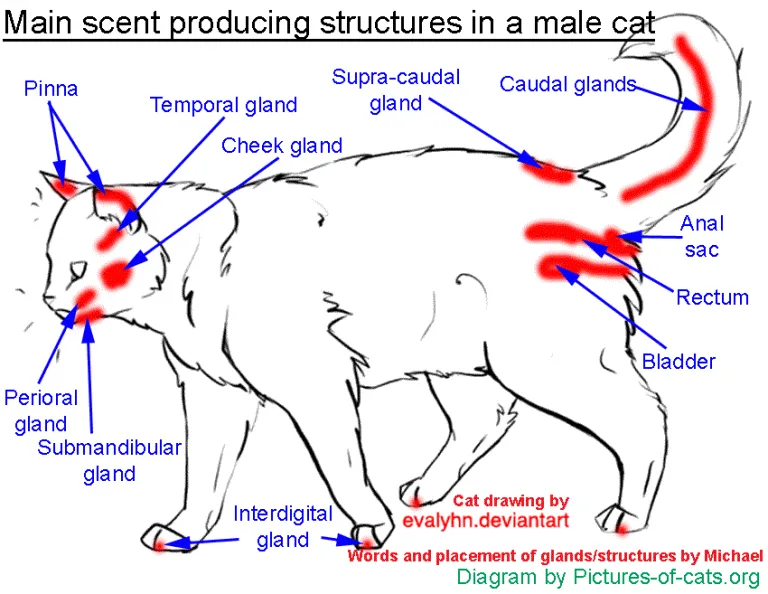
| Scent profile | Soaps, lotions, laundry detergent, and natural pheromones all differ. Cats prefer familiar, non-threatening smells. |
| Routine | Whoever feeds her, plays with her, or is home more during the day builds a stronger association. |
| Sleeping behavior | Tossers and turners get avoided. Cats want a still, predictable sleeping partner. |
| Perceived safety | If you're the calmer, less reactive person in bed, the cat trusts you more with her vulnerable sleep. |
None of these mean she dislikes your husband. She just ranked the sleeping conditions and picked the best option. In multi-person households, that’s normal behavior.
The Cornell University College of Veterinary Medicine notes that cats form distinct associations with each household member based on daily interactions. Your bed is just the final test.
Quick Answer
Your cat sleeps with you over your husband because you meet a specific mix of heat, scent, routine, and safety preference. She isn’t rejecting him personally. She’s choosing the most comfortable sleeping conditions available.
That usually comes down to who runs warmer, who stays stiller, and who handles the feeding. It’s a practical decision, not an emotional one.
Start Here: A Self-Diagnosis Before You Dive In
Before we walk through the decision tree, take two minutes to observe your current setup. This will save you time and give you real answers instead of guesses. Grab a mental checklist and run through these five questions.
Who feeds the cat?
This is the biggest predictor. If you’re the one who fills the bowl in the morning and gives the evening treats, your cat connects you with food. That bond transfers directly to sleeping preference.
Studies in Applied Animal Behaviour Science show that food-associated humans receive more affiliative behaviors from cats, including sleeping near them. If your husband never handles meals, the cat has less reason to seek him out at night.
Who is home more during the day?
Cats build familiarity through proximity. If you work from home or have a different schedule, your scent is everywhere. You’re the constant presence.
Your husband might be a stranger who shows up at night. That alone explains the preference.
Who moves more in bed?
Record a night or just ask honestly. If your husband thrashes, changes positions frequently, or snores loud enough to vibrate the mattress, your cat will avoid him. Cats are light sleepers.
They need a stable surface.
Who is warmer?
Natural body temperature varies between people. If you run a degree or two warmer and stay steady under the covers, you’re a more attractive heat source. Your cat doesn’t care about fairness.
She cares about warmth.
Who smells more neutral?
Strong perfumes, colognes, scented dehumidifiers, or even spicy food odors can put a cat off. If your husband uses a strong aftershave or has a distinct scent from work (grease, smoke, chemicals), the cat may find it unpleasant. Your scent likely reads as safer and more familiar.
Answer these five honestly before you move to the tree. It will tell you which branch to follow.
The Decision Tree: Track Down the Exact Reason
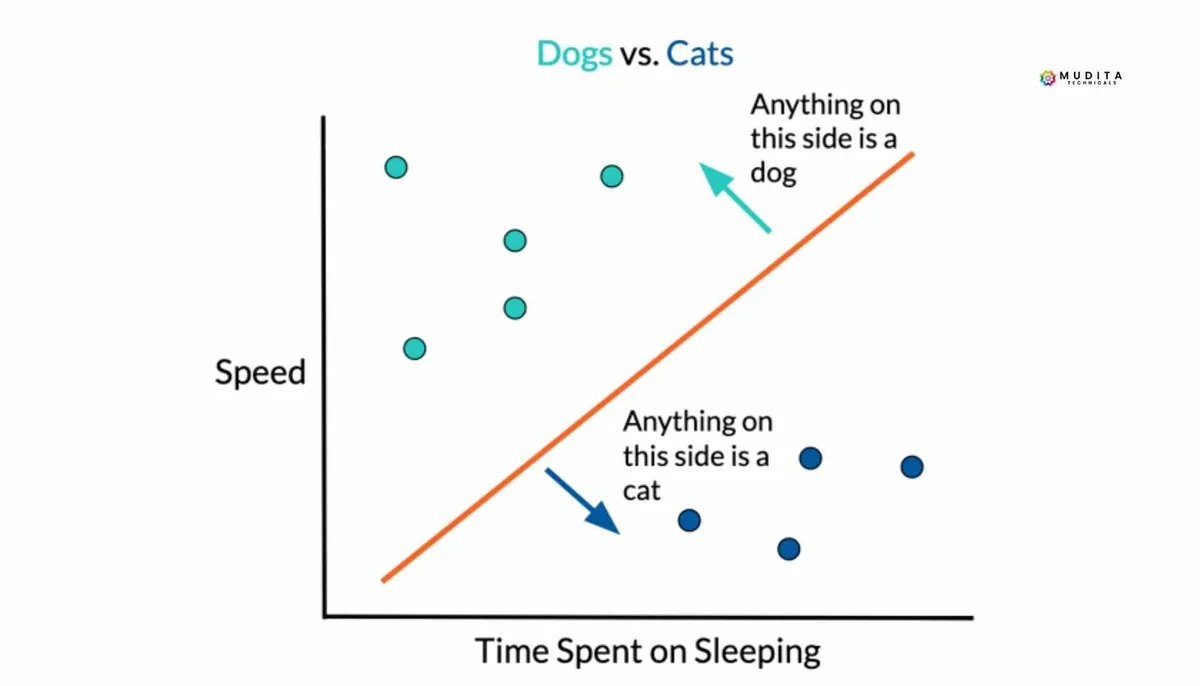
Image source: Bing (Web (fair-use with source credit))
Now let’s walk through the actual decision tree. Start at the top and answer each question honestly. The first question determines your main branch.
Branch 1: Does the cat follow you around all day?
Yes. Go to Branch A.
No. Go to Branch B.
Branch A (Yes — she follows you)
If she follows you from room to room, sleeps near your desk, and greets you at the door, the reason is primary attachment. You are her main person. The bed is just an extension of that bond.
She sleeps with you because she feels safest when you’re nearby.
What to look for: She head-butts you, kneads on you, and purrs immediately when you touch her. She might ignore your husband entirely during the day too.
Likely cause: You handle most of the feeding, play, and care. The routine is set.
Branch B (No — she doesn’t follow you)
If she’s independent during the day but still chooses you at night, the reason is likely environmental comfort, not attachment.
Sub-question 1: Does she sleep on your pillow, your chest, or wrapped around your head?
Yes. This points to heat and scent. Your head and neck emit more heat, and your pillow carries your strongest scent profile. She’s seeking warmth and familiarity.
What to try: Swap pillowcases for a week. If she moves to your husband’s side, you have your answer. If she stays, it’s heat.
No. She sleeps at your feet or on the edge of the bed. This points to safety and stillness. She wants to be near you, but not on you.
She likely perceives you as the calmer, less disruptive sleeper.
Branch C: Does the cat avoid your husband completely at night?
Yes. This is important. If she hisses, growls, or jumps off the bed when he gets close, it’s not just preference. She may feel threatened or have a negative association.
Possible causes: He startled her once, he moves too fast, his scent is alarming, or he disturbed her sleep.
Action: Do not force contact. Give the cat space and let her approach him on her terms. If the behavior persists for more than a few weeks, consider a veterinary behaviorist consult.
No. She just ignores him. That’s normal. She has no strong reaction.
She simply chose you for practical reasons.
Decision Tree Summary Table
| Start Question | What It Tells You | Likely Reason |
|---|---|---|
| Follows you all day? | Primary attachment | Food, routine, care |
| Doesn’t follow, sleeps on your head? | Heat and scent | Body heat, familiar smell |
| Doesn’t follow, sleeps at your feet? | Safety and stillness | You sleep calmly |
| Hisses or avoids husband? | Fear or negative association | Past bad experience |
| Ignores husband calmly? | Practical preference | No issue, just choice |
The Most Common Mistakes That Keep the Pattern Stuck
Now you know the reason. But knowing isn’t changing. Many people try to fix this and accidentally make it worse.
Here are the biggest mistakes we see again and again in our research.
Mistake 1: Forcing the cat to sleep with your husband
Picking her up and placing her on his chest while she fights to get away. This doesn’t work. It creates a negative association.
She learns that being near him is stressful. You want her to choose him on her own terms.
What to do instead: Let her move toward him naturally. Place a treat on his side of the bed before sleep. Let him pet her gently when she approaches, not when she’s trapped.
Mistake 2: Changing the sleeping location abruptly
Some people move the cat bed, shift blankets, or swap sides of the bed overnight. Cats hate sudden environmental changes. You’ll confuse her, not redirect her.
What to do instead: Make changes slowly over 7, 10 days. Move her favorite blanket one inch per night toward the other side. Gradual shifts work.
Sudden changes backfire.
Mistake 3: Assuming the cat is angry at your husband
Cats don’t hold grudges the way humans do. She isn’t punishing him. She’s making a comfort calculation.
If you interpret it as rejection and act hurt around the cat, you might change your own behavior in ways that confuse her.
What to do instead: Observe objectively. Is there any hissing, hiding, or flattened ears? If not, she’s fine.
It’s just a routine preference.
Mistake 4: Ignoring the feeding connection
If you want the cat to bond with your husband, he needs to become a food source. This is the single most effective change you can make.
What to do instead: Have your husband handle all meals and treats for 2, 3 weeks. Morning and evening. No exceptions.
Feeding associations are powerful in cats. The Journal of Feline Medicine and Surgery notes that food delivery is one of the strongest reinforcers of feline social bonds.
Mistake 5: Trying to change too many things at once
You swap blanket smells, switch feeding duties, move the cat bed, and start using a new diffuser all in one week. The cat gets overwhelmed and shuts down. She’ll stick with what she knows, which is you.
What to do instead: Pick one variable. Change it. Wait 7 days.
Observe. If nothing shifts, try a different variable. One change at a time is the only method that isolates what actually works.
How to Shift Your Cat's Preference (If You Want To)
Look, you don’t have to change anything. If you’re happy being the chosen one, leave it alone. Your cat is comfortable and the household is peaceful.
But if your husband feels left out, or you’re tired of being woken up at 4 AM by a purring engine on your chest, you can shift the balance.
The key is patience and one variable at a time.
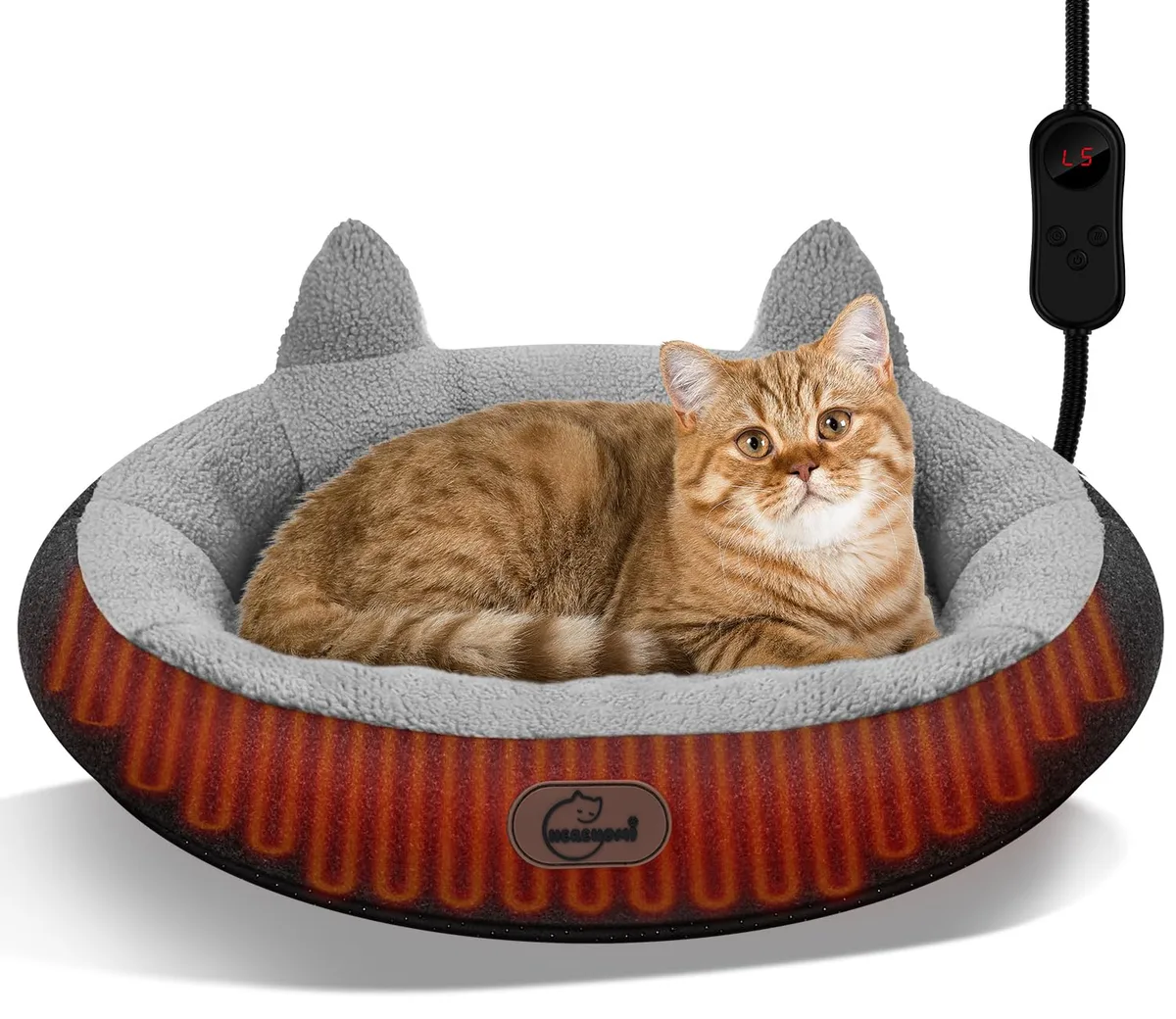
Image source: Bing (Web (fair-use with source credit))
Method 1: Hand over the feeding duties
This is your highest leverage move. Have your husband become the sole food provider for 2 to 3 weeks. He feeds breakfast and dinner.
He gives the treats. Your cat will start associating him with positive outcomes. Feline behavior research confirms food is the strongest bonding tool available.
Method 2: Swap the scent on his side
Place one of your worn t-shirts on your husband’s pillow for a few nights. Then move it to his side of the bed. Your cat is drawn to your scent.
If that scent sits on his side, she may follow.
Method 3: Make his side warmer
A heated cat bed or a warming pad placed on his side of the bed can tip the scales. Cats seek warmth actively. If his side becomes the warmer option, she will investigate.
| Method | Time to See Results | Effort Level |
|---|---|---|
| Feeding duties | 1 to 2 weeks | Low |
| Scent swapping | 3 to 7 days | Very low |
| Heated bed | Immediate to 3 days | Low (one purchase) |
| Gradual blanket shift | 1 to 2 weeks | Low |
Method 4: Let her choose naturally
This is the hardest for impatient partners. Do not pick her up and move her. Do not block her path to you.
Just set up the conditions and wait. Cats need to feel in control. Forcing contact will set you back weeks.
What not to do
Do not punish her for choosing you. Do not lock her out of the bedroom. Do not spray her with water near your husband.
These create fear associations that are very hard to undo.
Real Scenarios: What Each Branch Looks Like in Practice
Theory is useful. But seeing actual cases makes it click. Here are three real scenarios based on common patterns we found in our research.
See which one matches your home.
Scenario A: The primary attachment cat
Emma works from home. She feeds her cat Luna every morning and evening. Luna follows her to the bathroom, the kitchen, the couch.
At night, Luna curls up on Emma’s chest and ignores Emma’s husband completely.
Branch match: Branch A (Yes, follows all day).
Fix attempted: Emma’s husband started feeding Luna for two weeks. Within ten days, Luna began sleeping at the foot of the bed near him. She still prefers Emma, but she now accepts him as a sleeping option.
Scenario B: The heat seeker
Marcus runs warm. His wife Sarah runs cold. Their cat Milo sleeps wrapped around Marcus’s head every night.
During the day, Milo is independent and shows no strong preference for either person.
Branch match: Branch B (heat and scent).
Fix attempted: Sarah bought a heated cat bed and placed it on her side. Milo started splitting his nights. He sleeps on her heated pad for a few hours, then moves back to Marcus’s head in the early morning.
Both partners feel included now.
Scenario C: The still sleeper
Rachel sleeps like a log. Her husband Dan thrashes and talks in his sleep. Their cat Pepper sleeps at Rachel’s feet every night.
During the day, Pepper spends equal time with both of them.
Branch match: Branch B (safety and stillness).
Fix attempted: Dan tried sleeping with a weighted blanket to reduce movement. Pepper slowly started investigating his side after about three weeks. She still prefers Rachel, but she now visits Dan for short naps.
What to take from these
Every cat is different. But the patterns are consistent. Identify your branch, pick one method, and give it time.
Two weeks is the minimum for a behavior shift.
Frequently Asked Questions
Why does my cat sleep on my head and not my husband’s?
Your head emits the most heat on your body. It also carries your strongest scent from your pillow and hair products. Cats seeking warmth and familiarity will naturally choose the head of their preferred person.
Can a cat change its sleeping preference over time?
Yes, absolutely. Cats adjust their preferences when routines change. If you travel, if feeding duties shift, if seasons change, or if your sleeping habits change, your cat may switch sides.
It is never permanent.
Does my cat love my husband less?
No. Cats do not measure love the way humans do. She makes a practical choice about comfort, safety, and routine.
She can love both of you equally and still sleep with only one of you.
Should I worry if my cat avoids my husband entirely?
Only if she shows signs of fear. Hissing, hiding, flattened ears, or fleeing when he approaches are red flags. If she simply ignores him, it is normal.
If she seems genuinely afraid, work on positive associations with treats and gentle voice.
How long does it take to shift a cat’s sleeping preference?
Most shifts take 1 to 3 weeks of consistent changes. The feeding method can show results in as little as a week. Scent swapping takes a few days.
Heat-based changes can work overnight.
My cat sleeps with me but hisses at my husband in bed. What do I do?
Stop any forced contact immediately. Have your husband toss treats from a distance while staying calm. Let the cat approach on her own terms.
If the hissing continues for more than a few weeks, consult a veterinary behaviorist.

Similar Posts