Things I Wish I Knew Before Getting a Second Cat
[[block]]
The things I wish I knew before getting a second cat could fill a whole book. Actually, they could fill a cat carrier. Because the biggest mistake people make isn't picking the wrong cat.
It's skipping the decision tree entirely.
Per feline behavior guidelines from the American Association of Feline Practitioners, cat introductions typically take at least two to four weeks. Many take longer than two months. That is normal, not failure.
Here is what I learned the hard way.
Quick Answer
The things I wish I knew before getting a second cat come down to one truth. Your resident cat's personality decides everything. A slow, structured introduction is mandatory.
Rushing it causes stress. Matching energy and ages helps. Separating resources is essential.
Image source: Bing (Web (fair-use with source credit))
The Real Pain Points of Adding a Second Cat
Most people picture two cats cuddling on the sofa. The reality of the first few weeks looks very different. Your resident cat will very likely hiss.
The new cat will hide under a bed. You will ask yourself what you have done.
What Nobody Tells You About the First Few Weeks
The stress level is real. Your resident cat might stop eating for a day or two. That is common.
Some cats start spraying or scratching outside the box. These behaviors usually pass with proper introductions. But they feel awful in the moment.
You will lose sleep too. Cats squabble at night. Doors need to stay closed.
You wake up to hissing matches through the crack. It is exhausting.
The emotional toll is the surprise. You feel guilty toward your first cat. You worry you made a mistake.
You second-guess every decision for weeks. And that is completely normal. Research shows that stress-related issues like feline idiopathic cystitis (FLUTD) spike during failed or rushed introductions.
One bad fight can cause a UTI from sheer anxiety.
The Hidden Costs and Lifestyle Changes
Double the cats does not mean double the cost. It is closer to two and a half times.
- Vet bills. Annual check ups, vaccines, and emergency funds for two.
- Food and litter. Two cats eat more. You go through litter faster.
- Litter box count. The rule is one box per cat plus one extra. Three boxes minimum. That is more scooping than you think.
- Pet sitting. Boarding or hiring a sitter for two cats costs more and complicates travel.
- Cleaning. More hair, more mess, more vomit to clean.
If your cats never bond, you manage them separately forever. That means separate feeding stations, separate sleeping areas, separate everything. It works.
But it adds work.
Step 1: Assessing Your Resident Cat's Personality and Comfort
Your first cat decides whether a second cat works. Not your desire for a pair. Not the cute kitten at the shelter.
That cat alone.
Key Temperament Traits That Predict Success or Failure
Some cats are natural socialites. Others are territorial loners. Here is a quick decision guide based on our research.
| Resident Cat Trait | Likely Outcome | Recommended Action |
|---|---|---|
| Social, friendly, curious with other cats | High chance of success | Proceed with standard slow intro |
| Territorial, aggressive toward outdoor cats | High risk of fighting | Consider carefully or avoid |
| Timid, easily stressed | Moderate risk; needs patient intro | Proceed very slowly; watch for regression |
| Elderly, health issues | Low tolerance for kittens | Choose calm adult cat or none at all |

Image source: Web (Bing) / spotpetinsurance.ca (Web image (fair-use with source credit))
How to Honestly Evaluate If Your Cat Wants a Friend
Watch your cat closely for a few days. Here is what to look for.
Signs your cat might benefit from a companion:
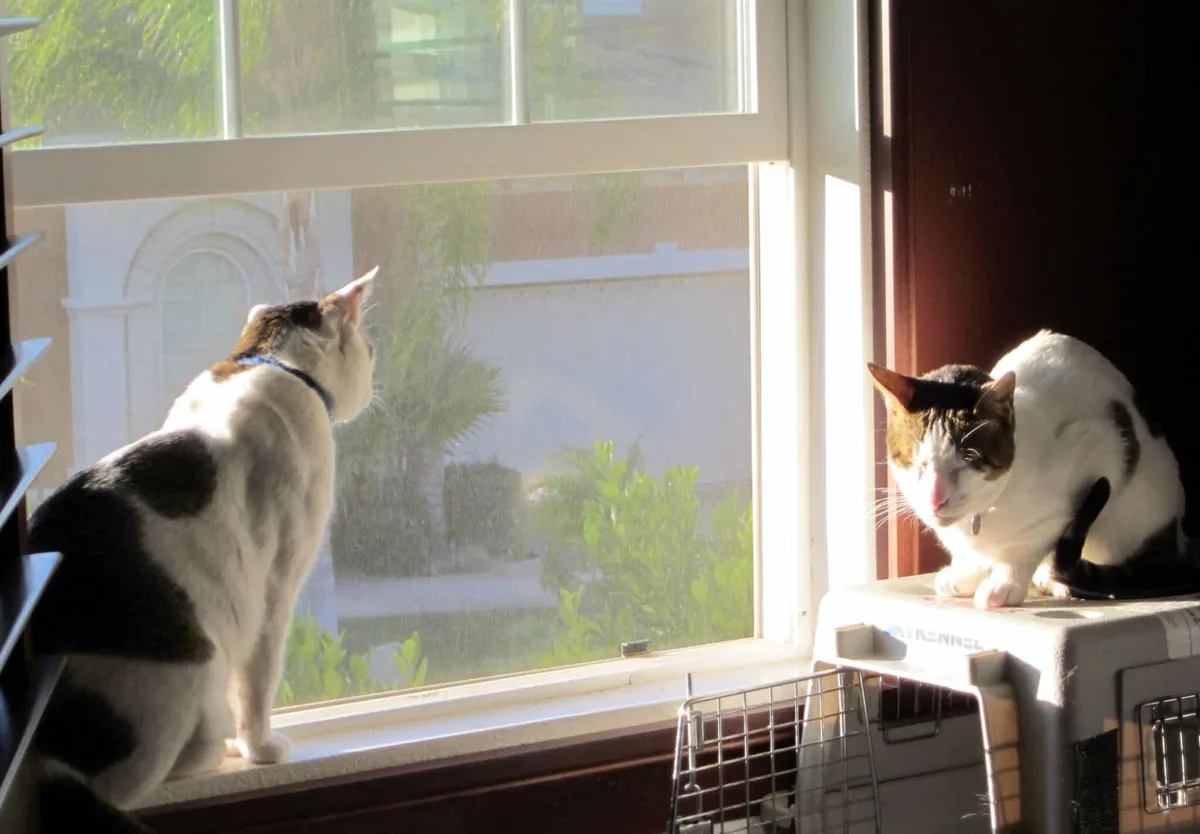
- He watches other cats through the window with interest, not aggression.
- She plays with you constantly but still seems bored.
- He follows you from room to room seeking attention.
- She was raised with another cat and did well.
Signs your cat is fine as an only cat:
- He is calm, independent, and content sleeping alone.
- She hisses at other cats through the window.
- He has always been territorial with other animals.
- She is sensitive to routine changes.
A simple rule: if your cat shows intense interest, try a friend. If he shows hostility, skip it or plan for a very cautious introduction. If you are unsure, fostering first is the safest test.
Many shelters will let you foster with the possibility of adoption. That gives you weeks to see if the dynamic works.
Step 2: Is a Second Cat Actually the Answer? (Or Is There a Better Alternative?)
This is the fork in the road that most people skip. They decide they want a second cat and go straight to adoption. The wiser step is to ask: does your cat need a friend, or just more enrichment?
When Enrichment Alone Is Enough Instead of Another Cat
A bored cat looks lonely. But a bored cat often just needs more stimulation. Here are cheaper, lower risk fixes that solve the same problem.
- Puzzle feeders. They engage a cat's hunting instinct.
- Cat trees and shelves. Vertical territory reduces boredom.
- Window perches. Watching birds is free entertainment.
- Interactive play. Two fifteen minute play sessions a day with a wand toy.
- Catio or harness walks. Outdoor access safely.
Our research shows that many single cats become "happier" simply because their owners spend more time engaging them. If you try enrichment for a month and your cat still seems desperate for feline company, then consider a second cat.
Kitten vs. Adult vs. Bonded Pair: Which Fits Your Situation
If you decide a second cat is the right call, the next question is what type.
| Option | Best For | Risks |
|---|---|---|
| Kitten (under 1 year) | A confident, playful resident cat; high energy match | May overwhelm a senior or timid cat; high energy for years |
| Adult cat (1–7 years) | A calm resident cat; predictable personality | Personality clash possible; slower bonding |
| Bonded pair (two cats) | Homes with space and budget; they entertain each other | Three cats total; more food, vet, litter costs |
| Senior cat (7+ years) | An elderly or low energy resident cat | Short adjustment if both calm; less play drive |
The safest pairing by the numbers is opposite sex, similar age, and similar energy levels. Two males can work. Two females can too.
But research shows that opposite sex pairings tend to bond faster and fight less.
The Step-by-Step Workflow: How to Introduce Your Cats (Without Starting a War)
This is the core. Everything else is preparation. If you get this right, you have a fighting chance at peace.
If you rush it, you reset the clock or worse.
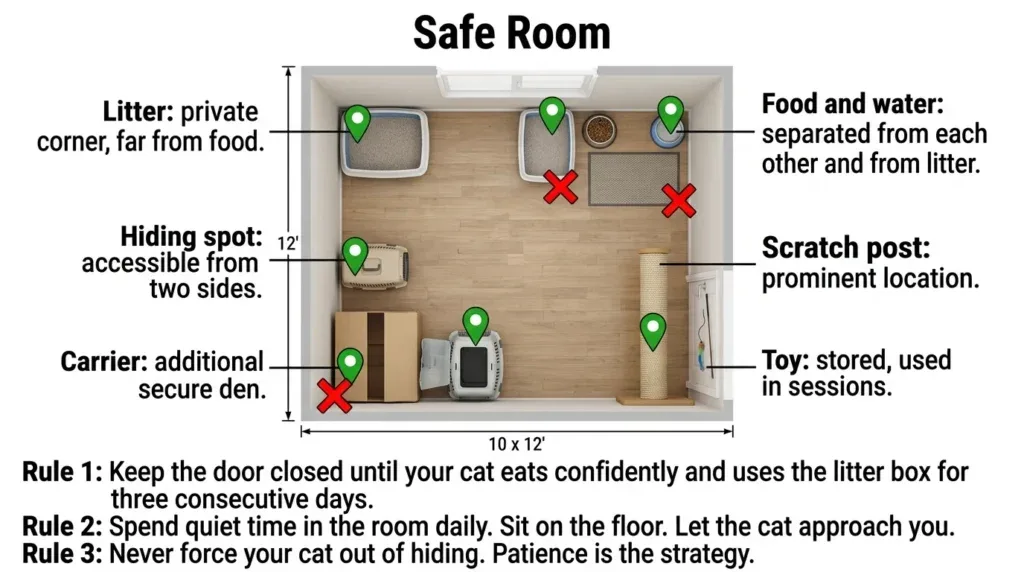
Image source: Bing (Web (fair-use with source credit))
The Safe Room, Scent Swapping, and Site Swapping Phases
Phase 1: Total separation (minimum 3, 7 days). The new cat stays in a single room. Litter box, food, water, bed, toys all in there. Do not let them see each other.
Only scent passes under the door.
Phase 2: Scent swapping (days 3, 7). Rub a towel on each cat. Place the towel with the other cat's scent near the other's food bowl. Positive association.
Swap rooms entirely after a few days. Let resident cat explore the safe room while new cat is elsewhere.
Phase 3: Site swapping (days 5, 10). Let each cat explore the other's territory without the other present. This marks the space with familiar scents. Do this for a few days.
Visual Introductions and Supervised Meetings
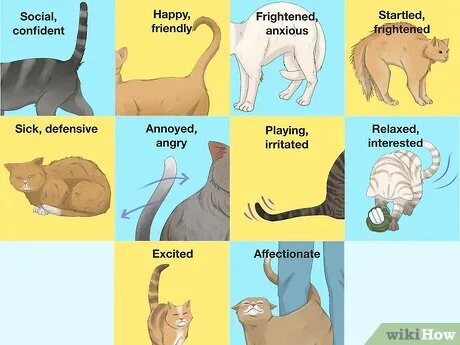
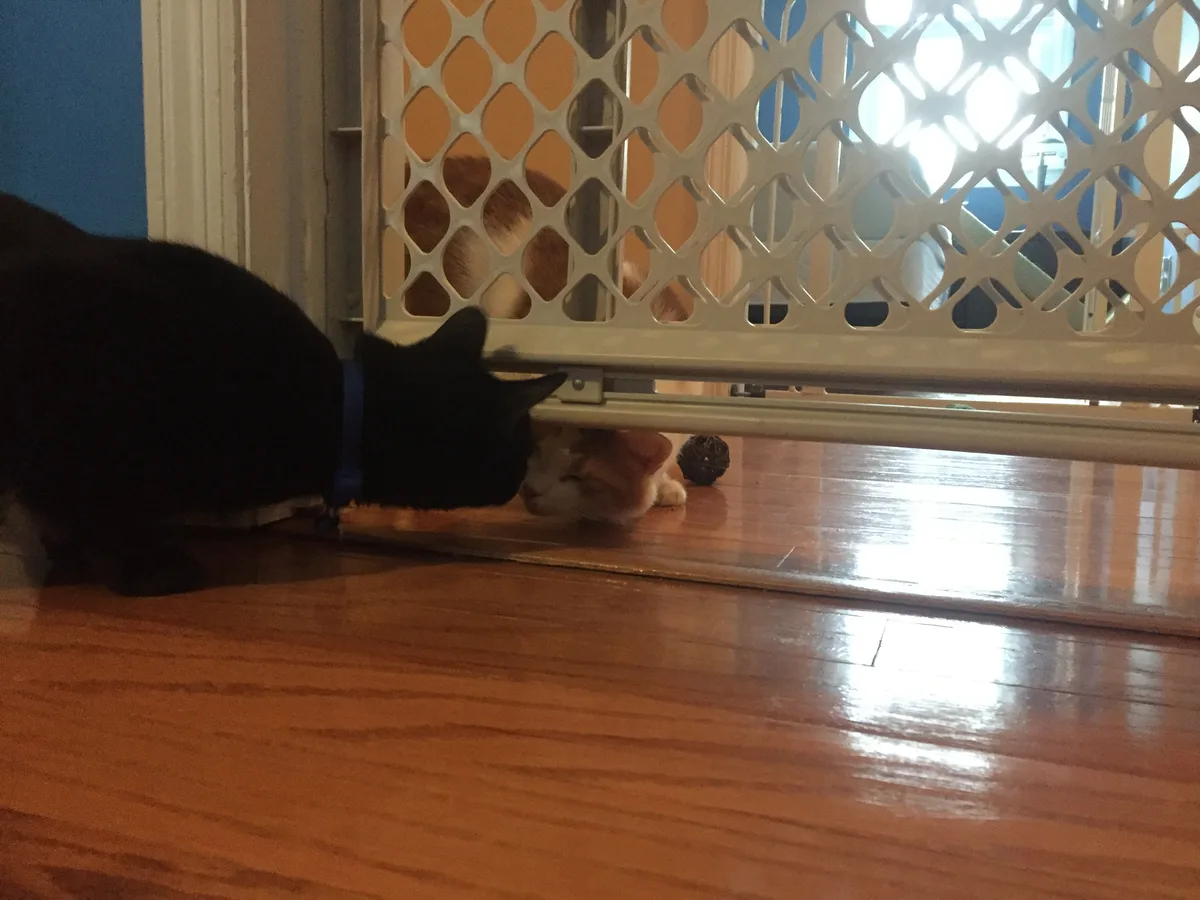
Phase 4: Visual contact (day 7, 14). Use a baby gate or crack in the door. Let them see each other. Watch body language.
Calm interest is good. Hissing or stalking means go back a step.
Phase 5: Short supervised meetings (day 10, 21). Open the door fully. Have treats ready. Keep sessions to 5, 10 minutes.
End on a positive note. Gradually extend.
Signs of Progress and When to Slow Down
Good signs: Nose touches, slow blinks, ignoring each other, playing in the same room, eating together peacefully.
Bad signs: Hissing, growling, puffed tails, flattened ears, hiding, refusing to eat, stalking.
The golden rule: If you see bad signs, go back one step. That is not failure. It is prevention.
Pushing through aggression creates a fight that takes weeks to undo.
Common Mistakes That Sink a Cat Introduction (And How to Avoid Them)
I have watched friends make the same errors over and over. Here are the ones that break introductions.
Rushing the Timeline
This is the number one mistake. People expect cats to be best friends in three days. It does not work that way.
The AAFP guidelines state that two weeks is a minimum. Many cats need four to six weeks. Some take three months.
Every time you rush, you reset the process. Slow is fast.
Ignoring Your Resident Cat's Stress Signals
Your resident cat's behavior is your guide. If he hides under the bed for three days, you are moving too fast. If she stops eating, slow down.
If he starts spraying, separate them completely and restart. Stress signals are not complaints. They are data.
Bad Pairings That Rarely Work Out
Some matches are stacked against success from the start.
- Two territorial adult males. Possible but high risk. Each wants to be top cat.
- A high energy kitten with a grumpy senior. The kitten wants to play. The senior wants to nap. Conflict is almost guaranteed.
- A very timid cat with a very dominant cat. The dominant one bullies. The timid one hides.
Does that mean these pairings never work? No. But they require more patience and a slower timeline.
If you try one, prepare to keep them separate for a month or longer.
Pro tip: If your introduction stalls, call a certified feline behaviorist. This is not failure. It is expert knowledge.
Many vet schools have behavior services. The cost is worth the peace.
The Decision Guide: When to Get a Second Cat and When to Wait
This is the moment all the earlier steps lead to. You have assessed your resident cat. You have considered alternatives.
You know what the introduction process looks like. Now you decide.
If your resident cat showed signs of sociability and you can afford the extra costs, proceed. If your cat is territorial, elderly, or stressed by change, wait or skip it entirely.
Here is the checklist that helps you know for sure.
Checklist Based on Your Cat, Budget, and Home Setup
Your resident cat must be:
- Healthy and fully settled in your home
- Social or at least curious about other cats
- Not showing signs of stress or illness
- Willing to eat and play near closed doors
Your home must have:
- A separate room for the new cat during introductions
- Enough space for separate feeding stations and multiple litter boxes
- Vertical space like cat trees and shelves
Your budget must cover:
- Adoption fees plus initial vet visit (roughly $150 to $300)
- Annual costs for two cats (food, litter, vet: $1000 to $2000)
- Potential behaviorist consult if things go wrong ($100 to $300 per session)
Final Thoughts from Someone Who Has Been Through It
The decision to add a second cat is not a test of your love for your first cat. It is a practical question about compatibility and resources. Many single cats live happy, enriched lives without a feline companion.
If you are on the fence, fostering is the best test. It gives you weeks to see the dynamic without a permanent commitment.
Frequently Asked Questions
How long does it take for two cats to get along?
Most introductions take two to six weeks. Some cats bond in a week. Others need three months.
The timeline depends entirely on the personalities of both cats and how carefully you manage the process.
What if my cats fight after the introduction?
If a fight breaks out, separate them completely. Go back to the safe room step and start over. Do not let them keep interacting after a fight.
The negative memory sets back progress significantly.
Should I get a kitten or an adult cat as a second cat?
A kitten works best if your resident cat is young and playful. An adult cat works better if your cat is calm or older. Opposite sex pairings tend to bond faster.
Avoid a high energy kitten with a grumpy senior.
Can I leave two new cats alone together?
Not until they show consistent positive signs. That means eating together peacefully, sleeping near each other, and no hissing or hiding. This usually takes at least a few weeks after visual introductions begin.
What if my cat never accepts the second cat?
Some cats are simply wired to be solo. That is not a failure. In that case, keep them separated permanently.
They can coexist in the same home with separate spaces. You can also consider rehoming the new cat with a rescue that will find her the right match.

Similar Posts