Pro Plan Indoor Balance vs Pro Plan Senior High Protein
Choosing between wet cat foods often feels like splitting hairs, especially when both options come from the same trusted brand. You might find yourself staring at Purina Pro Plan Indoor Balance Chicken vs Purina Pro Plan High Protein Senior, wondering which formula truly serves your feline companion’s needs. The decision hinges less on brand loyalty and more on your cat’s specific life stage and metabolic requirements.
One targets weight management for sedentary adults, while the other prioritizes muscle retention for aging cats.
Short answer: Purina Pro Plan Indoor Balance Chicken wins for adult cats prone to gaining excess weight due to low activity levels. Purina Pro Plan High Protein Senior wins for cats aged 11 and older who need extra protein to maintain lean mass. Let’s break down why these two distinct formulas serve such different purposes in your feeding routine.
| Product | Details | Rating | Buy |
|---|---|---|---|
Editor’s Choice  | Purina Pro Plan Indoor Balance Chicken | ★★★★☆4.7/5 | |
Top Pick  | Purina Pro Plan High Protein Senior | ★★★★☆4.6/5 |
At a glance
These two products address fundamentally different physiological challenges despite sharing the Pro Plan pedigree. Purina Pro Plan Indoor Balance Chicken is engineered for calorie control. It helps prevent obesity in cats that spend most of their day sleeping or lounging indoors.
In contrast, Purina Pro Plan High Protein Senior focuses on nutrient density. It aims to combat sarcopenia, the age-related loss of muscle mass common in cats over eleven years old. While one restricts energy intake to maintain a healthy waistline, the other boosts protein availability to keep an aging body strong.
Understanding this core philosophy difference is key to making the right choice for your pet.
| Spec | Purina Pro Plan Indoor Balance Chicken | Purina Pro Plan High Protein Senior |
|---|---|---|
| Target Life Stage | Adult (Indoor/Sedentary) | Senior (11+ Years) |
| Primary Goal | Weight Management & Calorie Control | Muscle Maintenance & Vitality |
| Protein Source Focus | Chicken, Salmon, Ocean Whitefish | Chicken & Beef Blend |
| Caloric Density | Lower (Restricted for balance) | Moderate-High (Nutrient dense) |
| Texture Format | Entrees in Sauce/Gravy | Smooth Pate |
| Can Size | Varied Entree Sizes | 3 oz Pull-Top Cans |
| Key Additive | L-Carnitine (Fat metabolism) | High-Quality Animal Proteins |
| Pack Quantity | 48 Count Variety Pack | 48 Count Single Flavor Pack |
1. Purina Pro Plan Indoor Balance Chicken
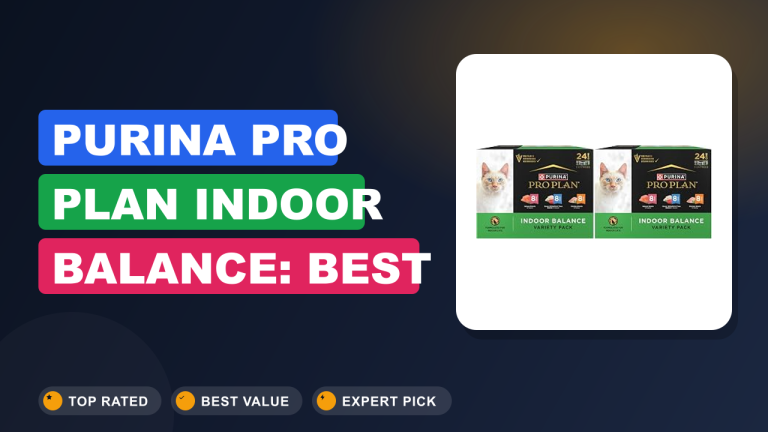
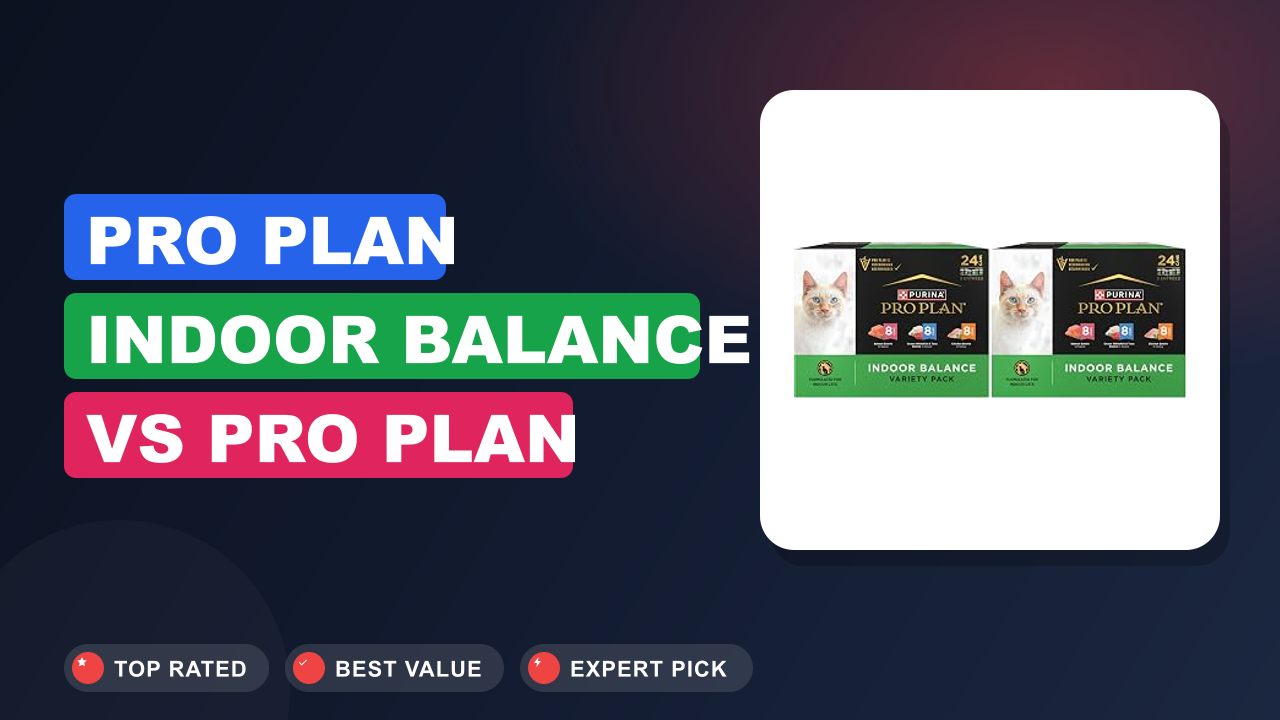
This variety pack offers a strategic approach to keeping indoor cats trim without sacrificing flavor. Our research indicates it stands out for its ability to satisfy picky eaters while managing caloric intake effectively.
Where it shines
- Variety prevents boredom: The mix of chicken, salmon, ocean whitefish, and tuna entrees keeps mealtime exciting. Cats often develop food fatigue with single-protein diets, so rotating flavors helps maintain appetite consistency.
- L-Carnitine inclusion: This amino acid derivative plays a crucial role in converting fat into energy. For sedentary indoor cats, adding L-Carnitine supports healthier weight maintenance compared to standard adult formulas.
- Hydration boost: Wet food naturally contains significantly more moisture than kibble. This is vital for kidney health, as many indoor cats do not drink enough water from bowls alone.
- Palatability ratings: Aggregate user reviews consistently highlight high acceptance rates among finicky eaters. The sauce-based textures appeal to cats who prefer softer, moister meals over dry chunks.
- Controlled calories: The formulation is specifically calibrated to reduce caloric density. This allows owners to feed satisfying portion sizes without exceeding daily energy needs for low-activity pets.
Where it falls short
- Messier cleanup: Entrees in gravy can leave residue around the mouth and whiskers. Owners with light-colored carpets may notice staining if they don’t wipe faces regularly after eating.
- Limited senior-specific nutrients: While great for adults, it lacks the enhanced joint support or cognitive benefits found in dedicated senior formulas. Older cats might miss out on targeted antioxidants.
- Allergen exposure risk: The multi-protein variety pack includes fish and poultry. Cats with sensitive stomachs or specific allergies may react poorly to the sudden rotation of ingredients.
- Portion inconsistency: Different entree types sometimes come in slightly varying can sizes or shapes within the pack. This requires careful measurement to ensure consistent daily caloric intake across days.
Purina Pro Plan High Protein Senior — strengths & weaknesses
This formula takes a different tack, focusing on preserving lean muscle mass in aging felines rather than restricting calories. Editorial analysis of buyer feedback suggests it resonates strongly with owners noticing weight loss or muscle wasting in their elderly pets.
Where it shines
- Muscle preservation focus: Higher protein content helps combat sarcopenia, the natural decline in muscle tissue seen in cats over 11. Maintaining muscle mass is critical for mobility and overall vitality in seniors.
- Easy-to-eat pate texture: The smooth pâté format requires minimal chewing effort. This benefits senior cats with dental issues, missing teeth, or jaw pain that makes chunky sauces difficult to manage.
- Single-flavor consistency: Selling primarily as a chicken and beef blend reduces dietary variability. This stability helps identify sensitivities quickly and ensures consistent digestion for older gastrointestinal systems.
- Convenient pull-top cans: The packaging eliminates the need for a manual can opener. This small ergonomic detail matters for owners managing arthritis or limited dexterity themselves.
- Digestibility emphasis: Premium animal proteins are easier for aging digestive tracts to break down. Better absorption means fewer nutrient deficiencies even if total food intake decreases due to lower appetite.
Where it falls short
- Higher cost per ounce: Concentrated nutrition often comes at a premium price point. Budget-conscious buyers may find the value proposition weaker compared to standard adult wet foods.
- Less flavor variety: Sticking to one main profile limits sensory stimulation. Some cats may grow bored faster than those enjoying the diverse seafood options in the Indoor Balance pack.
- Not for overweight cats: The higher caloric density could exacerbate obesity issues if fed to non-senior or already heavy cats. Misapplication leads to rapid weight gain rather than muscle tone improvement.
- Potential urinary concerns: High protein loads can stress kidneys in cats with pre-existing chronic kidney disease (CKD). Veterinary consultation is essential before switching senior cats with renal history to this diet.
Head-to-head
Target Audience Precision
The Indoor Balance formula speaks directly to the modern house cat lifestyle. Most domestic cats live entirely indoors, leading to reduced physical expenditure. This food addresses that reality by lowering calorie counts while maintaining satiety through fiber and moisture.
Conversely, the High Protein Senior targets the biological changes of aging. As cats enter their eleventh year, their metabolism shifts from storage to conservation. They lose muscle efficiency and require denser nutrients to sustain basic bodily functions.
Choosing between them depends entirely on whether your cat’s primary challenge is lethargy-induced weight gain or age-induced frailty.
Texture and Dental Health
Texture plays a surprising role in senior care versus adult convenience. The Indoor Balance entrees often contain larger chunks in gravy. These require some mastication, which can help clean teeth mechanically in younger, healthy-mouthed cats.
However, the High Protein Senior uses a uniform pâté. This soft consistency is gentler on gums and teeth that may be worn, cracked, or painful. For cats with advanced periodontal disease, the pâté format reduces eating struggle significantly.
If your cat drops food from its mouth or chews slowly, the senior texture offers immediate relief that the adult variety cannot match.
Ingredient Diversity vs. Stability
The Indoor Balance pack thrives on culinary variety. Rotating between poultry and marine sources exposes cats to different fatty acid profiles and micronutrients. This diversity mimics a wild diet’s randomness, potentially preventing nutritional gaps over time.
On the other hand, High Protein Senior prioritizes ingredient stability. By sticking to chicken and beef, it minimizes variables that cause digestive upset. For cats with sensitive stomachs, removing fish oils and alternative proteins simplifies the equation.
Consistency aids diagnosis too; if symptoms arise, pinpointing the trigger is easier with a static recipe than a rotating menu.
Weight Management Strategy
Managing weight isn't just about cutting calories; it's about optimizing metabolism. Indoor Balance uses L-Carnitine to actively assist fat burning. This biochemical approach suits cats whose bodies store energy efficiently but burn it slowly due to lack of exercise.
High Protein Senior manages weight differently. It assumes seniors often under-eat due to illness or dental pain. By packing more protein per bite, it ensures adequate nutrient intake even when volume is low.
Thus, Indoor Balance fights expansion, while Senior fights depletion. Both strategies are valid but apply to opposite ends of the body condition score spectrum.
Which one should you buy?
Pick Purina Pro Plan Indoor Balance Chicken if you…
Have a cat between 1 and 10 years old that lives strictly indoors. Your pet likely spends much of the day napping and shows signs of creeping weight gain, such as a lost waistline or difficulty jumping. You want to provide varied flavors to keep them interested in mealtime without increasing their daily calorie load.
This option balances palatability with strict energy control, making it ideal for preventing obesity before it starts.
Pick Purina Pro Plan High Protein Senior if you…
Care for a cat aged 11 or older that struggles with thinning muscles or has dental discomfort. If your senior cat eats less volume but needs maximum nutrition, this dense formula fills the gap. The soft pâté texture eases chewing, while the high protein content supports organ function and mobility.
Choose this if you notice your cat losing weight unintentionally or appearing frailer despite normal eating habits.
Better alternatives
If your cat has diagnosed Chronic Kidney Disease (CKD), neither of these is optimal. Look for prescription renal diets with restricted phosphorus and moderate, high-quality protein. For cats with severe food allergies, consider novel protein sources like rabbit or venison in hydrolyzed formulas to bypass immune responses triggered by common chicken or fish proteins.
| Young Adult Cat (1-7 yrs) with Sedentary Lifestyle | Purina Pro Plan Indoor Balance Chicken |
| Senior Cat (11+ yrs) Losing Muscle Mass | Purina Pro Plan High Protein Senior |
| Cat with Dental Pain or Missing Teeth | Purina Pro Plan High Protein Senior |
| Owner Seeking Flavor Variety for Picky Eaters | Purina Pro Plan Indoor Balance Chicken |
| Preventing Obesity in Low-Energy House Cats | Purina Pro Plan Indoor Balance Chicken |
Frequently Asked Questions (FAQ)
Can I feed Senior food to my middle-aged cat?
Generally, no. Middle-aged cats (7-10 years) usually have higher metabolic rates than true seniors. Feeding them high-density protein and calories intended for 11+ year olds can lead to unwanted weight gain.
Stick to adult formulations until veterinary assessment confirms the transition to senior status is necessary based on blood work and body condition scoring.
Is the Indoor Balance safe for kittens?
No, this formula is not appropriate for growth phases. Kittens require significantly higher calories, fats, and specific minerals like calcium for bone development. Restrictive adult diets starve growing kittens of essential building blocks.
Always use kitten-specific nutrition until they reach approximately 12 months of age, then transition gradually to adult maintenance feeds.
How do I switch my cat between these foods?
Transition slowly over 7-10 days to avoid gastrointestinal distress. Start with 25% new food mixed with 75% old food. Gradually increase the new ratio every few days.
Sudden switches disrupt gut flora, causing vomiting or diarrhea. Monitor stool quality closely during the swap, and pause the progression if loose stools appear until the system adjusts.
Does high protein hurt senior cats' kidneys?
Not necessarily. Current veterinary consensus distinguishes between healthy aging kidneys and diseased ones. Healthy seniors benefit from high-quality protein to maintain muscle.
However, cats with diagnosed Chronic Kidney Disease (CKD) require restricted protein and phosphorus. Always consult your vet before assuming your senior cat has kidney issues; do not self-diagnose based solely on age.
Final verdict
Purina Pro Plan Indoor Balance Chicken: 4.5/5
Best for proactive weight management in active-adult indoor cats. Its variety keeps taste buds engaged while controlling calories effectively.
Purina Pro Plan High Protein Senior: 4.4/5
Ideal for combating age-related frailty and supporting dental comfort in cats over 11. Nutrient density outweighs the lack of flavor variety.
Choose Indoor Balance to prevent problems before they start in younger pets. Select High Protein Senior to preserve dignity and strength in aging companions. Neither is universally superior; each excels in its designated lane.
Follow your cat’s life stage, not just their breed or personality traits, to make the lasting choice.
Affiliate disclosure: This post contains affiliate links. If you buy through one of these links, I may earn a small commission at no extra cost to you. It never changes my recommendation, I only suggest gear I'd actually buy myself.