What’S 1 Year in Cat Years: Unraveling Feline Age Mysteries
Have you ever caught yourself wondering how old your beloved feline friend really is in cat years? Understanding your cat’s age in their unique timeline can be a fascinating journey into their world.
Whether you’re a new cat parent or a seasoned feline enthusiast, knowing what’s 1 year in cat years can provide you with a deeper insight into your pet’s behavior, health, and needs. Imagine being able to gauge their life stages just like you would with a human child or elder.
This knowledge not only strengthens your bond with your cat but also empowers you to take better care of them. Get ready to unravel the mysteries of the feline age world and discover how one simple year in your life might mean an entirely different chapter in theirs. Stay with us as we decode the intriguing concept of cat years just for you!
Feline Aging Process
Cats age rapidly in their first years, with one cat year roughly equating to seven human years. This means a one-year-old cat is similar to a seven-year-old child, entering adulthood quickly. Understanding this helps in caring for their changing needs and health.
Understanding the aging process of your feline friend can feel complex, especially when trying to equate cat years to human years. This conversion helps you provide the best care as your cat transitions through different life stages. Let’s unravel the feline aging process and see what one year in cat years truly means.Understanding Feline Development
Cats mature rapidly in the initial years. In just the first two years, they reach the equivalent of 24 human years. This rapid growth means that by their first birthday, cats have already developed into young adults.The First Year: A Time Of Fast Growth
During the first year, your cat undergoes significant physical and behavioral changes. They transition from playful kittens to curious adults. This phase is crucial for socialization and learning about their environment.Adult Years: Stability And Routine
Once your cat hits the 2-year mark, each subsequent year is roughly equivalent to four human years. This stage is marked by a more stable and predictable routine. You’ll notice your cat becoming more independent and perhaps less playful.Senior Years: A Gentle Slowdown
Around the age of 7 to 10, cats enter their senior years. At this point, they might slow down and require extra care. Regular vet visits and a diet tailored to their age can help manage common health issues.Caring For Your Cat At Every Stage
Each life stage of your cat demands different care. Young cats benefit from stimulating toys and activities. Older cats might appreciate a cozy bed and a quieter environment. Are you adjusting your care routine as your cat ages?Practical Steps For A Healthy Life
Simple actions can keep your cat healthy through all stages. Regular vet check-ups, a balanced diet, and mental stimulation are key. Have you scheduled your cat’s next vet visit yet?Reflecting On Your Cat’s Journey
Consider the milestones your cat has reached in their life. Each year brings new challenges and joys. How have these experiences shaped your bond with your feline friend? Understanding your cat’s aging process helps you anticipate their needs and ensure a fulfilling life. Embrace each stage and cherish the moments shared with your furry companion.
Credit: greensafaris.com
Understanding Cat Years
Understanding cat years involves comparing their age to human years. A cat’s first year equals roughly 15 human years, reflecting their rapid growth and development. This knowledge helps in better care and companionship.
Understanding the concept of cat years can be both fascinating and puzzling. If you’ve ever wondered how your feline friend ages compared to humans, you’re not alone. Many pet owners find themselves intrigued by this topic, searching for a deeper connection with their pets.What Are Cat Years?
Cat years are a way to compare a cat’s age to a human’s age. This helps you understand your cat’s life stages better. Knowing this can improve your care for them.The Conversion Myth
You might have heard that one cat year equals seven human years. This isn’t entirely accurate. Cats mature quickly in their first two years, and their aging process slows down after that.Early Years: Kitten To Adult
In their first year, cats grow rapidly. By the end of year one, a cat is roughly 15 human years old. This explains their burst of energy and curiosity.Adulthood In Cat Years
Once a cat reaches two years, they are about 24 in human years. Each subsequent cat year is roughly equivalent to four human years. This steady pace reflects their maturity and independence.Senior Cats And Longevity
When cats reach their senior years, they require special care. A 10-year-old cat is approximately 56 human years old. Consider regular vet check-ups and a diet suitable for their age.Why Cat Years Matter
Understanding cat years helps you empathize with your pet’s needs. It guides you in providing age-appropriate activities and healthcare. Are you offering your cat the best life for their age?Practical Insights For Cat Owners
– Monitor health changes: Cats show signs of aging like humans. – Adjust their diet: Nutritional needs change as they age. – Provide mental stimulation: Keep their minds active with new toys and games.Your Cat’s Unique Journey
Every cat is different, and so is their aging process. Some cats remain playful well into their senior years. Understanding cat years can help you cherish every moment with them. Reflect on your cat’s age in human years. How does this change your perspective on their behavior and needs?Conversion Chart: Human To Cat Years
A conversion chart helps to understand cat years. One human year equals roughly seven cat years. This simple guide aids in gauging your cat’s age.
Understanding the age of your feline friend in human terms can help you better relate to their needs and behaviors. A conversion chart from human to cat years is a handy tool for pet owners. It allows you to grasp how your cat matures and ages, which is crucial for their care. Every cat owner has probably wondered, “How old is my cat in human years?” This chart serves as a bridge between your world and theirs.How To Use The Conversion Chart
Using a conversion chart is simple. Begin with your cat’s actual age in years. Then, refer to the chart to find the equivalent human age. This helps in understanding your cat’s life stage, whether they are a playful kitten or a wise senior. You can tailor their care and activities accordingly.Understanding The Early Years
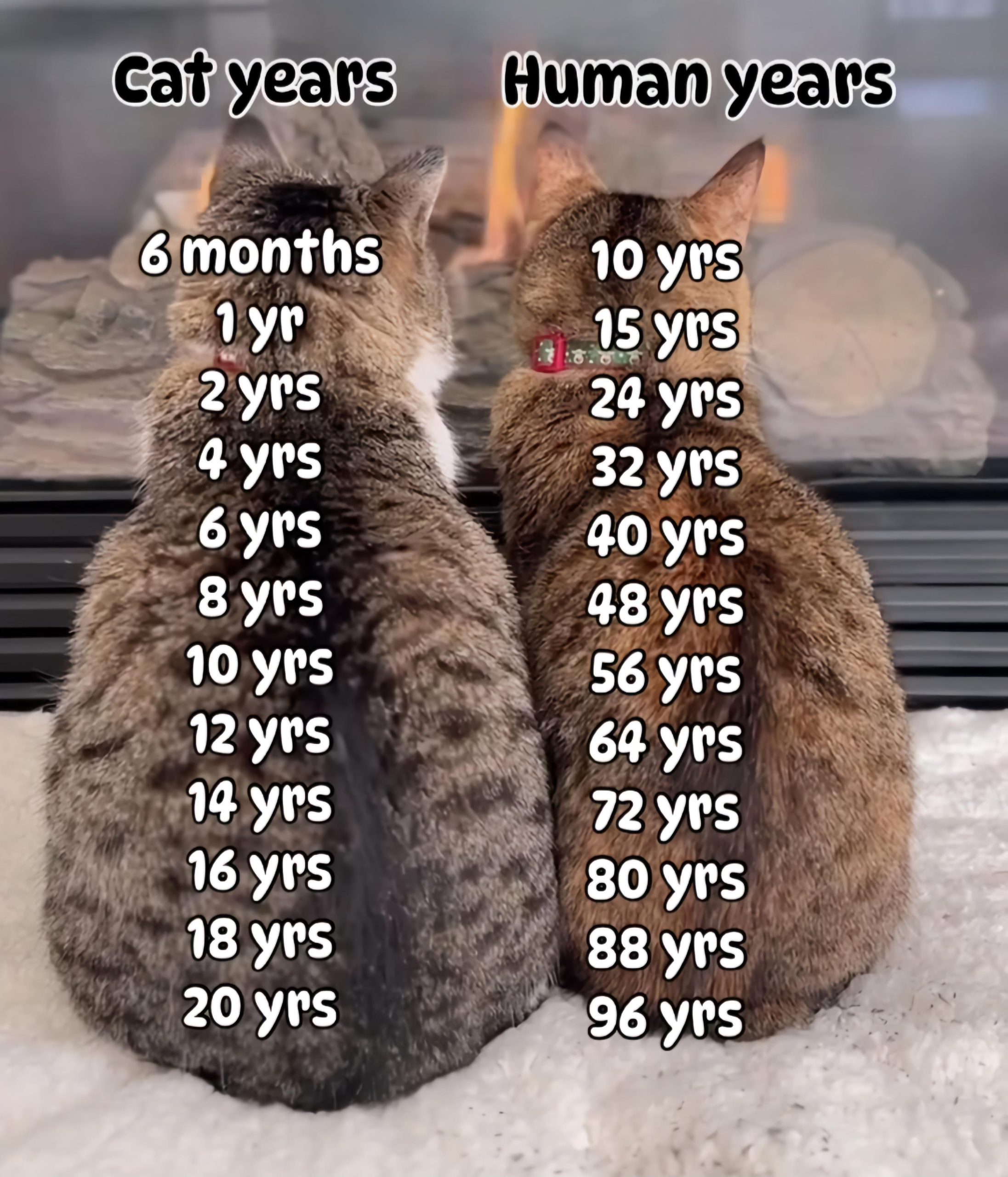
Did you know that a cat’s first year is roughly equivalent to 15 human years? This rapid growth phase explains why kittens seem to mature so quickly. If you’ve ever been amazed at how fast your kitten learns, now you know why. They are essentially going through their teenage years in a matter of months.Breaking Down The Chart
Here’s a straightforward look at how cat years compare to human years:| Cat Age (Years) | Human Age Equivalent |
|---|---|
| 1 | 15 |
| 2 | 24 |
| 3 | 28 |
| 4 | 32 |
| 5 | 36 |
| 6 | 40 |
| 7 | 44 |
| 8 | 48 |
| 9 | 52 |
| 10 | 56 |
| 11 | 60 |
| 12 | 64 |
| 13 | 68 |
| 14 | 72 |
| 15 | 76 |
| 16 | 80 |
| 17 | 84 |
| 18 | 88 |
| 19 | 92 |
| 20 | 96 |
Why It Matters
Knowing your cat’s equivalent human age isn’t just trivia. It can influence their diet, exercise, and medical care. Have you ever thought about how your behavior changes as you age? The same is true for cats. Adjustments in their routine can significantly enhance their quality of life.Are You Surprised?
Did you realize your six-year-old cat is middle-aged in human terms? It’s fascinating how different species age at various rates. Consider what changes you might make to better accommodate their stage of life. This awareness can deepen your bond and make your furry friend’s life even more fulfilling.Takeaway
Understanding the conversion from human to cat years is more than just a fun fact. It’s a tool that helps you be a more attentive and informed cat owner. What changes can you make today to improve your cat’s life? Use this knowledge to enhance your pet’s well-being. Your cat will thank you with purrs and companionship.Factors Affecting Cat Age
Understanding cat age is more complex than simply multiplying human years by seven. Several factors influence how a cat ages, making each feline unique in its journey through life. Just like humans, various elements impact their longevity and health. By understanding these factors, you can tailor your care to enhance your furry friend’s quality of life.
Breed Differences
Breed plays a significant role in the aging process of cats. Some breeds are known for their longevity, while others may face health challenges early on. For example, Siamese cats often live longer lives, sometimes reaching 20 years or more. On the other hand, breeds like the Maine Coon can be prone to certain genetic health issues that might affect their lifespan. Knowing your cat’s breed can help anticipate their needs and potential health concerns.
Lifestyle Impacts
A cat’s lifestyle significantly affects its age. Indoor cats generally live longer than those allowed to roam outside. Inside, they are shielded from dangers like traffic and predators. Regular vet visits and a balanced diet also contribute to their well-being. Have you ever noticed how playful and energetic your cat becomes with a new toy or perch? Keeping them mentally stimulated can improve their quality of life and help them stay youthful. Consider how small changes in their environment can make a big difference.
Factors affecting cat age are diverse and complex. From breed characteristics to lifestyle choices, each element plays a part in determining how your feline companion ages. By considering these factors, you can make informed decisions that help your cat live a happy, healthy life. What steps will you take to ensure your cat ages gracefully?
Signs Of Aging In Cats
As cats age, they exhibit distinct signs of aging. These changes can be subtle or obvious, affecting their physical appearance and behavior. Understanding these signs can help pet owners provide better care and comfort. Aging in cats is a natural process and recognizing it early can ease their transition.
Physical Changes
Older cats may show changes in their fur. It might become dull and thinner. You may notice weight loss or gain. Their skin may lose elasticity. Dental issues often arise with age. Teeth may decay or fall out. This can affect their eating habits. Joint pain is common in aging cats. Arthritis can make them less active. Watch for limping or stiffness.
Behavioral Shifts
Aging cats may become less social. They might prefer solitude more often. Changes in sleeping patterns are frequent. Your cat might sleep more during the day. Night-time activity could increase. Memory lapses can happen as they age. Forgetting places or people is possible. Older cats may show less curiosity. They might ignore new toys or environments.

Credit: greensafaris.com
Caring For Aging Cats
Understanding cat years helps in caring for aging cats. One human year equals about four to five cat years. This knowledge aids in monitoring their health.
As your feline friend enters their golden years, caring for them becomes more crucial than ever. You might notice subtle changes in behavior, appetite, or mobility, indicating that your cat is aging gracefully. Understanding their evolving needs can ensure they enjoy a happy and healthy life in their senior years.Dietary Needs
Just like humans, cats’ nutritional needs change as they age. Senior cats often require a diet that is higher in protein and lower in calories to maintain muscle mass and a healthy weight. Have you considered switching to a senior cat food formula? These specially designed diets provide essential nutrients that support joint health and kidney function. Monitoring your cat’s eating habits can also help. If they are eating less or seem to have lost interest in food, it might be time to consult your vet. My cat, Whiskers, became a picky eater in her later years, and it turned out she needed a dental check-up.Health Monitoring
Regular veterinary visits are essential as your cat ages. These check-ups can catch early signs of conditions like arthritis, kidney disease, or dental issues. How often do you take your senior cat to the vet? Scheduling at least two visits a year can make a significant difference in managing their health. Keep an eye on your cat’s behavior and physical changes. Is your cat less active or sleeping more than usual? A reduction in playfulness could indicate discomfort or pain. When my old cat, Felix, stopped jumping to his favorite perch, it was a sign of arthritis that needed attention. Make a habit of examining your cat at home. Check their coat, eyes, and ears regularly. Look for any lumps or bumps that weren’t there before. Early detection can be the key to effective treatment and a longer, happier life for your feline companion.Debunking Myths About Cat Age
Cats age differently than humans. One year for a cat equals about 15 human years. Many misunderstand this, thinking it’s similar to dog years. Understanding cat aging helps provide better care for your feline friend.
Understanding the age of your feline friend can often feel like unraveling a mystery. Many cat owners are curious about how their pet’s age translates into human years. Common myths and misconceptions abound, leading to confusion. Let’s break down these myths and get to the heart of what 1 year in cat years truly means. A popular myth suggests that one cat year is equivalent to seven human years. This is a misconception. Cats age rapidly in their first two years. By the end of the first year, a cat is roughly equivalent to a 15-year-old human.The First Year: Rapid Development
In the first year, cats undergo significant physical and behavioral changes. Just like teenagers, they explore their environment with curiosity and energy. By the end of this year, they reach full sexual maturity.Comparing Cat Years To Human Years
The second year of a cat’s life equates to about nine human years. After this, each additional cat year equals approximately four human years. This method provides a more accurate reflection of a cat’s aging process.Why The ‘seven Year’ Rule Falls Short
The notion that one cat year equals seven human years oversimplifies the aging process. Cats mature much faster initially and then age more slowly after the first couple of years. This myth doesn’t account for the rapid initial development in cats.The Importance Of Knowing Your Cat’s Age
Understanding your cat’s age helps in tailoring their care. Just like humans, cats have different needs at different life stages. Knowing their age in human years can assist you in providing age-appropriate nutrition and medical care.Practical Tips For Cat Owners
Monitor your cat’s health regularly. Schedule annual vet visits to ensure they’re healthy as they age. Adjust their diet as they transition through different life stages. Have you ever wondered how your cat’s age affects their behavior or health? Understanding their true age can deepen your bond with your furry friend. As you now know, knowing your cat’s age can make all the difference in their quality of life.
Credit: greensafaris.com
Frequently Asked Questions
How Old Is A 1 Year Old In Cat Years?
A 1-year-old cat is roughly equivalent to a 15-year-old human. Cats mature quickly in their first year. This rapid development covers kitten to young adulthood stages. Understanding their age helps in providing appropriate care and nutrition.
Why Is 1 Human Year 7 Cat Years?
The “1 human year equals 7 cat years” idea is a simplification. Cats age rapidly in early years, reaching maturity faster. This comparison helps understand their lifespan relative to humans. It’s not precise, as cat aging varies by breed and individual health.
Always consider these factors for accurate age assessment.
Is A 1 Year Old Cat Still A Kitten?
Yes, a 1-year-old cat is still considered a kitten. Cats typically reach maturity around 12 months. Kittens exhibit playful behavior and high energy levels. Proper nutrition and care during this stage support healthy growth and development. Enjoy this adorable phase of your feline’s life!
How Old Is A 35 Year Old Cat?
A 35-year-old cat is extremely rare. Cats typically live up to 15-20 years. If accurate, this cat’s age would be equivalent to around 169 human years.
Conclusion
Understanding cat years helps you care better for your feline friend. Cats age faster than humans. Each year means significant changes. Keep this in mind. Regular vet visits are essential. They catch health issues early. Nutrition also plays a key role.
A balanced diet supports longevity. Playtime keeps cats healthy and happy. It’s part of their needs. Observing behavior changes is crucial. It signals their well-being. Your cat’s age influences its care needs. Stay informed and attentive. This strengthens the bond.
Cherish each moment with your cat. They bring joy and companionship. Enjoy the journey together.

Similar Posts