Spider Bite on Cat: Signs & Treatment

No one expects to find a spider bite on cat when they're just going about their evening. But here's the thing: cats are masters at hiding pain, and by the time you notice something's wrong, the venom could already be working its way through their system. The difference between a good outcome and a bad one often comes down to how fast you recognize the signs and act.
In our research, we found that black widow venom is roughly 15 times more toxic to cats than to dogs on a per-weight basis, according to data from the ASPCA Animal Poison Control Center. That's not a statistic to shrug off. So let's walk through what you actually need to know, no fluff, no panic, just clear steps.
Quick Answer
A spider bite on cat is a genuine emergency with two dangerous spiders. Black widows cause muscle tremors, paralysis, and breathing trouble. Brown recluses destroy skin tissue over days or weeks.
Both need a vet immediately. Call your vet or a pet poison hotline without delay.
Image source: Web (Bing) / ar.inspiredpencil.com (Web image (fair-use with source credit))
Why This Can't Wait
Here's the uncomfortable truth: your cat's survival instinct works against you here. Cats evolved to hide illness and injury. That means by the time you see drooling, wobbling, or a swollen paw, the venom has already been circulating for hours.
The clock matters more than you think. Black widow venom is a neurotoxin. It attacks the nervous system and causes progressive muscle paralysis.
The diaphragm can stop working. That's respiratory failure. And it can happen within a few hours of the bite.
Brown recluse venom works slower but just as destructively. It kills tissue at the bite site and can spread. The full damage might not be visible for a week or more.
But early veterinary care can limit how much tissue is lost.
Another risk: secondary infection. A cat's mouth and claws carry bacteria. If they lick or scratch the bite, they can introduce infection on top of the venom problem.
We also see owners mistake spider bites for other things. Abscesses from cat fights, allergic reactions, even snake bites can look similar. That's why guessing at home is dangerous.
You need a trained eye to tell the difference.
The bottom line is simple. Spider venom acts fast. Cats hide symptoms.
Delay costs tissue and lives. That's why this section exists. Move quickly and move smart.
The Two Spiders That Actually Matter for Cats
Let's narrow this down. Out of thousands of spider species in North America, only two pose a real threat to your cat: the black widow and the brown recluse. Everything else is either harmless or causes nothing worse than a sore spot.
Black widow. You'll recognize her by the glossy black body and the red hourglass mark on the belly. Only the females bite. Their venom is a potent neurotoxin called alpha-latrotoxin.
It floods the nervous system with signals, causing muscle cramps, tremors, paralysis, and severe pain. Cats are especially sensitive to it.
Signs to watch for: muscle rigidity, drooling, vomiting, labored breathing, restlessness, and a rigid abdomen. Some cats become uncoordinated or collapse. Onset can be as fast as 30 minutes.
Brown recluse. This spider is smaller and more secretive. It has a violin-shaped marking on its back. The venom contains enzymes that destroy cell membranes and cause tissue death (necrosis).
The bite might not hurt much at first, but over days a blister forms, turns black, and ulcerates.
Systemic symptoms are less common but can include fever, dark urine, and kidney damage. The real problem is the wound itself. Without proper care, it can grow and require surgical removal.
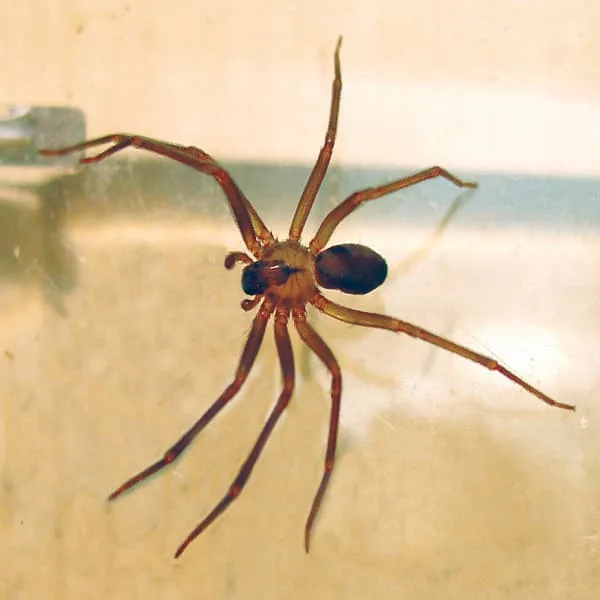
Image source: Bing (Web (fair-use with source credit))
Both spiders prefer dark, undisturbed places. Garages, woodpiles, basements, sheds, and cluttered corners. Outdoor cats and barn cats are at higher risk, but indoor cats can encounter them too.
What a Spider Bite Looks Like (and What It Doesn't)
This is where most people get confused. A spider bite doesn't always look like two neat fang marks. In fact, you might not see the bite site at all, especially on a fluffy cat.
Here's what you might see with a black widow bite. Small red punctures, sometimes so tiny you need to part the fur to spot them. Swelling around the area.
The cat might hold the bitten limb up or refuse to put weight on it. But the bigger clues are whole-body signs: twitching muscles, rigid belly, drooling, panting, stumbling.
Brown recluse bites start differently. A mild sting or nothing at all. Then a red bump appears.
Over the next 24 to 72 hours, a blister forms. The tissue underneath begins to die, turning blue, then black. The center may sink in (necrosis).
The wound can grow over days or weeks.
Now here's what a spider bite is not. It is not a hot, oozing, smelly abscess that pops up overnight. That's usually a cat fight abscess.
It is not hives or itching all over the body. That's an allergic reaction. It is not a single scratch or a scab from a minor scrape.
Many things look like spider bites. Bacterial infections, fungal spots, chemical burns, ringworm, and even certain cancers can mimic a necrotic bite. That's why vets rarely diagnose a spider bite with 100 percent certainty unless they see the spider or find matching venom in the tissue.
The takeaway? Don't try to diagnose from a photo on your phone. Look for the combination of a suspicious wound plus systemic signs.
And when in doubt, let a vet make the call.
What to Do — and What Never to Do — If You Suspect a Bite
Let's start with the don'ts, because they can do real harm.
Never cut into the bite. Do not try to squeeze out venom. Do not apply a tourniquet. These old first aid myths make things worse.
Cutting introduces bacteria. Squeezing spreads venom. Tourniquets cut blood flow and can cause permanent damage.
Never apply heat or ice directly to the skin. Ice packs are fine through a cloth, but direct ice can cause frostbite on already damaged tissue.
Never give your cat human painkillers. Tylenol (acetaminophen) is lethal to cats. Ibuprofen and aspirin can cause kidney failure and stomach ulcers. You have no safe OTC options at home for pain.
Never wait to "see if it gets better." By the time a spider bite looks bad, the venom has been working for hours. Waiting costs your cat's health and your wallet.
Now the right steps.
First, stay calm. Your cat will pick up on your panic. Gently examine the area without stressing the cat further.
Second, clean the wound gently with mild soap and warm water if the cat lets you. Pat dry with a clean cloth. Apply a cold pack wrapped in a thin towel for a few minutes to reduce swelling.
Do not press hard.
Third, keep your cat confined and quiet. Limit movement to slow venom spread. Put them in a carrier or a small room.
Fourth, if you can safely capture the spider in a jar without getting bitten yourself, do it. A photo works too. It helps the vet know exactly what they're dealing with.
Fifth, call ahead. Tell the emergency vet you're coming with a possible spider bite. Ask if they stock antivenom.
Not every clinic does.
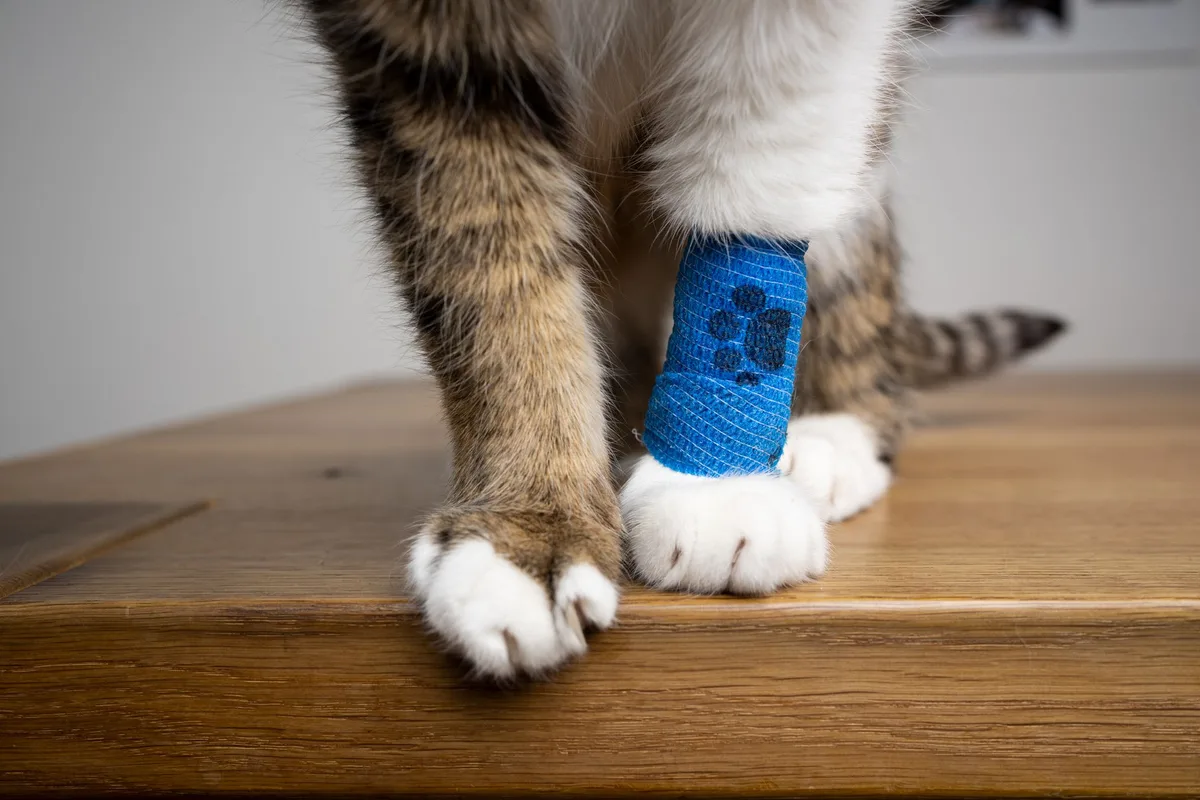
Image source: Bing (Web (fair-use with source credit))
When You Can Treat at Home vs. When You Need the ER Vet
The short answer is straightforward: any suspected venomous spider bite on a cat means an ER visit. There is no safe home treatment for black widow or brown recluse envenomation. None.
But let's be realistic. You might not know if the spider was venomous. Here's how to decide.
Go to the ER immediately if:
- Your cat is drooling, vomiting, twitching, or trembling
- The cat seems weak, wobbly, or collapses
- You see a blister that turns blue or black within 24 to 48 hours
- The cat is in obvious pain (crying, hiding, guarding a limb)
- Breathing is noisy, fast, or labored
- The cat is a kitten, a senior, or has a health condition
Home monitoring might be okay only if:
- You are 100 percent certain it was a harmless spider (like a garden spider or house spider)
- There is no swelling, pain, or any systemic signs after four hours
- The cat is acting completely normal, eating, drinking, and using the litter box
But even then, check the bite site daily for two weeks. Brown recluse bites can take days to show their full effect. If redness spreads, a blister forms, or the tissue feels firm and hot under the skin, get to the vet.
Here's a rule of thumb that has served us well. If you are asking yourself whether you need the vet, you already need the vet. Cats don't give second chances on this one.
Cost is a real concern for many people. A vet visit with basic wound care and observation runs 150 to 500 dollars. Antivenom adds 500 to 1500 more.
That's not cheap. But the alternative is a dead cat or a cat with permanent tissue loss. Most clinics offer payment plans or work with third-party financing.
Ask ahead. Don't let money stop you from saving your cat.
How Vets Diagnose and Treat Spider Bites
Your vet starts with a physical exam and a thorough history. When did you notice the symptoms? Has the cat vomited or stumbled?
Can you describe any spider you saw? Every detail helps.
Blood work is standard. A complete blood count and chemistry panel check for organ damage, dehydration, and infection. Clotting times matter too because some venoms affect blood coagulation.
For black widow bites, the hallmark sign is muscle rigidity with no other explanation. Cats often present with a rigid abdomen, tremors, and respiratory distress. Vets recognize this pattern quickly.
Treatment begins with stabilization. IV fluids correct dehydration and support blood pressure. Muscle relaxants like methocarbamol ease the painful cramping.
Pain medication is given intravenously because oral meds are hard to administer to a sick cat.
Antivenom is the definitive treatment for black widow envenomation. It binds to the circulating venom and stops progression. Most cats improve noticeably within a few hours of receiving it.
The vet monitors for allergic reactions during infusion, though serious reactions are rare in cats.
For brown recluse bites, treatment focuses on wound management. The vet cleans the site thoroughly and may remove dead tissue. Antibiotics prevent secondary infection.
In severe cases, surgery is needed weeks later to close the wound.
Hospitalization typically lasts 12 to 72 hours. The cat stays until it can eat, drink, and breathe comfortably on its own. Prognosis is excellent with prompt treatment.
Without it, outcomes are far worse.
Frequently Asked Questions About Spider Bites on Cats
Can a cat survive a spider bite without treatment?
Some cats survive mild bites from less venomous spiders. But black widow or brown recluse bites are life-threatening without care. The mortality rate for untreated black widow envenomation in cats is estimated at 10 to 20 percent.
That risk drops dramatically with antivenom and supportive care.
How long does it take for a cat to show symptoms of a spider bite?
Black widow symptoms can appear within 30 minutes to 4 hours. You might see drooling, tremors, or weakness that fast. Brown recluse symptoms take longer.
The bite site may not look serious for 24 to 48 hours. A blister then forms, followed by tissue damage over several days.
What does a spider bite look like on a cat?
It varies by spider type. Black widow bites often show small red punctures with subtle swelling. The bigger clues are whole-body signs like muscle rigidity and vomiting.
Brown recluse bites start as a red bump that blisters, then turns dark blue or black as tissue dies. You may not see the bite at all under thick fur.
Are all spider bites dangerous to cats?
No. Most spiders in North America have fangs too short or venom too weak to harm a cat. Common house spiders, wolf spiders, and jumping spiders are not a threat.
Only black widows and brown recluses cause serious trouble. Hobo spiders and false widows can cause mild symptoms but rarely require veterinary intervention.
How much does it cost to treat a spider bite on a cat?
A basic vet visit with exam, wound care, and observation runs 150 to 500 dollars. If antivenom is needed, add 500 to 1500 more. Hospitalization for one to three nights adds several hundred more.
Total costs range from 200 to 3000 dollars depending on severity. Many clinics offer payment plans.
The Takeaway: Staying Calm and Staying Smart
Here is what sticks with us after researching this topic. Venomous spider bites on cats are rare but serious. The window to act is narrow.
Black widow venom can paralyze a cat within hours. Brown recluse venom can destroy tissue over days. Neither improves with waiting.
Your job is not to become a spider expert. Your job is to recognize when something is wrong and get help fast. Muscle tremors, drooling, weakness, a blister that turns dark.
Those are your triggers.
Keep your vet's number saved. Program the ASPCA Animal Poison Control Center number (888-426-4435) into your phone too. A quick call can save hours of worry.
And remember this. Cats hide pain. If you are wondering whether to go to the vet, you already have your answer.
Go. The cost is worth it. The peace of mind is worth it.
And your cat is worth it.

Similar Posts