Is Cat Food Harmful to Dogs: Uncover the Truth
Have you ever caught your dog munching on cat food and wondered if it’s safe? You’re not alone.
Many pet owners find themselves in this tricky situation. You might think, “What’s the harm? It’s just food. ” But, the truth is, feeding your dog cat food regularly might not be the best choice. It can affect your dog’s health in ways you might not expect.
Imagine the peace of mind knowing exactly what’s best for your furry friend. Stick around, and you’ll discover the hidden risks and surprising truths about this common pet dilemma. You’re about to uncover whether that innocent nibble could be causing more harm than you think.
Differences Between Cat And Dog Nutrition
Dog and cat nutrition differs significantly, with cat food high in protein and fats. This imbalance can harm dogs by causing digestive issues or weight gain. Each species requires specific nutrients, making it essential to keep their diets separate for optimal health.
Understanding the nutritional needs of cats and dogs is crucial. These pets have different dietary requirements. Feeding them the wrong food can harm their health. Cat food and dog food are not interchangeable. Knowing the differences can prevent health issues.Unique Dietary Needs Of Cats
Cats are obligate carnivores. They need meat to survive. Their diet must include essential amino acids. Taurine is critical for their heart and vision. Cats cannot produce taurine on their own. They also need a higher protein intake. Fats and certain vitamins are vital too. Vitamin A and arachidonic acid are essential. Cats cannot convert plant-based nutrients efficiently.Specific Nutritional Requirements For Dogs
Dogs are omnivores. They thrive on a balanced diet. Both animal and plant-based nutrients are important. Protein is important, but in moderate amounts. Dogs need carbohydrates for energy. Fibers are essential for healthy digestion. Vitamins and minerals support their overall health. Calcium and phosphorus are critical for strong bones. Omega-3 fatty acids aid in brain development. `Common Ingredients In Cat Food
Cat food and dog food are not interchangeable, despite both being designed to nourish our beloved pets. You might wonder, “Why can’t I just feed my dog cat food, if it’s available?” While it might seem convenient, the differences in ingredients can have a significant impact on your dog’s health. Let’s dive into the common ingredients found in cat food and why they might not be suitable for your dog.
High Protein Content
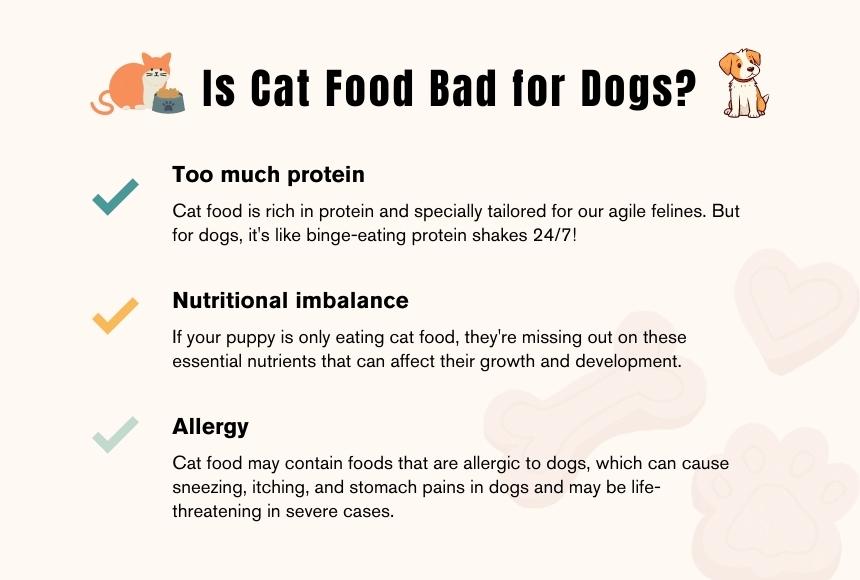
Cat food is typically high in protein because cats are obligate carnivores. This means their diet primarily consists of meat. Dogs, on the other hand, are omnivores and require a balanced diet with proteins, carbohydrates, and fats. High protein levels in cat food can strain a dog’s kidneys over time. Imagine treating your dog like a bodybuilder who eats nothing but steak—sounds intense, right? It’s essential to consider how a diet high in protein can affect your dog’s overall health.
Taurine And Other Additives
Cats need taurine, an amino acid not naturally produced by their bodies, hence it’s a common additive in cat food. Dogs can synthesize taurine, so they don’t need it added to their food. Feeding your dog cat food with taurine may not harm them directly, but it could mean missing out on other essential nutrients. Have you ever tried to manage a diet with unnecessary supplements? It’s not the most efficient approach. Additional ingredients like taurine can be redundant for dogs and may lead to nutrient imbalances.
Cat food may also contain other additives to cater to feline taste preferences. Some dogs might find these flavors irresistible, leading to overeating. If you’ve ever caught your dog sneaking a treat from the cat’s bowl, you know how tempting those flavors can be. But is it worth the risk of digestive issues or obesity?
Considering these factors, it’s crucial to stick to dog-specific food for your furry friend. Have you ever faced a pet food dilemma? Share your experiences in the comments below!
Potential Risks Of Dogs Eating Cat Food
Feeding dogs cat food might seem harmless at first. Yet, it poses certain risks. Dogs and cats have different dietary needs. Cat food often contains higher protein and fat levels. This difference can lead to health problems for dogs.
Digestive Issues
Cat food is richer in fats and proteins than dog food. This can upset a dog’s stomach. Dogs may experience diarrhea or vomiting. Their digestive systems are not used to this richness. Consuming cat food occasionally might not harm them. Regular intake, though, can cause persistent digestive issues.
Long-term Health Implications
Eating cat food frequently can lead to serious health issues. High protein content can strain a dog’s kidneys. This is particularly dangerous for older dogs. Excessive fat intake may cause obesity in dogs. Obesity can lead to other health problems like diabetes. Nutrient imbalance is another concern. Dogs might lack essential nutrients found in dog food. This can affect their overall health and well-being.
Why Dogs Might Prefer Cat Food
Dogs often show interest in cat food, leading to curiosity among pet owners. This behavior may stem from various factors that appeal to their senses. Understanding these preferences can help manage a dog’s diet effectively.
Taste Preferences
Cat food usually contains higher protein levels. This makes it richer and more flavorful. Dogs are attracted to the strong aroma and taste. Cat food often has added flavors and fats. These enhance its appeal to a dog’s palate. The enticing smell and texture can lure dogs away from their own meals.
Availability And Accessibility
Cat food is often left in accessible places. Dogs can easily find and reach it. Cats tend to eat smaller portions, leaving leftovers. These leftovers become irresistible snacks for dogs. The curiosity of exploring different food options drives them. Dogs may also enjoy the novelty of eating something new. This availability encourages them to choose cat food over their own.
Signs Of Health Problems In Dogs
Feeding dogs cat food can lead to health problems, including digestive issues and allergies. Dogs may show signs like vomiting, diarrhea, or skin irritations. It’s important to monitor your dog’s diet closely to prevent these health risks.
Feeding your dog might seem straightforward, but what if your furry friend sneaks some cat food? Could this harmless act lead to health issues? Dogs and cats have different nutritional needs, and a dog consuming cat food regularly might face health problems. Recognizing the signs early can help you take timely action and ensure your dog stays healthy.Symptoms To Watch For
Dogs are curious creatures, and their love for cat food is not uncommon. However, if your dog starts indulging in cat food, watch out for symptoms like vomiting, diarrhea, or a sudden drop in energy levels. These could indicate a digestive upset due to the rich content in cat food. You might also notice excessive thirst or urination. This could be a sign of underlying issues related to the high protein content in cat food, affecting your dog’s kidney function. Keep an eye on their weight, too. If your dog starts gaining weight unexpectedly, it might be due to the extra calories from sneaking the cat’s meals.When To Consult A Veterinarian
Trust your instincts. If your dog’s behavior or physical condition changes, consulting a veterinarian is wise. Don’t wait for multiple symptoms to appear. A single, persistent symptom is enough reason to seek professional advice. Veterinarians can provide specific tests to determine if cat food consumption is the culprit behind any health issues. They can also give dietary recommendations tailored to your dog’s needs. Remember, early intervention can prevent long-term health problems. Ever caught your dog nibbling on cat food and wondered if it’s a big deal? It’s a good time to reassess your pet’s diet and be proactive about their health. After all, a well-fed dog is a happy and healthy companion. Have you had any experiences with your pets and their unusual eating habits? Share your story in the comments!
Credit: www.masterclass.com
Safer Alternatives For Dogs
Feeding dogs cat food can lead to health issues. Cats need more protein and fat than dogs, potentially causing digestive problems. It’s essential to choose food specifically formulated for dogs to ensure their nutritional needs are met safely.
As a dog owner, you want the best for your furry friend. If you’ve ever caught your dog sneaking a bite of cat food, you might wonder about safer alternatives. Dogs have different dietary needs than cats, and consistently feeding them cat food can lead to health issues. Let’s look into some healthy options that can keep your dog happy and healthy.Balanced Dog Diet Options
A balanced diet is crucial for your dog’s health. Dogs need a mix of proteins, carbohydrates, fats, vitamins, and minerals. High-quality commercial dog foods often meet these needs. Consider a brand that lists meat as the first ingredient. It indicates a protein-rich diet, which is essential for your dog. Always check the label to ensure it includes essential nutrients like omega-3 fatty acids and antioxidants. If your dog has specific health issues, consult your vet. They might recommend a specialized diet to cater to your dog’s unique needs.Homemade Dog Food Recipes
Making dog food at home can be rewarding and healthy. It allows you to control the ingredients and tailor meals to your dog’s tastes and dietary needs. Here’s a simple recipe to try: Cook a cup of brown rice, mix it with a pound of ground turkey, and add a cup of chopped vegetables like carrots and peas. Ensure the mixture is well-cooked and cooled before serving. Remember to avoid ingredients harmful to dogs, such as onions, garlic, and chocolate. Always introduce new foods gradually to monitor any adverse reactions. Have you ever considered making dog food at home? It might sound daunting, but it can be a fun and fulfilling way to ensure your dog eats well. Taking the time to prepare balanced meals can significantly impact your dog’s health and happiness. Would you try it?Preventing Dogs From Eating Cat Food
Dogs and cats have different dietary needs. Cat food can lack nutrients essential for dogs. This can lead to health problems over time. Keeping dog food separate prevents accidental consumption and ensures your pet’s well-being.
Cats and dogs may both be adorable members of your family, but their dietary needs differ significantly. While it may seem harmless, letting your dog munch on cat food can lead to health issues. Preventing dogs from eating cat food is crucial to ensure their well-being. So, how can you keep your curious canine out of the cat’s bowl? Here are some practical strategies to help you maintain peace at mealtime.Effective Feeding Strategies
Establish separate feeding times for your pets. Feeding them at different times can minimize the chance of your dog sneaking a bite from the cat’s dish. Consider placing your cat’s food on a higher surface. Cats are natural climbers, and a countertop or shelf can be an ideal spot. This simple change can keep the cat food out of your dog’s reach. Using a slow feeder for your dog can also help. It can keep your dog busy and less interested in the cat’s meal. Plus, it adds the benefit of aiding digestion.Environmental Adjustments
Create a designated feeding area for your cat. A separate room or a gated section of your home can serve as a safe haven for the cat’s meals. Does your cat have a favorite spot? That may be the perfect place to set up their dining area. Use pet-proof barriers or gates. These are especially useful if your dog is particularly determined. They allow your cat access to their food while keeping your dog at bay. Think about installing a cat door. It gives your cat exclusive access to a room where your dog can’t enter. This can be a great long-term solution if space allows. What strategy will work best for your home? You know your pets best, and with a bit of observation, the perfect solution will reveal itself. Focus on your pet’s habits and adjust accordingly to ensure a peaceful coexistence.
Credit: animalemergencyservice.com.au

Credit: www.petmd.com
Frequently Asked Questions
What Happens If My Dog Eats Cat Food?
Dogs eating cat food occasionally isn’t harmful but can cause digestive upset. Cat food is high in fat and protein, which may lead to obesity or pancreatitis in dogs if consumed regularly. Monitor your dog for any signs of illness and consult a vet if concerned.
What Happens If Cat Food Is Given To A Dog?
Dogs may experience digestive issues if they eat cat food. Cat food is high in protein and fat, which isn’t suitable for dogs. Regular consumption can lead to obesity or pancreatitis. It’s essential to feed your dog food specifically formulated for them to ensure balanced nutrition.
Will One Bowl Of Cat Food Hurt My Dog?
One bowl of cat food likely won’t harm your dog, but it’s not ideal for their diet. Cat food contains higher protein and fat, which dogs don’t need. Regular consumption could lead to health issues. Always provide dog-specific food for balanced nutrition and consult your vet if concerned.
What Happens When I Feed My Cat Dog Food?
Feeding your cat dog food can lead to nutritional deficiencies. Cats require specific nutrients, like taurine, found in cat food. Dog food lacks essential proteins and vitamins cats need for optimal health. Long-term consumption can cause serious health issues. Always provide your cat with food specially formulated for their dietary needs.
Conclusion
Feeding cat food to dogs isn’t a good idea. It lacks essential nutrients for dogs. Dogs need a balanced diet for good health. Cat food is high in protein and fat. This can lead to obesity in dogs. It might also upset their stomach.
Always choose dog-specific food. Consult your vet for advice. Keep your pet’s diet healthy and safe. A little care now prevents issues later. Understanding their needs is key. Your dog’s health matters most. Be mindful of what they eat.