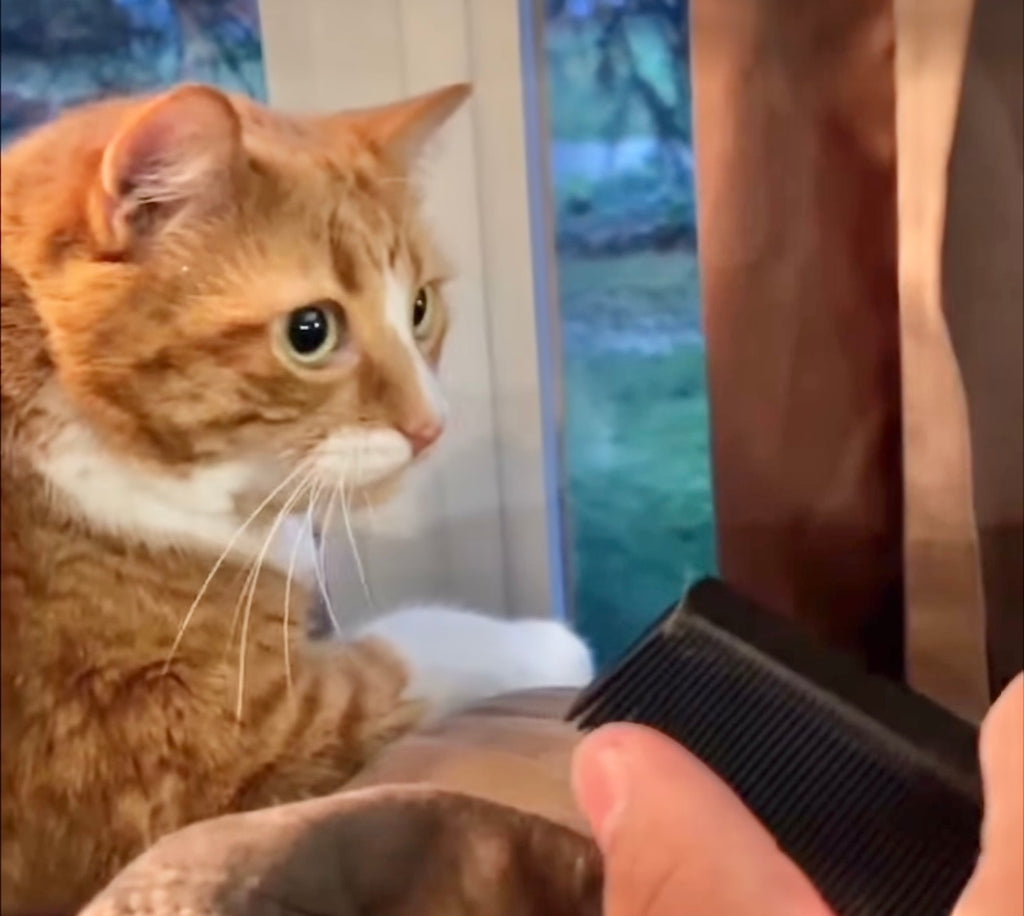
Have you ever noticed your cat making a strange gagging sound when you run a comb through its fur? It’s a curious and somewhat humorous behavior that often leaves cat owners puzzled.
You’re not alone in wondering why this happens. Understanding this peculiar reaction can not only quench your curiosity but also deepen your bond with your feline friend. We’re diving into the reasons behind this odd behavior, exploring the science, and shedding light on what’s really going on in your cat’s mind.
Stick around, and you’ll discover the surprising facts behind this quirky cat conundrum, ensuring you’re better equipped to care for your furry companion.

Credit: www.youtube.com
Cat Behavior And Sensory Responses
Cats gag at a comb due to their unique sensory responses. The sound or texture might trigger their gag reflex, making them react unexpectedly. This reaction is linked to their heightened sensitivity and instinctual behavior.
Cats are fascinating creatures with behaviors that often leave us scratching our heads. One of the more peculiar actions is their gagging when a comb is placed near them. To understand this odd reaction, we need to delve into cat behavior and their sensory responses. It’s not just about cats being quirky; there’s a science behind it that connects to their anatomy and sensory perceptions.Understanding Cat Gag Reflex
Cats have a sensitive gag reflex, which can be triggered by various stimuli. Have you ever noticed how your cat reacts to certain smells or textures? This reflex is their body’s way of protecting them from potentially harmful substances. A comb’s teeth can mimic the sensation of something unpleasant brushing against their whiskers. Whiskers are highly sensitive, and even slight pressure can send a signal to their brain, resulting in a gagging response. It’s similar to how we might react to an unpleasant smell or taste.Role Of Sensory Overload
Cats experience the world primarily through their senses. They rely heavily on their sense of smell and touch to navigate their environment. When you bring a comb close, it can create a sensory overload due to its unique texture and the sound it makes when moved. Imagine being in a room with flashing lights and loud noises; it can be overwhelming. For a cat, the comb can produce a similar effect. This overload can cause them to gag as a reflexive action to cope with the unexpected sensory input. Have you ever tried gently brushing your cat with a comb and noticed their discomfort? This is a clear sign that they’re experiencing more than just mild annoyance. It’s a sensory reaction that can vary from cat to cat. Understanding your cat’s sensory world can help you create a more comfortable environment for them. Have you ever wondered what other objects might cause such reactions? Observing and learning from your cat’s responses can be a fascinating journey into their unique way of experiencing the world.
Credit: www.youtube.com
Scientific Insights
Cats are fascinating creatures with unique behaviors. One intriguing behavior is their gagging response when exposed to a comb. Scientists have explored this phenomenon to understand the underlying reasons. This section delves into scientific insights behind this curious cat reaction.
Research On Cat Gagging
Several studies have examined why cats gag at combs. Researchers found that certain sounds trigger this response. The comb’s teeth create a high-pitched noise. This sound mimics the frequency of a natural predator or threat. Cats react defensively, leading to gagging.
Experiments revealed that not all cats gag at combs. Some cats show no reaction. This indicates individual variability based on experiences or genetics. Studies suggest environmental factors play a role. Cats exposed to similar sounds may develop a gag reflex.
Neurological Factors
The gagging response involves complex neurological processes. The feline nervous system is sensitive to certain frequencies. This sensitivity helps cats detect threats in their environment.
Neurons responsible for hearing react to specific sound waves. When a comb produces these waves, it triggers a defensive mechanism. This is similar to how humans flinch at sudden loud noises.
Understanding these neurological factors helps explain why some cats gag at combs. It highlights the intricate connection between sound perception and reflexive actions.
Common Triggers
Cats may gag at combs due to sensory overload or unexpected tactile sensations. The sound or texture of the comb can trigger a reflexive response. This reaction is often seen when the comb touches their fur unexpectedly, causing discomfort.
Cats are known for their quirky behavior. One puzzling reaction is gagging at certain objects or sounds. Understanding these common triggers helps explain this odd behavior. Cats are sensitive creatures. Their reactions are often instinctive.Objects And Sounds
Certain objects and sounds can provoke a gag reflex in cats. Loud noises can be startling. Sudden movements may seem threatening. Unfamiliar objects can cause stress. Cats have keen senses. Their heightened sensitivity leads to unique reactions. A vacuum cleaner’s noise can be overwhelming. A new scent might be unsettling. Each cat is different. Their triggers vary widely. Some cats are more sensitive than others. Others may ignore these stimuli completely.Comb As A Specific Trigger
Why does a comb cause gagging? It’s not just about grooming. The sound of a comb can be irritating. Its movement mimics a threat. Cats associate this with danger. The comb’s texture might be unpleasant. This can lead to discomfort. A cat’s gag reflex is a defense mechanism. It’s a way to avoid potential harm. This response is natural. It’s their instinct to protect themselves. Understanding these triggers helps in managing a cat’s environment. Keeping them comfortable minimizes stress.Impact On Cat Health
Cats often gag at combs due to the sound vibrations they produce. This reaction can be a natural reflex, similar to a human’s gag reflex. It is usually harmless but can sometimes indicate sensitivity or discomfort.
Impact on Cat Health When you see your cat gagging at a comb, it might seem amusing at first. However, it’s important to consider the potential impact on their health. Cats are sensitive creatures, and what may look like a harmless gag can sometimes indicate underlying issues.Potential Risks
Gagging can be more than just a funny reaction. It might signal a sensitive throat or respiratory issue. If your cat gags frequently, it could be a sign of an allergy or a more serious health problem. Some cats may have an aversion to certain smells or textures. The material of the comb or any residue on it could irritate them. It’s essential to ensure that grooming tools are clean and safe for your pet. Additionally, prolonged gagging might lead to stress or anxiety. Stress can weaken your cat’s immune system, potentially affecting their overall health. Have you noticed any other behavioral changes in your cat?Monitoring Cat Reactions
Observe your cat’s behavior closely during grooming sessions. Does the gagging only happen with a specific comb? Try using different grooming tools to see if there’s a change in their reaction. Pay attention to other symptoms. Is your cat coughing, sneezing, or showing signs of discomfort? If these symptoms persist, consult your veterinarian for advice. Document your observations. Keep a simple log of when and how often your cat gags. This information can be valuable when discussing your concerns with a vet. Engaging with your cat during grooming can help minimize stress. Speak softly and offer treats to make the experience more enjoyable. How can you make grooming a positive activity for both of you? Understanding the reasons behind your cat’s gagging can help you take better care of their health. Remember, your cat relies on you to notice and address any potential health issues.Preventive Measures
Cats may gag at combs due to the high-pitched sound they produce, which can be irritating to their sensitive ears. Ensuring a quiet environment and using gentler grooming tools can help prevent this reaction. Familiarizing your cat with grooming tools gradually might also reduce their discomfort.
Cats are curious creatures with quirky behaviors that often leave us scratching our heads. One such behavior is their tendency to gag at the sight or sound of a comb. If you’ve ever witnessed this, you might wonder how to prevent it. Understanding preventive measures can help you ensure your feline friend stays comfortable and stress-free.Reducing Exposure
Reducing exposure to combs is a practical step. You can start by storing combs out of your cat’s sight. Consider keeping grooming tools in a closed drawer or a cabinet. This simple act can minimize the chances of your cat encountering the trigger. Think about your daily routine. Do you leave the comb on the table or bathroom counter? Cats are curious and might explore these areas. Changing your habits can make a significant difference. Is your cat particularly sensitive? Observe their reactions. You might notice they gag when hearing the comb. Try grooming in a separate room or when your cat is not around.Alternatives To Combs
Consider alternatives to traditional combs. Soft brushes can be a gentle option. They often have flexible bristles that are less likely to cause distress. You might find your cat enjoys the sensation of a soft brush more. Have you tried grooming gloves? These can be a game-changer. Grooming gloves allow you to pet your cat while removing loose fur. It can feel like a natural extension of your hand, reducing the chance of gagging. Explore silicone grooming tools. These tools are designed to be gentle and can be a pleasant experience for your cat. Their unique texture might be less intimidating compared to a comb. What works for one cat might not work for another. It’s crucial to observe your cat’s reactions and adjust accordingly. Do they seem more relaxed with a certain tool? Use what makes them comfortable. Preventive measures are about creating a stress-free environment for your cat. By reducing exposure and exploring alternatives, you can ensure grooming is a pleasant experience for both of you. Isn’t it worth trying something new to keep your feline friend happy?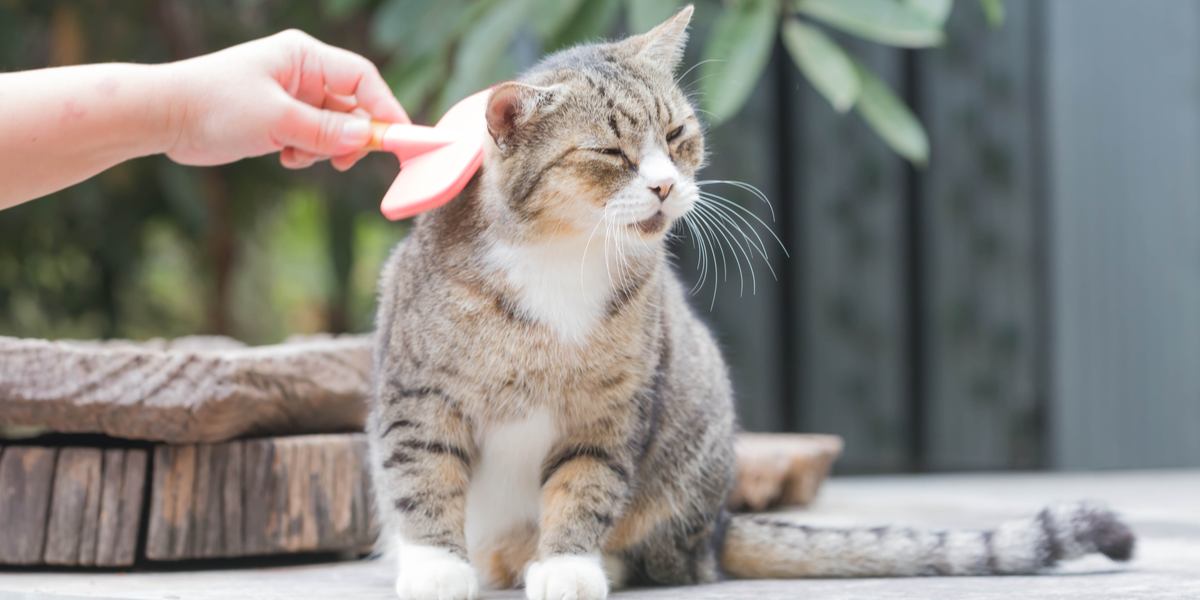
Credit: cats.com
Understanding Cat Communication
Cats may gag at combs due to the sound or texture triggering their sensitive gag reflex. This unusual behavior can be linked to their finely tuned instincts. Understanding these reactions helps in better communication with your feline friend.
Understanding how cats communicate is key to building a strong bond with your feline friend. Cats have a unique way of expressing themselves, often through subtle gestures and vocalizations. Gagging at a comb is one such behavior that can puzzle many cat owners. Understanding what your cat is trying to tell you can help you respond appropriately and strengthen your relationship.Decoding Cat Signals
Cats communicate with a wide range of signals, from body language to vocal sounds. When your cat gags at a comb, it might be trying to tell you something about its comfort or preferences. This response can be linked to various factors, including sensitivity to the comb’s texture or the sound it makes. Observe your cat’s behavior closely. Is it merely a reaction to the comb, or is it part of a larger pattern of aversion? A personal experience: My cat, Luna, would gag whenever I used a metal comb. Switching to a softer brush made all the difference, and she seemed much happier.Responding To Gagging Episodes
If your cat gags at a comb, consider changing the grooming tool. Soft-bristle brushes or rubber grooming gloves can be gentler alternatives. Experiment with different options to see which your cat prefers. Ensure that your grooming sessions are positive experiences. Offer treats and gentle praise to reinforce good behavior. Remember, your cat’s comfort is essential. If gagging persists or seems severe, consult your veterinarian to rule out any underlying health issues. Understanding cat communication is a journey. Are you ready to listen and adapt to what your furry friend is telling you?Frequently Asked Questions
Is It Bad To Make Your Cat Gag With Comb Sound?
Making your cat gag with a comb sound can be distressing for them. It may cause anxiety or stress. Avoid intentionally triggering this reaction to ensure your cat’s well-being. Always prioritize your pet’s comfort and emotional health.
Why Do Cats Do The Gag Reflex?
Cats often gag due to irritants like hairballs or strong smells. This reflex helps them expel unwanted substances. Cats’ sensitive noses and throats can trigger this reaction easily. If frequent, consult a vet to rule out health issues.
Why Do Cats Stick Their Tongue Out When They Hear A Comb?
Cats stick their tongue out when they hear a comb due to the “Flehmen response. ” This reaction helps them analyze scents, often triggered by vibrations resembling pheromone signals. It’s a natural, harmless behavior.
Why Does Comb Make Cat Gag Reddit?
Cats gag when hearing a comb’s sound due to the frequency mimicking their natural predators’ calls, triggering an instinctive response. This noise can resemble distress signals, making cats uncomfortable. Always observe your cat’s reaction and avoid actions that cause stress or discomfort.
Conclusion
Cats’ reactions to combs can be puzzling. They gag because of unique sensitivities. The sound or feel of combs triggers this reflex. Understanding this can help you care for your cat better. Try different combs or grooming methods. Ensure grooming is a comfortable experience.
Cats may not enjoy every grooming tool. Be patient and observant. Look for signs of discomfort or distress. Respect their preferences. This ensures a happier, healthier pet. Always prioritize your cat’s comfort and well-being. Happy grooming!