How Much Dry Cat Food Should I Feed My Cat: Expert Tips

Ever found yourself staring at a bag of dry cat food, wondering if you’re feeding your furry friend the right amount? You’re not alone.
Figuring out the ideal portion of dry cat food can be confusing, but it’s crucial for your cat’s health and happiness. You want them to be energetic and content, not sluggish or overweight. By understanding the right balance, you can ensure your cat enjoys a long and vibrant life.
So, if you’re curious about how much dry cat food you should be scooping into that bowl, keep reading. This article will guide you through the essentials, ensuring you make the best choice for your feline companion.
Credit: www.petmd.com
Factors Affecting Cat Food Intake
Understanding how much dry cat food to feed your feline friend is important. Various factors influence a cat’s food intake. Each cat is unique, and their needs can vary significantly. Knowing these factors helps ensure your cat stays healthy and happy.
Age And Life Stage
A cat’s age plays a crucial role in determining food intake. Kittens need more calories due to their rapid growth. They require frequent meals throughout the day. Adult cats have different needs. Their metabolism slows down. Therefore, they need fewer calories. Senior cats might eat less due to reduced activity levels. Always adjust portions based on your cat’s life stage.
Activity Level
Activity level significantly impacts how much your cat should eat. Active cats burn more calories. They need more food to sustain their energy. Sedentary cats, on the other hand, require fewer calories. Overfeeding less active cats can lead to obesity. Monitor your cat’s activity and adjust feeding accordingly.
Health Status
A cat’s health status affects its dietary needs. Cats with certain medical conditions may need special diets. Conditions like diabetes or kidney disease require specific nutritional plans. Always consult with a vet for tailored feeding advice. Keep an eye on your cat’s health changes. Adjust their diet to meet their health requirements.
Credit: articles.hepper.com
Reading Cat Food Labels
Understanding how much dry cat food to feed your cat is essential. Check the food label for serving size recommendations. Adjust portions based on your cat’s age, weight, and activity level.
Reading cat food labels can be confusing for many cat owners. They often contain detailed information. But understanding these labels is crucial. It helps ensure your cat gets the right nutrients. It also guides you on the proper serving size.Nutritional Content
The nutritional content section is vital. It tells you what your cat will eat. Look for high-quality proteins. Cats need proteins for growth and energy. Check for healthy fats too. They keep your cat’s coat shiny. Avoid foods with too many carbohydrates. Cats don’t need a lot of them.Serving Size Recommendations
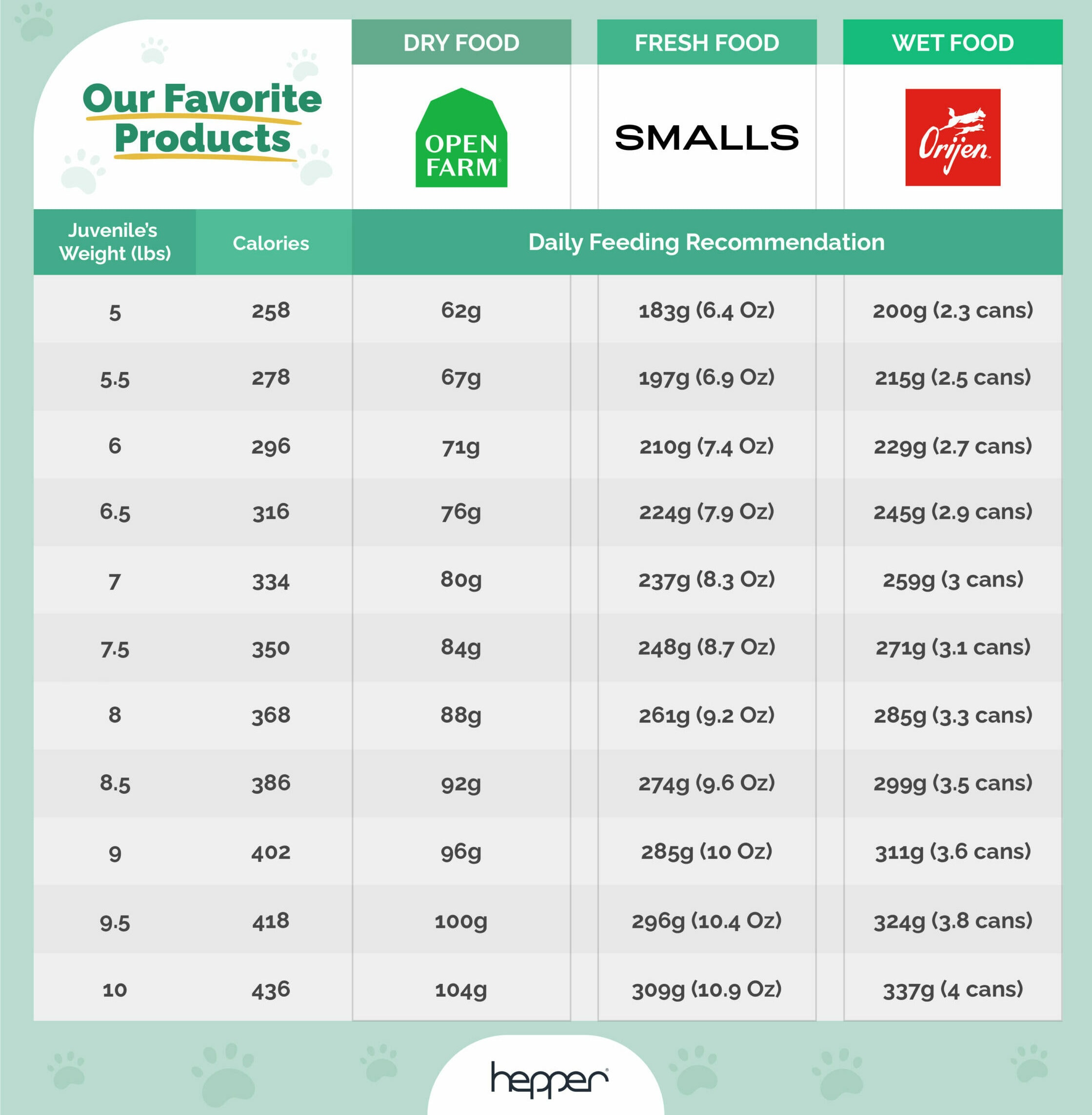
Serving size recommendations help prevent overfeeding. Overfeeding leads to obesity in cats. Labels usually list serving sizes based on weight. Check the weight of your cat. Use it to find the right amount. Remember, these are just guidelines. Adjust based on your cat’s activity level. Some cats are more active than others. They might need more food.Determining Portion Sizes
Feeding your cat the right amount of dry food ensures their health. The portion size depends on various factors. Understanding these helps in deciding how much to feed. Consider weight, breed, and activity level. Each plays a vital role in determining the perfect portion. Let’s explore how these elements influence your cat’s dry food intake.
Weight And Body Condition
A cat’s weight affects its food needs. Overweight cats require smaller portions. Slimmer cats may need more food to maintain their body weight. Assessing body condition involves checking muscle tone and fat deposits. A vet can help determine your cat’s ideal weight. Portion sizes should align with maintaining this weight.
Breed Considerations
Different breeds have different needs. Larger breeds often require more food. Smaller breeds might need less. Some breeds are more active and burn more calories. Others are less active and need fewer calories. Understanding your cat’s breed can guide portion sizes. Research breed-specific dietary needs for best results.
Feeding Schedule Guidelines
Feeding your cat the right amount of dry food is crucial for their health and well-being. But how do you figure out the best feeding schedule? Establishing a consistent routine can help you monitor their eating habits and prevent overeating. Let’s dive into some practical guidelines that will make feeding your feline friend a breeze.
Frequency Of Meals
Do you ever wonder how often you should feed your cat? Cats thrive on regularity. Most adult cats do well with two meals a day. This keeps their metabolism steady and avoids hunger spikes. If your cat seems constantly hungry or has weight issues, consult your vet for tailored advice.
Kittens, on the other hand, require more frequent feedings. They have higher energy needs and benefit from three to four meals a day. Keeping a consistent feeding schedule for kittens can help them grow strong and healthy.
Consistency In Feeding Times
Have you noticed how your cat seems to know exactly when it’s mealtime? Cats are creatures of habit. Maintaining consistency in feeding times helps regulate their digestive system and reduces stress. Try to feed your cat at the same times each day.
Setting alarm reminders on your phone can be a lifesaver. It’s easy to get caught up in daily activities and forget. My cat, Luna, knows when it’s 7 AM and 7 PM—she’s practically my furry alarm clock!
How do you balance your cat’s feeding schedule with your busy life? Share your thoughts and tips in the comments below! Your insights could help another pet parent.
Adjusting Diet For Weight Management
Wondering how much dry cat food to give? Consider your cat’s age, size, and activity level. Adjust portions to maintain a healthy weight and prevent overfeeding.
Adjusting Diet for Weight Management Feeding your cat the right amount of dry food is crucial for maintaining their ideal weight. Just like humans, cats can struggle with weight issues. Adjusting your cat’s diet can help them stay healthy and active. It’s essential to monitor your cat’s weight regularly. This will help you make informed decisions about their food intake. Let’s explore how to manage your cat’s diet for weight management.Identifying Overweight And Underweight Cats
Identifying if your cat is overweight or underweight is the first step. Look at your cat’s body shape and feel their ribs. You should be able to feel the ribs but not see them prominently. Another quick test is to observe your cat from above. An overweight cat will have little to no waist, while an underweight cat will appear bony. Regular vet visits can also provide a clear picture of your cat’s health status.Strategies For Weight Loss Or Gain
If your cat is overweight, consider reducing their portion sizes. You might also switch to a lower-calorie dry food. Increasing playtime can help burn extra calories. For underweight cats, a gradual increase in food quantity can help. Choose high-calorie, nutrient-rich dry foods. Monitor their weight weekly to ensure they’re gaining steadily. Always introduce dietary changes slowly to avoid digestive issues. Have you tried using a feeding schedule? This can help regulate their eating habits. Remember, every cat is unique. What works for one might not work for another. Always consult with your vet for personalized advice.Consulting With A Veterinarian
Consulting a veterinarian helps determine the right amount of dry cat food for your pet. Cats need specific nutrition based on age, weight, and activity level. Expert guidance ensures balanced meals, promoting health and happiness in your feline friend.
Consulting with a veterinarian is a crucial step in determining how much dry cat food your cat should eat. Cats have unique dietary needs that can vary based on age, weight, health, and lifestyle. A veterinarian can provide personalized advice to ensure your cat stays healthy and happy. They can also help you navigate the overwhelming variety of cat food options available.When To Seek Professional Advice
You might wonder when it’s necessary to consult a vet about your cat’s diet. If your cat is losing weight unexpectedly or gaining weight rapidly, it’s time to talk to a professional. Also, any changes in your cat’s behavior, such as lethargy or hyperactivity, could be diet-related. It’s wise to schedule a vet visit if you’re adopting a new cat. They can help you establish a feeding routine that suits your cat’s specific needs. Always consult a vet if your cat has health issues or special dietary requirements.Questions To Ask Your Vet
When you meet with your vet, having a list of questions can be helpful. You might ask, “How many calories should my cat consume daily?” or “Are there specific nutrients I should focus on?” Inquire about portion sizes and feeding frequency to prevent overfeeding or underfeeding. Ask, “Is there a specific brand of dry food you recommend?” to get expert insights based on your cat’s health profile. Discuss any concerns you have about food allergies or intolerances. Your vet can help you identify signs of food-related issues and suggest suitable alternatives. Pro tip: Keep a notebook of your cat’s dietary habits and health changes. Sharing this with your vet can lead to more tailored advice. Have you ever considered how your cat’s lifestyle changes might affect its diet? A simple adjustment could make a big difference.Common Mistakes In Cat Feeding
Feeding too much dry cat food can lead to obesity and health issues. Measure portions carefully to match your cat’s weight and activity level. Many owners mistakenly estimate food amounts, causing overfeeding or underfeeding.
Feeding your cat might seem straightforward, but it’s easy to make mistakes that can affect their health. Understanding these common pitfalls can help you make better choices for your feline friend. Whether you’re a first-time cat owner or a seasoned pro, you might be surprised by how small changes can lead to big improvements in your cat’s well-being.Overfeeding And Free-feeding
Overfeeding is a mistake that many cat owners make without even realizing it. It’s tempting to fill the bowl whenever it’s empty, but this can lead to obesity. A chubby cat might look cute, but extra weight can cause serious health issues like diabetes and joint problems. Free-feeding, or leaving food out all day, can contribute to overfeeding. While some cats can self-regulate, many will eat out of boredom or habit. This approach can lead to your cat consuming more calories than necessary. Think about how often you refill your cat’s dish. Is it because they need it or because it’s simply become a routine?Ignoring Individual Cat Needs
Every cat is unique, and their dietary needs can vary greatly. Some cats are more active and require more calories, while others are more sedentary. It’s crucial to tailor their food intake based on their specific needs. Consider any health issues your cat might have. For instance, a cat with kidney problems may need a special diet. Ignoring these individual needs can impact their health negatively. Assess your cat’s lifestyle and health. Are you feeding them based on their actual needs, or just following general guidelines? By recognizing these common mistakes, you can make more informed decisions about your cat’s diet. Your attention to detail and willingness to adjust can lead to a healthier, happier cat.Transitioning To New Foods
Determining the right amount of dry cat food for your pet can be tricky. Consider your cat’s age, weight, and activity level. Gradually transition to new foods to avoid digestive issues.
Transitioning to new cat food can be a delicate process. Cats are creatures of habit. Sudden changes in their diet might cause stress or digestive issues. A gradual approach ensures they adapt comfortably. It can prevent upset stomachs and other health problems. This step is crucial for their well-being.Gradual Introduction
Start by mixing a small amount of new food with the old. Increase the new food daily. This helps your cat’s digestive system adjust slowly. It also allows your cat to get used to the new taste. Mix the foods for about a week. Watch your cat’s reaction closely. If they seem upset, slow the process.Monitoring Cat’s Response
Observe your cat during this transition. Look for signs of discomfort. Vomiting or diarrhea are clear indicators. Changes in behavior can also be a sign. If your cat refuses to eat, take note. This might mean they dislike the new food. Adjust the mix if necessary. Always ensure your cat stays hydrated. Water is vital during dietary changes. Consult a vet if problems persist.Special Considerations For Senior Cats
Caring for senior cats is like nurturing a wise old friend. As your feline companion ages, their dietary needs evolve significantly. You might notice changes in their behavior, agility, and even appetite. It’s crucial to adjust their feeding practices to ensure they remain healthy and happy during their golden years. Let’s dive into the dietary needs and feeding adjustments for older cats.
Dietary Needs Of Older Cats
Senior cats often require fewer calories as their activity levels decrease. Overfeeding can lead to obesity, exacerbating joint issues and other health problems. Choose food specifically designed for older cats, which typically contains fewer calories.
Protein is still essential. High-quality protein helps maintain muscle mass in older cats. Look for foods with easily digestible proteins to support their changing digestive system.
Older cats can experience dental issues. Dry food can be harder for them to chew. Consider mixing wet food with their dry kibble to make it easier for them to eat.
Adjustments In Feeding Practices
Monitor your cat’s weight regularly. A digital scale can be a handy tool. Adjust the food quantity based on their weight and activity level to prevent weight gain.
Think about the feeding schedule. Smaller, more frequent meals can be beneficial, as older cats may struggle with large portions. This approach can also help manage their energy levels throughout the day.
Hydration is vital. Older cats might drink less water, leading to urinary tract issues. Mix a bit of water into their dry food to encourage fluid intake.
Have you noticed your cat becoming picky? Their taste buds might be changing. Experiment with different flavors and textures to find what excites them.
Reflect on this: Is your senior cat getting the nutrients they need? Regular vet check-ups can provide insights into any deficiencies and necessary dietary adjustments.

Credit: www.expertcatcare.com
Frequently Asked Questions
How Much Dry Cat Food Should A Cat Eat A Day?
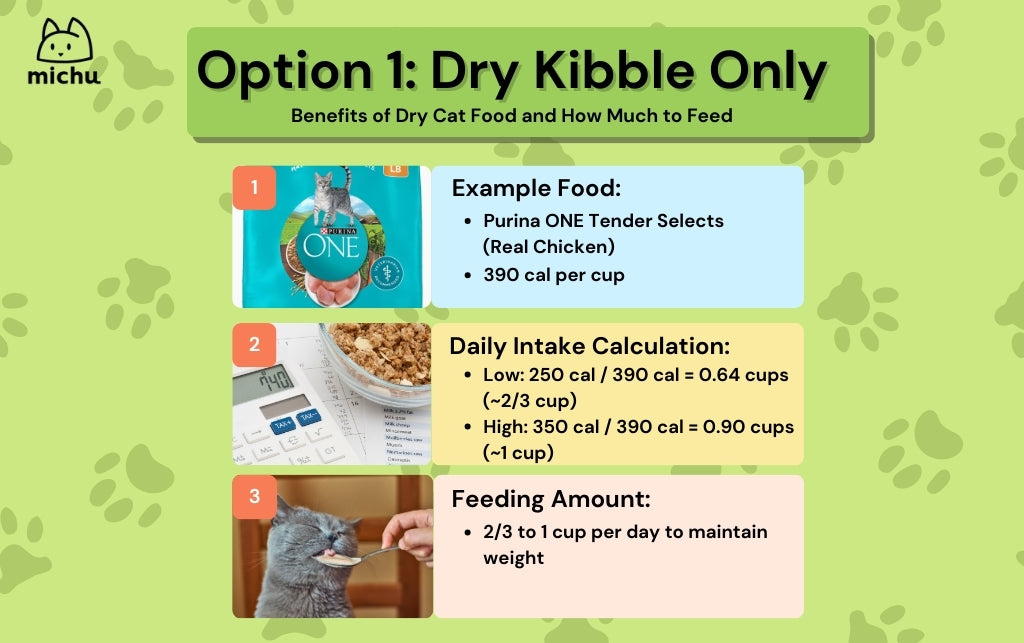
Feed your cat 1/3 to 1/2 cup of dry food daily, depending on age and activity level. Adjust portions based on your cat’s weight and health. Always consult your veterinarian for personalized advice. Ensure fresh water is available at all times to keep your cat hydrated.
What Is The Portion Size For Dry Food For Cats?
Feed adult cats 1/4 to 1/2 cup of dry food daily. Adjust based on activity and health. Always provide fresh water. Consult a vet for specific dietary needs.
How Much Dry Cat Food Per Day In Cups?
Feed your cat 1/4 to 1/2 cup of dry food daily, depending on its weight and activity level. Check the packaging for specific feeding guidelines and consult your vet for personalized advice. Proper portions ensure your cat maintains a healthy weight.
What Is The 25 Rule For Cat Food?
The 25 rule for cat food means the food must contain at least 25% of the named ingredient. If the cat food is labeled “Chicken Dinner,” it must have at least 25% chicken. This ensures the product has a significant amount of the specified ingredient.
Conclusion
Feeding your cat the right amount of dry food is crucial. Balance is key for their health. Always check the packaging for guidelines. Consult your vet for personalized advice. Consider your cat’s age and activity level. A playful kitten needs more calories than a senior cat.
Watch your cat’s weight and adjust portions as needed. Too much food can cause obesity. Too little might lead to malnutrition. Regular check-ups help monitor their health. Your cat’s happiness shows in their energy. Proper feeding keeps them healthy and active.
You can enjoy many years together with the right care.

Similar Posts