Are you a proud cat parent wondering how much food your furry friend needs each day? You’re not alone.
Ensuring your cat gets the right amount of food is crucial for their health and happiness. But with so many conflicting opinions out there, it can feel overwhelming. How do you know if you’re feeding your cat too much or too little?
The answer might surprise you. In this guide, we’ll unravel the mystery behind the right amount of cat food, helping you give your feline the balanced diet they deserve. Stick with us, and you’ll discover the perfect feeding plan tailored to your cat’s unique needs, ensuring they live their best life.
Understanding Cat Nutritional Needs
Understanding your cat’s nutritional needs is crucial for their overall health and well-being. Cats are obligate carnivores, meaning they require specific nutrients found primarily in animal tissues. Unlike humans and dogs, cats cannot survive on plant-based diets alone. This makes understanding their dietary requirements essential for any cat owner.
Understanding Protein Needs
Cats need a higher percentage of protein in their diet compared to other animals. Their bodies are designed to process proteins efficiently, converting them into energy. Make sure your cat’s food lists a high-quality source of protein as the first ingredient.
Read labels carefully. A diet rich in animal proteins supports muscle maintenance and repair. This is vital for your cat’s active lifestyle.
Importance Of Taurine
Taurine is an amino acid essential for a cat’s heart health and vision. Unlike other animals, cats cannot produce taurine in sufficient quantities on their own. It must be included in their diet.
Without adequate taurine, cats can suffer from severe health issues. Check your cat food packaging to ensure it meets taurine requirements.
Maintaining Proper Hydration
Cats often don’t drink enough water. A diet that includes wet food can help maintain hydration. Wet food naturally provides moisture, aiding kidney function and overall health.
Consider a water fountain to encourage your cat to drink more. Cats are more likely to drink from moving water.
Balancing Calories And Weight
Obesity is a common problem in domestic cats. Monitor your cat’s weight and adjust food portions accordingly. Use feeding guidelines as a starting point, but be ready to make changes based on your cat’s activity level and body condition.
Consult your vet for personalized advice. They can help you determine the right amount of food based on your cat’s unique needs.
How do you ensure your cat gets the nutrition they need? Observing your cat’s behavior and health can provide clues. If you notice lethargy or weight changes, it may be time to reassess their diet.
Factors Influencing Feeding Amounts
Deciding how much cat food to serve daily isn’t simple. Various factors play a role in determining the right portion size. It’s important to consider these elements to maintain your cat’s health and happiness.
Age And Life Stage
Kittens need more food than adult cats. They grow fast and require extra nutrients. Senior cats, on the other hand, have different dietary needs. They may eat less and need specific nutrients for aging bodies. Always check the feeding guidelines on cat food packages. They usually offer age-specific recommendations.
Weight And Body Condition
Weight significantly impacts feeding amounts. Overweight cats need fewer calories. Underweight cats need more to reach a healthy weight. Body condition scores help assess a cat’s weight status. Consult your vet for an accurate assessment. Adjust the feeding amounts accordingly.
Activity Level
Active cats burn more calories. They need more food to fuel their energy. Less active cats, like indoor ones, may need less. Monitor your cat’s activity level. Adjust their food intake to match their energy needs. This helps maintain a healthy weight.
Types Of Cat Food
Determining the daily amount of cat food depends on the type and nutritional needs of your cat. Dry kibble often requires measuring cups, while wet food might be served in smaller portions. Balancing these ensures your cat receives the right nutrients without overfeeding.
Understanding the types of cat food available can help you make the best choice for your feline friend. Cats have specific nutritional needs, and the type of food you choose plays a significant role in their overall health. Let’s explore the main types of cat food to help you decide what’s best for your pet.Dry Food
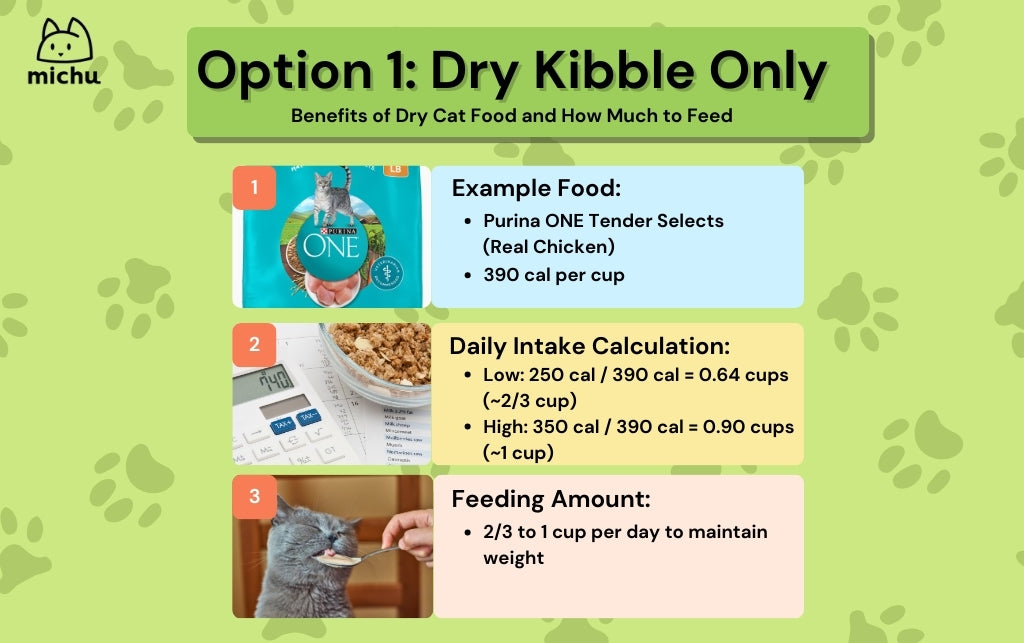
Dry food, often referred to as kibble, is a popular choice among cat owners. It’s convenient and can be left out for your cat to graze throughout the day. However, dry food typically has lower moisture content, which might not be ideal for cats that don’t drink enough water. I remember switching my cat to a mix of dry and wet food when I noticed her water intake was low. Consider whether your cat tends to drink a lot of water or not when choosing kibble.Wet Food
Wet food comes in cans or pouches and contains a higher moisture content than dry food. This can be beneficial for cats who need more hydration in their diet. Many cats find wet food more palatable, making it a good option for picky eaters. My cat, Max, always gets excited when he hears the sound of the can opening. Do you have a picky eater at home? Wet food might just be the answer.Raw Diet
A raw diet, also known as a BARF (Biologically Appropriate Raw Food) diet, includes raw meat, bones, and organs. It’s designed to mimic what cats would eat in the wild. Some cat owners swear by the raw diet for its potential health benefits, like shinier coats and more energy. Yet, it’s crucial to ensure the diet is balanced and safe. Are you ready to commit the time and effort it takes to prepare raw meals for your cat? It’s a decision that requires careful consideration. By understanding these types of cat food, you can tailor your cat’s diet to their specific needs. Which type do you think your cat would prefer?Recommended Daily Feeding Amounts
Feeding your feline friend the right amount of food daily is crucial for their health and happiness. But how much should you actually give? The answer varies depending on their age, lifestyle, and health needs. Whether you have a playful kitten or a wise senior cat, understanding the recommended daily feeding amounts can make a world of difference. Let’s dive into specific guidelines for kittens, adult cats, and seniors.
Kitten Feeding Guidelines
Kittens are bundles of energy and require more calories to support their rapid growth. You might notice your tiny furball munching on food all day. It’s essential to provide small, frequent meals to keep up with their high-energy needs. Generally, kittens need about 3 to 4 servings of food per day. This ensures they have enough energy to play, explore, and grow.
Consider your kitten’s weight and breed when measuring portions. A simple way to gauge is by using the weight chart provided on the cat food packaging. Have you ever wondered if your kitten is getting enough nutrients? Observing their playful behavior and healthy weight gain can be great indicators.
Adult Cat Feeding Recommendations
Adult cats require a balanced diet to maintain a healthy weight and prevent obesity. Typically, feeding them 2 meals a day is recommended. Monitor your cat’s activity level to adjust portions accordingly. A highly active cat may need a bit more than the standard serving size.
Reading food labels and understanding calorie content can be beneficial. Ever noticed how your cat seems more active after a meal? Providing the right amount keeps them energetic without gaining unwanted pounds. Your cat’s vet can offer personalized advice based on their specific needs.
Senior Cat Feeding Needs
Senior cats have different nutritional requirements than their younger counterparts. They generally need fewer calories due to decreased activity levels. It’s wise to consult your vet about the best diet for your aging cat, as their needs can vary greatly.
Feeding them once or twice a day with smaller portions can help manage their weight. Do you find your senior cat slowing down? Adjusting their diet can help maintain their health and vitality. Special senior cat foods are available, formulated to cater to their unique needs.
Remember, each cat is unique, and observing their behavior and health can guide you in adjusting feeding amounts. Are you feeding your cat correctly? Finding the perfect balance can enhance their well-being and happiness. Regularly consulting with your vet ensures your furry friend gets the nutrition they need.
Adjusting Portions For Weight Management
Feeding your cat the right amount of food is crucial for maintaining their health and happiness. Adjusting portions for weight management is key to ensuring your cat stays fit. This involves knowing when to cut back or when to add a little more to their bowl. Have you ever wondered if you’re giving your furry friend the right amount? Let’s dive into some practical ways to make sure your cat is getting just what they need.
Identifying Overweight Cats
First, let’s talk about spotting an overweight cat. You might notice your cat is less active or struggles to jump onto their favorite perch. Perhaps you can’t feel their ribs easily. These are signs of a weight issue. Keep an eye on their body shape and energy levels.
To help manage their weight, consider reducing portions gradually. Start by cutting back a little at each meal. You can also switch to a lower-calorie food. Watch how your cat responds to these changes over a few weeks. Are they more energetic? Are they moving more freely?
Increasing Portions For Underweight Cats
On the flip side, you might have a cat that seems a bit too thin. If their ribs are visible or they seem weak, it might be time to increase portions. A healthy cat should be active and have a shiny coat.
Try adding a little more food each day. You can choose a higher-calorie option or include some wet food to tempt them. Monitor their weight gain to ensure it’s healthy. Does their energy pick up? Are they more playful?
Weight management isn’t just about the scale—it’s about ensuring your cat lives a vibrant life. Are you ready to adjust those portions and see your cat thrive?
:strip_icc()/how-much-canned-food-to-feed-554404-Final-4e9268619c4847eaac29498a6a17d88c.png)
Credit: www.thesprucepets.com
Common Feeding Mistakes To Avoid
Feeding cats too much can lead to obesity and health issues. Aim for feeding one to two cups daily, depending on your cat’s size and activity level. Always adjust portions based on your cat’s age, weight, and health needs to ensure balanced nutrition.
Feeding your feline friend might seem straightforward, but there are common pitfalls many cat owners unknowingly fall into. These mistakes can lead to health issues or behavioral problems for your pet. By understanding these common feeding mistakes, you can ensure your cat remains healthy and happy.Overfeeding Risks
Overfeeding is a frequent mistake that many cat owners make. It’s easy to misjudge portion sizes, especially with those adorable eyes pleading for more. However, overfeeding can lead to obesity, which increases the risk of diabetes, liver disease, and joint problems. Think about the last time you overfed your cat. Did they finish the bowl, only to lie around sluggishly afterward? Cats naturally love to snack, but it’s vital to control portions. Using a measuring cup can help ensure they receive just the right amount.Ignoring Water Intake
Many cat owners focus solely on food and neglect the importance of water. Cats, especially those on a dry food diet, need adequate water to prevent urinary tract infections and kidney disease. But how often do you see your cat at their water bowl? Ensure your cat always has fresh water available. Consider using a pet water fountain to encourage them to drink more. Remember, water is as crucial as food for your cat’s well-being. Have you considered tracking your cat’s water intake like you do with food? Doing so can provide insights into their health and prevent future issues. A healthy cat is a well-hydrated one!Expert Tips For Balanced Cat Diet
Determining the right amount of cat food is crucial for a balanced diet. Typically, cats need about 1/3 to 1/2 cup of dry food daily. Consider your cat’s age, weight, and activity level. Always consult a vet for personalized advice.
Ensuring a balanced diet for your cat is crucial for their health and happiness. With so many options and opinions out there, it’s easy to feel overwhelmed. But don’t worry—understanding the essentials can help you make informed choices. Here are some expert tips to guide you in feeding the right amount of cat food per day for a balanced diet.Variety In Diet
Cats, much like humans, benefit from a variety of foods. Offering different flavors and textures can keep mealtime exciting and ensure they get a range of nutrients. Imagine eating the same meal every day—boring, right? Mixing dry kibble with wet food is a simple way to add variety. While dry food is great for dental health, wet food helps with hydration. If your cat seems uninterested in their meals, try rotating proteins like chicken, beef, or fish. Consider any special dietary needs your cat might have. For instance, my cat has a sensitive stomach, so I introduced hypoallergenic options. This simple change improved her energy levels and coat condition. Could a small adjustment in diet make a big difference for your cat too?Monitoring Health And Behavior
Keeping an eye on your cat’s health and behavior is essential. A balanced diet plays a key role in how your cat looks and feels. Are they maintaining a healthy weight? Is their coat shiny and soft? Regular vet check-ups can help you track your cat’s health and adjust their diet as needed. Your vet can provide valuable insights into what might be lacking or excessive in their current diet. Observe any changes in behavior. If your cat seems lethargic or unusually hyperactive, it could relate to their diet. When I noticed my cat had less energy, a quick consultation revealed she needed more protein. A slight tweak to her diet made her more playful and alert. So, what are you noticing about your cat’s health and behavior? Could their diet be the missing piece to their well-being puzzle?
Credit: www.instagram.com

Credit: michupet.com
Frequently Asked Questions
How Much Food Should A Cat Eat In 24 Hours?
A cat typically needs 200-300 calories daily. Feed adult cats 2-3 small meals. Adjust portions based on age, weight, and activity level. Always provide fresh water. Consult a veterinarian for specific dietary needs.
How Much Dry Cat Food Per Day In Cups?
Feed your cat 1/4 to 1/2 cup of dry food daily. Adjust based on age, weight, and activity. Always provide fresh water. Consult your vet for personalized advice.
Is 2 Meals A Day Enough For A Cat?
Cats can thrive on two meals a day. Ensure the meals are balanced and portioned properly. Consult your vet to tailor the diet to your cat’s specific needs. Regular feeding times help maintain their routine and health.
What Is The 25 Rule For Cat Food?
The 25% rule requires cat food labeled as “dinner” to contain at least 25% of the named ingredient. This ensures transparency in pet food labeling, helping pet owners make informed decisions about their cat’s diet.
Conclusion
Choosing the right amount of cat food is vital. It affects your cat’s health and happiness. Each cat is unique. Consider age, weight, and activity level. Always check the feeding guidelines on the package. Consult with a veterinarian for personalized advice.
Monitor your cat’s weight and adjust portions if needed. A balanced diet helps prevent health issues. Keep fresh water available at all times. Proper feeding ensures your cat stays healthy and active. Your furry friend deserves the best care. Make informed decisions for your cat’s well-being.
Feed wisely, love deeply, and enjoy a happy cat.