Are you tired of constantly cleaning up after your cat’s hairballs? You’re not alone.
Hairballs are a common issue for many cat owners, and they can be as frustrating for you as they are uncomfortable for your furry friend. Imagine a life where your cat is happier, healthier, and hairball-free. Sounds great, right? In this guide, we’ll reveal simple yet effective strategies to help reduce hairballs in cats, making your life easier and your cat’s life more comfortable.
Stick with us to discover tips that could transform your cat’s well-being and your home environment.
Credit: wetnosespetsitting.com
Causes Of Hairballs
Cats often get hairballs from grooming themselves. Loose hair ends up in their stomachs. Regular brushing helps.
Reducing hairballs in cats often begins with understanding their causes. Knowing why your feline friend struggles with these pesky hairballs can help you take effective steps in prevention. Let’s dive into the common causes of hairballs and how you can address them.Excessive Grooming
Cats are natural groomers. They spend a significant portion of their day licking their fur. This habit leads to the ingestion of loose fur, which accumulates in their stomach. If your cat grooms more than usual, it might be stress-related, and addressing the root cause can reduce hairball formation.Shedding Season
During certain times of the year, cats shed more fur than usual. This seasonal shedding increases the amount of hair they swallow. Regular brushing during these periods can help manage loose fur before your cat ingests it.Dietary Deficiencies
A poor diet might not provide the nutrients needed for a healthy coat. Dry and brittle fur can break off easily, increasing the amount of hair swallowed. Consider adding omega-3 fatty acids to your cat’s diet to promote a shinier, healthier coat.Underlying Health Issues
Sometimes, frequent hairballs can signal underlying health problems. Conditions like skin allergies or gastrointestinal issues might cause excessive grooming. If you notice persistent hairball problems, a visit to the vet can rule out any serious health concerns.Age And Breed Factors
Some cats are more prone to hairballs due to their breed or age. Long-haired breeds like Persians might experience more hairballs than short-haired ones. Older cats might also struggle with hairballs as their grooming habits change with age. Understanding these causes can help you better manage your cat’s grooming habits and diet. Have you noticed any specific triggers for your cat’s hairballs? Share your experiences in the comments below!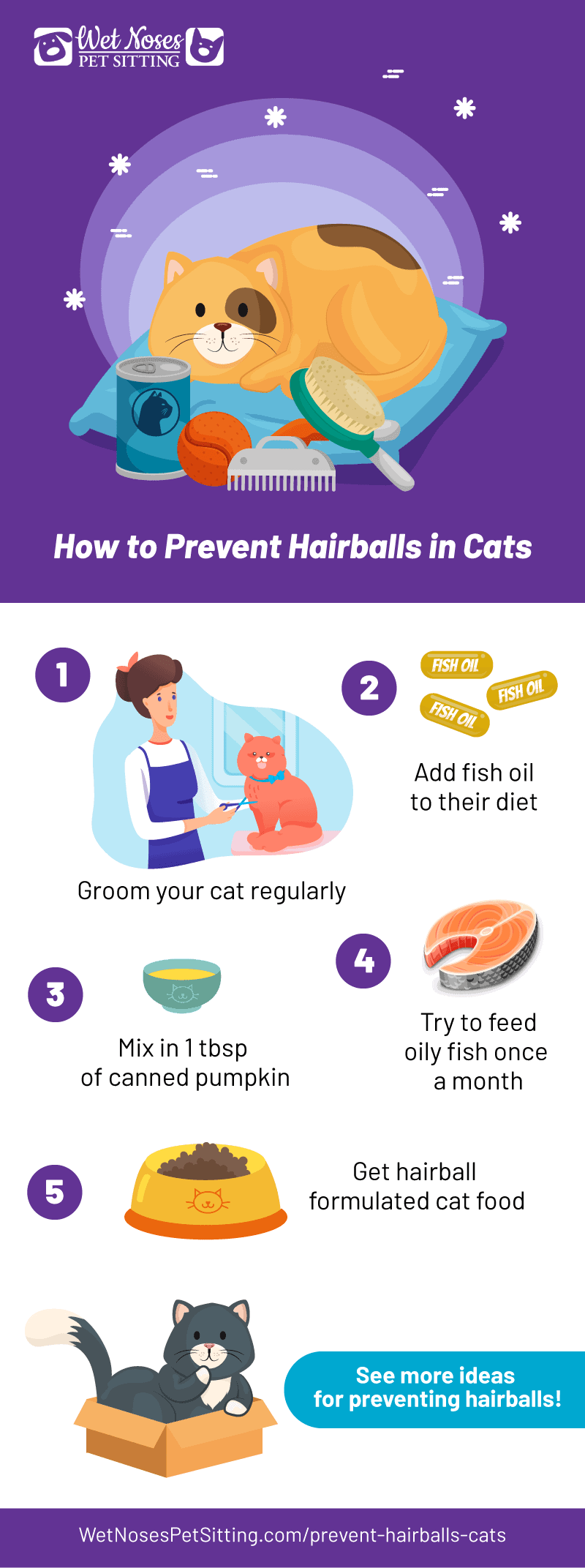
Credit: wetnosespetsitting.com
Dietary Adjustments
Adjusting a cat’s diet can help reduce hairballs. More fiber can aid digestion and prevent hair from clumping. Regular grooming and a balanced diet keep your cat healthy and comfortable.
Cats are known for their fastidious grooming habits, but this can often lead to the unwelcome issue of hairballs. If you’re looking to reduce hairballs, one effective strategy is to make dietary adjustments. What your cat eats can play a significant role in managing and minimizing hairball formation. By tweaking your feline friend’s diet, you can help them maintain a healthy digestive system and reduce the frequency of hairballs.High-fiber Foods
Introducing high-fiber foods into your cat’s diet can be a game changer. Fiber aids in moving hair through the digestive tract, minimizing the chance of hairball formation. Consider adding canned pumpkin or specialized high-fiber cat treats. These additions are not only tasty but also beneficial in promoting regular bowel movements. Always check with your vet to ensure any new food is suitable for your cat’s specific health needs.Specialized Cat Food
Another effective option is specialized cat food formulated to reduce hairballs. These products are designed with ingredients that help minimize hairball problems. When I switched my cat to a hairball control formula, I noticed fewer messes around the house and a happier cat. It’s a simple yet impactful change that can make a big difference. Have you ever thought about how the right food can impact your cat’s health? Selecting a specialized formula might be the solution you need. Always read labels carefully and look for products that specifically mention hairball control. Your cat will thank you for it!Regular Grooming
Keeping your cat groomed isn’t just about keeping them looking pretty; it’s also crucial for their health. Regular grooming is your secret weapon against hairballs. It’s a simple practice that can dramatically reduce the amount of fur your cat swallows. Plus, it’s a great way to bond with your feline friend. Let’s dive into some practical grooming techniques.
Brushing Techniques
Brushing your cat regularly is the first step in reducing hairballs. Use a brush suited for your cat’s coat type—short hair, long hair, or something in between. Brush gently, starting from the head and moving towards the tail. This removes loose hairs before they become part of a hairball.
Try different brushes to find one your cat likes. Some cats enjoy a soft bristle brush, while others prefer a slicker brush. If your cat resists, start slow and offer treats as encouragement. Consistent brushing can cut down on hairballs and keep your cat’s coat shiny and healthy.
Bathing Tips
Bathing a cat can be challenging, but it helps with hairballs. If your cat tolerates baths, use a mild cat shampoo to wash away loose fur. Keep bath time short to avoid stressing your cat.
Ensure the water is warm, not hot. Use a non-slip mat in the tub to help your cat feel secure. Rinse thoroughly to remove all shampoo residue. Bathing isn’t necessary for every cat, but it can be a helpful addition to your grooming routine.
Have you ever thought about how much grooming your cat actually needs? Regular grooming is not just a chore but a necessity. It’s an opportunity to keep your cat healthy and happy. Are you ready to make grooming a regular part of your routine?
Hydration Importance
Maintaining proper hydration is crucial for your cat’s overall health. Cats that drink enough water have less risk of developing hairballs. Water helps the digestive system work efficiently, pushing swallowed hair through the gut. It’s essential to encourage your cat to drink more water daily.
How Hydration Helps Prevent Hairballs
When cats are hydrated, their digestion improves. Hydrated cats have smoother bowel movements, reducing hairball formation. Water keeps the gut moist, aiding in the passage of hair.
Signs Your Cat Needs More Water
Look for signs like dry gums and reduced energy. Cats with low hydration might have rough fur. Notice these symptoms early for better prevention.
Ways To Encourage Drinking
Place multiple water bowls around the home. Cats prefer fresh water, so change it daily. Consider using a pet water fountain. Flowing water attracts cats and encourages drinking.
Wet Food Benefits
Wet cat food contains more water than dry kibble. Offering wet food increases your cat’s water intake. It also provides essential nutrients in a hydrating form.
Monitor And Adjust
Keep track of your cat’s water consumption. Adjust their routine if they aren’t drinking enough. Consult a vet if you notice persistent dehydration signs.
Lifestyle Changes
Hairballs are a common issue for cats. They can be uncomfortable for your pet. Making lifestyle changes can help reduce hairballs significantly. Focus on play, exercise, and stress reduction. These adjustments can improve your cat’s overall health.
Play And Exercise
Encourage your cat to play every day. Playtime keeps your cat active and healthy. Interactive toys can stimulate your cat’s mind. Physical activity helps the digestive system function better. A well-functioning system reduces hairball formation. Set aside a few minutes each day for play. This routine can make a big difference.
Stress Reduction
Stress can lead to more hairballs. Create a calm environment for your cat. Soft bedding and quiet spaces help your cat relax. Consider playing soothing music during the day. A relaxed cat will groom less aggressively. Less grooming means fewer hairballs. Regular routines can also lower stress levels. Routine brings comfort to cats.
Using Hairball Remedies
Cats often experience hairballs due to grooming. Incorporating specialized hairball remedies can significantly reduce this issue. These remedies help manage hairball formation, ensuring your feline friend’s comfort and health.
Reducing hairballs in cats can be a challenge for pet owners. Hairballs form when cats groom themselves and ingest loose fur. Using hairball remedies can help manage this issue. These remedies can be natural or commercial. Each option offers unique benefits for your furry friend.Natural Remedies
Natural remedies are safe and gentle for cats. Regular brushing can reduce the amount of loose fur. Less fur means fewer hairballs. Ensure your cat’s diet includes fiber. Fiber helps move hair through the digestive system. Pumpkin is a great source of fiber. Add a small amount to your cat’s food. Olive oil is another natural option. It lubricates the digestive tract. Add a teaspoon to your cat’s meal weekly. Always consult with a vet before trying new remedies.Commercial Products
Commercial products offer convenience and effectiveness. Hairball control cat foods are widely available. These foods contain specific nutrients to reduce hairballs. Check labels for added fiber and omega-3 oils. Hairball treats also help manage this issue. They are tasty and easy to give. Look for treats with natural ingredients. Hairball gels or pastes are another option. They lubricate the digestive tract, aiding fur passage. Always choose reputable brands. Read reviews and consult your vet for recommendations.Veterinary Consultation
Hairballs are common in cats, but they shouldn’t be frequent. If your cat often deals with hairballs, it could indicate a problem. A veterinary consultation can help identify the root cause. This ensures your cat remains healthy and happy. Discussing your cat’s health with a professional can offer peace of mind. It can also prevent potential complications.
When To Seek Help
Not all hairballs require a vet visit. But, certain signs should raise concern. If your cat vomits frequently or shows signs of distress, seek help. Changes in appetite or lethargy might also indicate a problem. These symptoms shouldn’t be ignored. A vet can provide timely advice or treatment.
Potential Medical Issues
Chronic hairballs may signal underlying medical issues. Digestive blockages can occur if hair accumulates in the intestines. This can be serious and requires immediate attention. Your vet might check for allergies or skin conditions. These can cause excessive grooming, leading to more hairballs. Identifying such issues early can prevent complications. Always prioritize your cat’s well-being by consulting a vet.
Credit: smallpetselect.com
Frequently Asked Questions
How To Reduce Cat Hairballs Naturally?
Feed your cat high-fiber foods to improve digestion. Regular grooming reduces loose fur. Offer hairball control treats. Provide fresh water to prevent dehydration. Encourage play and exercise to boost overall health.
What Is The Best Hairball Relief For Cats?
The best hairball relief for cats includes a high-fiber diet and regular grooming. Specialized hairball control cat food and treats can help. Using a cat-safe lubricant, like petroleum jelly, can also aid in passing hairballs. Always consult your vet for personalized advice and recommendations.
How Do I Help My Cat Stop Throwing Up Hairballs?
Brush your cat regularly to reduce loose fur. Offer a high-fiber diet or hairball formula food. Ensure your cat stays hydrated. Provide hairball prevention treats or gels. Consult a vet if the problem persists.
Does Dry Cat Food Cause Hairballs?
Dry cat food doesn’t directly cause hairballs. Low moisture content might lead to dehydration, worsening hairball issues. Ensure your cat drinks enough water and gets a balanced diet. Regular grooming and specialized hairball formula foods can help manage hairballs effectively.
Conclusion
Reducing hairballs keeps cats healthier and happier. Regular grooming really helps. Try brushing your cat often. Choose the right cat food. Look for formulas that aid digestion. Hydration is crucial. Ensure your cat drinks enough water. Playtime and exercise boost digestion.
So, encourage active play. Monitor your cat’s behavior closely. Visit your vet for advice if needed. Hairballs can be a nuisance. But, with care, they can be minimized. Consistency is key. Small steps make a big difference. Your efforts lead to a healthier, more comfortable cat.
Plus, less cleaning for you!