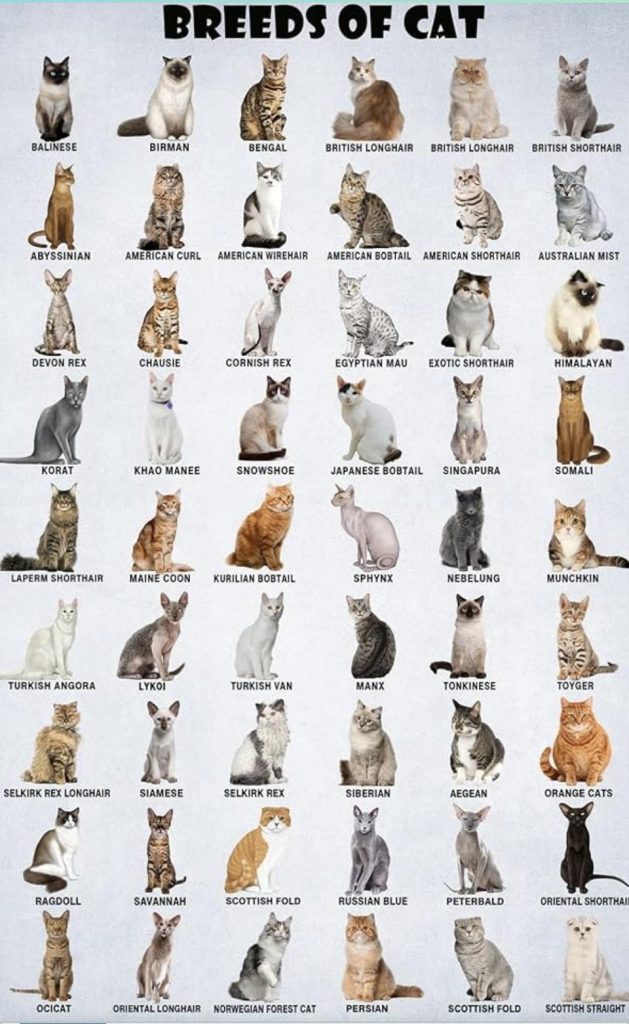
Have you ever found yourself gazing into the eyes of a mysterious feline, wondering, “What breed is this cat?” You’re not alone.
Many cat lovers are curious about the unique characteristics that define their furry companions. Imagine the thrill of uncovering your cat’s lineage and understanding the traits that make them so special. Knowing your cat’s breed can deepen your connection and help you cater to their unique needs.
By the end of this article, you’ll be equipped with the tools to identify and appreciate the distinct features of various cat breeds. Dive in and satisfy your curiosity!
Common Cat Breeds
Ever wondered about your cat’s breed? Common breeds include the playful Siamese, fluffy Persian, and curious Maine Coon. Each breed has unique traits and personalities, making every cat special in its own way.
Cats come in a delightful array of breeds, each with unique characteristics that can make them fascinating companions. Whether you’re adopting a new feline friend or curious about your current cat’s lineage, knowing the common breeds can help you understand their behaviors and needs better. Let’s dive into some popular cat breeds that you might encounter.Siamese
Siamese cats are known for their striking blue eyes and sleek, short coats. They’re often vocal and enjoy engaging in conversations with their humans. If you have a Siamese, expect them to demand your attention frequently. They thrive in environments where they can be the center of attention.Maine Coon
Have you ever seen a cat that looks like a small lion? That’s likely a Maine Coon. These gentle giants are friendly and often get along well with children and other pets. Despite their size, Maine Coons are known for their playful nature. Their thick fur requires regular grooming, so be prepared for some extra brushing sessions.Persian
Persians are the royalty of the cat world, known for their luxurious long fur and calm demeanor. If you prefer a cat that enjoys lounging rather than climbing the drapes, a Persian might be the perfect match. They require regular grooming to keep their coats in top condition, so keep your brush handy.British Shorthair
With their round faces and plush fur, British Shorthairs are incredibly charming. They tend to be independent, making them ideal for busy households. These cats are not as demanding as some other breeds, but they do appreciate a good play session. Their easy-going nature makes them a great choice for first-time cat owners.Bengal
Imagine having a mini leopard in your home; that’s the Bengal cat. Known for their energetic and adventurous spirit, Bengals love to explore and play. If you have a Bengal, ensure your home is full of engaging activities to keep them entertained. Their unique spotted or marbled coat is a real head-turner. Each breed has its quirks and personality traits. Have you noticed any of these traits in your cat? Understanding your cat’s breed can help you cater to their needs more effectively. Plus, knowing their background can make your bond even stronger.
Credit: www.reddit.com
Identifying Physical Traits
Determining a cat’s breed involves observing distinct physical traits. Look for unique fur patterns, ear shapes, and tail length. Eye color and body size also provide clues. These features help identify whether your feline friend belongs to a specific breed or is a lovely mix.
Understanding what breed your cat might be can be both fascinating and challenging. Identifying physical traits is a crucial step in determining your cat’s breed. Cats come in various shapes, sizes, and colors, each with unique characteristics. These traits often offer clues about their lineage. Let’s dive into some key physical traits you can use to identify your feline friend.Coat Colors And Patterns
Cats flaunt a variety of coat colors and patterns that can hint at their breed. Whether your cat has a solid color, stripes, or spots, each pattern has its own story to tell. – Solid Colors: Black, white, and grey are common solid colors. If you have a cat with a single, rich color, it might belong to breeds like the Russian Blue or the Bombay. – Tabby Patterns: These are very common and feature stripes, swirls, or spots. The classic “M” on a tabby’s forehead is a signature sign. Tabby patterns can be found in many breeds, including the Maine Coon and the American Shorthair. – Bicolor and Tricolor: Cats with two or three colors, like tuxedo or calico cats, are often mixed breeds. However, some purebreds, like the Turkish Van, also display bicolor patterns. – Color Points: Cats like the Siamese have a unique color-point pattern, where their ears, face, paws, and tail are darker than the rest of their body.Distinctive Features
Distinctive features go beyond coat patterns and include specific physical attributes that are unique to certain breeds. – Ear Shape and Size: The Scottish Fold is known for its folded ears, while the Oriental Shorthair boasts large, bat-like ears. Notice your cat’s ear shape as it can be a telling feature. – Body Build: Some cats are lean and muscular, like the Abyssinian, while others are large and fluffy, like the Maine Coon. Observing your cat’s build can narrow down the possibilities. – Eye Color and Shape: Cats like the Persian have large, round eyes, often in striking colors. The Siamese, on the other hand, is known for its almond-shaped blue eyes. Pay attention to these eye traits, as they can provide clues about breed. – Tail: A cat’s tail can vary significantly. For example, the Manx is famous for its lack of a tail, while the Japanese Bobtail has a distinctive bobbed tail. Next time your cat curls up on your lap, take a closer look at these traits. Are there any features that stand out or remind you of a specific breed? Identifying these physical traits not only helps in determining your cat’s breed but also deepens the connection you share. If you have a curious mix, embrace the mystery—it makes your feline even more unique!Behavioral Characteristics
Cats are unique creatures with diverse behaviors. Each breed has its own charm. Understanding these traits helps in identifying the breed. Observing a cat’s behavior provides clues to its lineage. Two major traits are activity levels and social temperaments. These features highlight the essence of a cat’s breed.
Activity Levels
Some cats are bundles of energy. They enjoy constant play and exploration. Breeds like the Bengal and Abyssinian are very active. They love climbing and chasing toys. Other breeds, like the Persian, are more laid-back. They prefer lounging and short play sessions. Recognizing activity levels can help identify the breed.
Social Temperaments
Social temperaments vary widely among cat breeds. Siamese cats are very vocal and affectionate. They seek attention and enjoy interacting with humans. In contrast, the Russian Blue is more reserved. They form strong bonds but require personal space. Understanding a cat’s social temperament aids in breed identification. Each cat’s social behavior is a window into its breed’s nature.

Credit: cfa.org
Genetic Testing For Cats
Understanding the genetic makeup of your feline friend can be an exciting journey. Genetic testing for cats has become a popular tool for pet owners who want to know more about their cat’s breed, potential health issues, and unique traits. Whether you’re curious about your cat’s lineage or concerned about inherited diseases, genetic testing can offer valuable insights. Imagine discovering that your seemingly ordinary tabby has a rich heritage of exotic breeds! Let’s dive into how you can uncover these mysteries through genetic testing.
Dna Testing Methods
There are several methods available for DNA testing in cats. Each method varies in precision and cost. The most common way is to use a cheek swab or blood sample, which is then sent to a lab for analysis.
Many companies offer at-home kits. These kits make the process simple and convenient. You collect the sample, mail it, and wait for the results.
Some tests are more comprehensive than others. It’s important to choose a test that matches your goals. Are you interested in breed identification or health screening?
Interpreting Results
Once you receive your cat’s genetic test results, the next step is interpreting the information. These results usually include a breakdown of your cat’s breed composition.
Understanding health risks can be crucial. Genetic testing often highlights potential health issues, allowing you to take preventative measures.
Results may also reveal unique traits. You might discover your cat has a predisposition for certain behaviors or physical characteristics.
It’s essential to remember that genetic testing provides probabilities, not certainties. How will you use this information to enhance your cat’s life?
Genetic testing offers a window into the world of your feline friend. With the right approach, you can unlock secrets about your cat’s breed and health. Ready to discover what makes your cat truly unique?
The Role Of Cat Registries
Cat registries play a crucial role in determining the breed of your feline friend. These organizations set the standards for each breed and ensure that breeders comply with these guidelines. If you’ve ever wondered about the lineage of your cat, registries are your go-to source. They offer a structured way to verify and register your pet, adding a layer of trust and authenticity.
Understanding Breed Standards
Breed standards are like blueprints for each cat breed. They outline physical characteristics, temperament, and even genetic traits. When you think of a Siamese, you expect specific features—registries ensure these expectations are met. Standards help maintain consistency and quality across breeds. This means when you buy a registered cat, you’re getting a genuine representation of the breed.
These standards are not just about looks; they also address health and behavior. A breed standard might specify a cat’s eye shape or fur texture. But it also ensures your cat has a healthy disposition and good temperament. This is why understanding breed standards is essential for anyone considering breeding or owning a registered cat.
Registration Process
Registering your cat with a reputable registry involves a straightforward process. You start by submitting proof of your cat’s pedigree. This often includes documentation from its breeder. Once you’ve provided the necessary papers, the registry reviews them for authenticity.
Why go through this process? Registration adds value to your cat. It’s a mark of quality and authenticity. Some registries offer perks like participation in shows or access to exclusive breeding networks. By registering, you ensure your cat’s lineage is recognized, which can be crucial if you plan to breed or sell in the future.
Have you ever thought about what goes into verifying a cat’s breed? The registration process is meticulous, ensuring every detail aligns with breed standards. This guarantees that each registered cat truly represents its breed, giving you peace of mind about your feline companion’s heritage.
Next time you cuddle your cat, consider its lineage and how registries play a role in safeguarding breed integrity. Does your cat meet the standards set by these organizations? Understanding this can deepen your appreciation for your pet’s unique qualities.
Mixed Breed Cats
Mixed breed cats, often called moggies, bring diversity to our homes. They possess a unique blend of characteristics from various feline ancestors. These cats do not belong to any specific breed. Their appearance and behavior are a charming mix of many genes.
Challenges In Identification
Identifying mixed breed cats can be tricky. They lack specific breed traits. Their varied looks make it hard to trace ancestry. Cat registries do not recognize them as a separate breed. This adds to the challenge of identification.
Mixed breeds often resemble many types of cats. This resemblance confuses owners and breeders. Visual cues alone are not enough to determine their lineage.
Unique Traits
Mixed breed cats boast diverse coat colors. Their patterns are often unpredictable. This unpredictability makes each cat unique. No two mixed breed cats look alike. Their eyes can be any color, adding to their charm.
These cats often show resilience and adaptability. They thrive in various environments. Their genetic diversity may lead to robust health. This makes them less prone to certain breed-specific ailments.
Mixed breed cats also have varied personalities. Each cat has its own quirks and habits. This variety brings joy to any cat lover’s life.
Popular Myths About Cat Breeds
Identifying a cat’s breed can be tricky due to common myths. Many people mistakenly believe all striped cats are tabby. Yet, a variety of breeds can have similar patterns, making it essential to look beyond appearances. Understanding these misconceptions helps in accurately recognizing different breeds.
Understanding cat breeds often leads to confusion. Many myths surround these furry companions. People often believe certain stereotypes about different cat breeds. These myths can shape how we perceive and choose our pets. Let’s explore some common misconceptions and clear the air.Common Misconceptions
Many think all cats are aloof and independent. This isn’t true for every breed. Some breeds, like the Ragdoll, are very affectionate. Others believe Siamese cats are always vocal. While many are chatty, not all Siamese cats meow excessively. Some misconceptions say Persian cats need constant grooming. In reality, regular grooming suffices for most Persians. People often assume black cats are unlucky. This myth can harm their adoption rates. Others think purebred cats are healthier than mixed breeds. Health depends on genetics, not just breed. These misconceptions can affect how we treat and care for our feline friends.Debunking Breed Myths
Let’s debunk these myths with facts. Not all cats are solitary. Breeds like the Maine Coon enjoy human company. Many believe only certain breeds can be trained. Cats, regardless of breed, can learn tricks with patience. The myth that tabby cats are a breed confuses many. “Tabby” refers to a coat pattern, not a breed. Another myth is that all long-haired cats shed excessively. Regular grooming can manage shedding for many long-haired breeds. Understanding the truth helps in choosing the right cat. It ensures we provide the best care and companionship.Credit: www.lemon8-app.com
Tips For New Cat Owners
Identifying a cat’s breed can be challenging yet exciting for new owners. Observing physical traits like fur texture and color patterns can offer clues. Consulting breed charts or a vet can help pinpoint the feline’s origins.
Bringing a new cat into your home is both exciting and a bit daunting, especially if you’re a first-time cat owner. Whether you’re adopting from a shelter or choosing a cat from a breeder, understanding the specific needs of your feline friend is crucial for a happy and healthy companionship. Let’s dive into some practical tips that will help you make informed decisions and create a loving environment for your new pet.Choosing The Right Breed
Selecting the perfect cat breed is more than just picking the one with the cutest face. Consider your lifestyle and home environment. Do you want a playful and active cat, or one that is more laid-back? If you have a busy household with kids, breeds like the Maine Coon or Ragdoll are known for their gentle nature. On the other hand, if you live in a small apartment, a breed like the British Shorthair, which is less active, may be a better fit. Research the breed’s personality traits. Some breeds are vocal and demand attention, while others are more independent. A friend once chose a Siamese because of its social nature but was surprised by its constant chatter. This taught her the importance of understanding breed characteristics beforehand.Understanding Cat Needs
Cats, regardless of breed, have specific needs that must be met. Ensuring a balanced diet is essential. Consult your vet to choose high-quality cat food that suits your cat’s age and health. Cats love routine. Feeding, playtime, and grooming should be consistent. Does your cat have a cozy spot to rest? Cats need a safe space where they can retreat and relax. Interactive toys and scratch posts are not just extras; they’re necessities. They keep your cat entertained and prevent destructive behavior. Remember, a bored cat can become a mischievous one. Finally, regular vet check-ups are non-negotiable. They ensure your cat stays healthy and any potential issues are caught early. By understanding and catering to your cat’s needs, you’ll nurture a loving and fulfilling relationship. Are you ready to welcome a furry friend into your life?Frequently Asked Questions
How Do I Identify My Cat Breed?
To identify your cat’s breed, examine its physical traits such as fur, color, and size. Consult a veterinarian or use online breed identification tools for accurate results. Consider genetic testing for more precise identification.
Can Google Identify Cat Breeds?
Google Lens can identify cat breeds using image recognition technology. Results may vary based on image quality. For precise identification, consult a veterinarian or a breed expert.
What Is The Cat Breed Ai Identifier?
A cat breed AI identifier uses machine learning to recognize and classify cat breeds from images. It analyzes features like fur color, patterns, and facial structure to provide accurate breed information. This tool is useful for breeders, veterinarians, and cat enthusiasts wanting to learn more about specific cat breeds.
What Is Taylor Swift’s Cat Breed?
Taylor Swift’s cat, Olivia Benson, is a Scottish Fold. This breed is known for its distinctive folded ears.
Conclusion
Identifying your cat’s breed can be fun and enlightening. It helps you understand their behavior better. Knowing the breed can guide you in providing proper care. Always pay attention to your cat’s unique traits. They might surprise you with their quirks.
Visit your vet for expert advice on breed identification. Online resources and communities can also be helpful. Engage with other cat owners. Share experiences and tips. Remember, each cat is special. Celebrate their uniqueness. Understanding your cat’s breed is just the beginning.
Enjoy the journey of discovery with your feline friend.