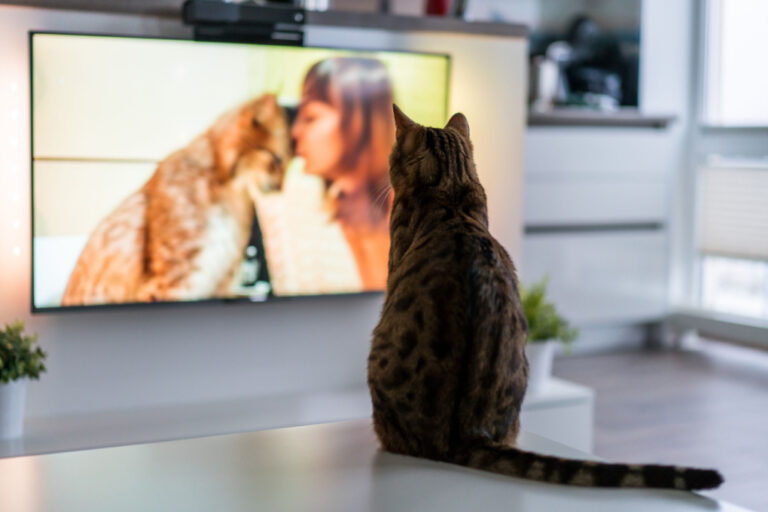
Have you ever caught your cat staring at the television screen? It’s a curious sight that makes you wonder, “Can cats really watch TV?”
You’re not alone in your curiosity. Many pet owners like you find themselves fascinated by their feline friends’ seemingly captivated gaze. Whether it’s the flicker of colors, the movement, or the sounds, something about the TV grabs their attention. But what’s really going on in your cat’s mind when they’re perched in front of your favorite show?
Understanding this behavior can help strengthen your bond and create a more enriched environment for your furry companion. Dive in to discover what science has to say and learn how you can make TV time entertaining for both you and your cat.
Feline Visual Perception
Cats can watch TV due to their keen visual perception. Quick movements and bright colors catch their attention. Their eyes are sensitive to flickering images, making TV interesting for them.
Understanding how cats perceive the world can be as intriguing as watching them curiously stare at a TV screen. Cats have a unique visual system that differs from humans in several ways. Their perception is tailored for hunting and survival, which impacts how they interact with moving images on a screen.How Cats See Colors
Cats do not see the world in black and white, but their color perception is limited compared to humans. They mainly see shades of blue and green. Red hues appear more like grayish colors to them. This is why your feline friend might not notice a red toy as quickly as a blue one. When watching TV, colorful cartoons might not captivate them as much as programs with lots of motion.Motion Detection
Cats are natural hunters, and their eyes are designed to detect motion effectively. They can spot even the slightest movement from a distance. This ability is why fast-moving scenes on TV can catch their attention. If you’ve ever noticed your cat trying to “catch” something on the screen, it’s because their eyes are tuned to detect movement, making TV shows with rapid action appealing to them.Night Vision Capabilities
Cats have excellent night vision, allowing them to see in low light conditions much better than humans. This is due to a higher number of rod cells in their retinas. However, bright screens can sometimes be overwhelming to them. If your cat seems to lose interest in the TV at night, it might be due to the glare from the screen being too intense for their sensitive eyes.Field Of View
A cat’s field of view is wider than ours, around 200 degrees compared to our 180 degrees. This means they can see more of the environment around them without moving their heads. But it also means they might not focus on the screen as much as we do. If your cat seems distracted while watching TV, it might be because they notice other things happening around them. Creating a calm environment might help them focus more on the screen.Practical Tips For Tv Time
Curious if your cat enjoys TV? Observe their reactions to different types of programs. Try shows with animals or fast-moving objects. Pay attention to their body language. Are they relaxed or alert? This can tell you if they’re truly interested or just mildly curious. Consider adjusting the brightness of your TV to make it more comfortable for them, especially in the evening. Small changes can enhance their viewing experience and make TV time a fun bonding activity for both of you.Behavioral Responses To Tv
Cats may appear to watch TV, reacting to movements and sounds on the screen. Their curiosity drives them to explore visuals, especially fast-moving objects. While cats might not understand content, their playful instincts make them engage with certain scenes.
Cats are curious creatures, and many cat owners have noticed their feline friends showing interest in television screens. But what exactly are the behavioral responses of cats when they watch TV? Understanding these behaviors can help you determine whether your cat is genuinely interested or just perplexed by the moving images.Common Reactions
Cats often exhibit a range of reactions when they watch TV. Some may sit calmly and watch the screen, occasionally flicking their tails or ears. Others might become more animated, pawing at the screen as if trying to catch the moving images. You might also see your cat’s eyes dilate, a clear sign of heightened interest or excitement. In some cases, they could even vocalize, chirping or meowing at the scenes unfolding before them. These behaviors suggest that cats might perceive TV as a form of entertainment or a source of intrigue.Factors Influencing Interest
Not all cats will react the same way to TV. Several factors can influence their level of interest. The content on the screen plays a significant role; fast-moving images or shows featuring animals like birds or fish can captivate some cats more than others. The type of TV can also matter. Modern high-definition screens might be more appealing to cats due to their clarity and the way they display motion. Additionally, the cat’s personality is crucial; a naturally curious cat might be more inclined to watch TV than a laid-back one. Have you ever noticed your cat reacting to TV in an unexpected way? Maybe they have a favorite show or become particularly interested when there’s a nature documentary on. Observing these behaviors can provide insights into what captures their attention. By understanding these responses, you can create more engaging environments for your pet, enhancing their well-being and your bond with them.The Science Behind Cats Watching Tv
Cats and TV—it’s a curious combination that intrigues many pet owners. You may have noticed your feline friend sitting next to you, seemingly entranced by the bright screen. What’s going on in their minds? Understanding the science behind cats watching TV can offer some fascinating insights into their behavior.
Visual Capabilities
Cats have unique visual abilities that differ significantly from ours. Their eyes are designed to detect motion effectively, which is why they may seem captivated by the flickering images on the screen. While humans have a higher number of cones for color perception, cats excel with more rods, enhancing their night vision.
Television screens refresh at a speed that aligns with a cat’s ability to perceive rapid movements. This makes the fluid motion on TV appealing to them. However, cats see fewer colors, mainly shades of blue and green, so a vibrant scene may not appear as colorful to them.
Auditory Sensitivity
Cats don’t just watch TV—they listen to it. Their auditory system is finely tuned to pick up high-frequency sounds that often go unnoticed by humans. This means the chirping of birds or the rustling of leaves on the screen might sound like the real deal to your cat.
Try observing your cat when animal sounds are broadcasted. Do they perk up or move closer to the TV? This behavior highlights their acute sensitivity to sound, proving that it’s not just the images but also the audio that captures their attention.
Have you noticed your cat responding to the TV? Next time, pay close attention to what specifically draws their interest. Could it be a certain sound or motion? Understanding these cues can help you create an engaging environment for your feline friend.

Credit: www.reddit.com
Popular Tv Content For Cats
Cats are curious creatures. They explore everything in their environment. Some cats enjoy watching TV. It’s entertaining for them. Discover what TV content cats love.
Nature Shows
Nature shows captivate cats. They love watching birds fly. Squirrels running around fascinate them. Fish swimming in water hold their attention. These movements attract their curiosity. Nature shows provide hours of entertainment.
Animated Features
Animated features charm cats. Bright colors grab their attention. Quick movements keep them engaged. Cats like characters bouncing around. Animation stimulates their playful side. It’s like a digital toy for them.
Safety Considerations
Many cat owners wonder if their furry friends can watch TV. While it’s amusing to see them gaze at the screen, safety is vital. Cats can be curious and attracted to moving images. Ensuring their safety during TV time is important. Let’s explore how to make TV watching safe for your feline companion.
Screen Time Limits
Limiting your cat’s screen time is crucial. Excessive exposure to TV can affect their behavior. Cats are natural hunters. Long screen time might confuse their instincts. Aim for short TV sessions. Ten to fifteen minutes at a time is enough. This keeps them engaged without overwhelming them.
Avoiding Anxiety
Certain TV content can cause anxiety in cats. Loud sounds or fast-moving scenes can startle them. Choose shows with calm visuals and sounds. Nature documentaries or slow-moving animations are ideal. Watch your cat’s reactions closely. If they seem stressed, it’s time to turn off the TV.

Credit: www.hillspet.com
Enhancing The Viewing Experience
Many cat owners notice their furry friends gazing at the TV screen. Cats often find moving images and sounds intriguing. Enhancing their TV viewing experience can be fun. It can also strengthen the bond between you and your cat. Creating an engaging environment keeps your cat entertained and stimulated.
Interactive Elements
Interactive elements can make TV time exciting for cats. Some TV shows feature birds or small animals. These images capture a cat’s attention. Try using apps that display moving fish or insects. Cats enjoy pawing at these moving images on the screen. This interaction mimics hunting, keeping them engaged.
Laser pointers can add to the fun. Point the laser at the TV, and watch your cat chase it. This simple activity adds excitement to their viewing experience. Be sure to avoid shining lasers directly in their eyes.
Comfortable Environment
Creating a cozy spot enhances your cat’s enjoyment. Arrange a soft blanket or pillow near the TV. Cats love comfort and will settle in quickly.
Ensure the room is quiet and free from distractions. Loud noises or sudden movements can startle your cat. Dim the lights for a relaxing atmosphere. It helps your cat focus on the screen.
Consider the volume level too. Cats have sensitive hearing. Keep the sound at a moderate level. This ensures they enjoy the show without discomfort.
Potential Benefits
Cats might find watching TV stimulating, potentially offering mental enrichment and entertainment. Moving visuals can capture their attention and reduce boredom. This could lead to a calmer, happier pet.
Cats are naturally curious creatures, often intrigued by anything that moves or makes a sound. You might notice your feline friend taking an interest in the TV, especially if there’s a bird or mouse on the screen. But did you know that allowing your cat to watch TV can have potential benefits? From mental stimulation to entertainment, your cat might gain more than just a moment’s distraction.Mental Stimulation
Just as puzzles and toys challenge your cat’s mind, TV can stimulate their senses. Watching moving images can engage your cat’s attention, keeping their brain active. This could be particularly helpful if you’re out of the house and want to keep your cat mentally engaged. Consider a program featuring birds or fish. The bright colors and swift movements can captivate your cat, providing a mini mental workout. It’s a simple way to keep their instincts sharp and their mind alert.Entertainment
TV can also serve as a form of entertainment for your feline. If your cat seems bored, a lively show might capture their interest. This can be especially beneficial for indoor cats who don’t have the same opportunities to explore as outdoor cats. I once played a nature documentary for my cat, and to my surprise, she seemed genuinely entertained by the scenes of scurrying animals. It was a joy to see her so engaged, and it gave me peace of mind knowing she wasn’t just staring at the wall. Have you ever considered what your cat might enjoy watching? Experiment with different shows to see what captures their interest. You might find that your cat has a surprising taste in entertainment!
Credit: www.reddit.com
Frequently Asked Questions
What Does Tv Look Like For Cats?
Cats see TV differently than humans. They detect rapid movements, bright colors, and moving objects. Their vision is more tuned to blues and greens, so these colors might catch their attention more. Cats enjoy watching TV when it resembles their natural hunting environment, like birds or small animals.
What Does My Cat See When He Watches Tv?
Cats perceive TV screens differently from humans. They see rapid movement and flickering images due to their faster visual processing. Colors appear duller, as they primarily see blues and greens. The sound and motion can grab their attention, but they don’t understand TV content like humans do.
Is It Good To Leave The Tv On For My Cat?
Leaving the TV on can entertain your cat, reducing boredom and anxiety. Choose programs with birds or nature sounds. Ensure the volume isn’t too high to avoid stress. Every cat is different, so observe your pet’s reaction to find what works best.
Is Tv Ok For Cat’s Eyes?
TV is generally safe for cats’ eyes. Brightness and volume should be moderate to avoid stress. Cats may enjoy watching moving images, but they should not watch TV for long periods. Providing other forms of entertainment is beneficial for their overall well-being.
Conclusion
Cats can indeed watch TV. They might not understand plots. But movement on screen grabs their attention. Flickering images can intrigue their curious nature. Bright colors and sounds keep them engaged. Some cats might respond more than others. It’s all about their personality.
Safe viewing is important. Avoid overstimulation or stress. Balance screen time with play and rest. TVs can entertain cats, but interaction is key. Cats love companionship. Watching TV together can strengthen bonds. Explore what your cat enjoys. Every feline is unique.
Find the right balance for your furry friend.