Your cat is more than just a pet; it’s a cherished member of your family. So, when you notice your furry friend vomiting, it’s natural to feel worried and unsure about what to do next.
Is it a minor issue or a sign of something more serious? Knowing when to take your cat to the vet for vomiting can be crucial in ensuring their health and happiness. We’ll explore the signs and symptoms that indicate it’s time for a vet visit, helping you make informed decisions.
By understanding what’s normal and what’s not, you can act swiftly, easing your concerns and providing your cat with the care they need. Stay with us to learn how to protect your beloved pet and gain peace of mind.
Common Causes Of Cat Vomiting
Cat vomiting can be alarming for pet owners. Understanding the reasons helps in taking prompt action. Various factors can cause a cat to vomit. Some are harmless, while others need immediate attention. Identifying these causes is crucial for your cat’s health.
1. Hairballs
Cats groom themselves often. They ingest loose hair, leading to hairballs. Hairballs can cause occasional vomiting. Regular grooming can minimize this issue.
2. Dietary Indiscretion
Cats may eat things they shouldn’t. This includes spoiled food or garbage. Such behavior can upset their stomachs. Resulting in vomiting.
3. Sudden Diet Changes
Changing a cat’s diet suddenly can upset their stomach. Gradual changes are better. This helps avoid digestive issues and vomiting.
4. Infections And Parasites
Infections or parasites can cause vomiting in cats. These require veterinary attention. Prompt treatment can prevent further complications.
5. Toxin Ingestion
Some household items are toxic to cats. Ingesting these can lead to vomiting. Seek immediate help if you suspect poisoning.
6. Food Allergies
Some cats have food allergies. This can cause vomiting. Identifying and eliminating the allergen is necessary.
7. Stress And Anxiety
Stress affects cats just like humans. It can lead to vomiting. Providing a calm environment helps reduce stress.
Credit: www.pethealthclub.com
Signs Of Serious Health Issues
Recognizing signs of serious health issues in cats can be vital. Vomiting might indicate various underlying problems. Knowing when to act can save your cat’s life. Watch for warning signs that require immediate veterinary attention.
Frequent Vomiting Episodes
Frequent vomiting is not normal for cats. It could signal a serious health issue. If your cat vomits more than twice in a day, it’s time to worry. Such episodes can lead to dehydration. A vet should evaluate persistent vomiting.
Presence Of Blood In Vomit
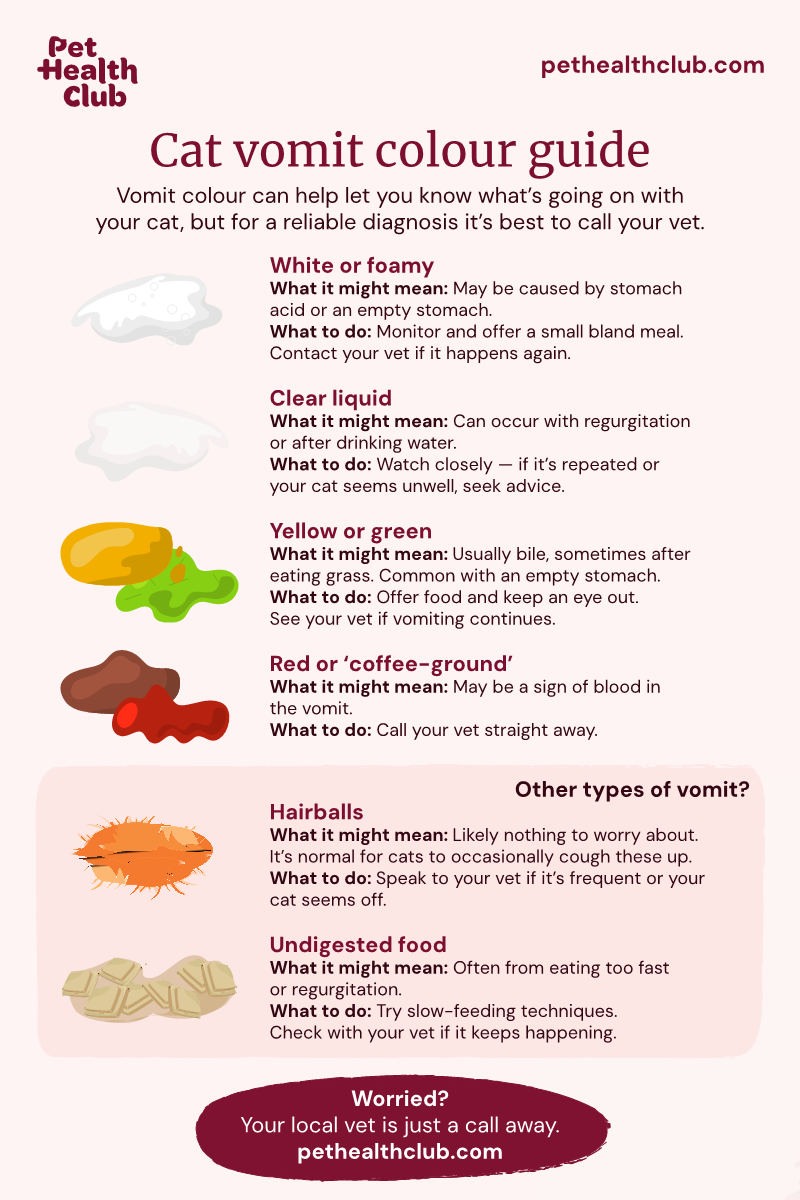
Blood in vomit is always alarming. It may indicate internal bleeding. Gastrointestinal issues or poisoning can cause this symptom. Blood can appear as bright red or coffee grounds. Immediate veterinary care is crucial.
Lethargy And Weakness
Lethargy can accompany vomiting in cats. Weakness is a sign of distress. Cats may become less active and sleep more. These symptoms can indicate serious illness. Seek a vet’s advice if your cat seems unusually tired.
When To Seek Immediate Veterinary Care
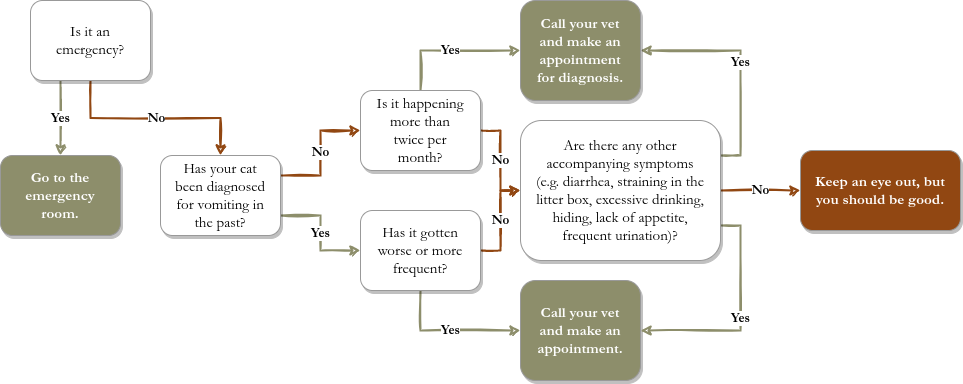
Cats may need a vet visit if vomiting happens often. Signs like blood, lethargy, or loss of appetite are alarming. Quick care helps prevent serious health issues.
When your cat vomits, it can be quite concerning. Sometimes, it might be a simple issue. Other times, you must seek immediate veterinary care. Knowing when to act is crucial for your pet’s health. This section highlights key signs to watch for.Persistent Vomiting
If your cat vomits more than once or twice, take notice. Vomiting that lasts for more than a day is a red flag. It might indicate a serious health problem. Frequent vomiting can lead to other health issues. A vet visit becomes essential.Dehydration Risks
Vomiting can quickly lead to dehydration. Cats lose fluids and essential electrolytes. Dehydration is dangerous and can happen fast. Signs include dry gums, lethargy, and sunken eyes. Immediate care can prevent severe outcomes.Change In Behavior
Cats often show changes in behavior when unwell. Look for signs like hiding, aggression, or unusual lethargy. These changes can signal distress or pain. Behavioral shifts, paired with vomiting, need urgent attention. A vet can diagnose and treat the underlying issue.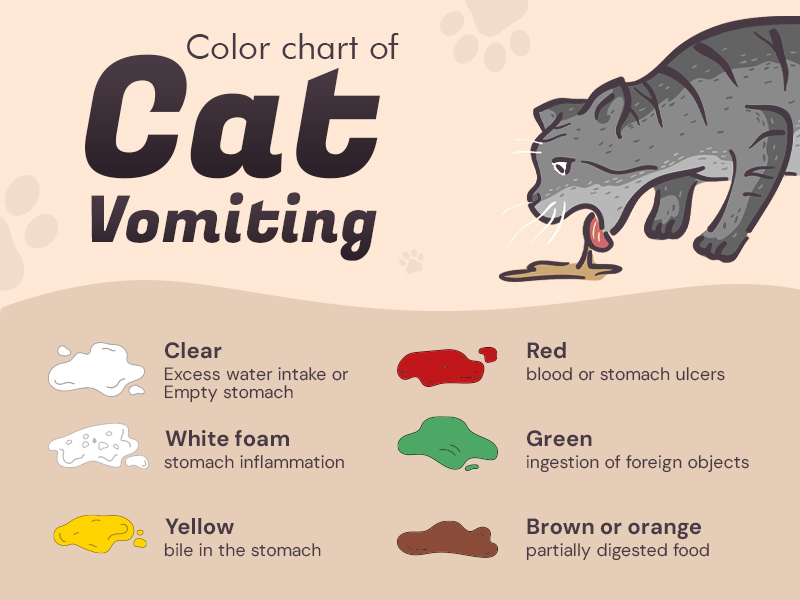
Credit: www.bestvetcare.com
Home Care Tips Before Visiting The Vet
Vomiting in cats can be alarming, but sometimes, it’s not serious enough to warrant an immediate vet visit. Before you rush off to the vet, there are some helpful home care tips you can try. These proactive measures might not only provide relief to your furry friend but also give you valuable information to share with your vet if a visit becomes necessary.
Monitoring Fluid Intake
Keeping an eye on your cat’s water consumption is crucial. Cats can easily become dehydrated, especially if they’re vomiting. Make sure fresh water is always available. Consider using a cat fountain; many cats prefer running water, which encourages drinking. If your cat isn’t drinking enough, you might notice signs like lethargy or dry gums. These indicators will help you decide whether a vet visit is urgent.
Diet Adjustments
Sometimes, a simple change in diet can make a world of difference. Start by removing any potential irritants or newly introduced foods. Offer bland alternatives, like boiled chicken or rice. This can help soothe your cat’s stomach. Be patient and observe if there’s any improvement. Your cat’s reaction to these changes can provide clues about what’s causing the vomiting.
Tracking Vomiting Patterns
Documenting your cat’s vomiting can be incredibly helpful. Note the frequency, timing, and appearance of the vomit. Is it only after meals, or random? Does it contain undigested food or is it mostly liquid? These details might seem trivial, but they are crucial for your vet to diagnose the issue accurately. Ask yourself: Is there a pattern? Understanding this can guide your next steps and inform your vet about potential causes.
By implementing these home care tips, you’re not just buying time; you’re gathering essential information that might make all the difference during the vet consultation. Your efforts at home can lead to a quicker diagnosis and more effective treatment for your beloved pet.
Preparing For The Vet Visit
Vomiting is a common issue in cats. Knowing when to visit the vet is crucial. Preparing for the vet visit can ease stress for you and your cat. This section will guide you on gathering information, what to ask, and what to expect during the vet examination.
Gathering Important Information
Start by noting the frequency of vomiting episodes. Record what your cat eats daily. List any recent changes in diet or environment. Observe your cat’s behavior. Is it lethargic or acting differently? Bring a sample of the vomit if possible. This helps the vet determine the cause.
Questions To Ask Your Vet
Prepare a list of questions. Ask about possible causes of vomiting. Inquire about tests or procedures needed. Discuss treatment options and costs. Learn about home care tips. Understand when to return if symptoms persist. Ensure you have all the information needed.
What To Expect During The Examination
The vet will examine your cat thoroughly. Expect questions about your cat’s health history. The vet may conduct tests like blood work or X-rays. Prepare your cat for a physical examination. The vet will check for dehydration or pain. Stay calm during the examination.
Your vet will explain findings clearly. Follow any advice given. This helps in managing your cat’s health effectively.

Credit: www.winston-salem.carolinavet.com
Preventive Measures For Cat Health
Ensuring your cat’s health prevents frequent vet visits. Vomiting in cats is common but can indicate serious issues. Implement preventive measures to maintain your cat’s well-being and reduce health risks.
Proper Nutrition
Feed your cat a balanced diet. Choose high-quality cat food. Ensure it meets nutritional requirements. Avoid giving human food. Some foods are toxic to cats. Provide fresh water daily. Hydration is crucial for their health.
Regular Health Checkups
Schedule routine vet visits. Early detection of issues is vital. Vaccinations protect against diseases. Regular exams catch potential problems. Discuss any behavioral changes with your vet. Keep your cat’s medical records updated.
Stress Reduction Techniques
Identify stress triggers in your cat’s environment. Create a peaceful home atmosphere. Provide a safe space for them to retreat. Engage in interactive play sessions. Toys can help reduce anxiety. Maintain a consistent routine. Cats thrive on predictability.
Frequently Asked Questions
How Many Times Should A Cat Vomit Before Going To Vet?
A cat should visit the vet if it vomits more than once or twice in 24 hours. Persistent vomiting may indicate health issues requiring professional assessment. Early intervention can prevent complications and ensure your cat’s well-being. Always consult a vet for persistent symptoms or concerns.
What Is Concerning Cat Vomiting?
Cat vomiting can signal various issues. Common causes include hairballs, dietary changes, or infections. Persistent vomiting may indicate serious conditions like kidney disease or pancreatitis. Monitoring frequency and symptoms is crucial. Consult a vet if vomiting persists, worsens, or accompanies other symptoms like lethargy.
Early intervention ensures your cat’s health and well-being.
What Color Vomit Is Concerning For Cats?
Bright yellow, green, or red vomit in cats can be concerning. These colors may indicate bile, toxins, or blood. It’s crucial to consult a veterinarian if your cat vomits these colors, as they may suggest serious health issues. Regular monitoring helps identify any unusual symptoms early.
Is It An Emergency If My Cat Keeps Throwing Up?
Frequent vomiting in cats can indicate an emergency. Contact your vet immediately if vomiting persists, or is accompanied by other symptoms like lethargy, diarrhea, or lack of appetite. Prompt attention ensures your cat’s health and safety.
Conclusion
Caring for your cat’s health is crucial. Vomiting can signal problems. Monitor your cat closely. Frequent vomiting? Call the vet right away. Trust your instincts. Sudden changes in behavior matter. Keep a record of symptoms. Share them with your vet.
Early detection helps. Your cat deserves the best care. A healthy cat is a happy cat. Always prioritize their well-being. Regular vet check-ups prevent issues. Stay informed. Your cat depends on you. Take action when needed. It’s vital. Your cat’s comfort and health come first.